Beginner Guide to Buying Your First Hello Kitty Earring
Discover how to choose the perfect hello kitty earring. Learn about safe materials, gauge sizes, and styling tips for sensitive lobes and cartilage.

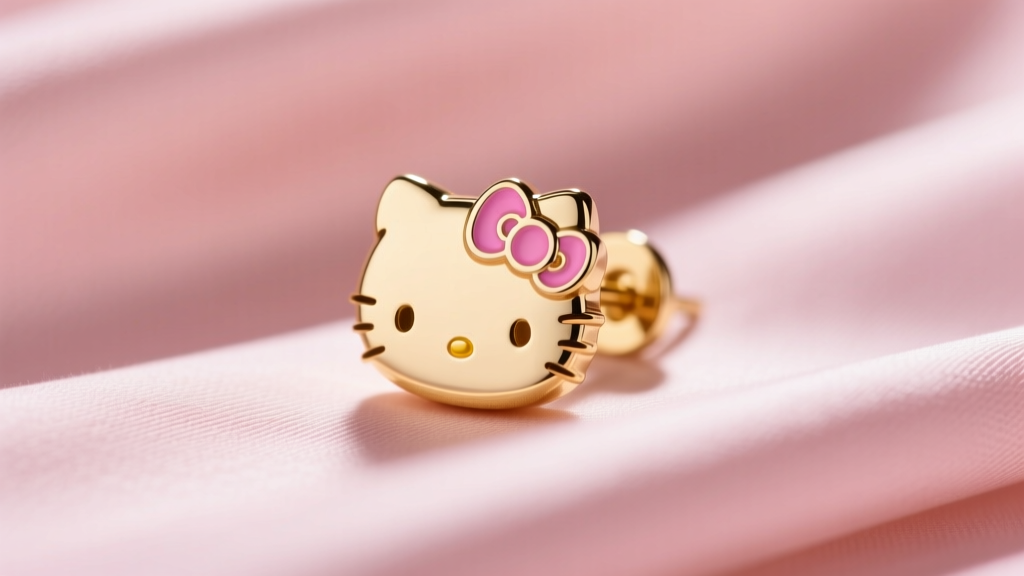
The Enduring Appeal of Sanrio Jewelry
Since her debut in 1974, Hello Kitty has evolved from a simple vinyl coin purse design into a global pop-culture phenomenon. For jewelry enthusiasts and newcomers alike, the hello kitty earring represents a unique intersection of playful nostalgia and everyday wearable art. However, navigating the market for character-themed jewelry can be surprisingly complex for beginners. Between fast-fashion knockoffs that cause severe contact dermatitis and high-end custom pieces that require specific piercing gauges, making the right choice requires a bit of metallurgical and anatomical knowledge.
This beginner-friendly explainer will demystify the process of selecting, sizing, and caring for your first hello kitty earring. Whether you are looking for a subtle stud for your standard lobe piercing or an enameled clicker for your healed helix, understanding the foundational elements of jewelry construction is the key to building a safe, long-lasting collection.
Decoding Materials: Avoiding the Nickel Trap
The most critical mistake beginners make when buying character jewelry is prioritizing the design over the metal composition. Many officially licensed, mass-produced Sanrio accessories are crafted from brass or zinc alloys plated with silver or gold. While these look charming in the packaging, they frequently contain nickel—a common allergen that leads to itching, swelling, and weeping piercings.
According to the American Academy of Dermatology, nickel allergy is one of the most common causes of allergic contact dermatitis. Once you develop a nickel sensitivity, it is generally lifelong. Therefore, investing in hypoallergenic metals from the start is non-negotiable for fresh or sensitive piercings.
| Material Grade | Hypoallergenic Rating | Average Price Range | Best Use Case |
|---|---|---|---|
| ASTM F-136 Implant-Grade Titanium | Excellent (Nickel-Free) | $45 - $120 | Fresh piercings, highly sensitive ears |
| 14k or 18k Solid Gold | Excellent (If Nickel-Free Alloy) | $150 - $350+ | Healed lobes, luxury everyday wear |
| 316L Surgical Steel | Moderate (Contains Trace Nickel) | $25 - $60 | Fully healed, non-sensitive lobes |
| Brass/Zinc Alloy (Plated) | Poor (High Nickel Risk) | $5 - $20 | Display only, or worn over clothing |
When shopping, always look for explicit mentions of "implant-grade titanium" or "nickel-free solid gold." The Association of Professional Piercers (APP) strongly recommends ASTM F-136 titanium for anyone with metal sensitivities, as it is the exact same grade of metal used in surgical implants.
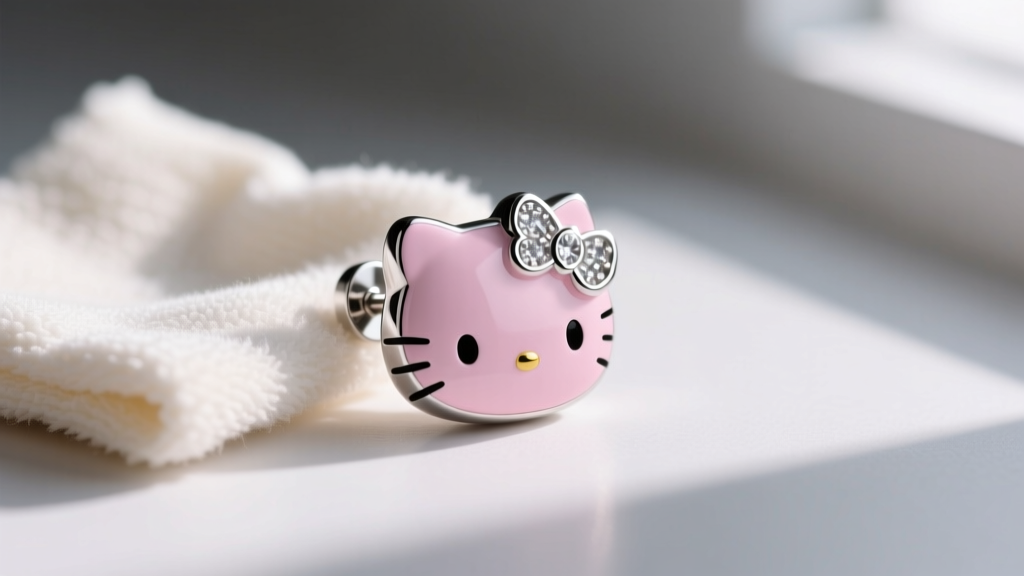
Understanding Gauge Sizes and Post Lengths
A beautiful hello kitty earring will not serve you well if the post is the wrong thickness or length for your specific piercing. Jewelry thickness is measured in "gauge" (G), where a higher number indicates a thinner post.
- 20G (0.8mm): The standard size for most traditional earlobe piercings done with a piercing gun (though needle piercings are always recommended). Many delicate, enameled Hello Kitty studs are manufactured at this size to keep the overall weight low.
- 18G (1.0mm): A slightly thicker, more robust option for standard lobes. High-quality indie jewelers often default to 18G for solid gold or titanium character studs to prevent the post from bending during insertion.
- 16G (1.2mm): The universal standard for cartilage piercings (helix, tragus, conch). If you want to wear a Hello Kitty flat-back labret in your cartilage, you will almost certainly need a 16G post.
Post length is equally vital. A standard lobe post is usually 6mm to 8mm. If your piercing is still healing, or if you have naturally thicker earlobes, an 8mm post is necessary to prevent the butterfly backing or flat-back disc from embedding into the skin, which can cause severe infection and migration.
Authentic Sanrio Merchandise vs. High-Quality Indie Alternatives
Beginners often assume that buying directly from Sanrio's official catalog is the only way to get a legitimate hello kitty earring. While official merchandise guarantees design accuracy and supports the original artists, it is rarely crafted from fine jewelry materials. Official Sanrio earrings are typically fashion jewelry—perfect for occasional wear on fully healed, non-sensitive lobes, but unsuitable for daily wear or cartilage setups.
Conversely, the independent jewelry market (often found on specialized platforms or curated Etsy shops) offers licensed or inspired character designs crafted from premium materials. Indie jewelers frequently use CAD (Computer-Aided Design) and 3D wax printing to cast intricate Hello Kitty silhouettes in solid 14k gold or titanium, finishing them with high-grade vitreous enamel or ethically sourced lab-grown sapphires for the iconic bow. While the initial investment is higher ($80 to $250+), the longevity, safety, and wearability of these pieces far surpass mass-produced fashion accessories.
Curating Your Ear Stack: Placement Guide
Integrating a whimsical character stud into a mature, curated ear stack requires thoughtful placement. Here is a framework for styling your hello kitty earring based on your anatomy:
The Upper Lobe Focal Point
Placing a medium-sized (6mm to 8mm) enameled Hello Kitty stud in the upper lobe creates a charming secondary focal point. Pair it with a simple, unadorned titanium or gold hoop in the primary lobe piercing to balance the visual weight. The minimalist lower hoop allows the intricate enamel work of the character stud to shine without overwhelming the ear.
The Helix Cartilage Statement
For a healed helix piercing, a 16G flat-back labret featuring a bezel-set Hello Kitty silhouette offers a subtle flash of personality. Because cartilage is more prominent, opt for a design with a slightly larger face (around 7mm) so the details remain visible from a distance. Ensure the flat-back disc is 3mm or 4mm to prevent it from catching on hair or headphones.
The Tragus Accent
The tragus is a small, thick piece of cartilage that sits just in front of the ear canal. A tiny, 4mm to 5mm solid gold Hello Kitty stud with a single diamond accent is perfect here. Due to the tragus's proximity to the ear canal, avoid long posts or bulky butterfly backings; internally threaded or threadless flat-back labrets are the only safe options for this placement.
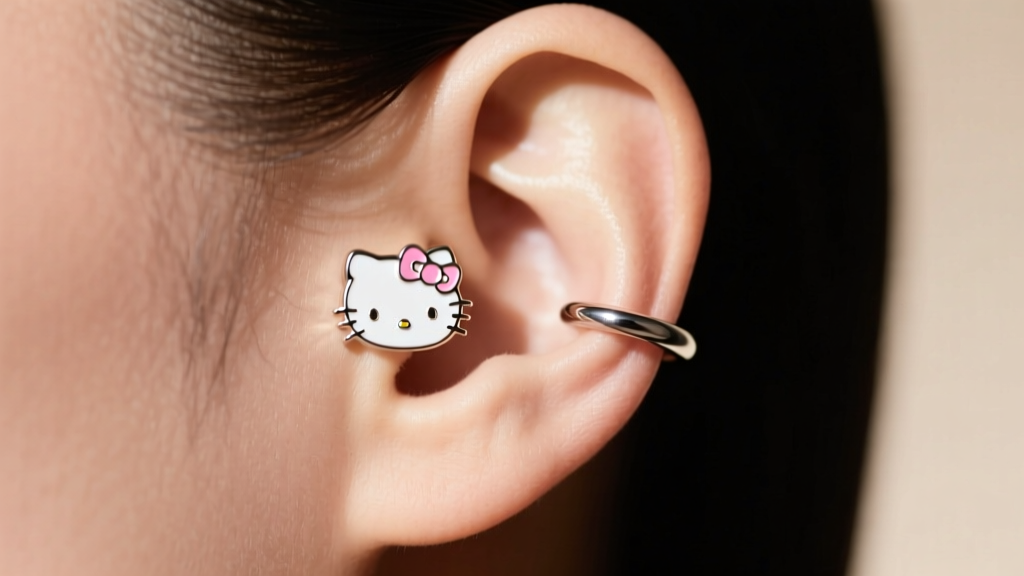
Cleaning and Preserving Enamel Jewelry
Many premium hello kitty earring designs utilize cold or vitreous enamel to achieve the character's signature bright whites, yellows, and reds. Enamel is essentially crushed glass fused to metal, making it vibrant but susceptible to chipping and chemical degradation if cleaned improperly.
Expert Warning: Never place enameled character jewelry in an ultrasonic cleaner. The high-frequency sound waves can easily shatter the enamel or cause micro-fractures that lead to peeling over time.
To maintain the pristine condition of your jewelry, follow this gentle cleaning protocol:
- Prepare a Solution: Mix a few drops of mild, fragrance-free liquid soap (like unscented Castile soap) into a bowl of warm distilled water.
- Soak Briefly: Submerge the earring for no more than 3 to 5 minutes to loosen sebum and dead skin cells from the post and backing.
- Brush Gently: Use an extra-soft baby toothbrush to gently sweep away debris from the crevices of the design. Do not scrub the enamel directly with abrasive force.
- Rinse and Dry: Rinse thoroughly under distilled water and pat completely dry with a lint-free microfiber cloth. Ensure the post is 100% dry before reinserting it into your piercing to prevent moisture trapping.
By prioritizing biocompatible metals, understanding your unique gauge requirements, and practicing mindful maintenance, your hello kitty earring will remain a safe, joyful, and stylish staple in your jewelry rotation for years to come.


