Beginner's Guide to Buying and Styling Hoop Earrings 20mm
Discover everything about hoop earrings 20mm. Our beginner guide covers sizing, gauge thickness, best metals, and face-shape styling tips.

Why 20mm is the 'Goldilocks' Size for Everyday Wear
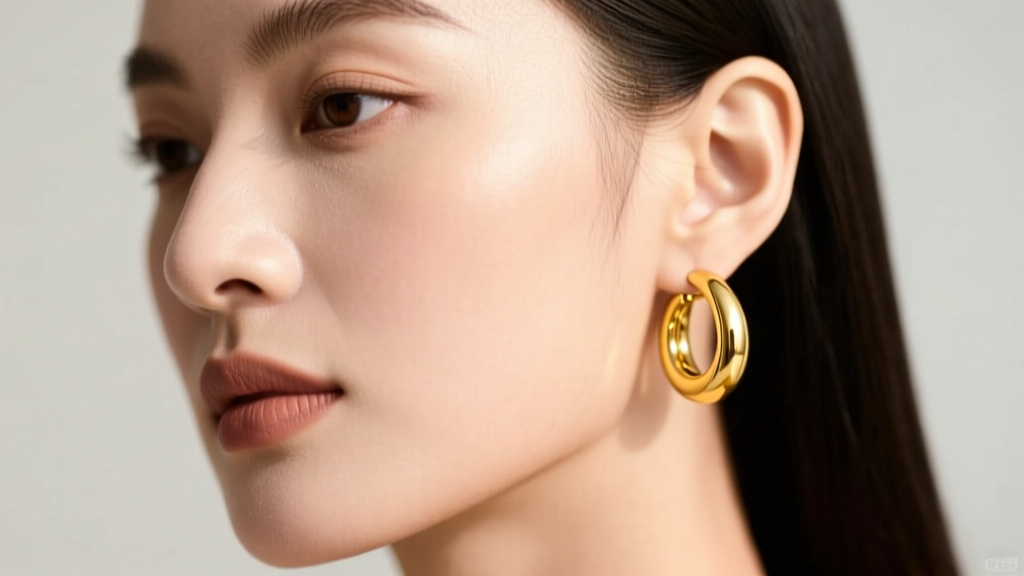
When building a foundational jewelry wardrobe, finding the perfect everyday hoop can feel overwhelming. Enter the 20mm hoop. In the jewelry world, huggies typically range from 10mm to 15mm, while standard medium hoops start around 25mm to 30mm. The 20mm size sits precisely in the 'Goldilocks' zone: it is large enough to be noticeable and frame the face, yet small enough to avoid snagging on hair, clothing, or headphones. For beginners, hoop earrings 20mm offer the most versatile entry point into hoop styling, transitioning seamlessly from a corporate office environment to a casual weekend outing without needing to be swapped out.
Decoding the Specs: Outer vs. Inner Diameter and Gauge
The most common mistake beginners make when shopping for hoops is assuming the listed millimeter size tells the whole story. When a retailer lists 'hoop earrings 20mm,' they are almost always referring to the Outer Diameter (OD). However, how the earring actually fits on your ear depends on the Inner Diameter (ID) and the wire gauge (thickness).
If you have a thicker earlobe, a 20mm OD hoop with a chunky 4mm tube thickness will leave you with an Inner Diameter of just 12mm (calculated as OD minus twice the wire thickness). This can cause the hoop to press uncomfortably against the bottom of your piercing fistula. According to the Association of Professional Piercers, jewelry should always allow for slight movement and swelling without constricting the tissue.
| Wire/Tube Thickness | Outer Diameter (OD) | Inner Diameter (ID) | Best For |
|---|---|---|---|
| 1.0mm (18 Gauge) | 20mm | 18mm | Standard to thick lobes; comfortable drape |
| 2.0mm (14 Gauge) | 20mm | 16mm | Standard lobes; offers a bolder look |
| 3.0mm+ (Chunky Tube) | 20mm | 14mm or less | Thin lobes only; may constrict thicker tissue |
Material Matters: Hypoallergenic Metals for Sensitive Lobes
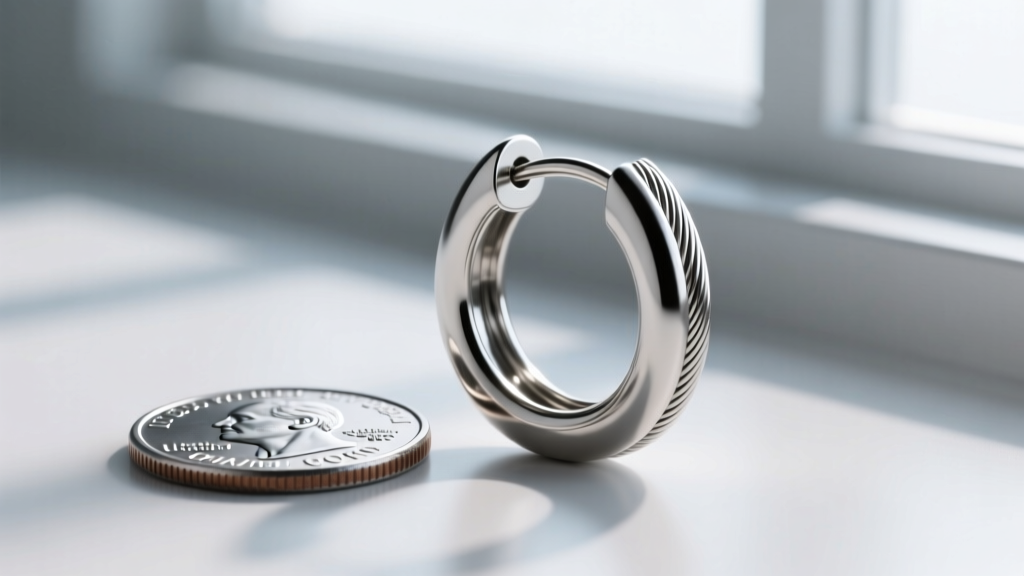
Because 20mm hoops move more freely than studs, the metal constantly glides through the piercing channel. This friction makes material biocompatibility critical. Avoid 'surgical steel' (often 316L stainless steel) if you have known nickel sensitivities, as it contains up to 10% nickel which can leach into the skin over time.
- Implant-Grade Titanium (ASTM F136): The absolute gold standard for sensitive ears and healing piercings. It is completely nickel-free, lightweight, and highly resistant to tarnish.
- Niobium: A highly reactive metal that is naturally hypoallergenic and can be anodized into vibrant colors without using plating or dyes.
- 14k or 18k Solid Gold: Ensure it is solid, not plated. The Gemological Institute of America (GIA) notes that 14k and 18k gold offer the best balance of pure gold content and durable alloy metals for everyday wear jewelry. Avoid white gold unless it is alloyed with palladium rather than nickel.
Face Shape & 20mm Hoops: A Beginner’s Styling Matrix
While 20mm is universally flattering due to its moderate scale, the shape of the hoop (perfect circle, oval, or squared) can enhance your natural features.
- Round Faces: Opt for slightly elongated 20mm oval hoops or hoops with a subtle geometric edge to add vertical length and structure.
- Square Faces: Classic, perfectly round 20mm hoops soften strong jawlines and add a gentle curve to angular features.
- Heart-Shaped Faces: Teardrop-shaped 20mm hoops or circles with a bit of bottom-weight (like a subtle pavé diamond cluster at the base) balance a narrower chin.
- Oval Faces: You have the most versatility. Standard 20mm circular hoops, chunky tubes, or textured wire designs will all complement your balanced proportions.
Common Beginner Mistakes (and How to Avoid Them)
Even with the perfect size and metal, improper handling can ruin both the jewelry and your piercing. Here are the top failure modes for beginners:
- Sleeping in Continuous Hoops: Never sleep in 20mm continuous (endless) hoops. The pressure of your pillow can warp the soft metal, bending the hoop out of its perfect circle and putting uneven pressure on the fistula, leading to migration or irritation bumps.
- Pulling Hinged Clickers Open by Hand: If your 20mm hoop has a hinged clicker closure, do not pry it open with your fingernails. This damages the tiny hinge pin. Instead, use a specialized jewelry opening tool or gently twist the segment along the hinge's natural axis.
- Ignoring the Closure Type for Active Days: If you work out or wear over-ear headphones, avoid latch-back or fishhook closures, which can easily snag. Opt for a secure 'clicker' or 'hinged snap' closure that locks flush against the wire.
Where to Buy: Price Ranges and What to Expect
Understanding pricing tiers helps you avoid overpaying for plated metals or underpaying for potentially toxic alloys. Here is a realistic breakdown of what to expect when shopping for high-quality 20mm hoops in today's market:
- Budget ($15 - $35): Typically PVD-plated titanium over a steel base, or sterling silver. Good for occasional wear, but the plating may eventually wear down near the closure mechanism due to friction.
- Mid-Tier ($40 - $120): The sweet spot for beginners. You will find solid 14k gold-filled options, high-quality anodized niobium, and basic solid 14k gold wire hoops from specialized body jewelry brands.
- Fine Jewelry ($150 - $400+): Solid 14k or 18k gold, often featuring seamless tubing, diamond pavé, or designer branding. These are investment pieces meant to last a lifetime without tarnishing.
By understanding the precise dimensions, material grades, and closure mechanics of hoop earrings 20mm, you can confidently select a pair that offers both supreme comfort and effortless style for years to come.


