How to Style Multi Gemstone Drop Earrings: A Beginner Guide
Learn how to choose, style, and care for multi gemstone drop earrings. Expert tips on wire gauges, Mohs hardness, and face shape matching.

Understanding the Anatomy of Multi Gemstone Drop Earrings
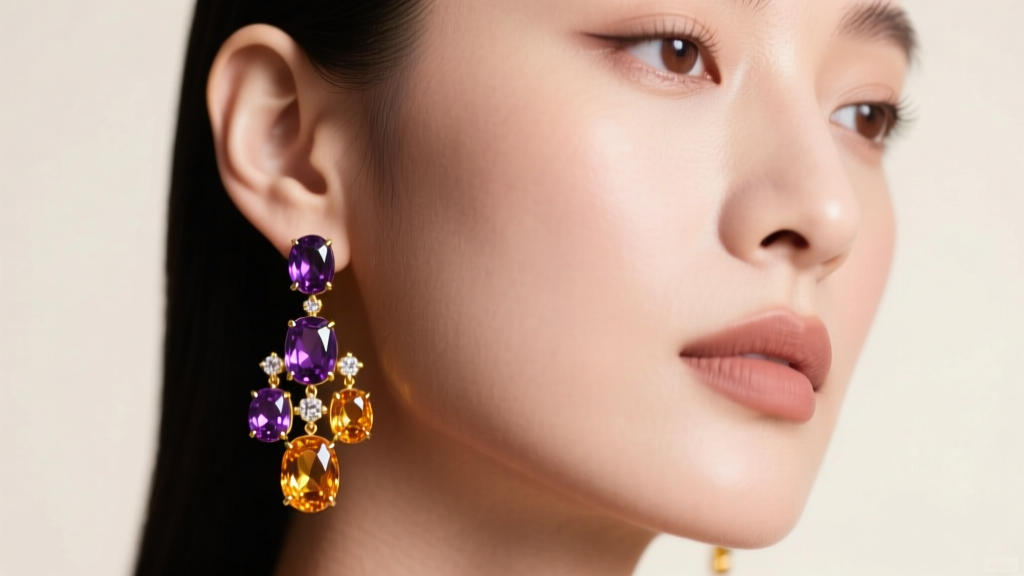
When building a versatile jewelry collection, multi gemstone drop earrings occupy a unique middle ground between subtle studs and dramatic chandeliers. Unlike dangle earrings, which feature multiple articulated joints that move independently, a true drop earring hangs just below the earlobe and swings as a single, unified pendulum. This structural distinction is critical for beginners to understand, as it directly impacts the weight distribution, the stress placed on your piercing, and the way the gemstones catch the light.
Multi gemstone drop earrings typically feature a primary metal framework—often a bezel, prong, or channel setting—that holds two to five distinct stones in a vertical or clustered arrangement. Because they move as one solid unit, the kinetic energy transfers directly to the earwire. This makes the choice of metal gauge and gemstone durability paramount for long-term wearability.
Wire Gauge, Weight, and Earlobe Biomechanics
The most common mistake beginners make when purchasing drop earrings is ignoring the earwire thickness, formally known as the wire gauge. The gauge dictates both the structural integrity of the earring and the long-term health of your earlobe tissue.
- 22-Gauge (0.64mm): The industry standard for lightweight, delicate drops. While comfortable for immediate wear, 22-gauge wires are prone to bending if the multi gemstone drop earrings exceed 4 grams in total weight.
- 20-Gauge (0.81mm): The ideal sweet spot for most multi-stone designs. It provides enough rigidity to support clusters of semi-precious stones (like amethyst, garnet, or peridot) without warping, while still fitting comfortably through standard lobe piercings.
- 18-Gauge (1.02mm): Reserved for heavy, high-carat precious stone drops. While structurally superior, forcing an 18-gauge wire through a tight or healing piercing can cause micro-tears. Furthermore, wearing heavy 18-gauge drops for more than 6 hours can lead to 'creep deformation'—the gradual, irreversible stretching of the earlobe tissue due to sustained gravitational pull.
Pro Tip: If you fall in love with a heavy pair of multi gemstone drop earrings but have delicate lobes, invest in silicone earring support patches (like Lobe Wonder). These adhesive backings distribute the weight across a wider surface area of the ear, preventing the dreaded 'stretched slit' appearance.
Gemstone Durability: Why the Mohs Scale Dictates Your Choice
Because drop earrings swing against your neck, jawline, and shoulders, the gemstones are highly susceptible to impact and friction. Beginners must evaluate stones using the Mohs Hardness Scale to ensure their jewelry survives daily wear.
| Gemstone | Mohs Hardness | Impact Risk | Best Use Case |
|---|---|---|---|
| Turquoise | 5.0 - 6.0 | High (Prone to scratching and chipping) | Occasional evening wear |
| Opal | 5.5 - 6.5 | High (Contains water, can crack on impact) | Climate-controlled indoor events |
| Amethyst / Citrine | 7.0 | Moderate (Resists dust scratches, but can chip) | Office and daily casual wear |
| Garnet | 7.5 | Low-Moderate (Excellent durability for drops) | Frequent daily wear |
| Sapphire / Ruby | 9.0 | Very Low (Highly impact resistant) | Heirloom and lifetime daily wear |
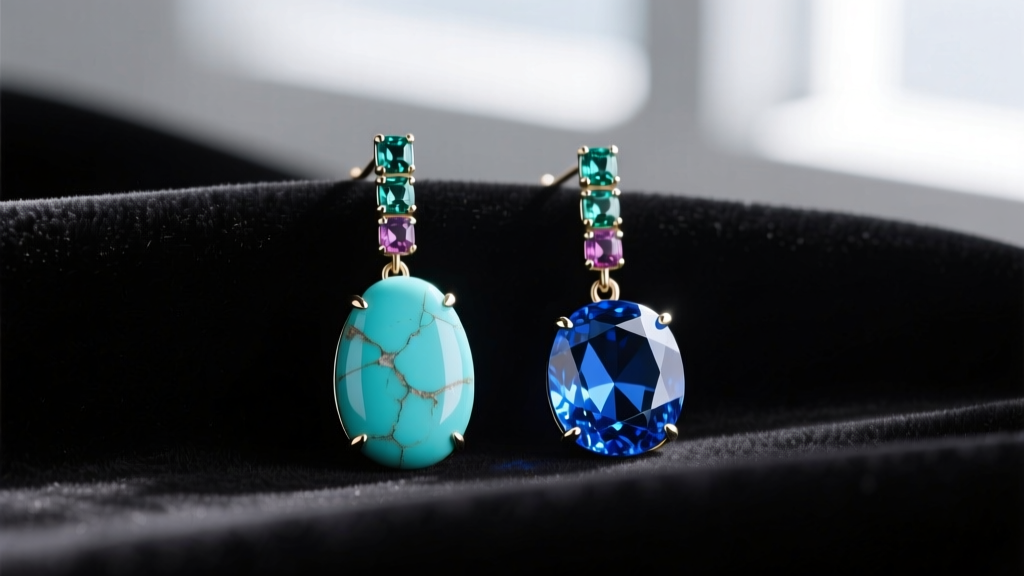
According to the Gemological Institute of America (GIA), any gemstone with a Mohs rating below 7 is vulnerable to micro-abrasions from ordinary household dust, which contains quartz particles (hardness 7). When your multi gemstone drop earrings brush against your clothing or skin, softer stones like turquoise or opal will slowly lose their polish. If you are buying drops for everyday wear, prioritize garnet, amethyst, topaz, or sapphire.
Metal Allergies and Hypoallergenic Frameworks
The earwire is the only part of the earring that maintains constant, uninterrupted contact with your bloodstream and tissue. Multi gemstone drop earrings require sturdy settings, which often leads manufacturers to use brass or nickel-silver alloys plated in gold. As the plating wears off at the friction point of the earlobe, nickel is exposed to the skin.
Nickel contact dermatitis affects roughly 18% of adults in North America. The initial symptom is often mistaken for a heavy earring pulling on the ear, but it is actually an immune response to nickel ions leaching into the skin barrier.
To avoid this, always verify the base metal. Look for ASTM F136 Implant-Grade Titanium, which is entirely nickel-free and biocompatible, or solid 14k/18k Gold (ensure it is nickel-white gold-free; opt for palladium-white gold instead). Avoid terms like 'gold-plated' or 'gold-filled' for heavy drop earrings, as the mechanical stress of a swinging drop will accelerate the degradation of the outer metal layer.
The Face Shape Pairing Framework
Styling multi gemstone drop earrings is an exercise in visual geometry. The goal is to create balance by either contrasting or complementing your natural bone structure.
Round and Square Faces
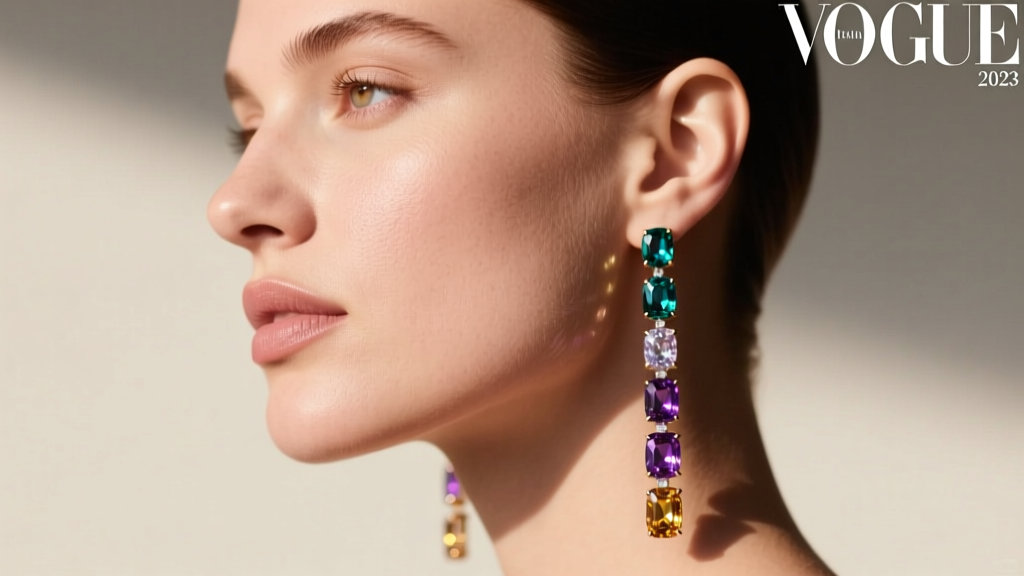
If you have a round face (equal width and length) or a square face (strong, angular jawline), you want to create the illusion of length. Choose multi gemstone drop earrings that are elongated, linear, and narrow. A vertical stack of three emerald-cut garnets or a long, teardrop-shaped sapphire cluster will draw the eye downward, elongating the neck and softening the jawline. Avoid wide, circular, or clustered geometric drops, which will accentuate facial width.
Oval and Heart Faces
Oval faces are universally balanced, meaning almost any drop style works. However, heart-shaped faces (wider forehead, narrow chin) benefit from drops that feature a wider base. Look for multi gemstone drop earrings that are bottom-heavy, such as a pear-shaped cluster or a chandelier-style drop that flares outward at the bottom. This adds visual weight to the lower half of the face, balancing a narrow chin.
Pricing Tiers: What to Expect in 2026
Understanding the market pricing for multi gemstone drop earrings helps you identify genuine value versus inflated brand markups. Here is the current landscape for solid, well-crafted pieces:
- Tier 1: Semi-Precious & Gold-Vermeil ($65 - $180): Expect stones like amethyst, peridot, and garnet set in thick gold vermeil (sterling silver base with at least 2.5 microns of gold). Excellent for trend-driven styling, but requires removal before showering.
- Tier 2: Precious & Solid 14k Gold ($400 - $1,200): This tier includes smaller carat-weight sapphires, rubies, or high-grade tourmalines set in solid 14k gold. These are lifetime pieces that can withstand daily wear and water exposure.
- Tier 3: High Jewelry & Platinum ($2,500+): Reserved for flawless, untreated gemstones (like unheated Burmese rubies or Paraíba tourmalines) set in platinum or 18k gold with custom micro-pavé diamond halos.
Cleaning and Storage Protocols
Because multi gemstone drop earrings feature multiple setting joints, they trap skin oils, lotions, and environmental dust between the stones. Never use ultrasonic cleaners on multi-stone drops unless you are 100% certain every stone is a diamond, ruby, or sapphire. Ultrasonic vibrations can shatter opals, strip the oil from emeralds, and loosen the adhesive in lower-tier settings.
Instead, use a lukewarm bath of distilled water and a single drop of mild, phosphate-free dish soap. Gently agitate the earrings, then use a brand-new, ultra-soft baby toothbrush to sweep the bristles behind the gemstone settings. Pat dry with a microfiber cloth and store them hanging in a jewelry box to prevent the earwires from bending under the weight of the stones.
By paying close attention to wire gauge, Mohs hardness, and facial geometry, you can confidently select multi gemstone drop earrings that are not only visually stunning but structurally sound for years of wear.