Daisy Earrings Stud Trends: 2026 Style & Sizing Guide
Discover the 2026 daisy earrings stud trend. Explore material upgrades, cartilage placements, and expert styling guides for this timeless floral motif.


The 2026 Shift: Nostalgia Meets Fine Jewelry
For the better part of a decade, the floral motif was relegated to fast-fashion accessories and nostalgic Y2K revivals. However, as we navigate the jewelry landscape of 2026, the daisy earrings stud has undergone a radical metamorphosis. No longer just a playful plastic trinket, this botanical silhouette has been reclaimed by fine body jewelers and luxury designers alike. Today’s iterations are defined by micro-pavé diamond centers, biocompatible titanium bases, and sophisticated hard-fire enamel techniques.
This evolution reflects a broader consumer pivot toward 'heirloom nostalgia'—the desire for pieces that evoke youthful sentimentality but are crafted with the permanence and quality of fine jewelry. Whether you are looking to anchor a curated lobe stack or add a subtle botanical touch to a helix piercing, understanding the material science, anatomical sizing, and styling geometry of the modern daisy earrings stud is essential for making an informed investment.
Material Science: What Makes a Premium Daisy Stud?
The market is currently saturated with varying tiers of floral jewelry. To distinguish a true 2026 luxury piece from a mass-market replica, one must examine the metallurgy and enamel work. The modern daisy earrings stud relies heavily on two critical components: the base alloy and the petal detailing.
Enamel Techniques: Hard Fire vs. Cold
In premium jewelry, petals are rendered using vitreous (hard fire) enamel. This process involves fusing glass powder to a metal substrate at temperatures exceeding 1,400°F. The result is a scratch-resistant, luminous finish that will not yellow or peel over time. Conversely, budget options utilize cold enamel (epoxy resin), which is prone to chipping and UV degradation. When shopping for a high-end daisy earrings stud, always verify that the product specifies kiln-fired or vitreous enamel.
Base Alloys and Hypoallergenic Standards
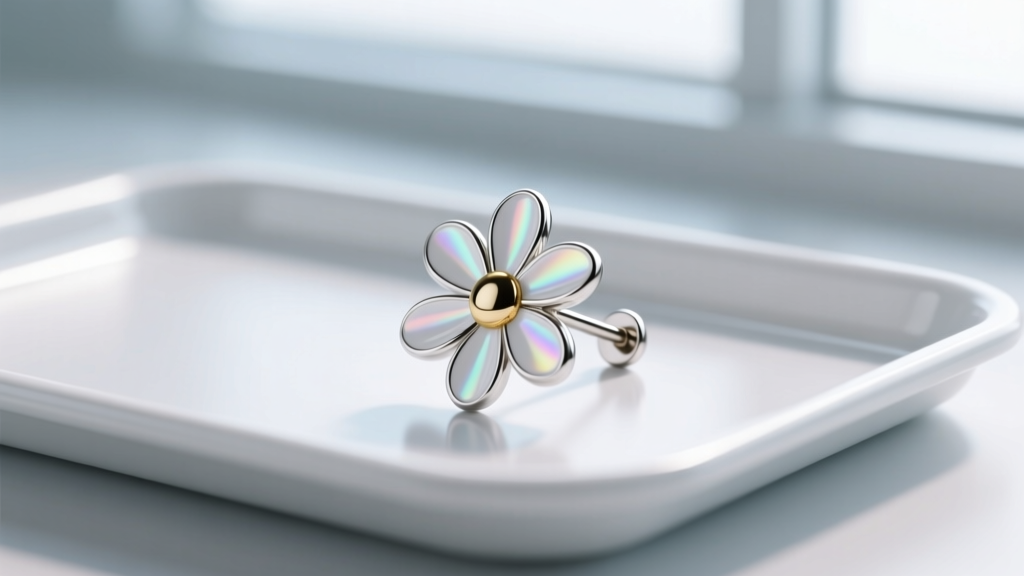
According to the Association of Professional Piercers, only specific grades of metal are safe for long-term wear, particularly in cartilage. The top-tier brands (such as BVLA and Maria Tash) machine their daisy earrings stud bases from ASTM F-136 implant-grade titanium or solid 14k/18k gold. Avoid gold-plated brass or sterling silver for cartilage placements, as the porosity of silver can harbor bacteria and cause severe irritation bumps in tight fistulas.
| Material Grade | Durability | Avg. Price Range | Best Placement |
|---|---|---|---|
| ASTM F-136 Titanium | Exceptional (Hypoallergenic) | $80 - $180 | Helix, Conch, Fresh Piercings |
| Solid 14k Gold | High (Tarnish Resistant) | $150 - $350 | Standard Lobe, Upper Lobe |
| Solid 18k Gold | Moderate (Softer, Prone to Scratches) | $250 - $500+ | Healed Lobes Only |
| Gold Vermeil / Plated | Low (Wears off over time) | $30 - $70 | Occasional Lobe Wear |
Biomechanics and Sizing: Lobe vs. Cartilage
A common mistake in 2026 ear curation is ignoring the biomechanical requirements of different piercing sites. A daisy earrings stud designed for a standard earlobe will often fail in a cartilage placement due to improper gauge thickness and post length.
Gauge and Post Specifications
Standard lobe piercings are typically done at 20G (0.8mm) or 18G (1.0mm). However, cartilage piercings (helix, flat, conch) are almost universally pierced at 16G (1.2mm) or 18G (1.0mm) to prevent the 'cheese-cutter effect,' where thin jewelry migrates through the tissue. If you are placing a daisy earrings stud in a helix, you must ensure the post is at least 18G, and ideally 16G if your piercing was done at that thickness.
Furthermore, post length is critical. A standard lobe stud features a 4mm to 5mm post. Cartilage tissue, however, requires a longer post (typically 6mm to 8mm) to accommodate the angle of the piercing channel and any residual swelling. Forcing a 5mm lobe stud into a helix will result in the backing pressing into the skin, leading to pressure necrosis or hypertrophic scarring.
- Standard Lobe: 20G or 18G thickness, 4mm-5mm post length, 5mm-7mm daisy head diameter.
- Upper Lobe / High Lobe: 18G thickness, 5mm-6mm post length, 4mm-6mm daisy head diameter.
- Helix / Flat: 16G or 18G thickness, 6mm-8mm post length, 4mm-5mm daisy head diameter (to avoid catching on hair).
The 'Daisy Chain' Ear Curation Framework
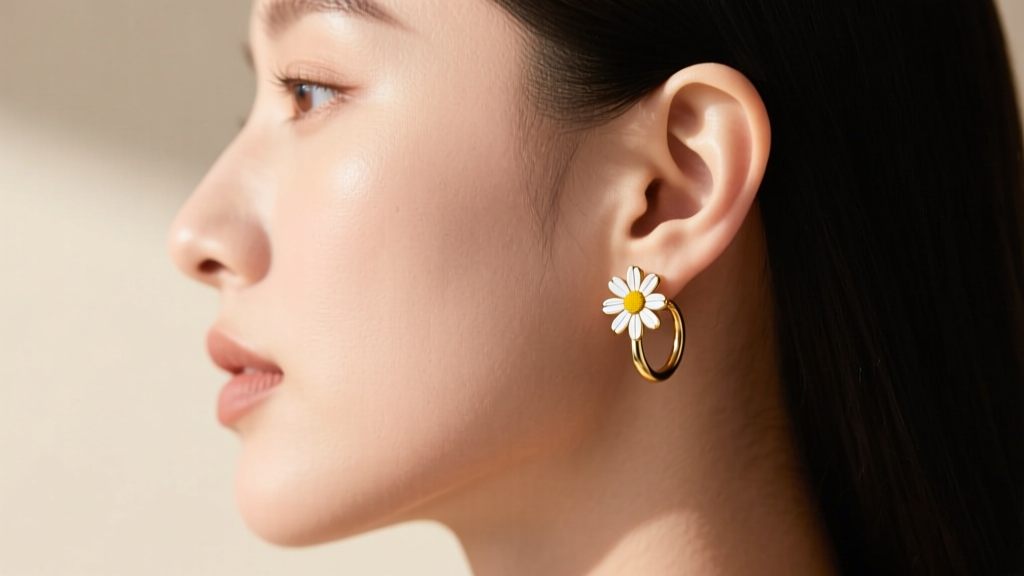
Styling a floral motif requires an understanding of visual weight. Because the daisy earrings stud features a radially symmetrical, expansive shape, it naturally draws the eye. In 2026, the prevailing styling framework is the 'Daisy Chain'—a method of balancing the floral stud with complementary, non-competing geometric shapes.
'When a client chooses a botanical centerpiece like a daisy stud for their primary lobe piercing, I always advise against pairing it with other organic shapes like leaves or vines. Instead, anchor the visual weight with minimalist, high-polish seamless hoops or simple diamond solitaires in the upper piercings. Let the daisy breathe.' — Senior Piercer & Curation Specialist, Jewel Style Radar Archives
For a cohesive look, adhere to the Rule of Three: limit your ear curation to three distinct focal points. If your daisy earrings stud is the primary focal point (usually the bottom lobe), use secondary and tertiary piercings for subtle accents. Mixing metals is highly encouraged this year; pairing a yellow gold daisy stud with white titanium or platinum upper hoops creates a sophisticated, layered contrast that feels distinctly modern.
Maintenance: Protecting Enamel and Pavé
The longevity of your jewelry depends heavily on your maintenance routine. While the Gemological Institute of America provides extensive guidelines on cleaning diamonds and precious metals, enamel requires a more delicate touch. Ultrasonic cleaners, while excellent for bare diamond solitaires, can cause micro-fractures in hard-fire enamel over time due to high-frequency vibrations.
To clean your daisy earrings stud, use a soft-bristled baby toothbrush and a mild, phosphate-free dish soap mixed with warm water. Gently brush the pavé center and the crevices between the enamel petals to remove sebum and cosmetic buildup. Rinse thoroughly with distilled water and dry with a lint-free microfiber cloth. Avoid applying perfumes, hairsprays, or chemical exfoliants directly to the jewelry, as the alcohol and acids can degrade the polish on the gold and dull the enamel's vitreous shine.
Conclusion
The daisy earrings stud has successfully graduated from a fleeting trend to a permanent fixture in the fine jewelry lexicon. By prioritizing implant-grade materials, respecting the anatomical requirements of your specific piercings, and applying thoughtful curation frameworks, you can elevate this nostalgic motif into a sophisticated, lifelong staple of your personal style.


