How to Measure, Fit, and Style 6.0 mm Earrings Perfectly
Learn how to accurately measure, fit, and style 6.0 mm earrings for lobe and cartilage piercings with our expert step-by-step sizing guide.

The Anatomy of the 6.0 mm Threshold
In the precision-driven world of body jewelry, a single millimeter can dictate the difference between a comfortable, flattering fit and an irritating, poorly proportioned accessory. The 6.0 mm earring size represents a fascinating threshold in jewelry design. At exactly 0.236 inches, 6.0 mm is considered a 'statement' size for a standard lobe stud, yet it functions as a 'micro-huggie' or a snug-fitting cartilage hoop for piercings like the forward helix, tragus, or snug. Understanding how to measure, select, and style this specific dimension requires moving beyond generic jewelry sizing and adopting the meticulous standards used by professional piercers.
Whether you are upgrading your initial healing jewelry to a permanent piece or curating a curated ear constellation, mastering the 6.0 mm profile is essential. This step-by-step guide will walk you through the technical specifications, material grades, and styling frameworks necessary to perfect your 6.0 mm earring selection.
Step 1: Distinguish Between Inner and Outer Diameter
The most common point of failure when purchasing 6.0 mm hoop earrings or huggies is confusing the Inner Diameter (ID) with the Outer Diameter (OD). When a manufacturer labels a hoop as '6.0 mm,' they are almost exclusively referring to the ID—the empty space inside the ring that wraps around your tissue.
To find the true physical footprint of the earring, you must calculate the OD using the wire thickness (gauge). For example, a standard 16-gauge (1.2 mm thick) cartilage hoop with a 6.0 mm ID will have an OD of 8.4 mm (calculated as ID + [wire thickness x 2]). This distinction is critical for piercings located in tight anatomical folds. If your tragus piercing sits close to the cheek, an 8.4 mm OD might press uncomfortably against your skin, whereas a thinner 18-gauge (1.0 mm) wire would yield a more forgiving 8.0 mm OD.
'Always measure the inner diameter for hoops and huggies, but consider the outer diameter when mapping out adjacent piercings to prevent jewelry overlap and tissue compression.' — Association of Professional Piercers (APP)
Step 2: Match the Material to Your Piercing Age
Because 6.0 mm earrings sit closely against the skin—especially in huggie and seamless hoop configurations—the material's biocompatibility is non-negotiable. The close proximity limits airflow and increases the risk of contact dermatitis if subpar metals are used.
For Healed Piercings (6+ Months)
- Implant-Grade Titanium (ASTM F136): The gold standard for sensitive ears. It is entirely nickel-free, lightweight, and can be anodized to various colors without using surface plating that might chip.
- Solid 14k or 18k Gold: Ensure the gold is nickel-free and alloyed for body safety. According to the Gemological Institute of America (GIA), the specific alloy mix in jewelry-grade gold dictates both its color and its hypoallergenic properties. Avoid gold-plated or gold-filled options for 6.0 mm huggies, as the friction against the earlobe will eventually wear away the microscopic top layer.
For Fresh or Irritated Piercings
Stick exclusively to mirror-polished ASTM F136 titanium. Avoid 'surgical steel' (316L), as it contains up to 10% nickel, which frequently triggers localized allergic reactions when trapped in the tight 6.0 mm curvature of a healing cartilage fold.
Step 3: Choose the Right Closure Mechanism
At the 6.0 mm scale, the mechanism of the earring drastically affects both the aesthetic and the security of the piece. Here is how to navigate the technical options:
Threadless (Push-Pin) vs. Internally Threaded Studs
If you are opting for a 6.0 mm round or hex stud, the backing mechanism matters. Threadless jewelry utilizes tension; a slightly bent pin is pushed into a hollow post, creating a secure, friction-based lock. This is vastly superior to externally threaded jewelry, where the screw threads are on the post itself, forcing you to drag sharp metal ridges through your piercing channel every time you insert it. Internally threaded or threadless options ensure a smooth, tissue-safe insertion.
Hinged Clickers vs. Seamless Hoops
For 6.0 mm hoops, hinged clickers feature a microscopic hinge and a snapping closure. They are incredibly easy to insert but add a tiny bit of visual bulk at the seam. Seamless hoops (continuous rings) offer a flawless, unbroken circle that is visually superior for minimalist ear curations, but they require a specific twisting technique to open and close without warping the metal's memory.
Step 4: The Insertion and Sizing Verification Process
Never rely on a standard fabric tape measure or a printed paper ruler to verify your 6.0 mm earrings. The margin of error is simply too high. Follow this verification protocol:
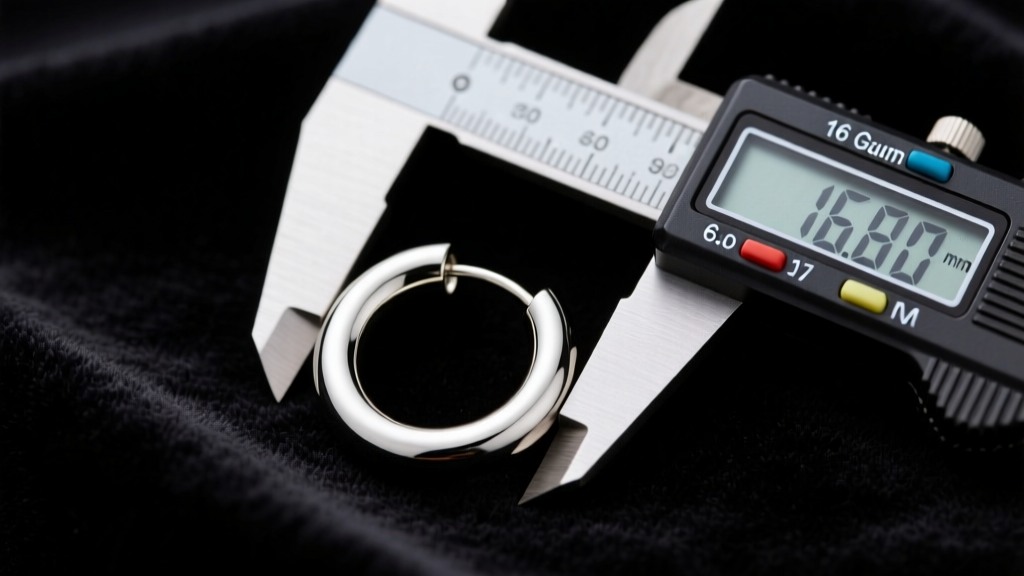
- Procure Digital Calipers: Invest in a basic set of digital calipers (accurate to 0.01 mm). This is the only way to verify the manufacturer's claims.
- Measure the ID: Close the caliper jaws gently inside the hoop to confirm the 6.0 mm inner clearance.
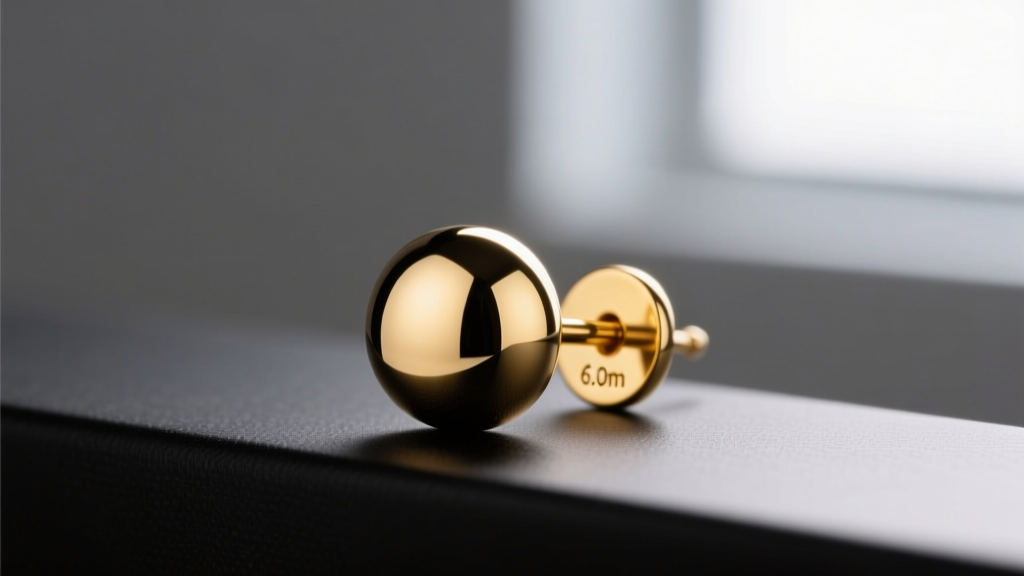
- Check the Post Length (For Studs): If you are buying a 6.0 mm stud face, ensure the post length is appropriate. A standard lobe requires an 8mm to 10mm post, while a tragus might only need a 5mm to 6mm post. A 6.0 mm face on an overly long post will look disproportionate and snag easily.
Piercing Compatibility and Fit Chart
Use this reference table to determine how a 6.0 mm earring will behave across different anatomical placements.
| Piercing Type | Recommended 6.0 mm Style | Ideal Gauge | Fit Notes & Considerations |
|---|---|---|---|
| Standard Lobe | Huggie Hoop or 6mm Stud | 18g or 16g | Sits flush as a micro-huggie; 6mm stud provides bold, classic coverage. |
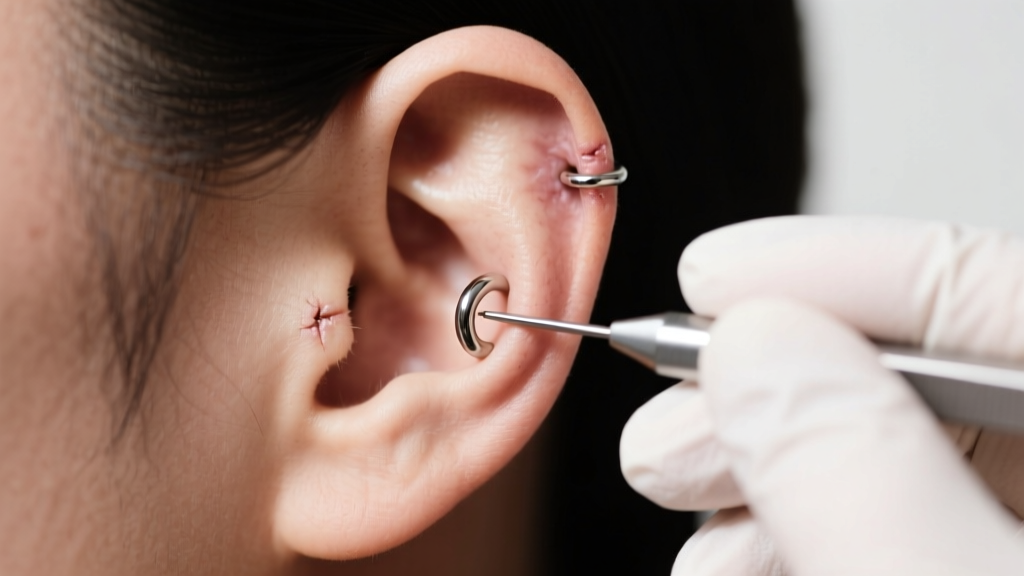
| Helix / Forward Helix | Seamless Hoop or Clicker | 16g | Provides a snug, contoured fit. Ensure OD does not press on the ear fold. |
| Tragus | Threadless 6mm Bezel Stud | 16g | Hoops are rarely 6mm here due to cheek clearance; a 6mm stud is optimal. |
| Conch | Threadless 6mm Gem Stud | 14g or 16g | Acts as a delicate accent in the large conch bowl; pair with larger pieces. |
Styling the 6.0 mm Profile in a Curated Ear
When building an ear constellation, visual weight is just as important as physical dimensions. A 6.0 mm earring serves as an excellent 'anchor' or 'bridge' piece. If you have a large 10mm or 12mm statement piece in your conch, using a 6.0 mm huggie in the upper lobe and a 6.0 mm stud in the mid-helix creates a balanced, graduating aesthetic.
For a highly cohesive look, maintain a uniform metal color and gemstone cut across your 6.0 mm pieces. Mixing a 6.0 mm brilliant-cut diamond bezel with a 6.0 mm plain polished titanium huggie can look disjointed. Instead, match the bezel settings or stick to all-metal polished finishes to create a streamlined, intentional narrative across your cartilage and lobe.
Common Sizing Mistakes to Avoid
- Ignoring Swelling: Never attempt to wear a 6.0 mm ID hoop in a cartilage piercing that is less than 9 to 12 months fully healed. Cartilage swells unpredictably, and a tight 6.0 mm hoop will act as a tourniquet, embedding into the tissue and causing severe irritation bumps.
- Assuming Universal Gauge Sizing: A 6.0 mm hoop designed for a 20-gauge nose piercing will be far too flimsy and fragile for a 14-gauge industrial or conch piercing. Always cross-reference the gauge with the diameter.
- Buying Plated 'Hypoallergenic' Jewelry: Many fast-fashion brands label gold-plated brass as 'hypoallergenic.' At the 6.0 mm huggie size, the continuous friction against the earlobe crease will strip the plating within weeks, exposing the reactive base metal underneath.
Final Thoughts on Precision Sizing
Mastering the 6.0 mm earring size elevates your jewelry curation from guesswork to an exact science. By prioritizing implant-grade materials, understanding the crucial mathematics of inner versus outer diameters, and utilizing precise measuring tools like digital calipers, you ensure that your jewelry not only looks exceptional but promotes long-term piercing health. Whether you are snapping a titanium clicker into a healed helix or setting a 6.0 mm gold bezel into your lobe, precision is the ultimate luxury.


