Name Plate Earrings: A Beginner's Guide to Custom Styles
Discover everything about name plate earrings. Learn how to choose metals, fonts, backings, and proportions for your custom jewelry in this beginner guide.

The Resurgence of Personalized Jewelry
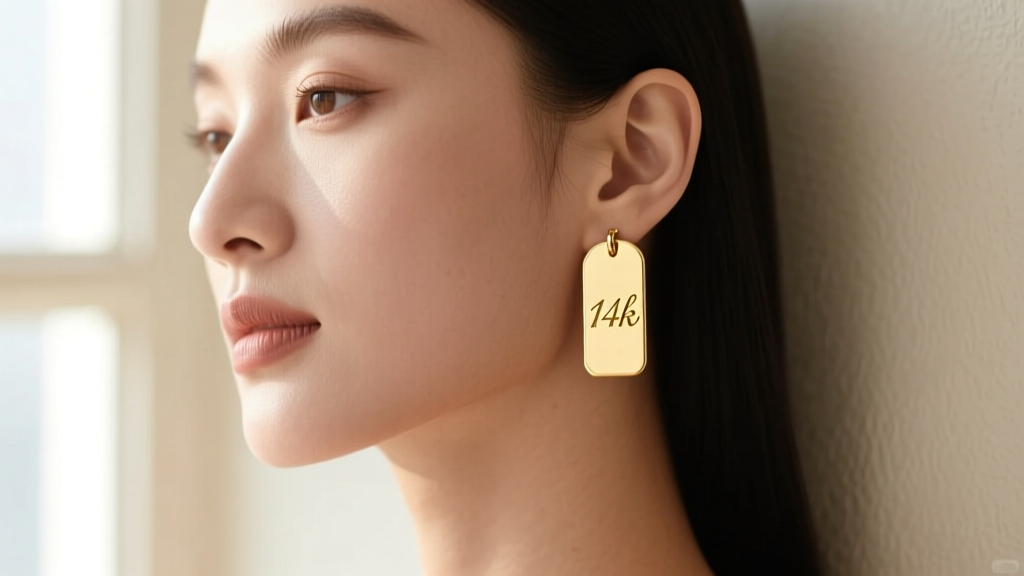
Name plate earrings have successfully transcended their early 2000s pop-culture origins to become a foundational staple of modern, personalized jewelry. Unlike mass-produced studs or generic hoops, custom name plates offer a unique blend of self-expression, sartorial edge, and intimate storytelling. However, ordering custom jewelry online can be incredibly daunting for beginners. What gauge should the earring post be? How thick should the metal plate be to avoid bending? Which font will actually be legible from a conversational distance?
This comprehensive guide breaks down the exact metallurgical specifications, structural mechanics, and styling proportions you need to know before commissioning your first pair of custom name plate earrings.
Decoding Materials: Plated vs. Vermeil vs. Solid
The longevity and hypoallergenic properties of your earrings depend entirely on the base metal and the plating process. When browsing custom jewelers, you will typically encounter three main categories:
- Gold Plated (Brass/Copper Base): This involves a microscopic 'flash' layer of gold (usually less than 0.5 microns) over a cheap base metal. These are highly prone to tarnishing within months and pose a severe allergy risk due to hidden nickel or copper.
- Gold Vermeil (Sterling Silver Base): According to the Gemological Institute of America (GIA), true vermeil must feature a 925 sterling silver base plated with at least 2.5 microns of 10k or higher gold. This is the sweet spot for budget-conscious buyers who need hypoallergenic properties.
- Solid 14k Gold: The premium, heirloom-quality choice. 14k gold (58.3% pure gold alloyed with copper and silver) offers the perfect balance of rich color and structural rigidity. Avoid 18k or 24k gold for large name plates, as the higher pure gold content makes the metal too soft, leading to warping and deep scratches on a large surface area.
Plate Thickness and Structural Integrity
Beginners often overlook plate thickness, which is measured in millimeters rather than gauge. The thickness dictates how the earring drapes and whether it will survive a snag on a winter sweater.
- 0.6mm - 0.8mm: Considered flimsy. While lightweight, these plates will easily bend or warp if dropped or snagged.
- 0.9mm - 1.2mm: The absolute sweet spot for everyday wear. This thickness provides enough rigidity to hold its shape while remaining light enough not to stretch the earlobe over time.
- 1.5mm and above: Heavy and substantial. Plates this thick require a heavier-duty post and specialized backings to prevent the earring from drooping forward.
Proportions and Face Shape Matching
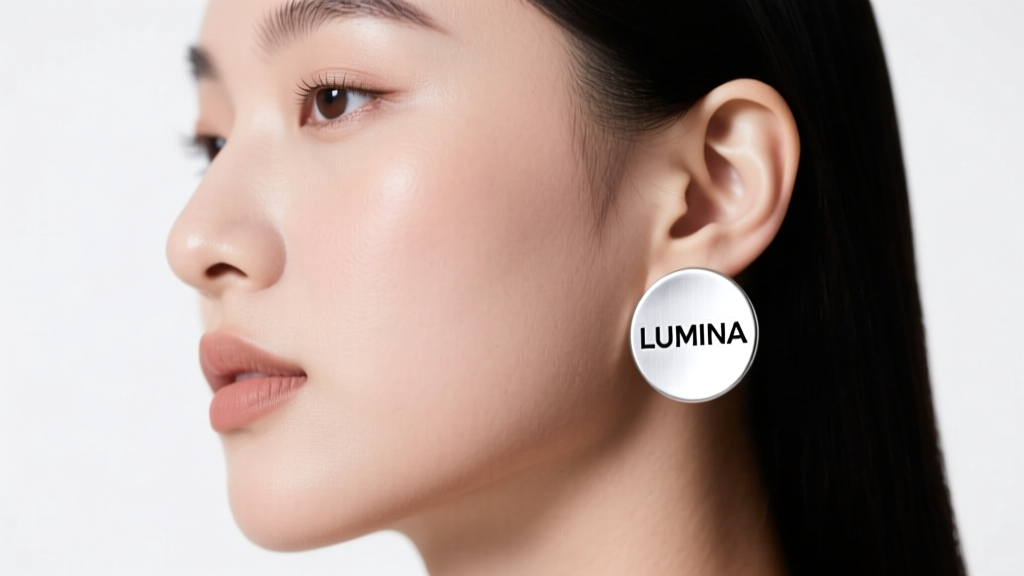
A name plate acts as a horizontal line that draws the eye across the face. Matching the plate length and font style to your face shape is crucial for visual harmony.
| Face Shape | Ideal Plate Length | Recommended Font Style | Why It Works |
|---|---|---|---|
| Round | 1.5 - 2.0 inches | Angular / Block | Adds structural contrast and elongates the jawline. |
| Oval | 1.0 - 1.5 inches | Classic Script | Maintains the natural balance of an already proportionate face. |
| Square | 1.2 - 1.8 inches | Flowing Cursive | Softens strong, angular jawlines with curved letterforms. |
| Heart | 1.0 - 1.5 inches | Minimalist Sans-Serif | Prevents visual clutter near the narrower chin area. |
The Hardware: Post Gauge and Backing Mechanics
The post—the wire that actually passes through your piercing—is measured in gauge (g). Standard lobe piercings are usually 20g (0.81mm) or 18g (1.02mm). The physics of a name plate earring dictate that the plate acts as a cantilever, with the post serving as the fulcrum.
If you purchase a heavy, 1.5-inch solid gold name plate attached to a thin 22g (0.64mm) post, the metal wire will inevitably bend under the weight of the plate. Always verify that the post is at least 18g for plates exceeding 1 inch in length.
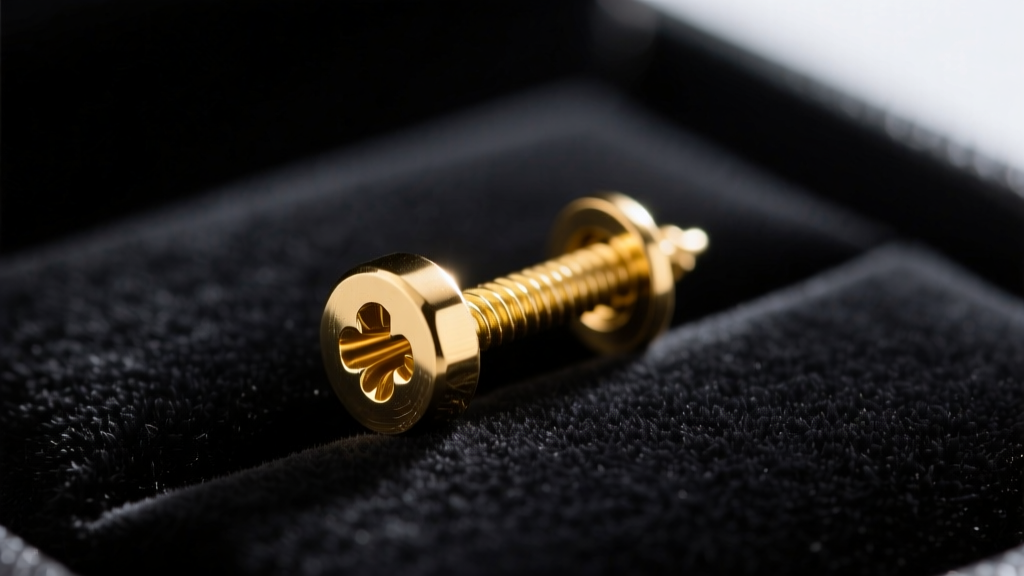
Furthermore, standard butterfly friction backs are notorious for failing under the uneven weight distribution of name plates. Upgrade your hardware to La Pousette backs (which feature a mechanical locking notch) or screw-backs to ensure you never lose your custom piece.
Font Selection and the 'Snag Factor'
While typography is usually a purely aesthetic choice, in jewelry design, it is a functional one. Script fonts with elongated descenders (the tails on lowercase letters like 'y', 'g', 'p', or 'q') look beautiful on screen but act as microscopic hooks in real life.
If your name contains these letters, you have two options: ask the jeweler to 'tuck' or loop the tail back into the letterform, or pivot to a modern block font. Additionally, for short names (3-4 letters), avoid hyper-compressed cursive fonts. The letters will blur together into an illegible metallic smudge from just three feet away. Opt for a slightly spaced, modern calligraphy font to ensure readability.
Pricing Tiers: What to Expect in the Current Market
Understanding pricing helps you identify whether a jeweler is using quality materials or simply dropshipping cheap brass.
- Fast Fashion / Dropshipped ($15 - $35): Brass or copper base with flash plating. High allergy risk, poor structural integrity, and low longevity.
- Boutique / Artisan ($60 - $150): 925 Sterling Silver or high-micron Gold Vermeil. Usually laser-cut and hand-polished. Excellent for trendy, semi-permanent wear.
- Fine Custom Jewelers ($250 - $800+): Solid 14k or 18k gold, precision CNC cut or hand-sawn. Heirloom quality, fully hypoallergenic, and often includes a lifetime polishing warranty.
Care and Maintenance to Prevent Tarnish
Sterling silver and lower-karat gold name plates will oxidize over time, and tarnish loves to hide in the tight, microscopic crevices of cursive lettering. According to the GIA's Silver Quality Factors guide, silver sulfide (tarnish) forms rapidly in humid environments, making proper storage non-negotiable.
To clean the grooves of your name plate, use a soft-bristled baby toothbrush with a drop of mild, phosphate-free dish soap and warm water. Avoid harsh silver dips, as they can strip the rhodium or gold plating from vermeil pieces. When storing, always place your name plates in an airtight anti-tarnish bag with a 3M anti-tarnish strip. Never store multiple name plates loose in the same jewelry box; the friction of the metal edges rubbing together will permanently scratch the polished surfaces.


