What Are Needle Earrings? A Beginner’s Guide to Threaders & Micro Bars
Discover everything about needle earrings, from delicate threaders to micro-bar studs. Learn about gauges, materials, and styling tips.


What Exactly Are Needle Earrings?
If you have been browsing minimalist jewelry collections or curating a sleek ear stack, you have likely encountered the term "needle earrings." As we navigate the refined, ultra-delicate jewelry trends of 2026, needle earrings have cemented themselves as a staple for both piercing enthusiasts and everyday wearers. But what exactly are they? In the jewelry industry, "needle earrings" is a catch-all descriptor for two distinct styles of ultra-thin, linear ear jewelry: threader earrings and micro-bar studs.
Unlike traditional hoops or chunky drop earrings, needle earrings prioritize a sleek, architectural silhouette that mimics the slender profile of a sewing needle or a fine thread. They are designed to offer maximum visual impact with minimal metal, making them the ultimate choice for those who prefer subtle elegance. Whether you are looking for a flexible chain that glides through your fistula or a rigid, microscopic bar that rests flush against the lobe, understanding the mechanics, gauges, and materials of needle earrings is crucial for both comfort and longevity.
Threader Earrings vs. Micro-Bar Studs
While both fall under the "needle" umbrella, their construction and wearability differ vastly:
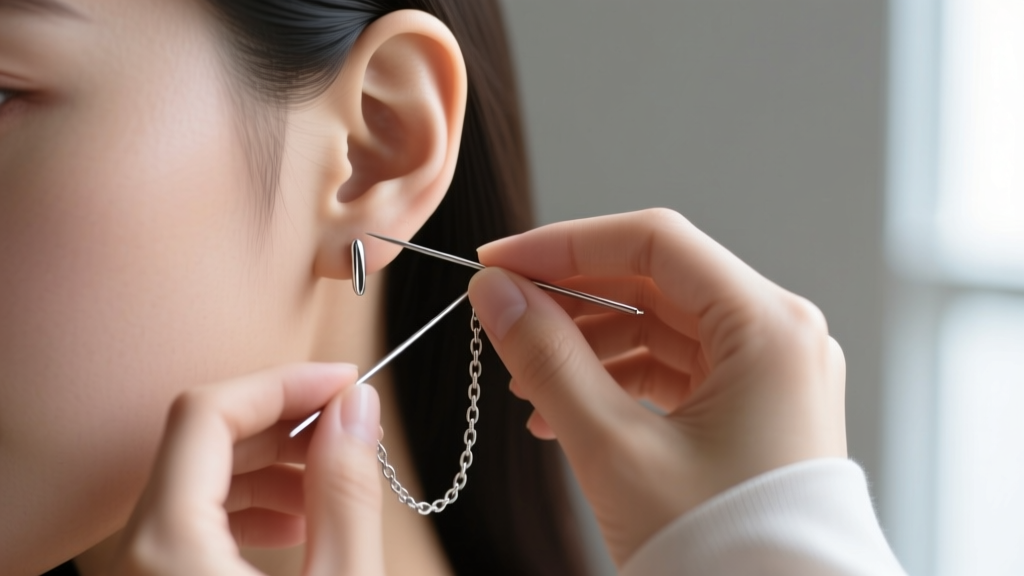
- Threader Earrings: These feature a thin, rigid metal "needle" tip attached to a delicate chain. You insert the needle tip through the piercing and pull the chain through until the desired length is achieved. There is no backing required; the friction of the chain and the weight distribution keep it in place.
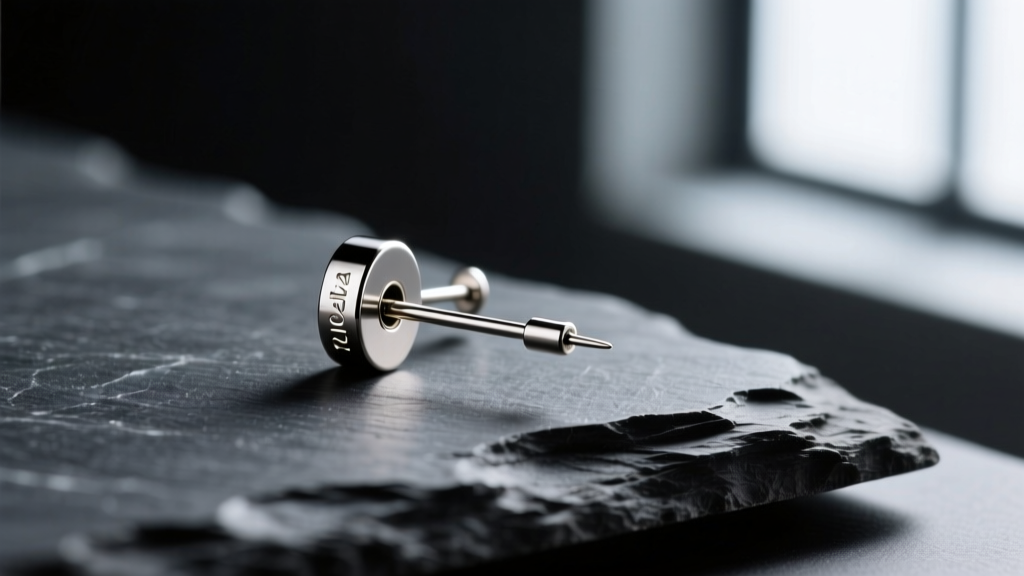
- Micro-Bar Studs: These feature an ultra-thin, straight horizontal or vertical bar (often 1mm to 3mm thick) attached to a standard earring post. They give the illusion of a floating metallic line or a tiny needle resting directly on the skin.
The Anatomy of a Needle Earring: Gauges and Materials
Because needle earrings are exceptionally thin, the choice of metal and the gauge (thickness) of the wire are critical. A standard earlobe piercing is usually 20-gauge (0.81mm) or 18-gauge (1.02mm). However, the delicate nature of needle earrings requires specific engineering.
| Feature | Threader Needle Earrings | Micro-Bar Needle Studs |
|---|---|---|
| Average Wire Gauge | 22G (0.64mm) to 24G (0.51mm) | 18G (1.02mm) to 20G (0.81mm) post |
| Best Material | 14k or 18k Solid Gold | Implant-Grade Titanium (ASTM F136) |
| Average Price Range | $65 - $250+ | $25 - $120 |
| Security Level | Medium (can slip if snagged) | High (secured with friction or screw back) |
| Ideal Piercing Location | Standard Lobes, Upper Lobes | Lobes, Helix, Tragus |
Why Material Grade Matters for Ultra-Thin Jewelry
When dealing with 22G or 24G wire, structural integrity is your biggest concern. Lower-quality metals like sterling silver or brass are prone to "work hardening"—a metallurgical process where the metal becomes brittle and snaps after repeated bending. This is why high-quality threader earrings are almost exclusively crafted from 14k or 18k solid gold. Gold alloys possess a natural malleability that allows them to be drawn into microscopic chains without losing their tensile strength. According to the Gemological Institute of America (GIA), 14k gold offers the perfect balance of purity and durability for fine, flexible jewelry chains.
For micro-bar studs, the post must be rigid and biocompatible. The Association of Professional Piercers (APP) strongly recommends Implant-Grade Titanium (ASTM F136) for any jewelry that sits snugly against the skin or is worn in healing piercings. Titanium is completely nickel-free, hypoallergenic, and possesses a high strength-to-weight ratio, ensuring the thin post will not bend under the pressure of sleeping or wearing headphones.
Step-by-Step: How to Insert Threader Needle Earrings
For beginners, the lack of a traditional earring backing on threaders can be intimidating. The secret lies in letting the jewelry do the work without forcing the delicate chain. Follow this foolproof method to protect both your piercing and your jewelry:
- Prep the Needle: Ensure the rigid metal tip (the "needle") is clean. Wipe it with a sterile alcohol pad to remove any oils or debris.
- Align and Insert: Gently guide the rigid tip into the back of your earlobe piercing. Do not push the chain yet; only push the solid metal tip through the fistula.
- Pull, Don't Push: Once the tip emerges from the front of your earlobe, pinch it gently with your thumb and index finger. Slowly pull the needle tip forward, allowing the fine chain to glide through the piercing channel.
- Balance the Chain: Pull the chain until the decorative end rests near the back of your lobe, leaving an equal or aesthetically pleasing length of chain dangling in the front.
- Secure (Optional): If you are worried about the threader slipping out, you can slide a tiny, clear silicone earring back onto the chain behind the earlobe to act as a stopper.
Flattering Face and Ear Shapes
One of the greatest advantages of needle earrings is their ability to manipulate visual proportions. Because they are essentially geometric lines, they interact with your facial structure in highly specific ways.
For Round and Square Face Shapes
Threader needle earrings are a secret weapon for round or square faces. The vertical drop of the dangling chain creates an optical illusion that elongates the jawline and neck. Opt for threaders that drop between 1.5 to 2.5 inches below the earlobe to maximize this lengthening effect.
For Petite Earlobes
If you have small or shallow earlobes, heavy dangles or thick hoops can cause discomfort and stretch the piercing over time. Micro-bar needle studs are the perfect solution. A 10mm to 15mm horizontal micro-bar provides a modern, edgy aesthetic without adding any downward weight to the lobe, preventing migration or tearing.
Curating Your Ear Stack with Needle Earrings
In the realm of curated ear stacks, needle earrings serve as the ultimate "anchor" or "bridge" piece. Because they are so visually quiet, they prevent an ear stack from looking cluttered.
- The Lobe Anchor: Use a diamond-accented micro-bar in your primary lobe piercing to ground the stack, then build upward with delicate helix cuffs and tragus studs.
- The Upper Lobe Bridge: Threader earrings look exceptionally chic in second or third lobe piercings. The chain can be pulled taut to create a straight horizontal line across the lobe, or left loose to drape elegantly toward the neck.
Care, Cleaning, and Maintenance
The ultra-thin profile of needle earrings requires specialized care to prevent tangling, snapping, and tarnishing.
- Avoid Ultrasonic Cleaners for Threaders: While ultrasonic cleaners are great for solid micro-bars, the high-frequency vibrations can tangle and weaken the microscopic links of a threader chain. Instead, soak threaders in a bowl of warm water with a drop of mild, phosphate-free dish soap, then gently brush with a baby-soft toothbrush.
- Storage is Non-Negotiable: Never toss needle earrings loosely into a jewelry box. Threader chains will instantly knot. Always store them hanging from a dedicated jewelry stand, or lay them completely flat and straight inside a velvet-lined compartment.
- Beware of Snags: The open links of a threader chain can easily catch on knit sweaters, towels, and hair. Always remove threader earrings before washing your hair or changing into tight clothing to prevent the chain from stretching or snapping.
Final Thoughts
Needle earrings represent the pinnacle of modern, minimalist jewelry design. Whether you opt for the fluid, kinetic movement of a gold threader chain or the sharp, architectural precision of a titanium micro-bar, these pieces offer unparalleled versatility. By paying close attention to gauge sizes, investing in biocompatible materials, and practicing proper insertion techniques, you can enjoy the delicate beauty of needle earrings safely and comfortably for years to come.


