The Beginner's Guide to Buying Opal Drop Earrings Gold
Discover how to choose, style, and care for opal drop earrings gold. Learn about opal types, gold karats, and face-shape matching in this beginner guide.

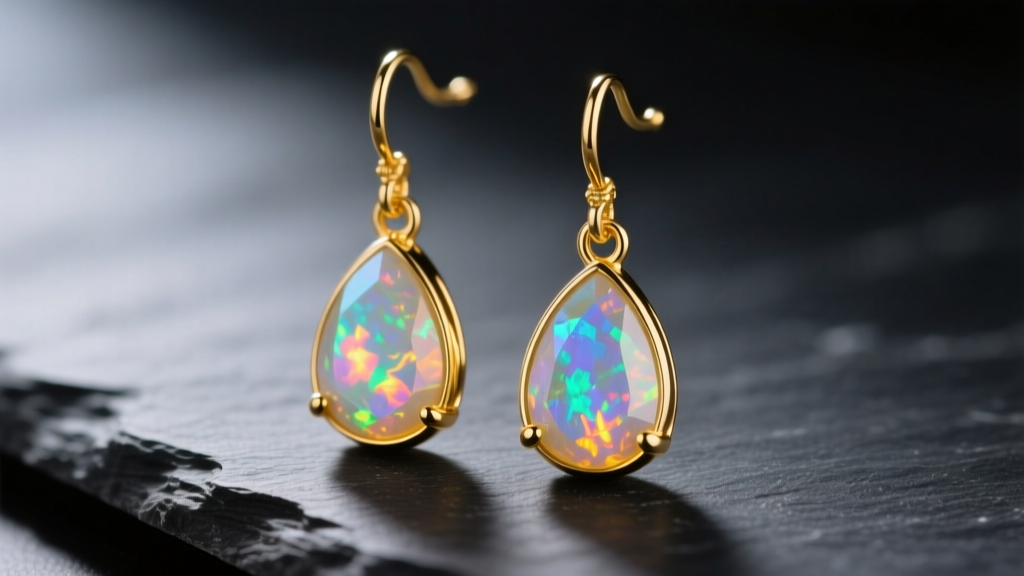
Introduction to Opal Drop Earrings in Gold
Entering the world of fine jewelry can feel overwhelming, especially when navigating the intersection of delicate gemstones and precious metals. When it comes to opal drop earrings gold settings, you are combining two materials that require specific knowledge to ensure longevity and aesthetic brilliance. Opals are renowned for their 'play-of-color'—a mesmerizing optical phenomenon caused by the diffraction of light through microscopic silica spheres. When paired with the warm, reflective properties of gold, the result is a show-stopping piece of ear jewelry.
However, as a beginner, you must understand that opals are not like diamonds or sapphires. They are relatively soft and contain trace amounts of water, making them susceptible to specific types of damage. This comprehensive guide will walk you through the exact material grades, hardware mechanics, and styling frameworks you need to make an informed purchase in 2026.
Decoding the Gemstone: Natural vs. Lab-Created Opals
Before evaluating the gold setting, you must understand the opal itself. According to the Gemological Institute of America (GIA), natural opals rank between 5.5 and 6.5 on the Mohs hardness scale. For context, a steel knife is about 5.5, meaning your opal can be scratched by everyday dust (which contains quartz, a 7 on the Mohs scale). Because drop earrings swing and are prone to bumping into desks, doorframes, and hairbrushes, understanding opal composition is critical.
Solid, Doublet, and Triplet Opals
- Solid Opals: Cut from a single piece of rough stone. They are the most valuable but also the most vulnerable to chipping if struck against a hard surface.
- Opal Doublets: A thin slice of precious opal glued to a dark backing (often ironstone or black glass). The backing enhances the color play and adds structural thickness, making them an excellent, budget-friendly choice for drop earrings.
- Opal Triplets: Similar to doublets, but with an additional clear quartz or glass cap on top. This cap acts as a built-in protective shield, making triplets the most impact-resistant option for active wearers, though they lack the investment value of solid stones.
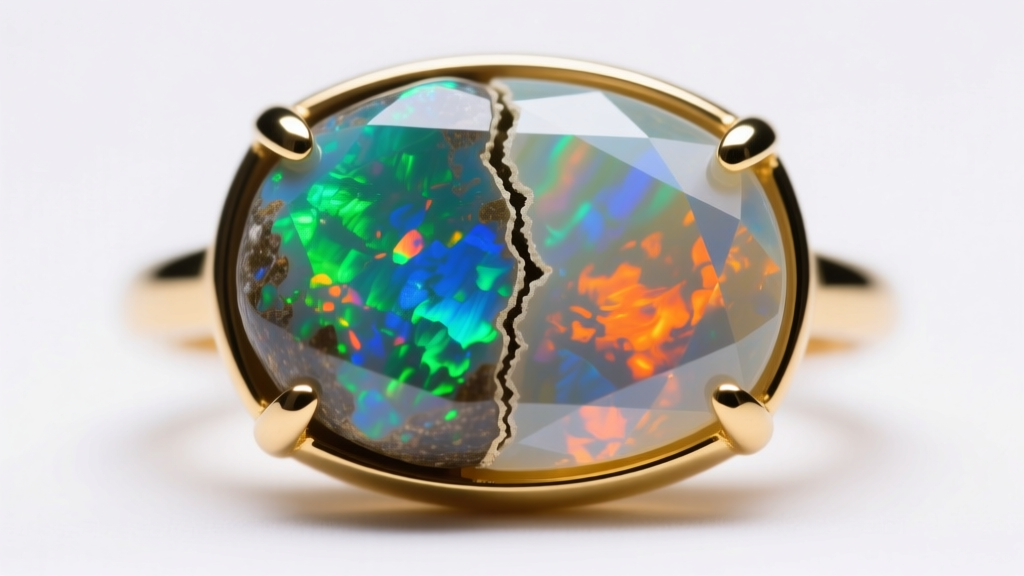
Understanding Gold Settings: Karats and Hardware
The 'gold' in your opal drop earrings gold piece is rarely pure 24-karat gold, which is far too soft to hold a gemstone securely. Jewelers alloy pure gold with metals like copper, silver, and zinc to increase durability. For drop earrings, which exert continuous downward leverage on the earlobe, choosing the right karat and hardware style is essential to prevent tearing and loss.
| Gold Karat | Purity | Durability Profile | Best Setting Style for Opals |
|---|---|---|---|
| 10k Gold | 41.7% | Highly durable, stiff, prone to tarnishing over time. | Prong settings (strong enough to hold prongs tight). |
| 14k Gold | 58.5% | The industry standard. Excellent balance of rich color and structural integrity for earring wires. | Bezel or half-bezel settings to protect opal edges. |
| 18k Gold | 75.0% | Softer, richer yellow hue, but the wire can bend under the weight of heavy stone drops. | Thick bezel settings; requires heavier gauge wires. |
The Mechanics of the Drop: Wires and Gauges
Pay close attention to the earring wire. Standard French wires (fishhooks) are typically 20-gauge (0.81mm) or 22-gauge (0.64mm). While 20-gauge is standard for lobe piercings, a heavy solid opal drop on a thin 22-gauge 18k gold wire will eventually cause the wire to bend or warp. For drops exceeding 1.5 inches in length or weighing more than 3 grams per earring, always opt for leverback closures or secure la pousette (butterfly) friction posts with a drop chain. Leverbacks lock into place, preventing the earring from slipping out when your hair catches on the drop.
Matching Drop Lengths to Face Shapes
Drop earrings are a powerful tool for balancing facial proportions. The American Gem Society (AGS) frequently highlights how the geometry of jewelry interacts with natural bone structure. Here is a practical decision framework for beginners:
- Round Faces: Avoid circular or wide teardrop opals, which emphasize facial width. Instead, choose long, linear, or angular geometric gold drops (e.g., a rectangular gold bar ending in a small opal briolette) to visually elongate the jawline.
- Square Faces: Strong jawlines benefit from softening elements. Curved, elongated teardrop opals set in smooth, polished 14k gold bezels will soften angular features without adding harsh lines.
- Heart-Shaped Faces: With a wider forehead and narrower chin, chandelier-style drops or wider, inverted teardrop opals help add visual weight to the lower half of the face, creating balance.
- Oval Faces: The most versatile shape. You can confidently wear anything from short, punchy opal huggies with a tiny drop to dramatic, shoulder-grazing gold and opal chandeliers.

Practical Care and Maintenance for Beginners
The most common way beginners ruin their opal jewelry is through improper cleaning. Opals contain between 6% and 10% water by weight. If they dry out too quickly or are exposed to sudden temperature changes, they can develop a network of fine cracks known as crazing.
What to Avoid (The Failure Modes)
- Ultrasonic Cleaners: Never put opal drop earrings in an ultrasonic cleaner. The high-frequency vibrations will fracture the silica structure, and the heat from the water bath can cause immediate crazing.
- Steam Cleaners: The sudden blast of hot steam will shock the stone and potentially melt the epoxy resin used in doublet and triplet opals, causing the layers to separate.
- Hairspray and Perfume: Always apply your cosmetics, perfumes, and hairsprays before putting on your earrings. The chemicals in aerosol sprays can dull the polish of the opal and degrade the gold alloy over time.
The Correct Cleaning Protocol
To clean your opal drop earrings gold settings, simply wipe them with a soft, slightly damp microfiber cloth. If the gold setting requires deeper cleaning, use a drop of mild, phosphate-free dish soap in lukewarm (never hot) water, and gently brush the gold with a baby-soft toothbrush, carefully avoiding the opal itself. Dry immediately with a lint-free cloth.
Pro-Tip for Arid Climates: If you live in a very dry environment (like the American Southwest or the Middle East), store your solid opal earrings in a sealed ziplock bag with a slightly damp cotton ball. This maintains the ambient humidity and prevents the opal from losing its internal moisture, safeguarding it against crazing. The Gemmological Association of Great Britain (Gem-A) confirms that stable humidity is key to opal preservation.
2026 Pricing Guide: What to Expect
Understanding the market value prevents you from overpaying for simulated stones or underestimating the cost of solid gems. Here is a realistic pricing framework for 14k gold opal drop earrings in the current market:
- Lab-Created / Simulant Opals ($40 - $120): Often made from silica and resins (like Kyocera's opals). They offer brilliant, consistent color and high durability, making them perfect for everyday, worry-free drop earrings.
- Opal Doublets in 14k Gold ($150 - $450): The sweet spot for beginners. You get the authentic play-of-color of natural precious opal, backed by structural support, set in durable 14k gold.
- Solid Australian Crystal Opals in 18k Gold ($600 - $2,500+): Investment-grade pieces. The price scales exponentially based on the brightness and pattern of the color play (e.g., 'harlequin' patterns command the highest premiums).
- Ethiopian Welo Opals ($200 - $800): Known for their incredible transparency and vivid flashes of color. However, Welo opals are hydrophane (they absorb water like a sponge). They are beautiful but require strict maintenance to avoid losing their color play if exposed to moisture or oils.
Final Thoughts for the First-Time Buyer
Purchasing opal drop earrings gold settings is an exercise in balancing beauty with practicality. By prioritizing 14k gold for structural integrity, opting for bezel settings to protect the opal's vulnerable girdle, and choosing leverback closures for security, you ensure your earrings remain a staple in your wardrobe for decades. Treat your opals with the respect their delicate chemistry demands, and they will reward you with an unmatched, fiery brilliance that no other gemstone can replicate.