The Beginner’s Guide to Choosing Stone Hoop Earrings
Discover how to choose, style, and care for stone hoop earrings. Learn about gemstone settings, metal gauges, and lobe versus cartilage placement.

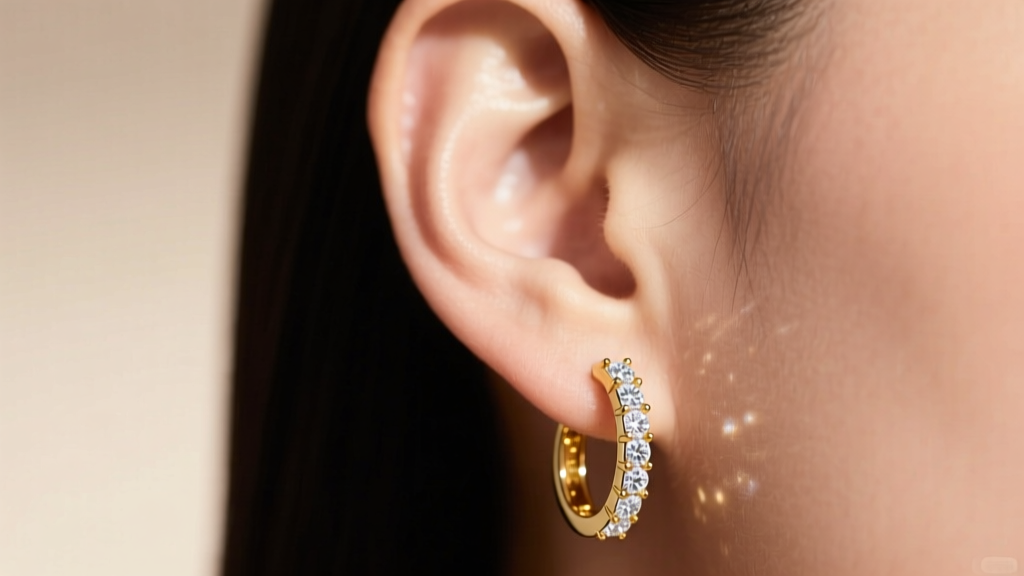
What Are Stone Hoop Earrings?
Stone hoop earrings represent a perfect intersection of classic geometry and brilliant sparkle. Unlike standard metal hoops or simple studs, these earrings incorporate gemstones—ranging from cubic zirconia and moissanite to natural diamonds and semi-precious stones like onyx or turquoise—directly into the circular frame. For beginners, navigating the world of stone-set hoops can feel overwhelming due to the sheer variety of setting styles, metal gauges, and placement options. This guide breaks down the technical specifications you need to know to make an informed, durable, and stylish purchase.
The anatomy of a stone hoop earring consists of three main components: the post or hinge mechanism, the hoop body (which dictates the diameter and thickness), and the stone setting. Understanding how these elements interact is crucial, especially when deciding between standard earlobe wear and more advanced cartilage placements like the helix or tragus.
Decoding Gemstone Settings: Which is Best for Beginners?
The way a gemstone is secured to the metal hoop drastically affects the earring's durability, snag risk, and overall aesthetic. Beginners often prioritize sparkle over security, which can lead to lost stones and frustration. Here is a breakdown of the three most common setting styles used in stone hoop earrings.
| Setting Type | Security Level | Snag Risk | Best For |
|---|---|---|---|
| Pavé | Low to Medium | High | Special occasions, maximum sparkle |
| Channel | High | Low | Everyday wear, active lifestyles |
| Bezel | Very High | None | Cartilage piercings, sleep-friendly hoops |
Pavé Settings: Small stones are held in place by tiny metal prongs or beads. While this offers maximum light exposure and brilliance, the micro-prongs are highly susceptible to catching on hair and clothing. Over time, metal fatigue can cause prongs to lift, resulting in lost stones.
Channel Settings: Gemstones are set into a grooved channel with metal walls on both sides. This is the gold standard for beginners seeking a balance of sparkle and security. The smooth metal edges prevent snagging, making channel-set stone hoop earrings ideal for daily wear.
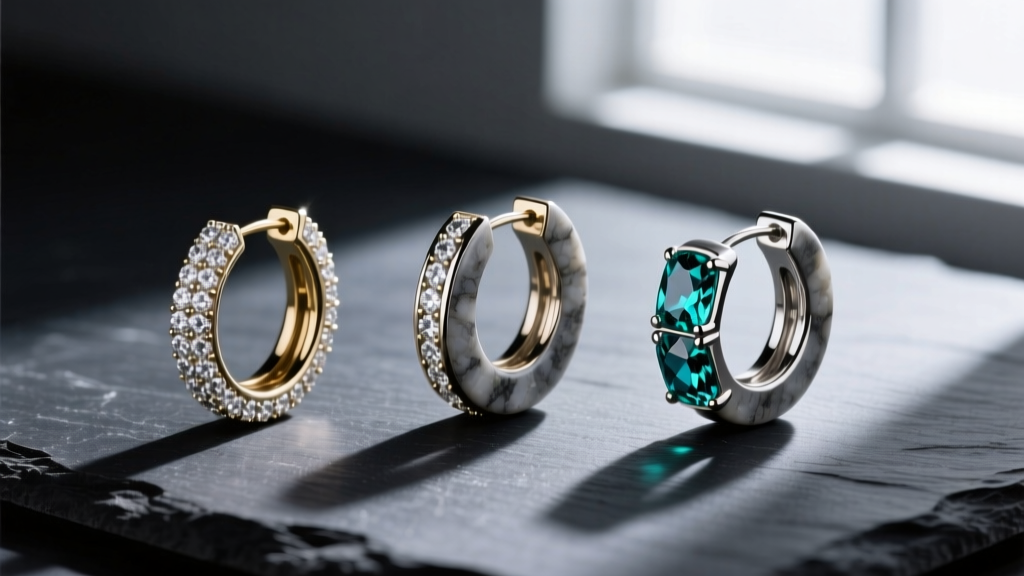
Bezel Settings: A single rim of metal completely encircles the gemstone. Bezel settings offer the highest level of protection and a sleek, modern aesthetic. They are highly recommended for cartilage placements where hair snagging is a primary concern.
Sizing and Gauge: Lobe vs. Cartilage Placement
One of the most common beginner mistakes is purchasing a hoop with the wrong gauge (thickness) or diameter for their specific piercing. The gauge of the earring wire must match the size of your healed fistula to prevent irritation, migration, or tearing.
- 20-Gauge (0.81mm): The standard for basic earlobe piercings. Most lightweight, fashion-tier stone hoop earrings use this thin wire. Avoid 20g for cartilage, as the thin wire can act like a cheese wire and migrate through the tissue.
- 18-Gauge (1.02mm): A versatile middle ground. Excellent for standard lobes and some healed secondary lobe piercings.
- 16-Gauge (1.29mm): The standard for cartilage piercings (helix, forward helix, tragus). If you are buying stone hoop earrings for your upper ear, 16g is the safest and most stable choice.
- 14-Gauge (1.63mm): Used for thicker cartilage or industrial placements. Finding stone-set hoops in 14g is rare outside of custom or high-end body jewelry brands.
According to the Association of Professional Piercers (APP), wearing jewelry that is too thin for a cartilage piercing can cause the 'cheese-cutter effect,' where the weight of the jewelry slowly slices through the tissue. Always verify your piercing gauge before purchasing hoops for upper-ear placements.
Diameter Matters: For lobes, a 15mm to 20mm inner diameter provides a classic, comfortable fit. For huggies (which hug the earlobe tightly), look for 10mm to 12mm. For cartilage, a smaller 8mm to 10mm inner diameter is usually required to prevent the hoop from catching on hairbrushes and headphones.
Material Grades and Stone Durability
The longevity of your stone hoop earrings depends heavily on both the metal alloy and the Mohs hardness scale rating of the gemstone. According to the Gemological Institute of America (GIA), the Mohs scale measures a mineral's resistance to scratching, which directly correlates to how well a stone will survive daily wear in a hoop setting.
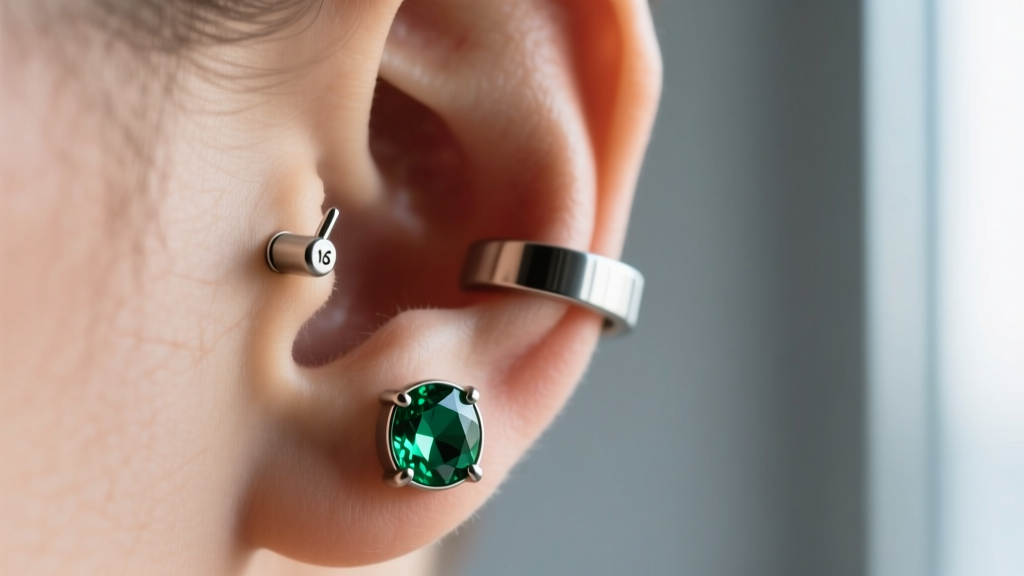
Gemstone Hardness:
- Cubic Zirconia (8.0 - 8.5): Affordable and brilliant, but prone to clouding and scratching over years of daily wear.
- White Sapphire (9.0): An excellent, durable alternative to diamonds. Highly resistant to scratching, making it perfect for channel-set hoops.
- Diamond (10.0): The hardest natural material. Ideal for pavé settings where stones are placed closely together and might scratch one another.
- Opal and Turquoise (5.0 - 6.0): Very soft and porous. Avoid these in hoop earrings meant for daily wear, as they will easily chip or crack against hard surfaces.
Metal Recommendations: For sensitive ears or fresh piercings, always opt for Implant-Grade Titanium (ASTM F136) or solid 14k/18k gold. Avoid gold-plated brass or nickel alloys, as the friction of a hoop moving through the piercing can quickly wear away the plating, exposing the skin to irritants.
Common Beginner Mistakes and How to Avoid Them
Even with the right gauge and setting, poor structural design can ruin a pair of stone hoop earrings. Watch out for these specific failure modes:
- Hollow Tubing: Many budget-friendly stone hoops are made from hollow metal tubes to save on gold weight. The problem? Hollow tubes dent easily. When the metal bends, the rigid gemstones do not, causing them to pop out of their settings. Always look for 'solid' or 'semi-solid' cast hoops.
- Heavy Stones on Thin Lobes: A large, 30mm hoop heavily encrusted with thick gemstones can weigh down and stretch delicate earlobes over time. If you want a large diameter, choose lightweight stones like CZ or opt for a half-pave design where stones only cover the bottom half of the hoop.
- Sleeping in Hoops: The pressure of a pillow against a hoop earring can bend the post, warp the circular shape, and loosen prongs. Always remove your stone hoops before bed, or switch to specifically designed 'sleep-safe' continuous titanium rings.
Price Tiers: What Should You Expect to Spend?
Understanding the market pricing for stone hoop earrings will help you identify quality and avoid overpaying for inferior materials.
- Fashion Tier ($20 - $60): Typically features sterling silver or brass with gold plating and cubic zirconia. Expect pavé settings with higher snag risks. Great for occasional wear, but expect plating to fade within 6 to 12 months of daily use.
- Demi-Fine Tier ($80 - $250): The sweet spot for beginners. Features solid 14k gold or heavy gold vermeil with high-quality CZ, moissanite, or lab-grown sapphires. Channel and bezel settings are common here, offering excellent durability for everyday wear.
- Fine Jewelry Tier ($500+): Crafted in solid 18k gold or platinum featuring natural or high-grade lab-grown diamonds. These pieces utilize precision micro-pavé or secure bezel settings and are designed to last generations with proper care.
By prioritizing secure settings, correct gauge sizing, and durable materials, you can confidently build a collection of stone hoop earrings that offer both timeless elegance and everyday reliability.


