Smoky Topaz Earrings: A Beginner's Guide to Buying & Styling
Discover everything you need to know about smoky topaz earrings. Learn about gemstone grades, metal pairings, and how to style them for any occasion.

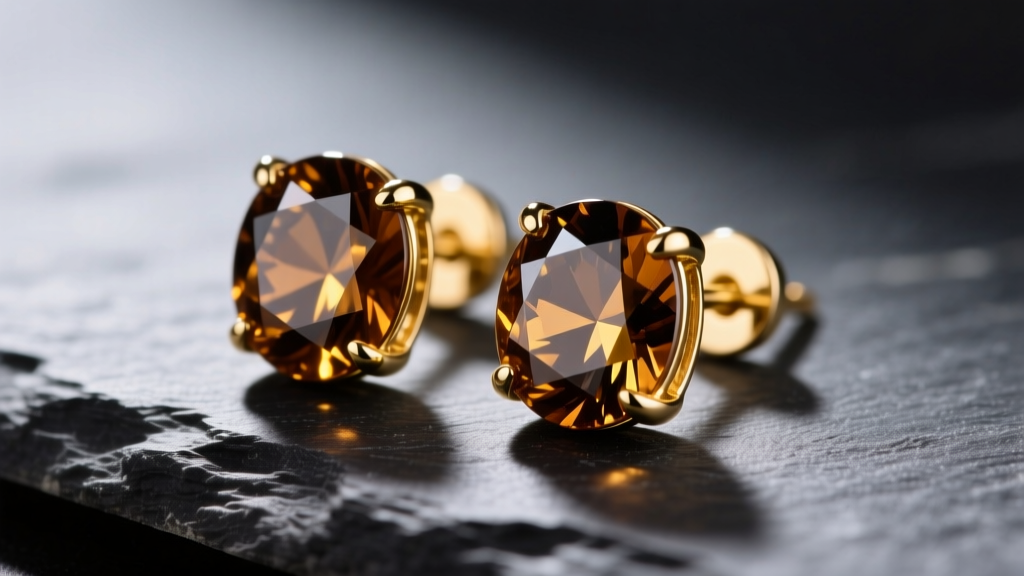
Smoky topaz earrings offer a sophisticated, earthy elegance that bridges the gap between everyday wear and formal evening styling. With their rich, translucent brown hues, these gemstones capture the light beautifully, providing a warm alternative to traditional clear diamonds or stark black onyx. However, stepping into the world of colored gemstones can be daunting for beginners. The market is flooded with confusing terminology, varying price points, and critical durability factors that every smart buyer must understand before making a purchase.
In this comprehensive beginner’s guide, we will decode the gemological realities of smoky topaz, explore the best metal pairings, and provide actionable advice on how to select, style, and care for your earrings to ensure they last a lifetime.
The Great Misnomer: Are You Buying Topaz or Quartz?
The most critical piece of information any beginner must learn is that the term "smoky topaz" is frequently a trade misnomer. According to the Federal Trade Commission (FTC) Jewelry Guides, it is considered deceptive to use the word "topaz" to describe any form of quartz. True smoky coloration is a hallmark of smoky quartz, not topaz.
Genuine topaz does occur in brown hues—often referred to in the trade as "chocolate topaz" or "precious brown topaz"—but it is geologically distinct from quartz. When shopping for smoky topaz earrings, you are often looking at one of two stones:
- Genuine Brown Topaz: An aluminum silicate mineral that is highly prized, denser, and harder.
- Smoky Quartz (Mislabeled): A silicon dioxide mineral that is much more abundant, lighter, and significantly less expensive.
As noted by the Gemological Institute of America (GIA), topaz and quartz can look identical to the untrained eye when faceted into small earring studs. However, their physical properties dictate vastly different care routines and price points.
Gemological Showdown: Topaz vs. Quartz
To ensure you are paying a fair price, you must understand the physical differences between genuine brown topaz and the smoky quartz that is often sold under the "smoky topaz" moniker. Below is a data-driven comparison to help you evaluate potential purchases.
| Feature | Genuine Brown Topaz | Smoky Quartz (Often Mislabeled) |
|---|---|---|
| Mohs Hardness | 8 (Highly scratch-resistant) | 7 (Prone to micro-scratches over time) |
| Specific Gravity (Weight) | 3.49 - 3.57 (Noticeably heavy) | 2.65 (Lighter in the hand) |
| Cleavage | Perfect Basal (Can split if struck) | None (Chips or fractures irregularly) |
| Refractive Index | 1.61 - 1.64 (High brilliance) | 1.54 - 1.55 (Moderate brilliance) |
| Avg. Price Range (Stud Earrings) | $80 - $300+ | $20 - $60 |
Pro Tip: If a pair of "smoky topaz" stud earrings is priced under $40 and set in sterling silver, you are almost certainly looking at smoky quartz. Genuine brown topaz commands a premium due to its rarity and superior light return.
Choosing the Right Metal and Setting
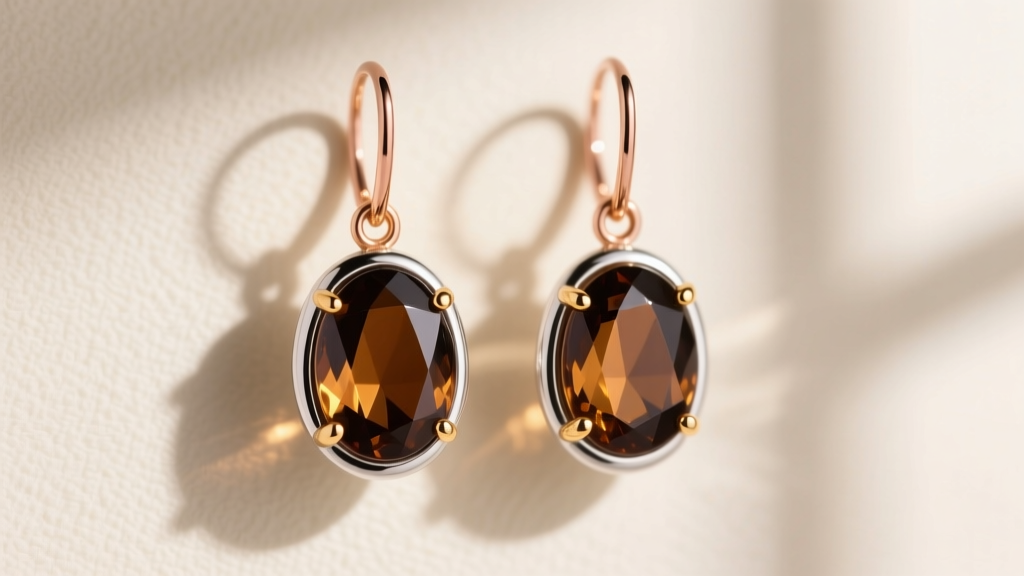
The warm, earthy tones of brown and smoky gemstones interact differently with various metal alloys. Selecting the right metal is just as important as selecting the stone itself.
Best Metal Pairings
- 14k or 18k Yellow Gold: This is the ultimate pairing for brown topaz. The warm undertones of the gold amplify the honey and chocolate hues within the stone, creating a cohesive, vintage-inspired look.
- Rose Gold: Enhances the reddish-brown secondary flashes often found in deeper brown topaz stones. It provides a romantic, modern aesthetic.
- White Gold / Platinum: Creates a high-contrast, striking look. The cool, silvery metal forces the brown gemstone to pop, making it ideal for contemporary or minimalist jewelry designs.
The Cleavage Factor: Why Setting Matters
As mentioned in the GIA's mineral guides, genuine topaz possesses perfect basal cleavage. This means that if the stone is struck hard along a specific crystallographic plane, it can split cleanly in half. Because dangle and drop earrings are prone to swinging and bumping against surfaces, the setting is crucial.
Expert Advice: Avoid tension settings or minimal two-prong settings for smoky topaz drop earrings. Opt for bezel settings (where a metal rim completely encircles the stone) or V-prong settings that protect the vulnerable corners and edges of the gemstone from direct impact.
Sizing, Gauges, and Face Shape Styling
When buying earrings, the physical dimensions of the jewelry must align with both your piercing anatomy and your facial structure.
Understanding Post Gauges
For standard lobe piercings, the industry standard is 20-gauge (0.81mm) or 18-gauge (1.0mm). If you are purchasing smoky topaz huggies or studs for a cartilage piercing (like a helix or tragus), you will likely need a thicker 16-gauge (1.2mm) post. Always verify the gauge thickness with the jeweler before purchasing, as wearing a 20G earring in a 16G cartilage hole can cause irritation and migration.
Matching Earring Styles to Face Shapes
- Round Faces: Elongate your features with long, linear smoky topaz drop earrings. Avoid large, round studs, which will only emphasize the circular geometry of your face.
- Oval Faces: You have the most versatile face shape. Classic oval or cushion-cut smoky topaz studs will sit perfectly on the lobe without overwhelming your natural proportions.
- Square Faces: Soften a strong jawline with curved silhouettes. Smoky topaz hoops or teardrop-shaped dangles introduce gentle curves that balance angular features.
- Heart-Shaped Faces: Look for chandelier earrings or dangles that are wider at the bottom than the top. This adds visual weight to the lower half of your face, balancing a narrower chin.
Care, Maintenance, and Failure Modes
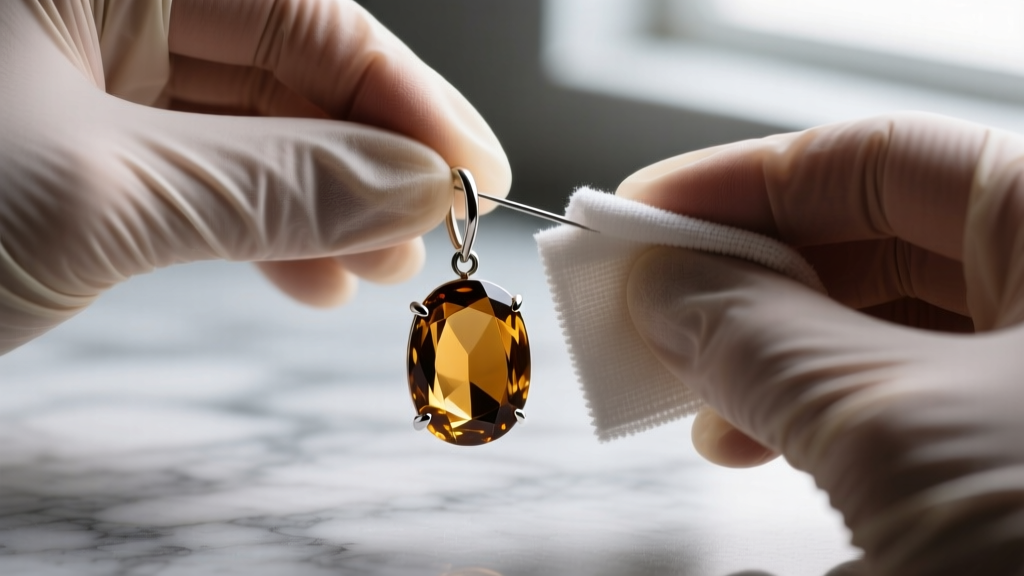
Proper maintenance is where many beginners fail, leading to damaged stones and dull settings. Because of topaz's unique physical properties, standard jewelry cleaning methods can be disastrous.
What to Avoid (The Failure Modes)
- Ultrasonic Cleaners: Never put genuine topaz in an ultrasonic cleaner. The high-frequency vibrations can easily exploit the stone's perfect cleavage, causing internal fractures or completely splitting the gem.
- Steam Cleaning: Sudden temperature changes (thermal shock) can also cause topaz to fracture. Avoid steamers and boiling water.
- Harsh Chemicals: Chlorine and bleach can degrade the metal alloys (especially sterling silver and lower-karat golds) and dull the polish of the gemstone.
The Correct Cleaning Protocol
To safely clean your smoky topaz earrings at home, follow this simple, foolproof method:
- Mix a few drops of mild, phosphate-free dish soap into a bowl of lukewarm water.
- Soak the earrings for 3 to 5 minutes to loosen oils and cosmetics.
- Gently scrub the back of the stone and the setting with a baby-soft toothbrush. Do not press hard on the facets.
- Rinse under a gentle stream of lukewarm water (ensure the drain is plugged!).
- Pat dry with a lint-free microfiber cloth. Avoid air-drying, as water spots can ruin the brilliance of the stone.
Final Thoughts for the First-Time Buyer
Purchasing smoky topaz earrings is an exercise in informed decision-making. By understanding the difference between genuine brown topaz and smoky quartz, you can accurately assess pricing and demand the correct gemological disclosures from your jeweler. Prioritize protective settings like bezels to guard against topaz's basal cleavage, and always pair your stones with metals that complement their warm, earthy undertones. Armed with this knowledge, you can confidently build a jewelry collection that is as durable as it is breathtaking.


