The True Cost of DIY Clay Earrings: 2026 Value Guide
Is making your own jewelry actually cheaper? We break down the real costs, material grades, and hidden expenses of crafting DIY clay earrings in 2026.

The Allure of DIY Clay Earrings: Hobby vs. Hustle
The explosion of polymer clay jewelry on platforms like Etsy and TikTok has positioned diy clay earrings as the ultimate low-barrier entry into jewelry making and micro-business ownership. Visually, they are stunning. Financially, they are often misunderstood. Many crafters assume that because a block of clay costs under five dollars, the profit margins on a finished pair of $25 dangle earrings are astronomical. However, a true budget and value assessment requires looking past the raw clay and examining the hidden costs of structural hardware, sealing agents, specialized tooling, and most importantly, time.
In this comprehensive 2026 value guide, we will deconstruct the actual cost-per-pair of handmade polymer clay earrings, evaluate the material grades that dictate longevity, and determine whether DIY clay earrings are a genuine budget hack for your personal wardrobe or a viable, profitable hustle.
Material Breakdown: Polymer Clay Grades and Costs
Not all polymer clay is created equal. Polymer clay is essentially a PVC (polyvinyl chloride) base mixed with plasticizers and pigments. The ratio of these plasticizers determines the clay's flexibility, brittleness, and final weight—three factors that directly impact the value and wearability of an earring. Heavy or brittle clay leads to stretched earlobes and snapped dangles, destroying the perceived value of your jewelry.
Comparing the Big Three Brands
- Sculpey Soufflé: The undisputed champion for earrings. It bakes to a velvety, matte finish and is exceptionally lightweight due to its unique formulation. At roughly $3.89 per ounce (2026 pricing), it is a premium material, but it eliminates the need for heavy sanding and sealing.
- Sculpey Premo: A highly durable, flexible clay that excels at intricate cane work and color blending. It costs around $2.89 per ounce. While cheaper, it bakes to a semi-gloss finish that often requires sanding and sealing to achieve the trendy matte look.
- Cernit Number One: A European brand favored for its translucent properties and porcelain-like finish. Priced at $3.50 per ounce, it is slightly more temperamental to condition but offers unparalleled durability for thin, delicate arches.
According to the official Sculpey baking guidelines, under-baking any of these clays will cause the plasticizers to remain un-fused, leading to catastrophic snapping at the jump-ring hole. A dedicated oven thermometer is a non-negotiable $10 investment to protect your material yield.
| Clay Brand | Cost per Oz (2026) | Baked Weight | Best Earring Application | Value Verdict |
|---|---|---|---|---|
| Sculpey Soufflé | $3.89 | Ultra-Light | Large statement dangles, geometric studs | Highest ROI for wearability |
| Premo | $2.89 | Medium | Mica shift techniques, small huggies | Best for complex colorwork |
| Cernit | $3.50 | Medium-Heavy | Faux porcelain, thin delicate cutouts | High durability, steep learning curve |
The Hidden Hardware Costs: Posts, Backs, and Adhesives
The most common failure mode in DIY clay earrings is not the clay breaking; it is the metal post detaching from the clay back. When assessing the budget of your materials, skimping on hardware is a false economy that results in ruined products and lost customers.
Metal Grades and Gauge Sizes
For standard lobe piercings, 20-gauge or 22-gauge posts are the industry standard. If you are designing clay ear cuffs or cartilage huggies, you will need 18-gauge or 16-gauge wire. The metal composition is where your budget and ethical value intersect.
- Brass with Gold Plating: The cheapest option ($0.15 per pair). However, the plating will eventually wear off, exposing the brass and causing skin discoloration or allergic reactions. Low long-term value.
- Surgical Stainless Steel (316L): A mid-tier option ($0.30 per pair). Hypoallergenic for most, but contains trace amounts of nickel that can trigger severe contact dermatitis in highly sensitive wearers.
- Implant-Grade Titanium (ASTM F-136): The gold standard for jewelry hardware, costing roughly $0.65 to $0.90 per pair. Sourcing from reputable jewelers like Rio Grande ensures you are getting genuine, nickel-free titanium that guarantees zero allergic reactions, instantly elevating your earrings to a premium, high-value tier.
The Adhesive Dilemma: E6000 vs. UV Resin
Many beginners use E6000 industrial adhesive to glue flat-pad posts to baked clay. While cheap, E6000 is notorious for peeling off smooth polymer clay surfaces over time due to temperature fluctuations and the natural oils from human skin. To make E6000 work, you must aggressively sand both the clay surface and the metal pad, adding labor time.
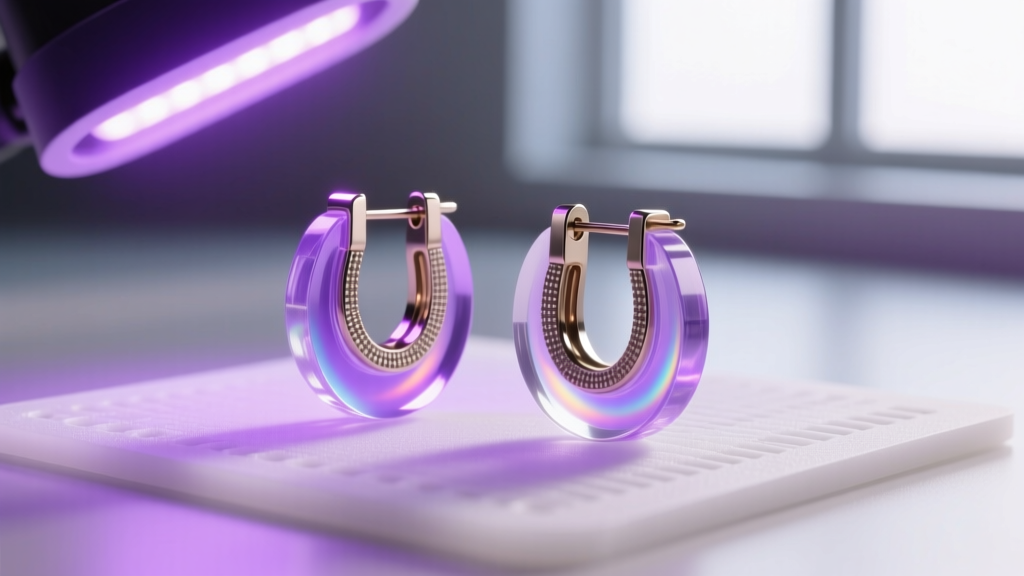
The superior, high-value alternative is UV Resin Another pervasive myth in the polymer clay community is the necessity of sealing every single pair of earrings. As noted by polymer clay experts at The Blue Bottle Tree, polymer clay is a solid plastic once baked. It is inherently waterproof and does not require a sealant unless you have applied surface treatments like mica powders, chalk pastels, or alcohol inks. If your design relies on surface powders, you must seal the clay to prevent the pigments from rubbing off onto the wearer's skin or clothing. Here is where the budget assessment gets tricky: To truly assess the value of DIY clay earrings, you must calculate your effective hourly wage if you intend to sell them, or your cost-per-wear if you are making them for your personal collection. Let's break down the exact timeline for a standard pair of marbled arch dangles: Total Active Labor Time: 55 minutes per pair. From a purely financial standpoint, making diy clay earrings for your own personal wardrobe is not cheaper than buying mass-produced acrylic or stamped metal earrings from fast-fashion retailers. The initial tooling investment (pasta machine, dedicated toaster oven, tissue blades, sanding sponges, and UV lamp) easily exceeds $150 before you even make your first wearable pair. However, if we assess value rather than just budget, the equation flips entirely. Mass-produced earrings are often heavy, cause allergic reactions, and feature identical designs worn by thousands. By investing in high-grade polymer clay and implant-grade titanium hardware, you are creating bespoke, ultra-lightweight, hypoallergenic art pieces. For artisans willing to master the sanding and finishing processes, the profit margins remain highly lucrative in the 2026 handmade market, provided you price your work to reflect the skilled labor involved, rather than competing in a race to the bottom on material costs.Tooling, Sealing, and the Budget Bleed
When Sealing is Mandatory
Time-to-Value Ratio: Calculating Your Hourly Yield
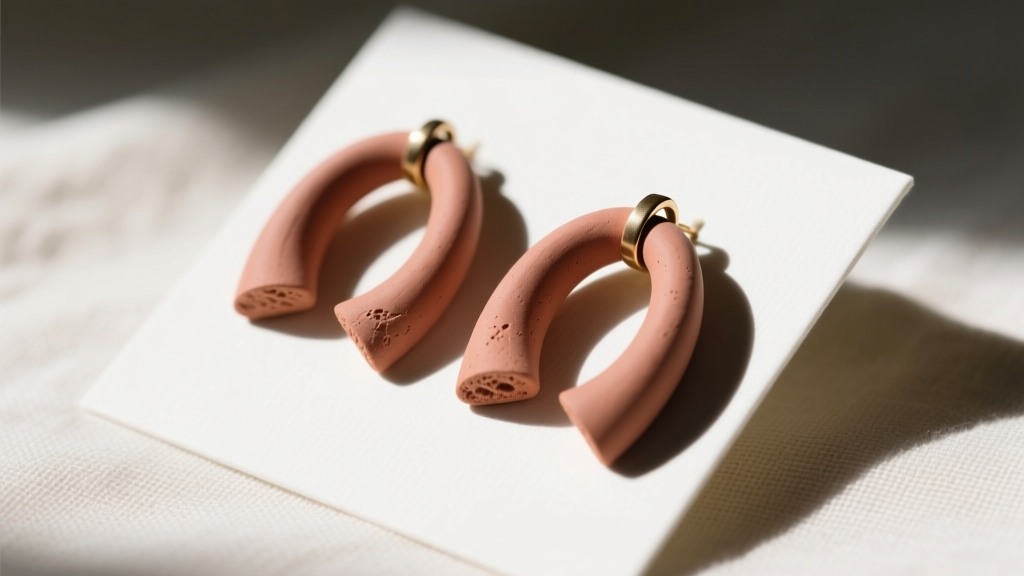
If you sell a pair of handmade polymer clay earrings for $28, and your material cost (clay, titanium post, resin, jump rings, packaging) is $4.50, your gross profit is $23.50. Divided by 55 minutes of active labor, your hourly wage is roughly $25.63. While this is a respectable side-hustle margin, it highlights that the true expense of DIY clay earrings is not the clay—it is the skilled labor required to finish them properly.
Final Verdict: Are DIY Clay Earrings Worth the Investment?


