Gold Wing Earrings: A Material & Karat Comparison Guide
Discover the best metals for gold wing earrings. Compare 14k, 18k, vermeil, and gold-filled options for durability, weight, and detailing.

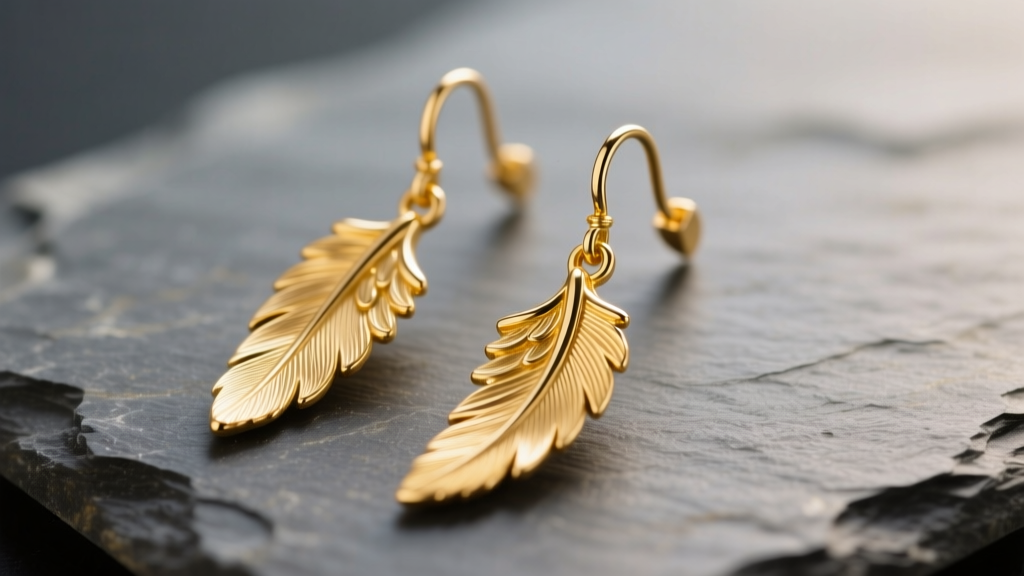
Wing motifs—ranging from delicate angel feathers and mythological Pegasus wings to edgy bat and dragon silhouettes—are a perennial favorite in jewelry design. However, when shopping for gold wing earrings, the aesthetic appeal of the design is only half the equation. The structural integrity, weight, and longevity of these intricate pieces are entirely dictated by the metal composition and karat purity used in their creation.
Because wing designs often feature ultra-thin edges, protruding barbs, and complex 3D casting, choosing the wrong gold alloy can lead to bent feathers, snapped posts, or rapid wear. In this comprehensive material guide, we break down the metallurgical properties of solid gold, gold-filled, and vermeil options to help you select the perfect pair of wing earrings for your lifestyle and piercing needs.
The Anatomy of Wing Earrings: Why Metal Purity Matters
The manufacturing process for most 3D wing earrings involves lost-wax casting, where molten metal is injected into a mold to capture microscopic feather textures. Flat, 2D wing silhouettes are typically die-struck or stamped. Both methods require a metal with specific tensile strength and a suitable Vickers hardness (HV) rating.
Pure 24-karat gold has a Vickers hardness of roughly 25 HV, making it as soft as a fingernail. While ideal for simple, thick bands, 24k gold is entirely unsuitable for the thin, protruding tips of a feather wing earring. The metal must be alloyed with copper, silver, zinc, or palladium to increase its durability and allow for crisp, sharp casting details that won't deform during everyday wear.
Solid Gold Karats Compared for Intricate Motifs
When investing in fine jewelry, understanding the karat system is essential. The Gemological Institute of America (GIA) defines karatage as the proportion of pure gold in the alloy, which directly impacts both the color and the structural resilience of the earring.
10k and 14k Gold: The Durability Standard
14k gold (58.5% pure gold) is the undisputed champion for intricate wing dangles and ear cuffs. With a Vickers hardness ranging between 120 and 140 HV, 14k gold provides the necessary rigidity to maintain the sharp lines of individual feather barbs. It is highly resistant to scratching and bending, making it the optimal choice for larger, heavier wing drops that experience more kinetic movement. 10k gold (41.7% pure gold) is even harder but possesses a noticeably paler yellow hue and a higher risk of causing contact dermatitis due to its higher alloy content.
18k Gold: The Luxury Balance
18k gold (75% pure gold) offers a richer, deeper yellow color that beautifully mimics the warmth of vintage and antique wing jewelry. However, its hardness drops to roughly 90-110 HV. While perfectly suitable for small wing studs or huggies that sit flush against the earlobe, 18k gold is more prone to micro-bending on long, dangling feather tips. If you choose 18k for a dangle, ensure the design features a thicker central 'spine' to support the softer outer edges.
22k and 24k Gold: Why to Avoid for Wings
As mentioned, high-karat golds are too malleable for complex motifs. A 22k gold wing earring will quickly lose its textured detailing as the soft metal rubs against hair and clothing. Furthermore, the heavy density of pure gold makes large wing designs uncomfortably heavy, risking lobe stretching over time.
Gold Alternatives: Vermeil, Filled, and Plated
For those seeking the look of gold wing earrings without the solid gold price tag, alternatives exist. However, the Federal Trade Commission (FTC) Jewelry Guides strictly regulate how these terms can be used, and understanding the difference is crucial for avoiding premature tarnishing and flaking.
| Material Type | Base Metal | Gold Layer Thickness | Lifespan & Durability | Avg. Price Range |
|---|---|---|---|---|
| Solid 14k Gold | None (Alloyed) | 100% Gold Alloy | Lifetime; can be polished and repaired | $150 - $600+ |
| Gold-Filled | Jeweler's Brass | Min. 5% of total weight (1/20th rule) | 5-10 years with daily wear; highly durable | $45 - $120 |
| Gold Vermeil | Sterling Silver | Min. 2.5 microns (must be 10k+ gold) | 1-3 years; prone to wear on high-friction edges | $60 - $180 |
| Gold Plated | Brass or Copper | Less than 0.5 microns | Months; flakes quickly on textured casts | $15 - $40 |
Pro Tip: Wing earrings have high-friction areas, particularly the tips of the feathers and the curves of the wing joints. Gold-plated earrings will quickly reveal the base metal in these crevices. Always opt for Gold-Filled or Vermeil if solid gold is out of budget, as the thicker gold layers will better survive the friction of daily wear.
Weight, Gauge, and Backing Mechanics
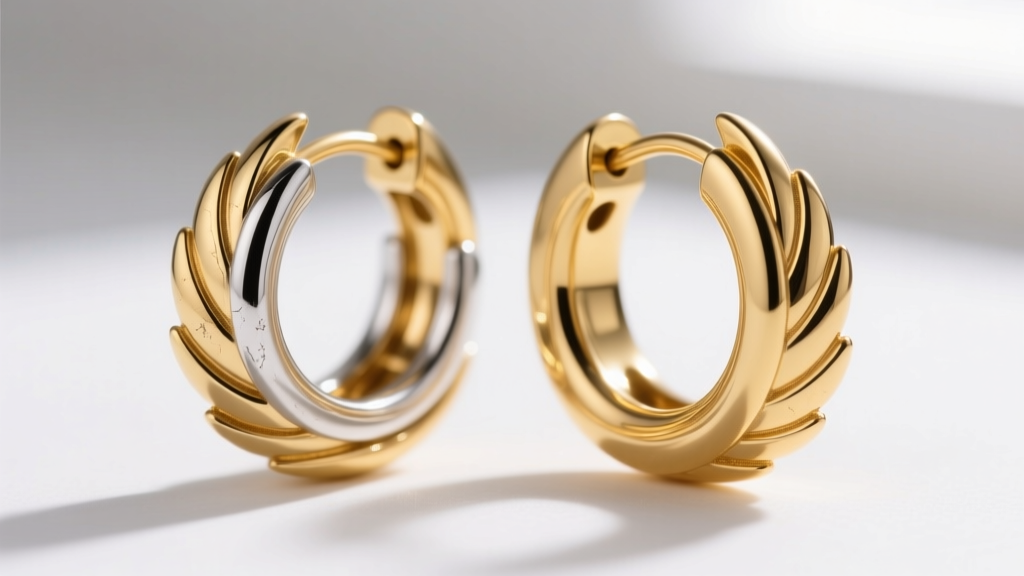
Wing earrings are aerodynamic in shape but can be surprisingly dense in metal. A standard 40mm 14k gold feather dangle can weigh between 4 to 6 grams per earring. This weight distribution creates a pendulum effect that puts immense stress on the ear piercing.
- Post Gauge: Avoid standard 20-gauge (0.81mm) posts for heavy wing dangles; they will easily bend under the leverage of the wing's weight. Look for 18-gauge (1.02mm) or 16-gauge (1.29mm) posts, which provide the necessary structural support.
- Backing Types: Standard friction backs (butterfly backs) are insufficient for heavy wings. The weight will cause the earring to droop, stretching the piercing downward. Instead, seek out wing earrings featuring omega backs, leverbacks, or locking la pousette backs, which distribute the weight across a broader surface area of the earlobe.
- Cartilage Considerations: If wearing wing ear cuffs or helix studs, ensure the post is no longer than 6mm to 8mm to prevent snagging on hair, which can tear delicate cartilage piercings.
Allergies and Alloy Compositions in White Gold Wings
While yellow and rose gold wings are alloyed primarily with copper, silver, and zinc, white gold presents a unique challenge. Traditional white gold is alloyed with nickel to achieve its silvery color. Because wing earrings feature intricate textures that trap sweat and skin oils, nickel-sensitive wearers may experience severe contact dermatitis.
Furthermore, white gold is typically plated with rhodium to enhance its brightness. On a textured wing earring, the rhodium plating will wear off the raised feather barbs much faster than on a smooth surface, leading to a patchy, yellowish-grey appearance. If you prefer silver-toned wings, opt for palladium white gold (which is nickel-free and does not require rhodium plating) or platinum, which offers superior durability and a naturally white, hypoallergenic finish.
Care and Maintenance for Textured Gold Wings
The deep crevices and overlapping layers of a cast wing earring make them magnets for lotions, hairspray, and environmental dust. Improper cleaning can ruin the delicate finish.
Expert Warning: Avoid using ultrasonic jewelry cleaners on gold-plated or gold vermeil wing earrings. The high-frequency vibrations can cause the layered gold to delaminate and flake off the base metal, especially along the thin, fragile edges of the wing tips.
For solid gold wing earrings, the safest cleaning method involves soaking the pieces in a bowl of warm water with a few drops of mild, phosphate-free dish soap for 10 minutes. Use an extra-soft baby toothbrush to gently sweep out the debris trapped between the feather barbs. Never use abrasive polishing cloths on textured areas, as they will smooth out the sharp, intentional casting lines that give the wing its realistic appearance.
Final Thoughts on Selecting Your Wings
Whether you are drawn to the celestial symbolism of angel wings or the fierce aesthetic of dragon scales, the material you choose will define the lifespan of your jewelry. For heirloom-quality pieces that capture every microscopic detail of the plumage, 14k solid gold remains the gold standard. By paying close attention to karat purity, gauge thickness, and alloy composition, you can ensure your gold wing earrings remain a striking, durable staple in your collection for decades to come.


