A Beginner's Guide to Turquoise Stud Earrings Silver
Discover how to choose, authenticate, and care for genuine turquoise stud earrings silver. Learn about stone treatments, 925 silver, and sizing.

The Enduring Appeal of Turquoise and Silver
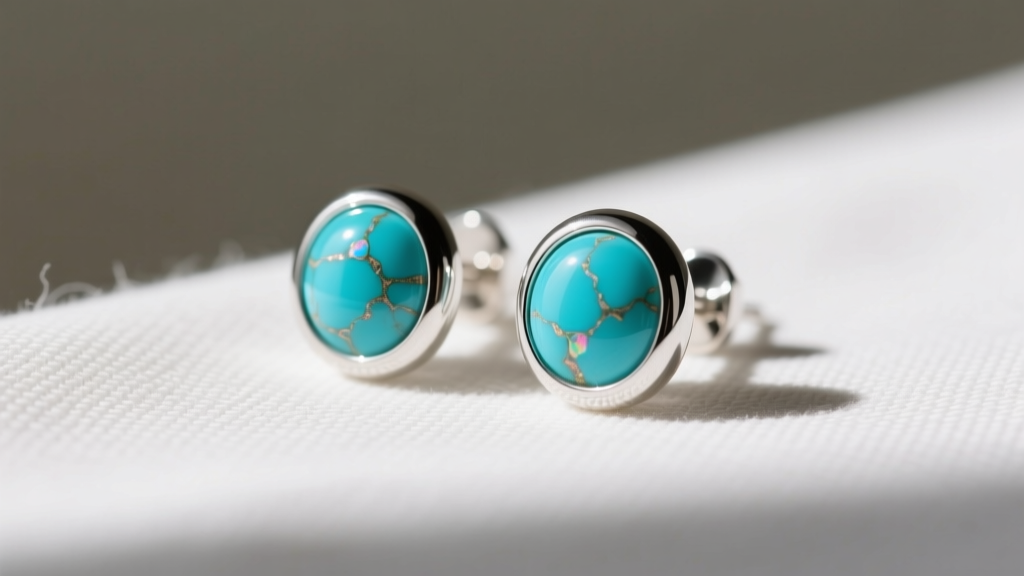
Few jewelry pairings are as iconic and historically rich as turquoise and sterling silver. For beginners stepping into the world of gemstone jewelry, turquoise stud earrings silver settings offer a perfect entry point. They are versatile, deeply rooted in Southwestern and Native American lapidary traditions, and provide a vibrant pop of color that complements nearly every wardrobe. However, the modern jewelry market is saturated with misleading terminology, synthetic imitations, and confusing silver stamps. Whether you are shopping for your first pair of genuine stones or looking to understand the lapidary mechanics behind your favorite accessories, this guide will break down the exact specifications, material grades, and pricing structures you need to know in 2026.
Natural vs. Stabilized vs. Dyed: The Treatment Spectrum
The most critical concept for any beginner to grasp is that not all turquoise is created equal. In its purest, untreated form, turquoise is a porous, relatively soft phosphate mineral with a Mohs hardness rating between 5 and 6. Because it is porous, it can absorb oils, lotions, and environmental pollutants, which can alter its color over time. To understand what you are buying, you must understand the treatment spectrum.
Natural Turquoise: This refers to stones that are mined, cut, and polished without any chemical alterations. Only a small percentage of mined turquoise is hard and dense enough to be used in jewelry without treatment. Natural stones are highly prized, often featuring unique 'matrix' (the host rock webbing), but they require careful maintenance.
Stabilized Turquoise: According to the Gemological Institute of America (GIA), stabilization is the most common and widely accepted treatment in the industry. Lower-grade, softer turquoise is placed in a vacuum chamber where epoxy resin or liquid plastic is forced deep into the stone's pores. This hardens the gem, making it durable enough for daily wear in silver stud settings, and locks in its vibrant color. Stabilized turquoise is still genuine turquoise; it is simply reinforced.
Dyed and Reconstituted: Dyed turquoise involves injecting color into pale or white stones (or entirely different minerals) to mimic high-grade turquoise. Reconstituted turquoise, often called 'block' turquoise, consists of turquoise dust and chalk mixed with resin and molded into shapes. Beginners should generally avoid these if they are seeking authentic gemstone value.
| Treatment Type | Durability | Color Fastness | Market Value |
|---|---|---|---|
| Natural (Untreated) | Low to Medium (Prone to scratching) | Can change with oil exposure | Premium ($150 - $500+) |
| Stabilized (Epoxy) | High (Ideal for daily wear) | Permanent | Moderate ($40 - $120) |
| Dyed Howlite/Magnesite | Medium | Can fade or rub off | Very Low ($10 - $25) |
| Reconstituted (Block) | High (Plastic-like) | Permanent but artificial | Negligible (Under $15) |
Understanding Your Silver Setting
When shopping for turquoise stud earrings silver settings, you will frequently encounter the '925' stamp. This denotes Sterling Silver, an alloy consisting of 92.5% pure silver and 7.5% other metals, almost always copper. As noted by The Silver Institute, pure silver (999 fine silver) is far too soft to securely hold a gemstone bezel or maintain the structural integrity of an earring post. The copper addition provides the necessary tensile strength.
However, that 7.5% copper is also the culprit behind silver tarnish. When exposed to sulfur and moisture in the air, the copper reacts and creates a dark patina. Some modern jewelers apply a microscopic layer of rhodium plating over the sterling silver to prevent tarnishing and provide a bright, white-gold-like finish. While rhodium is excellent for low-maintenance wearers, traditionalists and collectors of Native American jewelry often prefer un-plated sterling silver, as they appreciate the antique oxidation that develops in the recesses of the silver bezel over time, highlighting the intricate metalwork.
Sizing, Gauges, and Post Mechanics
The physical dimensions of the earring post and the stone itself dictate both comfort and security. For standard earlobe piercings, the industry standard post thickness is 20-gauge (0.81mm). If the turquoise cabochon is particularly large or heavy (e.g., over 10mm in diameter), a jeweler may opt for an 18-gauge (1.02mm) post to prevent the earring from drooping or bending under the weight of the stone and the silver bezel.
Post length is equally important. A standard post length is 10mm to 11mm. This specific length is chosen to accommodate the average earlobe thickness (which ranges from 4mm to 6mm) while leaving enough room for the butterfly clutch or screw-back to secure the earring without pressing tightly against the skin, which can restrict blood flow and cause irritation. When purchasing, always check if the earrings come with standard friction backs, secure screw-backs (ideal for expensive natural turquoise), or silicone O-rings for added grip.
Spotting Fakes: Howlite and Magnesite
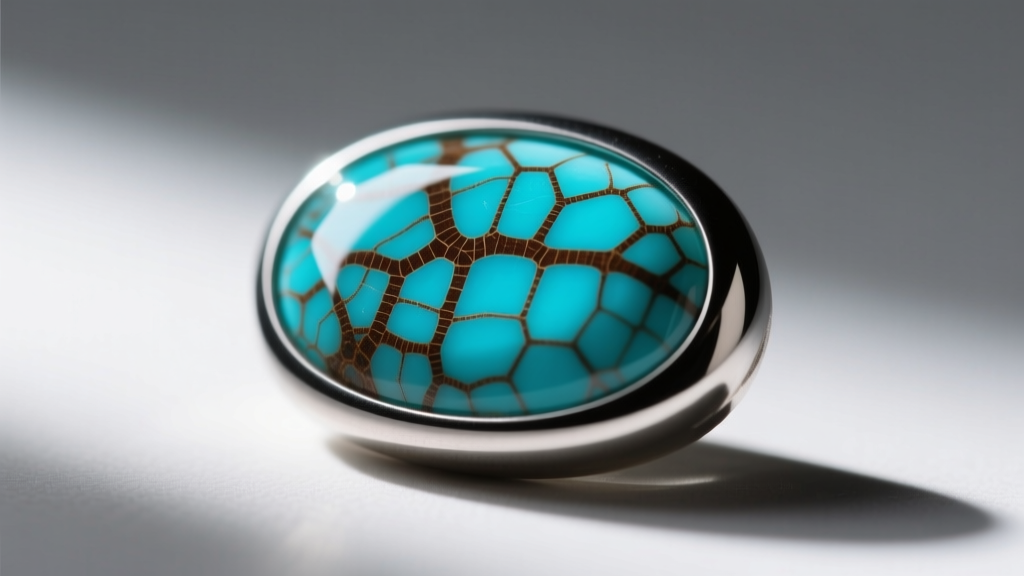
Beginners are frequently tricked by dyed howlite or magnesite sold as turquoise. Howlite is a naturally white or gray borate mineral with dark gray or black veining that closely mimics the matrix of natural turquoise. When dyed blue or green, it becomes a cheap stand-in. To spot the difference, examine the matrix (the veining). In genuine turquoise, the matrix is usually the host rock (like sandstone or shale) and has a distinct, sometimes metallic or earthy depth. In dyed howlite, the dye tends to pool and concentrate heavily in the cracks, creating unnatural, spider-web-like dark spots that look 'stamped on.' Furthermore, howlite is generally lighter in weight than dense turquoise, and under a jeweler's loupe, you may see the dye staining the porous surface unevenly.
Pricing Expectations and Value Factors
The price of turquoise stud earrings in silver varies wildly based on the mine of origin, the treatment, and the craftsmanship of the silverwork. Here is a realistic pricing framework for the current market:
- Sleeping Beauty Turquoise (Natural): Mined in Arizona, this stone is famous for its pure, sky-blue color with little to no matrix. Because the mine closed in 2012, genuine, untreated Sleeping Beauty commands a massive premium. Expect to pay $200 to $450+ for a high-quality pair of natural studs in solid 925 silver.
- Kingman or Royston Turquoise (Stabilized): Kingman (Arizona) offers brilliant blues with black matrix, while Royston (Nevada) provides deep greens with brown matrix. High-quality stabilized stones from these historic mines, set in well-crafted sterling silver bezels, typically range from $60 to $150.
- Commercial Grade (Stabilized/Unknown Origin): Mass-produced studs featuring heavily stabilized, paler stones with simple, machine-stamped silver settings usually retail between $25 and $45.
Essential Care and Maintenance
Caring for turquoise and silver requires a gentle touch. Never use ultrasonic jewelry cleaners, steam cleaners, or harsh chemical dips on turquoise stud earrings. The porous nature of the stone means it will absorb the chemicals, which can strip the polish, alter the color, or degrade the epoxy in stabilized stones. Furthermore, chemical silver dips will strip the intentional oxidation (antiquing) from the silver bezel, leaving the jewelry looking flat and overly bright.
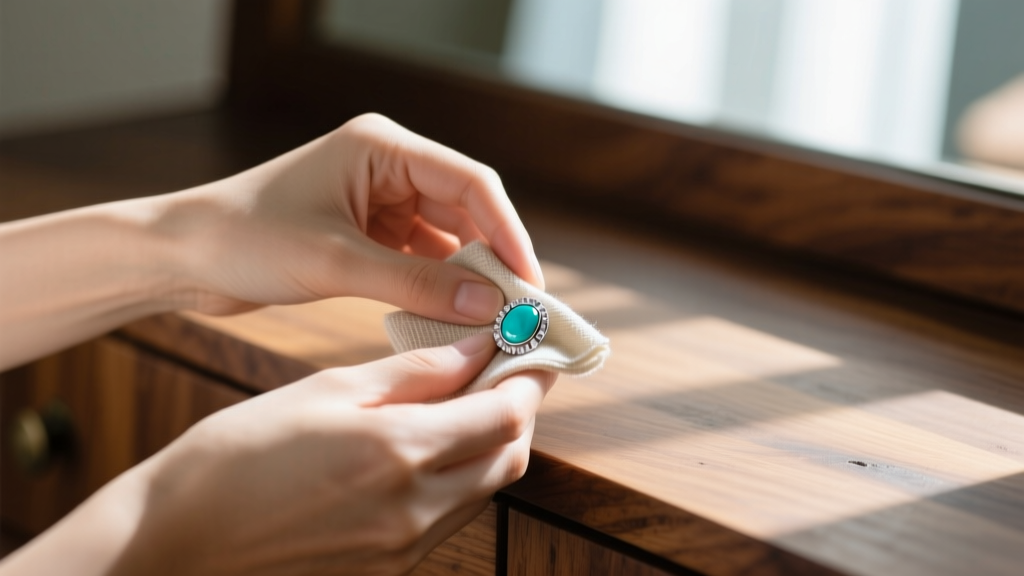
Instead, adopt a simple, dry maintenance routine. After wearing your earrings, gently wipe them with a clean, dry microfiber cloth to remove skin oils and environmental dust. For tarnished silver, use a specialized silver polishing cloth that contains mild, dry anti-tarnish compounds. Rub the silver bezel and post gently, taking care not to press the polishing agents into the turquoise stone itself. Always put your jewelry on after applying perfumes, hairsprays, and lotions, and remove them before swimming in chlorinated pools or soaking in hot tubs.
Final Thoughts for First-Time Buyers
Purchasing your first pair of genuine turquoise stud earrings silver settings is an exciting milestone. By prioritizing transparency from the seller—asking direct questions about the mine origin, whether the stone is natural or stabilized, and confirming the 925 silver stamp—you protect your investment. Embrace the unique imperfections, the natural matrix variations, and the living nature of sterling silver. Unlike mass-produced synthetic jewelry, genuine turquoise and silver carry a geological and historical weight that makes every single pair entirely one-of-a-kind.


