A Beginner’s Guide to Buying Vintage Mother of Pearl Earrings
Discover how to identify, style, and care for vintage mother of pearl earrings with our beginner-friendly guide on materials, eras, and pricing.

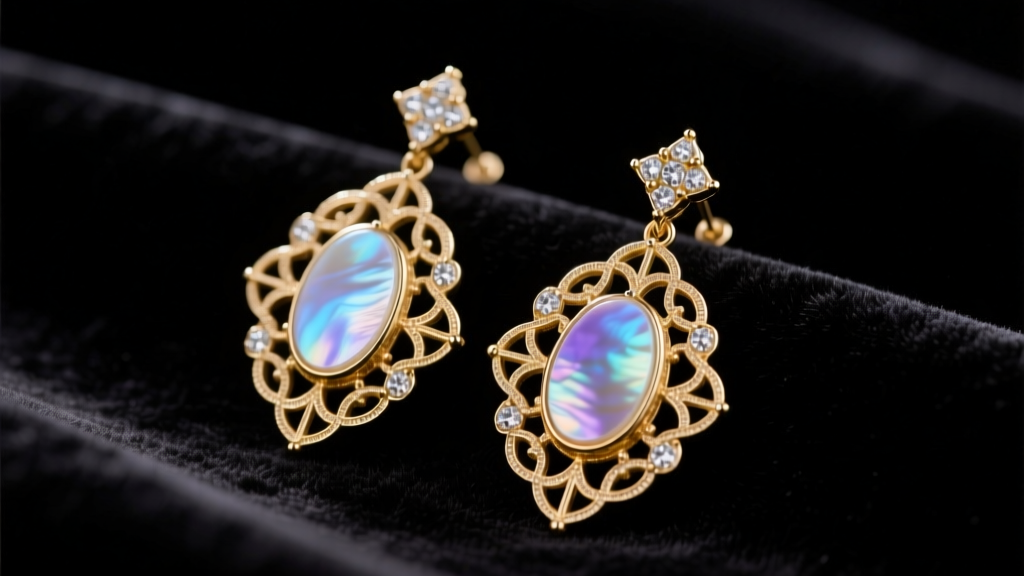
Entering the world of antique jewelry can feel like navigating a labyrinth of hallmarks, synthetic imitations, and confusing terminology. For beginners, vintage mother of pearl earrings offer a spectacular entry point. They carry the romance of bygone eras, showcase nature’s most mesmerizing optical effects, and remain surprisingly accessible compared to high-carat gemstone antiques. However, buying vintage shell jewelry requires a specific set of diagnostic skills. This guide will equip you with the material science, historical context, and practical frameworks needed to confidently identify, value, and care for vintage mother of pearl (MOP) earrings.
The Anatomy of Nacre: What You Are Actually Buying
Mother of pearl is not a stone; it is an organic-inorganic composite material produced by the inner lining of certain mollusk shells. According to the Gemological Institute of America (GIA), this material, known as nacre, consists of microscopic hexagonal platelets of aragonite (a form of calcium carbonate) glued together by an organic polymer called conchiolin.
When light hits these microscopic layers, it refracts and interferes, creating the signature iridescent glow known as "orient." In vintage pieces, you will typically encounter two forms of MOP:
- Cabochons and Carved Cameos: Thick cuts (usually 2mm to 5mm) that showcase deep, multi-tonal iridescence. These were heavily featured in Victorian and Art Deco designs.
- Veneers and Inlays: Paper-thin slices (0.5mm to 1mm) glued onto metal, enamel, or tortoiseshell bases, common in mid-century costume jewelry and Art Nouveau revival pieces.
The Temperature Test: To differentiate genuine vintage shell from early plastics like celluloid or Bakelite, use the temperature test. Real MOP is highly thermally conductive. When pressed against your cheek or wrist, genuine shell will feel distinctly cold and warm up slowly, whereas plastic or resin will feel room-temperature and warm instantly.
Decoding Eras: From Victorian Carvings to Mid-Century Clips
Identifying the era of your vintage mother of pearl earrings drastically alters both their historical value and how you should wear them. According to the Victoria and Albert Museum’s jewelry archives, shell carving has shifted dramatically in style and technique over the last 150 years.
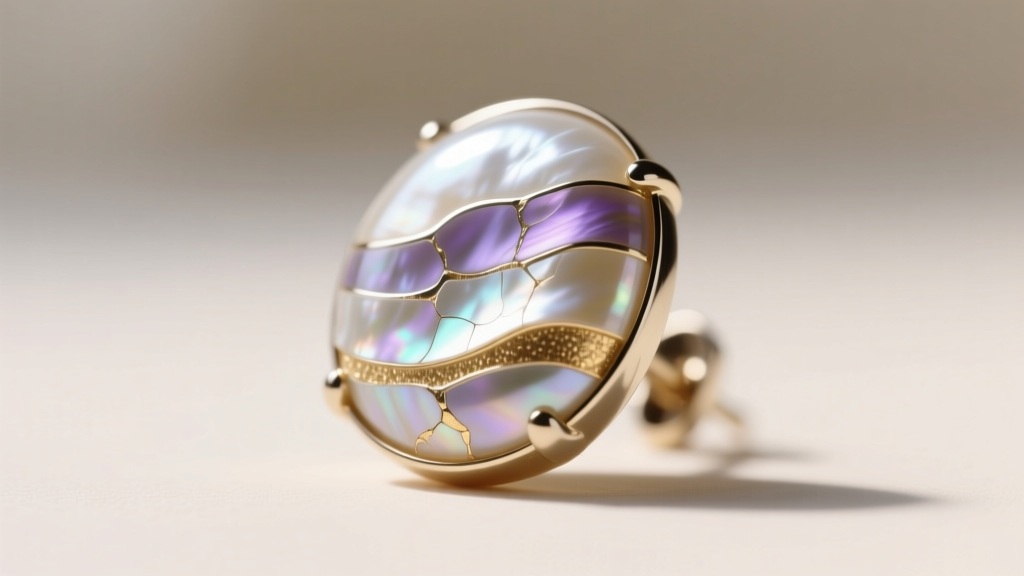
The Victorian Era (1837–1901)
Victorian MOP earrings often feature intricate hand-carved floral motifs, cameos, or "forget-me-not" designs. Because pierced ears fell out of favor among upper-class women during the mid-to-late 19th century, many genuine Victorian pieces were originally designed as screw-back conversions, pendants, or brooches that were later retrofitted with ear wires by 20th-century jewelers. Look for silver or low-karat gold (9k or 10k) settings with closed-back bezels, which were used to protect the delicate shell from skin oils.
Art Deco (1920–1935)
The Art Deco period embraced stark geometric contrasts. You will frequently find MOP cut into sharp octagons, squares, or baguettes and set against black onyx, dark enamel, or marcasite. Platinum and white gold were the metals of choice. These pieces are highly sought after by collectors for their architectural precision and the high quality of their diamond or paste accent stones.
Mid-Century and Retro (1940–1960)
During the mid-century, MOP was frequently paired with warm yellow gold, rose gold, and intricate filigree wirework. Floral sprays, starbursts, and shell-shaped motifs dominated. This era also saw the mass production of clip-on earrings, making MOP accessible to a broader demographic through high-end costume jewelers like Trifari and Coro.
Hardware as a Time Machine: Dating by Backings
For a beginner, the earring backing is the most reliable forensic tool for dating a piece. Lang Antiques’ Antique Jewelry University notes that ear piercing technology and fashion trends dictate the hardware used in specific decades:
- Screw Backs (1900s–1950s): Characterized by a threaded post and a paddle-shaped nut that screws down to secure the earring. If your MOP earrings have original screw backs, they likely predate the 1950s.
- Clip-Ons (1930s–1980s): Invented in the 1930s, clip-ons feature a spring-loaded or paddle-style clasp that pinches the lobe. Heavy, ornate MOP clip-ons are hallmarks of the 1940s and 1950s.
- Friction Posts (1960s–Present): The modern "butterfly" push-back became standard only after the piercing gun gained popularity in the late 1960s. If a supposedly "Victorian" earring has a modern friction post and a standard clutch back, it has either been altered or is a modern reproduction.
Valuation Matrix: Pricing Vintage Mother of Pearl
Pricing vintage MOP earrings depends heavily on the era, the metal purity, the condition of the nacre, and the maker's mark. Below is a general pricing framework for the current market:
| Era / Style | Typical Materials | Condition Factors | Estimated Price Range (USD) |
|---|---|---|---|
| Victorian Carved Cameos | Sterling Silver, 9k Gold | High relief carving, no chips | $150 – $450 |
| Art Deco Geometric | Platinum, White Gold, Onyx | Intact enamel, original diamonds | $300 – $1,200+ |
| Mid-Century Costume | Gold-Filled, Rhinestones | Working clips, no foil peeling | $40 – $120 |
| 1970s Boho / Inlay | Sterling Silver, Turquoise | Intact veneers, no lifting | $60 – $200 |
Note: Pieces bearing hallmarks of renowned makers like Tiffany & Co., Cartier, or Boucheron will command a significant premium, often exceeding $2,000 regardless of the shell's intrinsic material value.
Care Protocols and Common Failure Modes
Mother of pearl is remarkably durable in terms of tensile strength, but it is highly vulnerable to chemical and environmental damage. On the Mohs scale of mineral hardness, MOP ranks between 2.5 and 4.5, making it softer than quartz, dust, and most gemstones. When caring for vintage pieces, you must avoid the following failure modes:
1. Ultrasonic Delamination
Never put vintage MOP earrings in an ultrasonic cleaner. The high-frequency vibrations can cause the microscopic layers of aragonite and conchiolin to separate, leading to irreversible "delamination" where the shell peels apart like flaky pastry.
2. Acid and Chemical Etching
Nacre is primarily calcium carbonate, which reacts violently with acids. Perfumes, hairsprays, and even the natural lactic acid in human sweat can dull the orient and cause microscopic pitting on the surface over time. Always apply cosmetics before putting on your earrings, and wipe the shells with a dry, untreated microfiber cloth immediately after removal.
3. Dehydration and Crazing
Because conchiolin is an organic protein, it requires a slight amount of ambient moisture. Storing vintage MOP in airtight plastic bags or overly dry safes can cause the organic binder to dry out, resulting in "crazing" (a network of fine surface cracks). Store them in a soft cotton pouch in a climate-controlled room.
Styling and Lobe Mechanics
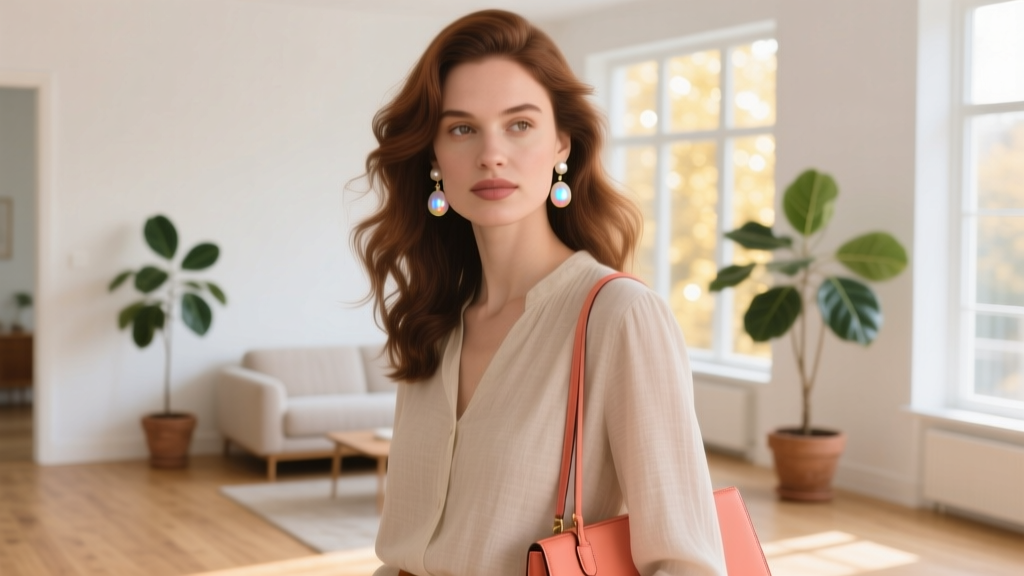
Vintage earrings were often designed with different lobe mechanics in mind. Heavy Art Deco screw-backs or solid gold mid-century drops can weigh between 8 and 15 grams per ear. For beginners with standard modern piercings (typically 20-gauge or 18-gauge), wearing heavy vintage drops for more than a few hours can cause lobe stretching and discomfort.
If you are purchasing heavy vintage MOP dangles, consider investing in silicone earring support patches (like "Lobe Wonder" pads) which distribute the weight across a wider area of the ear. For face shapes, the soft, glowing, and often rounded geometry of MOP cabochons is exceptionally flattering on angular or square face shapes, as the iridescent glow softens the jawline. Conversely, sharp, geometric Art Deco MOP drops provide a brilliant structural contrast to rounder face shapes.
By understanding the organic science of nacre, recognizing the historical hallmarks of different eras, and adhering to strict, non-chemical cleaning protocols, you can build a collection of vintage mother of pearl earrings that will retain their luminous beauty for generations to come.


