Square Earrings Silver: Expert Guide to Alloys, Edges & Fit
Discover technical details of square earrings silver. Expert insights on 925 vs Argentium alloys, edge finishing, gauge sizes, and clasp mechanics.

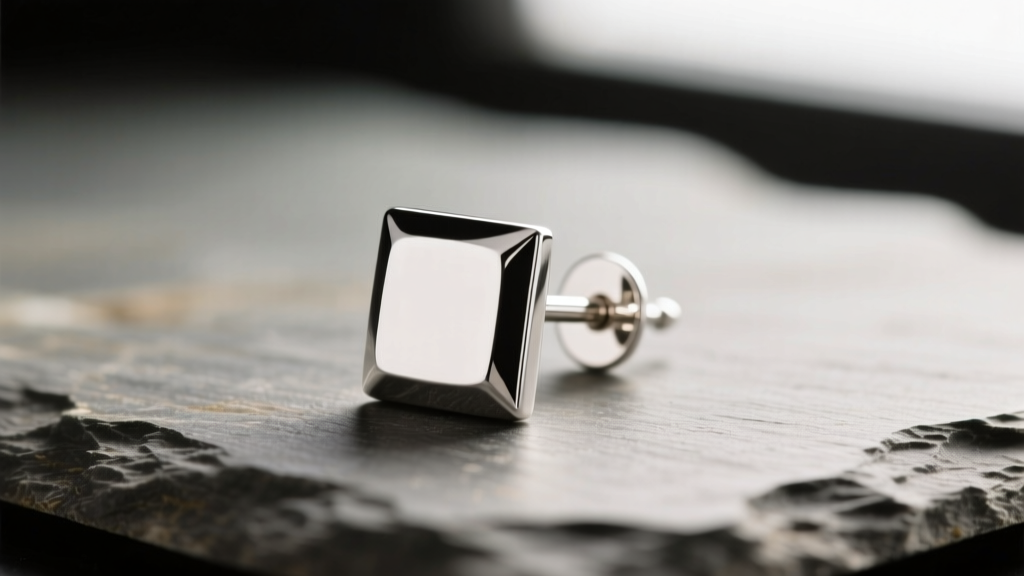
Finding the perfect pair of square earrings silver requires looking beyond the surface polish. As geometric jewelry continues to dominate architectural style trends, the structural integrity, alloy composition, and edge finishing of these pieces become critical factors for both comfort and longevity. This expert deep dive explores the metallurgy, physics, and manufacturing nuances that separate mass-market geometric studs from fine jewelry masterpieces.
The Metallurgy: 925 Sterling vs. Argentium vs. Fine Silver
Not all silver is created equal, especially when formed into rigid, flat geometric shapes. According to the Gemological Institute of America (GIA), pure silver (999 fine) is too malleable for everyday structural wear. A 10mm square stud made of fine silver will easily dent if dropped on a hard surface due to its low Vickers Hardness (HV) rating of roughly 25.
To solve this, jewelers use alloys. Standard 925 sterling silver (92.5% silver, 7.5% copper) raises the hardness to approximately 60-110 HV depending on work-hardening. However, the copper content introduces a vulnerability: tarnish and firescale. When a jeweler solders a post onto a flat square backing, the heat causes the copper to oxidize, creating a dark purplish stain known as firescale. On a wide, flat square surface, this is notoriously difficult to polish out completely without rounding the sharp geometric corners.
This is where Argentium 935 or 960 silver becomes the superior choice for square earrings. By replacing some of the copper with germanium, Argentium forms a transparent, self-healing oxide layer that drastically slows tarnish. More importantly, Argentium can be precipitation-hardened in an oven to reach an HV of 140, making the sharp corners of a square earring highly resistant to impact dents.
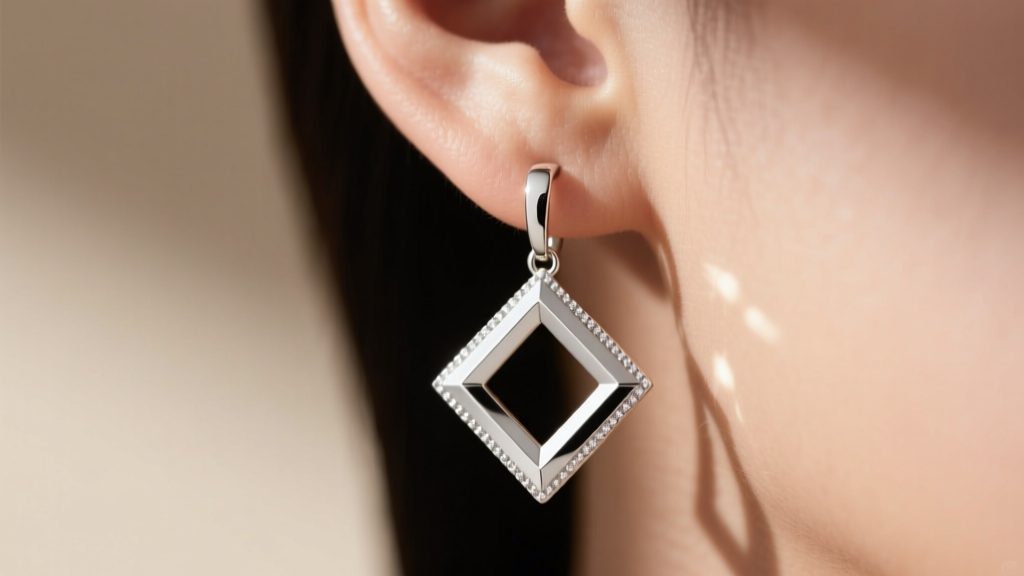
Geometric Precision: The Danger of 90-Degree Edges
The defining feature of square earrings is the corner. In cheap manufacturing, square blanks are stamped out and tumbled, leaving microscopically sharp 90-degree extrusions. These sharp corners act like tiny blades, catching on hair, sweaters, and even scratching the side of the neck or the earlobe itself.
Expert silversmiths employ a technique called micro-beveling or chamfering. Using a specialized cutting tool or a precise abrasive wheel, the jeweler removes exactly 0.1mm to 0.2mm of metal from the outer edges. This creates a tiny, flat facet that catches the light (creating a brilliant border effect) while completely eliminating the snag hazard. When inspecting square earrings silver, run your fingernail lightly along the perimeter. If it catches or feels like a knife edge, the piece lacks proper finishing.
Hardware Physics: Post Gauges and the Fulcrum Effect
Square shapes distribute mass differently than circles. A 12mm square stud has its weight concentrated further from the center post compared to a 12mm circular disc. This creates a fulcrum effect on the earlobe. If the earring is too heavy and the post is too thin, the earring will perpetually droop forward, stretching the piercing over time.
- 20-Gauge (0.81mm): The industry standard. Acceptable for small square studs (up to 8mm x 8mm) weighing under 1.5 grams.
- 18-Gauge (1.02mm): Required for larger square geometric drops or heavy 10mm+ studs. The thicker post resists bending and provides a more stable anchor.
- Friction Backs vs. Screw Backs: Standard butterfly backs often fail to support the wide base of a square earring. Look for heavy-duty 6mm disc friction backs or threaded screw-backs to distribute the clamping pressure evenly across the lobe.
Technical Specifications & Pricing Matrix
When shopping for square silver earrings, understanding the material grades will help you evaluate pricing and longevity. The Jewelers of America strictly regulates hallmarking, ensuring that stamped pieces meet these minimum thresholds.
| Alloy Grade | Composition | Vickers Hardness (HV) | Tarnish Resistance | Avg. Price (10mm Studs) |
|---|---|---|---|---|
| 925 Sterling | 92.5% Ag, 7.5% Cu | 60 - 110 | Low (Requires Rhodium) | $35 - $65 |
| Argentium 935 | 93.5% Ag, Cu, Ge | 120 - 140 | High (Self-healing oxide) | $55 - $95 |
| 999 Fine Silver | 99.9% Ag | ~25 (Too soft) | Very High | $40 - $70 |
| Silver-Plated Brass | Cu/Zn core, Ag flash | 100+ (Hard core) | Very Low (Wears off) | $12 - $25 |
Rhodium Plating and Skin Sensitivities
Many high-end square earrings silver are plated with rhodium to provide a bright, white, tarnish-resistant finish. However, the plating process is where many consumers experience allergic reactions. Historically, jewelers used a nickel "strike" layer to help the rhodium adhere to the silver. Nickel is a primary contact allergen.
Today, reputable manufacturers use a palladium strike layer instead of nickel. Furthermore, the thickness of the rhodium matters. "Flash plating" uses a microscopic layer (0.05 microns) that wears off in weeks, exposing the tarnishing silver beneath. Fine jewelry utilizes 0.5 to 1.0 microns of rhodium, ensuring the square earring maintains its bright white geometry for years. Always ask the retailer for the plating thickness and confirm a nickel-free guarantee.
Manufacturing Nuances: Laser Welding vs. Torch Soldering
The method used to attach the earring post or jump ring to a square silver backing fundamentally impacts the piece's longevity. Traditional torch soldering requires heating a large area of the silver to flow the solder alloy. On a flat, wide square surface, this broad heat application can cause warping or leave a visible "ghost" mark where the metal's crystalline structure has been altered by heat.
Expert manufacturers now utilize laser welding for geometric silver jewelry. A laser welder concentrates a microscopic beam of light to fuse the post directly to the square backing in a fraction of a second. This localized heat application prevents warping, eliminates firescale, and preserves the perfectly flat, mirror-polished surface of the square earring. When inspecting a high-end square stud, look for a seamless, tiny weld pool at the base of the post rather than a large, messy blob of traditional silver solder.
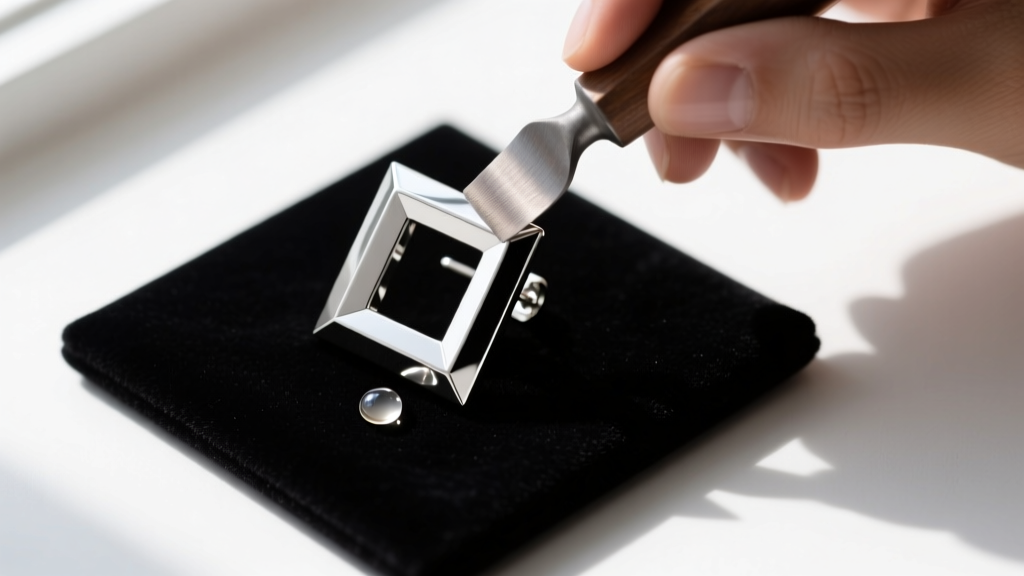
Expert Care Protocols for Geometric Silver
Maintaining the sharp, architectural lines of square silver earrings requires specific care. Avoid the common internet hack of using baking soda and aluminum foil baths. While this chemical reaction removes tarnish, it also strips the intentional oxidation (patina) that jewelers sometimes apply to the crevices of textured square designs to add depth.
Furthermore, never use abrasive silver dips or harsh polishing compounds on micro-beveled edges. Over-polishing will slowly round off the sharp 90-degree corners, degrading the geometric precision of the earring over time. Instead, use a treated, non-abrasive jeweler's microfiber cloth. For square drop earrings with hinged components or jump rings, periodically check the connection points for metal fatigue, as the swinging motion of a square shape places unique lateral stress on the solder joints.
Expert Tip: If your square silver earrings feature gemstone inlays, avoid ultrasonic cleaners. The high-frequency vibrations can fracture tension-set stones or loosen the adhesive used in geometric channel settings.
For comprehensive hallmarking and precious metal standards, consult the UK Assay Office guidelines, which provide rigorous benchmarks for silver purity and consumer protection globally. By prioritizing Argentium alloys, micro-beveled edges, and proper gauge thickness, you can invest in square silver earrings that are as structurally sound as they are visually striking.


