Beginner Guide to Washer Earrings: Sizing and Styling
Discover everything about washer earrings. This beginner guide covers flat disc styles, gauge sizes, implant-grade metals, and how to style them.

What Are Washer Earrings?
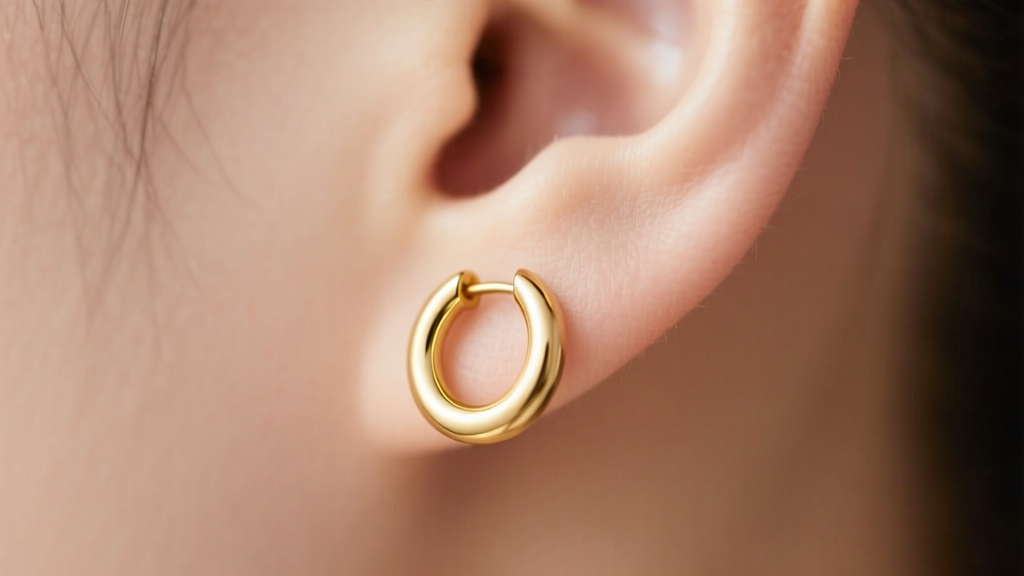
When navigating the vast world of minimalist jewelry, you will inevitably encounter the term washer earrings. In contemporary jewelry design, washer earrings refer to flat, circular disc earrings that mimic the shape of a hardware washer. Unlike traditional domed studs or intricate gemstone settings, these earrings feature a completely flat face that sits flush against the earlobe or cartilage. They are the cornerstone of the 'industrial-chic' and 'quiet luxury' aesthetics, offering a sleek, geometric profile that catches the light subtly without overwhelming your features.
For beginners, washer earrings are an excellent entry point into curated ear projects. Because they lack protruding edges, they are highly practical for sleeping, working out, and wearing over-ear headphones. However, choosing the right diameter, gauge, and material is crucial to avoiding irritation and achieving a proportional look.
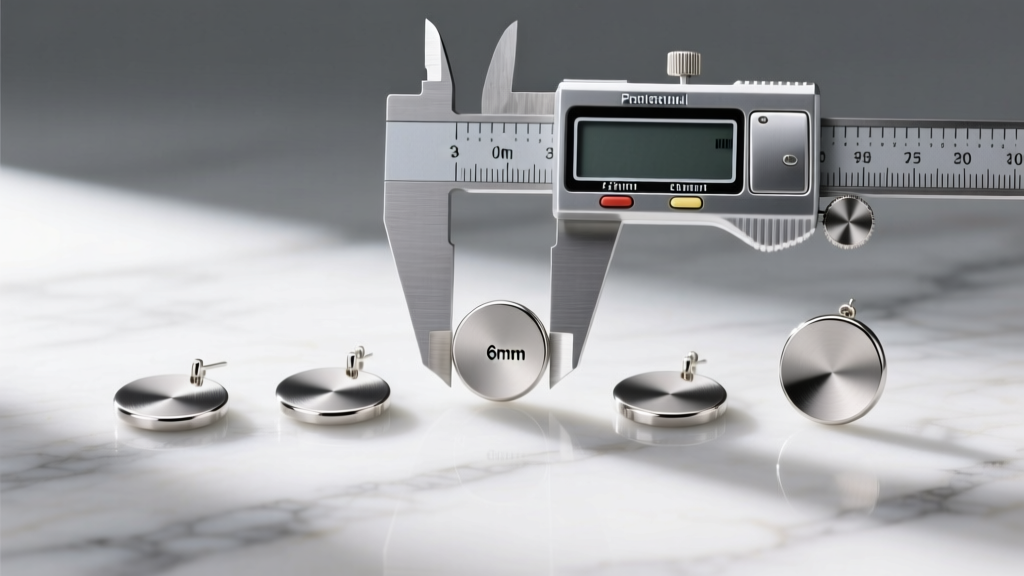
The Sizing Matrix: Diameter vs. Placement
The most common mistake beginners make with flat disc styles is choosing a diameter that clashes with their piercing placement. A washer earring that is too large on a delicate helix will look clumsy and may catch on hair, while one that is too small on a standard lobe might disappear entirely.
| Diameter | Best Piercing Placement | Visual Impact | Average Price Range (14k Gold) |
|---|---|---|---|
| 3mm - 4mm | Tragus, Forward Helix, Rook | Tiny, subtle sparkle; ideal for tight cartilage spaces | $65 - $85 |
| 5mm - 6mm | Standard Lobe, Conch, Upper Lobe | Classic minimalist stud; perfectly frames the fistula | $85 - $110 |
| 8mm - 10mm | Lower Lobe (Stretched), Flat Conch | Bold, industrial statement; requires ample flat skin space | $120 - $160 |
Material Grades and Allergy Prevention
Because washer earrings sit completely flush against the skin, they trap more heat and moisture against the piercing site than open-back designs. This makes material selection non-negotiable. According to the Association of Professional Piercers (APP), initial jewelry and long-term wear pieces should be made of biocompatible materials to prevent contact dermatitis.
- Implant-Grade Titanium (ASTM F-136): The gold standard for sensitive ears. It is completely nickel-free, lightweight, and will not oxidize. Expect to pay $25–$45 per piece for high-quality titanium washer earrings from brands like NeoMetal or BVLA.
- Solid 14k or 18k Gold: Excellent for healed piercings. Ensure the gold is alloyed without nickel (some white gold alloys contain nickel, which triggers reactions).
- Surgical Steel (ASTM F-138): While budget-friendly ($10–$20), surgical steel contains trace amounts of nickel. The American Academy of Dermatology warns that prolonged skin contact with nickel-bearing alloys is a leading cause of allergic contact dermatitis. Avoid steel if you have a known sensitivity.
Threadless vs. Internally Threaded: A Beginner’s Dilemma
How the washer earring attaches to the post is just as important as the disc itself. You will generally encounter two high-quality options:
1. Threadless (Push-Pin) Jewelry
Threadless jewelry uses tension to stay together. The post has a smooth interior, and the washer earring top has a slightly bent pin that you insert and push shut. This is the most beginner-friendly option because there are no microscopic threads to strip, and it is incredibly secure once properly tensioned.
2. Internally Threaded Jewelry
Here, the threading is on the inside of the washer earring top, and the post is smooth. This prevents the sharp threads from scraping the delicate fistula (piercing channel) during insertion. Never buy externally threaded jewelry (where the post has sharp ridges), as it acts like a cheese grater on your piercing tissue.
Functional Washers: Upgrading Your Backings
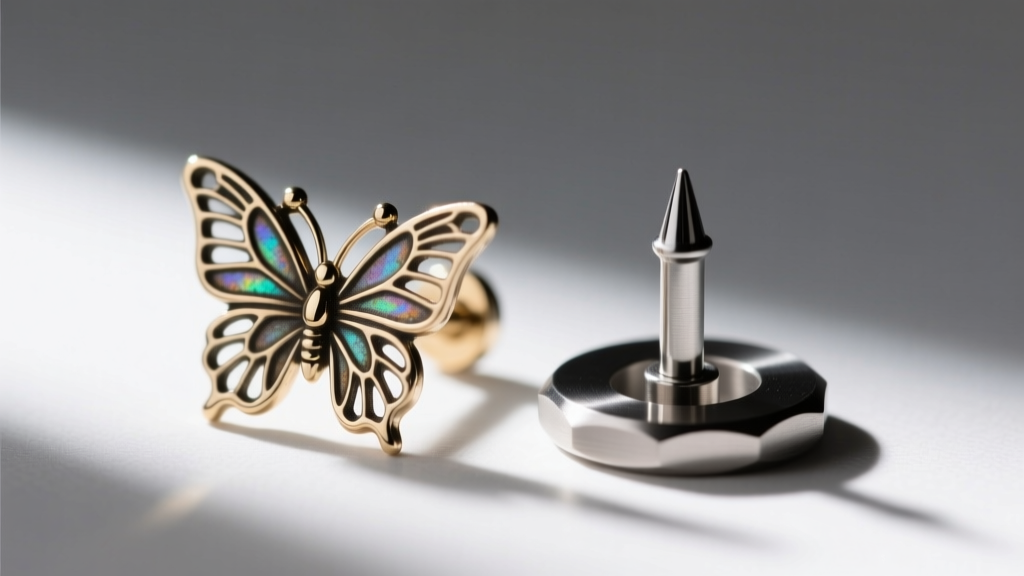
In some jewelry communities, the term 'washer' also refers to the flat disc backing used on labret posts. If you are transitioning from standard butterfly-back earrings (which are notorious for poking the neck and trapping dead skin cells), upgrading to a flat washer back is a game-changer.
Flat disc backs (usually 4mm or 5mm in diameter) distribute pressure evenly across the back of the ear. They are essential for cartilage piercings like the helix or conch, where a butterfly back would create uneven pressure and cause the jewelry to tilt, leading to migration or irritation bumps.
Styling Washer Earrings for Face Shapes
Because washer earrings are purely geometric, they interact directly with your facial structure. Here is a practical framework for styling them:
- Round Faces: Opt for slightly thicker, stacked washer earrings (e.g., a 6mm and a 4mm in adjacent lobe piercings). The rigid geometry adds structural contrast to soft facial curves.
- Angular/Square Faces: Medium-sized discs (5mm) in polished gold soften sharp jawlines by introducing smooth, continuous lines without adding harsh angles.
- Heart-Shaped Faces: Keep the focus on the upper ear. A 3mm titanium washer earring in the helix or tragus draws the eye upward, balancing a narrower chin.
Common Beginner Mistakes and Troubleshooting
The 'Snag and Tear' Failure Mode
Even though flat disc earrings are marketed as 'snag-free,' they can still catch on coarse knit sweaters or loofahs if the gap between the disc and the skin is too wide. Fix: Ensure your post length is perfectly sized by a professional piercer. A post that is even 1mm too long will cause the washer to tilt, creating a lip that catches on fabric.
Cleaning Flat Surfaces
The flat face of a washer earring shows fingerprints, makeup, and skincare residue much faster than faceted gems. Fix: Wipe the face of the earring daily with a microfiber cloth or a cotton swab dipped in sterile saline. Avoid harsh chemical jewelry dips, which can degrade the polished finish of titanium and gold over time.
By understanding the precise sizing, metallurgy, and mechanics behind washer earrings, you can build a comfortable, irritation-free, and effortlessly modern ear curation that lasts a lifetime.


