How to Wear XL Earrings Without Tearing Your Earlobes
Discover how to wear XL earrings comfortably. Learn lobe support tricks, weight distribution tips, and styling rules for oversized statement jewelry.


Extra-large earrings are undeniably powerful. They frame the face, draw the eye, and instantly elevate a minimalist outfit into a high-fashion statement. However, for beginners, the transition from lightweight studs to dramatic, shoulder-grazing silhouettes can be physically painful. The excitement of wearing bold jewelry often fades the moment the sheer weight of the metal begins to drag on the earlobe, leading to discomfort, redness, and in severe cases, permanent tissue damage.
If you have ever experienced the dreaded "earlobe sag" or sharp pain after an hour of wearing heavy statement pieces, you are not alone. The secret to pulling off oversized jewelry lies in understanding the physics of your piercing, selecting the right materials, and utilizing strategic lobe support. This beginner-friendly explainer will teach you exactly how to wear XL earrings comfortably, safely, and stylishly.
The Physics of the Piercing: Why Weight Matters
To understand why XL earrings cause discomfort, you must first understand the anatomy of a standard ear piercing. The hole in your earlobe is lined with a fistula—a tube of healed scar tissue. This tissue is resilient, but it is highly susceptible to localized shear stress.
Most standard earrings feature a 20-gauge (0.81mm) or 18-gauge (1.02mm) post. When you hang a 25-gram XL earring from a thin 20-gauge wire, all that downward force is concentrated on a microscopic surface area at the bottom of the fistula. In physics, Pressure equals Force divided by Area. Because the area of a 20-gauge post is so small, the pressure on your earlobe tissue is immense. Over time, this creates the "cheese cutter effect," where the thin wire slowly slices through the bottom of the earlobe, leading to elongation or a complete tear.
According to dermatological guidelines from the American Academy of Dermatology (AAD), repeated trauma from heavy jewelry is a leading cause of acquired earlobe splitting, which often requires surgical repair. To prevent this, always look for XL earrings that feature thicker posts or wires. Upgrading to a 16-gauge (1.29mm) or even 14-gauge (1.63mm) post significantly increases the surface area, distributing the weight more evenly and saving your earlobes from unnecessary strain.
Essential Lobe Support Systems
If you already own heavy XL earrings with thin posts, or if you simply want extra security for a long event, you need to reinforce the back of the earlobe. Relying on standard metal friction backs or "butterfly" clasps is a mistake when dealing with oversized jewelry; they easily slip down the post, allowing the earring to droop forward.
Silicone Support Patches
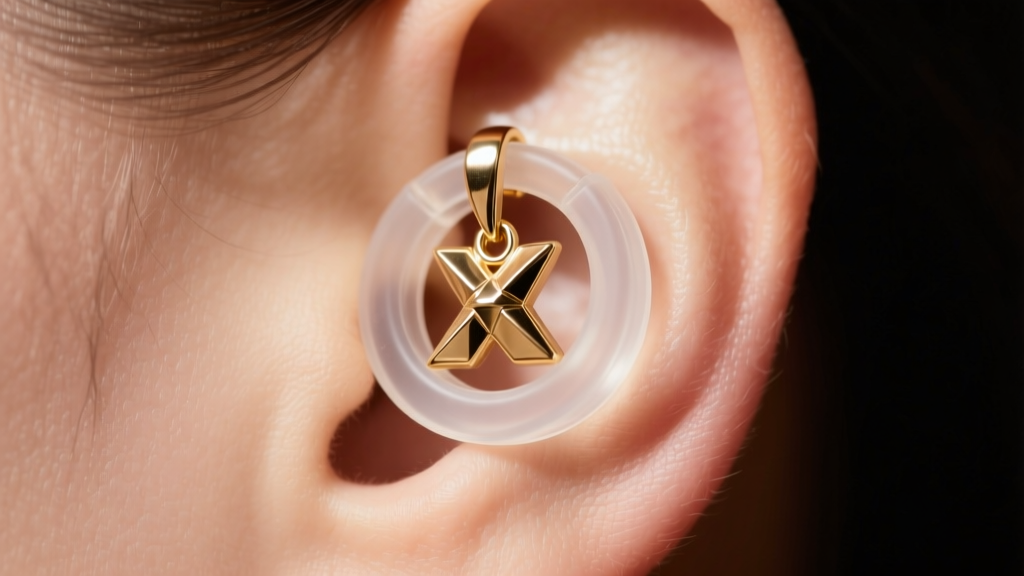
Silicone earring support patches (often sold under brand names like Blomdahl Earlobe Lifters or generic silicone discs) are a game-changer for heavy jewelry. These are small, medical-grade silicone stickers with a pre-punched hole in the center. You apply the patch directly to the back of your earlobe, push the earring post through the patch, and secure it with a back. The silicone acts as a splint, distributing the weight of the earring across a two-inch radius of the ear and neck, completely relieving the pressure on the fistula.
Plastic Jumbo Backs
For a more budget-friendly approach, oversized clear plastic friction backs provide a wider barrier than metal backs. While they do not offer the splinting effect of an adhesive silicone patch, their wider surface area prevents the earring from tilting forward, keeping the center of gravity aligned with your piercing hole.
Leverback and Snap Closures
When shopping for XL earrings, prioritize leverback or hinged snap closures over standard post-and-back designs. A leverback wire hooks entirely through the ear and snaps shut at the front, creating a continuous loop that prevents the earring from slipping out and provides a more secure anchor point against the front of the lobe.
Material Matters: Lightweight Metals for Oversized Styles
The most effective way to wear XL earrings comfortably is to reduce the overall weight of the piece before it even touches your ear. The Gemological Institute of America (GIA) frequently highlights how modern jewelry manufacturing techniques allow for massive visual impact without the massive weight of solid metals.
| Material | Avg. Weight (3-inch drop) | Durability | Hypoallergenic |
|---|---|---|---|
| Solid 14k Gold | 22-28g | Excellent | Yes (if nickel-free) |
| Electroformed Gold | 6-9g | Moderate (prone to denting) | Yes |
| Grade 23 Titanium | 4-6g | Excellent | Yes |
| Cellulose Acetate | 3-5g | Moderate | Yes |
| Cast Brass | 25-35g | Excellent | No (contains zinc/copper) |
The Magic of Electroforming
Electroforming is a specialized manufacturing process that creates hollow gold jewelry. A jeweler creates a mold out of wax or resin and submerges it in an electrolytic bath. Gold is deposited onto the mold layer by layer. Once the gold shell is thick enough, the inner core is melted or dissolved away. The result is an XL earring that looks like solid gold but is up to 70% lighter. The trade-off is that hollow gold is more susceptible to denting if dropped, so it requires careful storage.
Acetate and Resin
For chunky, geometric XL earrings, cellulose acetate (a plant-based plastic derived from wood pulp) is a premium alternative to cheap acrylic. It is incredibly lightweight, hypoallergenic, and can be polished to a high glass-like shine, making it perfect for oversized hoops and thick sculptural drops.
Face Shape Scaling: Proportions for XL Silhouettes
Wearing XL earrings is not just about comfort; it is about visual harmony. Because oversized earrings command attention, they alter the perceived proportions of your face. Here is how to scale XL earrings to your specific face shape:
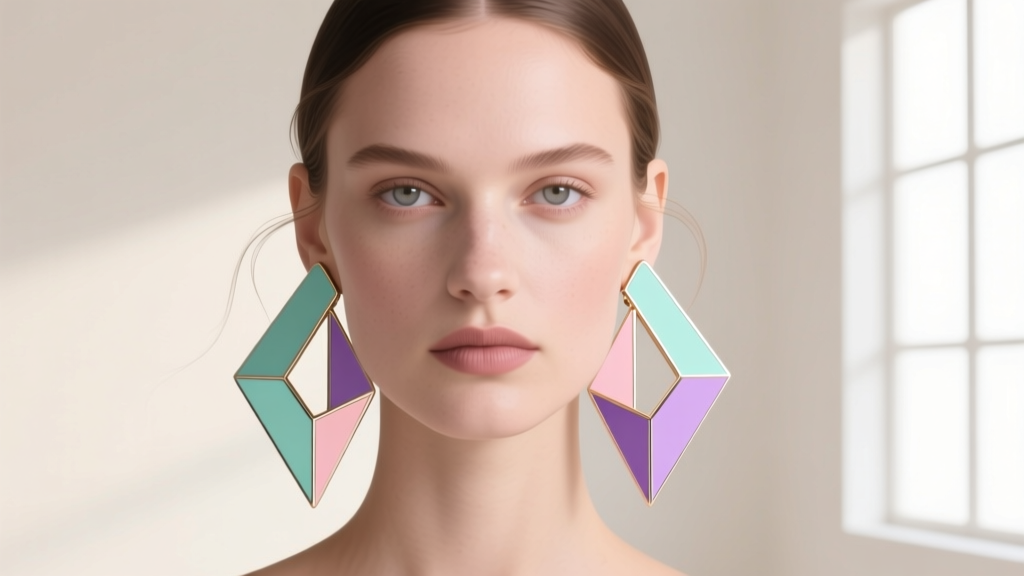
- Round Faces: Avoid massive XL hoops, which will only echo and exaggerate the circularity of your face. Instead, opt for long, angular geometric drops (like rectangles or diamonds) that extend past the jawline to create a visual elongating effect.
- Square Faces: Sharp jawlines benefit from softening curves. XL hoops, teardrops, and chandelier earrings with rounded edges will beautifully balance the strong angles of your lower face.
- Oval Faces: The universal face shape can pull off almost any XL silhouette. However, be cautious with extreme lengths; drops that graze the collarbone can visually shorten the neck.
- Heart Faces: With a wider forehead and a narrow, pointed chin, heart-shaped faces benefit from XL earrings that are wider at the bottom than the top. Teardrops and inverted triangles add visual weight to the lower half of the face, creating perfect symmetry.
Preventing Long-Term Lobe Elongation
Even with the right materials and support, wearing heavy jewelry requires a mindful aftercare routine. The Jewelers of America recommends treating your fine jewelry with the same care as your physical body. Never sleep in XL earrings. The lateral pressure of your head against a pillow can bend the posts and severely twist the fistula, leading to micro-tears and inflammation.
Furthermore, practice the "one-hour rule" when breaking in new, heavy pieces. Wear your XL earrings for just an hour, then take them out and gently massage the earlobe with a drop of jojoba or vitamin E oil to promote blood flow and tissue elasticity. Gradually increase the wearing time as your earlobes build tolerance.
"Your earlobes are not static; they are living tissue that responds to stress. If you feel a pulsing sensation or heat in your lobe while wearing heavy earrings, that is your body signaling restricted blood flow and tissue strain. Take them off immediately."
Final Thoughts on Sizing and Styling
Transitioning to XL earrings should be an empowering experience, not a painful one. By paying close attention to post gauge thickness, investing in silicone support patches, and choosing smart, lightweight materials like electroformed gold or acetate, you can wear dramatic, head-turning pieces all day long. Remember that true style is rooted in comfort; when you are not distracted by aching earlobes, you can fully own the bold, confident energy that only oversized jewelry can provide.


