How to Avoid a Bent Earring: Post & Wire Buying Guide
Learn how to prevent a bent earring with our expert buying guide. Discover the best metal alloys, gauge sizes, and wire styles for lasting durability.

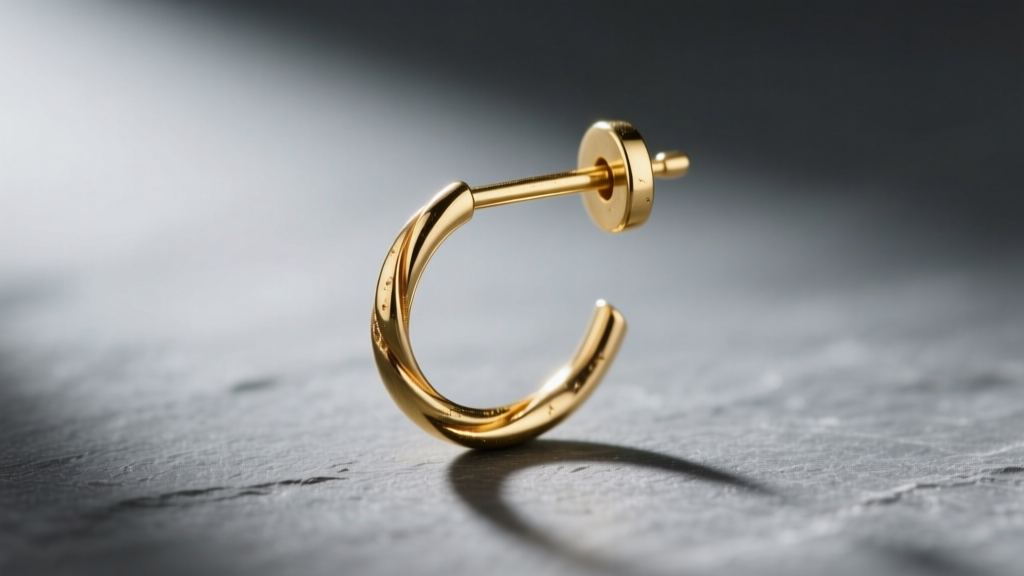
The Anatomy of a Bent Earring: Why Metals Fail
There are few things more frustrating in a jewelry collection than reaching for your favorite studs or dangles, only to find a bent earring post or a warped wire. A bent earring is not merely a cosmetic annoyance; it is a structural failure that can compromise your piercing channel, cause micro-tears in the fistula, and lead to irritation bumps or cartilage rejection. When you are shopping for new jewelry, understanding why certain metals bend—and how to select pieces engineered for longevity—is critical for both comfort and piercing health.
The root cause of a bent earring post usually comes down to two factors: metallurgical hardness and wire gauge thickness. Soft, high-purity metals paired with ultra-thin wire gauges create a perfect storm for structural warping. According to the Association of Professional Piercers (APP), jewelry must possess adequate tensile strength to withstand the daily friction and accidental snags of wear. In this comprehensive buying guide, we will break down the exact material grades, Vickers hardness ratings, and gauge dimensions you need to look for to ensure your earrings stay perfectly straight.
The Vickers Hardness Scale in Jewelry
To understand bend resistance, jewelers and metallurgists rely on the Vickers Hardness (HV) scale. This metric measures a material's resistance to permanent indentation and deformation. Pure 24-karat gold, for instance, has a Vickers hardness of roughly 25 HV. It is so malleable that a 20-gauge pure gold post will bend under the simple pressure of pushing a tight earring backing into place. Conversely, implant-grade titanium boasts an HV rating of over 300, making it virtually immune to everyday bending.
Buying Guide: Choosing Bend-Resistant Posts and Wires
When evaluating jewelry for structural integrity, you must balance the aesthetic appeal of the metal with its mechanical properties. Below is a comparative breakdown of common earring materials, their relative hardness, and their susceptibility to bending.
| Metal Alloy | Vickers Hardness (HV) | Bend Risk | Best Use Case |
|---|---|---|---|
| 24k Pure Gold | ~25 HV | Extreme | Decorative inlays only; never for posts |
| 14k Yellow Gold | ~130 HV | Moderate | Standard lobe studs (18G or thicker) |
| 18k White Gold | ~160 HV | Low-Moderate | High-end diamond studs and cartilage |
| 316L Surgical Steel | ~150 HV | Low | Heavy dangles and budget-friendly hoops |
| Grade 23 Titanium (6Al-4V) | ~330 HV | Negligible | Fresh piercings, cartilage, and active wear |
| Platinum (950) | ~110 HV | Moderate | Heirloom pieces (requires thick gauges) |
As highlighted by the Gemological Institute of America (GIA), alloying gold with metals like copper, zinc, and nickel drastically increases its durability. If you prefer the look of gold, always opt for 14k or 18k alloys rather than higher purities when selecting posts and wires that bear structural loads.
Gauge Thickness: The Structural Backbone
Even the hardest metal will bend if the wire is too thin. The gauge of the earring post or wire is the single most important physical dimension to check before purchasing. In the American Wire Gauge (AWG) system, a lower number indicates a thicker, stronger wire.
- 22-Gauge (0.64mm): Avoid for posts. This ultra-thin wire is highly prone to bending and snapping. It is sometimes used in lightweight, cheap fashion jewelry but lacks the structural integrity for long-term wear.
- 20-Gauge (0.81mm): The standard for many commercial lobe studs. While acceptable for lightweight jewelry, a 20G post in 14k gold can still bend if snagged on a sweater or hairbrush.
- 18-Gauge (1.02mm): The sweet spot for durability and comfort. An 18G post provides excellent bend resistance in gold and silver while remaining comfortable for standard lobe piercings.
- 16-Gauge (1.29mm) & 14-Gauge (1.63mm): Mandatory for cartilage, helix, and tragus piercings. The thicker wire prevents the 'cheese-cutter effect' and ensures the jewelry remains perfectly straight even if subjected to pressure while sleeping.
Expert Insight: When buying heavy gemstone studs (e.g., over 2 carats total weight), always demand an 18-gauge or 16-gauge post. The leverage exerted by a heavy stone on a thin 20-gauge post will inevitably cause the metal to droop and bend over time, altering the angle of the piercing.
Navigating 'Bent Wire' Earrings (Shepherd Hooks)
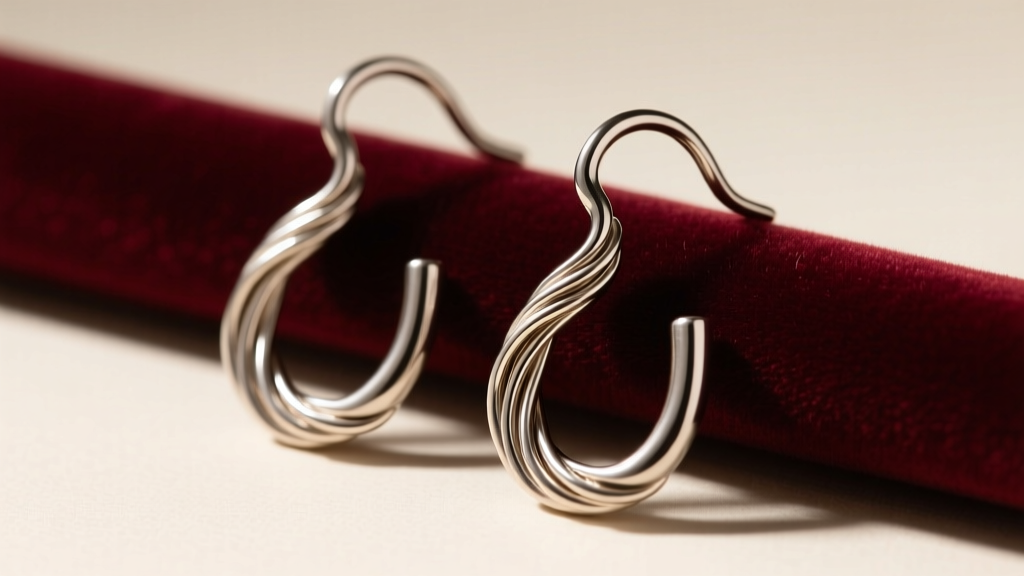
The term 'bent earring' does not always refer to damage; it often describes a specific, highly popular style of ear wire known as the shepherd hook, French wire, or fishhook. These wires rely on a precise, intentional bend to secure the earring in the ear without a backing. However, buying poorly manufactured shepherd hooks can lead to a warped, asymmetrical mess.
What to Look for in French Wire Curves
When shopping for bent wire earrings, look for wires that have been work-hardened. Work-hardening is a metallurgical process where the wire is bent and tumbled during manufacturing, which compresses the metal's grain structure and increases its stiffness. A properly work-hardened shepherd hook will spring back to its original shape if gently squeezed. If the wire feels gummy or easily shifts out of its curved profile when you handle it, it has been annealed (softened) and will quickly warp in your ear.
Additionally, check the termination of the wire. High-quality bent wire earrings will feature a smooth, rounded bead or a meticulously polished tapered end to prevent scratching the delicate tissue of the fistula during insertion. Avoid wires with sharp, flat-cut ends, which indicate mass production without proper finishing.
Troubleshooting: Can You Safely Straighten a Bent Earring?
If you already own a valuable piece with a warped post, you may be able to salvage it. However, you must be extremely cautious of metal fatigue. Every time you bend a metal back and forth, it accumulates microscopic stress fractures. Bending a post repeatedly will cause it to snap entirely.
Step-by-Step Straightening Protocol
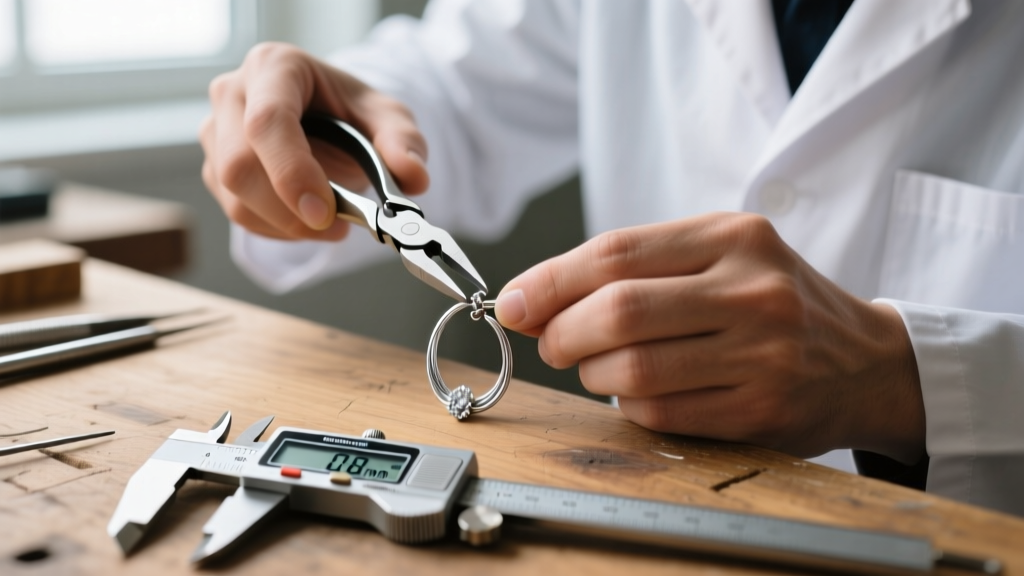
- Use the Right Tools: Never use standard steel pliers directly on gold, silver, or platinum. The hardened steel teeth will gouge and scratch the precious metal. Instead, use nylon-jaw pliers or wrap the tips of your pliers in masking tape.
- Measure the Bend: Use a digital caliper to identify the exact millimeter where the warp occurs. This prevents you from applying pressure to the wrong section of the post.
- Apply Gentle, Single-Direction Pressure: Grip the post firmly near the base (close to the earring head) to prevent the head from snapping off. Apply slow, steady pressure to coax the metal back to a 90-degree angle. Do not overcorrect and bend it back and forth.
- Inspect for Stress Cracks: After straightening, examine the post under a jeweler's loupe. If you see a visible crease or a white stress line in silver or gold, the structural integrity is compromised. Take it to a professional jeweler to have the post laser-welded or completely replaced.
By prioritizing high Vickers hardness alloys, selecting 18-gauge or thicker dimensions, and understanding the mechanics of work-hardened wires, you can entirely eliminate the frustration of a bent earring from your jewelry wardrobe. Invest in structural integrity, and your pieces will remain as flawless as the day you bought them.


