Best Value Stud Earrings 2026: The Ultimate Budget Guide
Discover the best value stud earrings in 2026. We break down material grades, pricing tiers, and where to find premium quality on a strict budget.

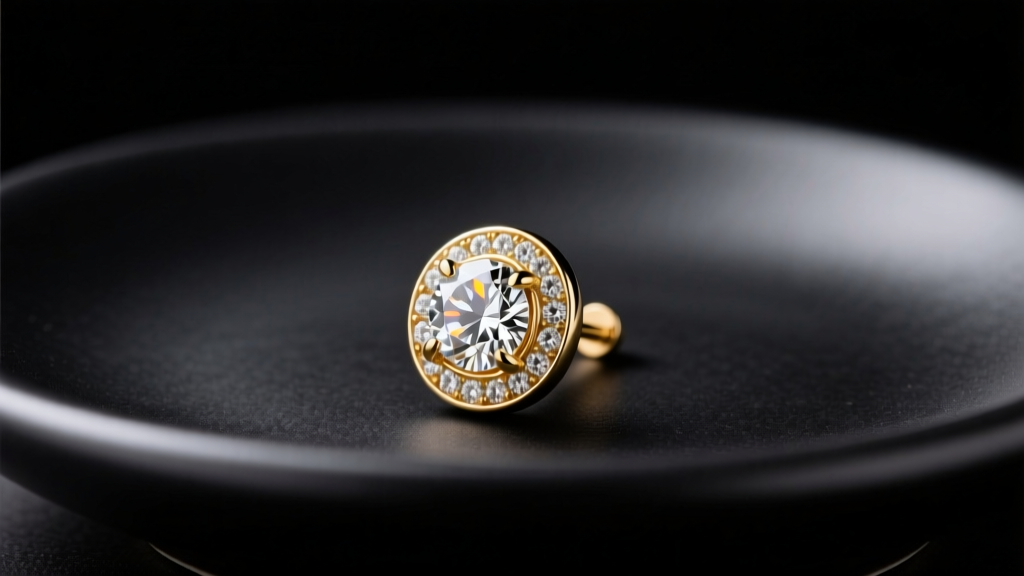
Navigating the jewelry market in 2026 requires a sharp eye for metallurgy and manufacturing standards. With inflation impacting precious metal costs and the rise of direct-to-consumer brands blurring the lines between luxury and fast fashion, finding the best value stud earrings is no longer just about hunting for the lowest price tag. True value lies at the intersection of material longevity, biocompatibility, and fair market pricing. Whether you are building a curated ear stack or seeking a reliable everyday pair, understanding what you are actually paying for is the difference between an heirloom investment and a tarnished disappointment.
The True Cost of 'Cheap' vs. 'Value' Stud Earrings
Before diving into specific price tiers, we must distinguish between 'cheap' and 'value.' Cheap stud earrings—typically priced under $12—are almost universally constructed from brass or zinc alloys with a microscopically thin flash-plating of gold or silver. These pieces trigger contact dermatitis, bend under minor pressure, and degrade within weeks. Value, conversely, means paying the fair market cost for solid, hypoallergenic materials with transparent sourcing. In 2026, a high-quality, entry-level value stud earring should start around the $25 mark, scaling up to $300+ depending on gemstone integration and karat weight.
Material Breakdown: What You Should Actually Pay
To assess value accurately, we categorize the market into three distinct material tiers. Each tier serves a different budget and use-case, but all must meet strict biocompatibility standards to be considered a worthy purchase.
Tier 1: Implant-Grade Titanium (The $20–$45 Sweet Spot)
For sensitive ears, newly pierced lobes, or cartilage studs, titanium is the undisputed king of budget value. However, not all titanium is equal. You must look for ASTM F136 implant-grade titanium. According to the Association of Professional Piercers (APP), this specific alloy is completely nickel-free and boasts a mirror-polished surface that resists bacterial adhesion. A standard 16-gauge titanium flat-back labret stud should cost between $20 and $35. If a brand charges $60+ for plain titanium without gemstones, you are paying for marketing, not material.
Tier 2: Heavy Vermeil & Gold-Filled (The $45–$85 Range)
If you desire the look of gold without the solid gold price tag, you must understand the legal definitions of plating. Standard 'gold-plated' jewelry has a gold layer of less than 0.5 microns and will wear off rapidly. Heavy Gold Vermeil requires a sterling silver base with a minimum of 2.5 microns of 14k or 18k gold. Gold-Filled jewelry features a brass core mechanically bonded with a gold layer comprising at least 5% (1/20th) of the total weight. Gold-filled stud earrings offer superior longevity to vermeil and represent excellent value in the $45 to $85 range, provided the posts are solid and not hollow.
Tier 3: Solid 14k Gold & Lab-Grown Diamonds (The $150–$300 Investment)
For lifetime wear, solid 14k gold is superior to 18k gold for stud earrings. 14k gold (58.5% pure gold) is alloyed with copper and silver, providing the structural rigidity needed to prevent posts from bending during sleep. When paired with lab-grown diamonds, the value proposition is immense. The Gemological Institute of America (GIA) confirms that lab-grown diamonds share the exact optical and chemical properties as mined stones. In 2026, a pair of 14k solid gold bezel-set stud earrings featuring 0.25ctw (carat total weight) VS-clarity lab-grown diamonds should retail between $180 and $280. Anything significantly higher includes a heavy brand premium.
The Gauge and Post Length Matrix
A major factor in the value and comfort of stud earrings is the dimensional accuracy of the post. Wearing the wrong gauge or post length leads to migration, irritation bumps, and lost jewelry. Use this matrix to ensure you are buying the correct specifications for your anatomy.
| Gauge Size | Thickness (mm) | Ideal Post Length | Best Placement | Expected Value Price |
|---|---|---|---|---|
| 20g | 0.81mm | 6mm - 8mm | Standard Earlobe (Healed) | $25 - $150 |
| 18g | 1.02mm | 6mm - 8mm | Upper Lobe / Second Hole | $30 - $180 |
| 16g | 1.29mm | 6mm - 10mm | Helix / Cartilage / Flat | $35 - $220 |
| 14g | 1.60mm | 8mm - 10mm | Tragus / Conch | $45 - $250 |
Pro Tip: For initial piercings or swelling-prone cartilage, always opt for a longer post (8mm-10mm) and downsize to 6mm once fully healed. Buying a brand that offers free or cheap post downsizing adds massive long-term value.
Hidden Value Killers: What to Avoid in 2026
Even if the metal is pure, poor engineering can ruin an otherwise valuable stud earring. Avoid these manufacturing shortcuts at all costs:
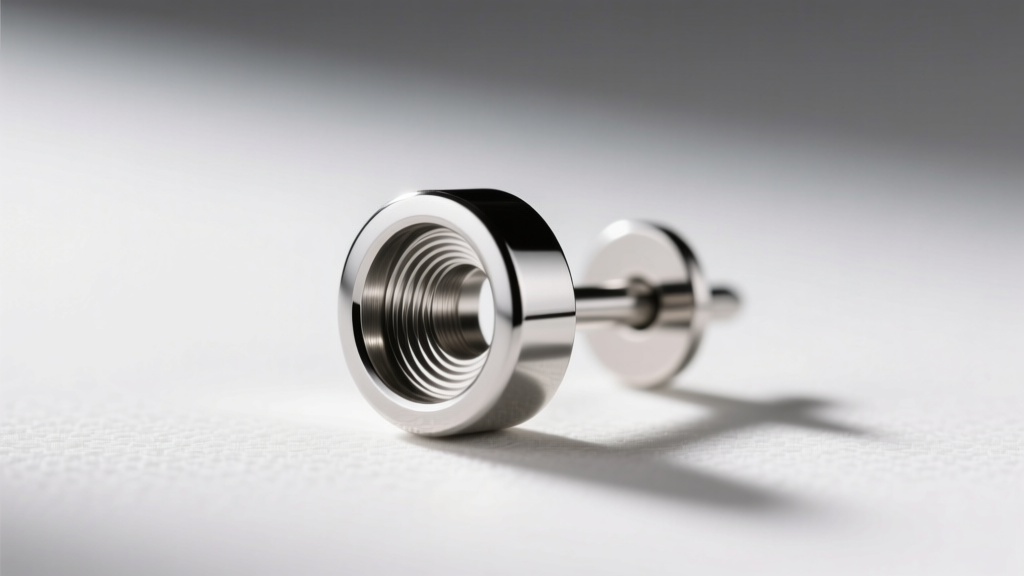
- External Threading: If the screw threads are on the post itself (rather than inside the backing), the sharp threads will tear through your piercing fistula every time you insert them. Always demand internally threaded or threadless (push-pin) stud earrings.
- Hollow Posts: Many mall-kiosk brands use hollow tubing for their gold posts to save on material weight. These bend irreparably if you sleep on them. Look for brands that explicitly advertise 'solid cast posts'.
- Butterfly Friction Backs: Traditional push-on butterfly backs trap sebum, dead skin, and bacteria, leading to foul odors and localized infections. Furthermore, they easily slip off in hair or clothing. Upgrade to flat-back labrets or secure screw-back clasps for vastly superior hygiene and security.
Brand Value Assessment: Where to Shop
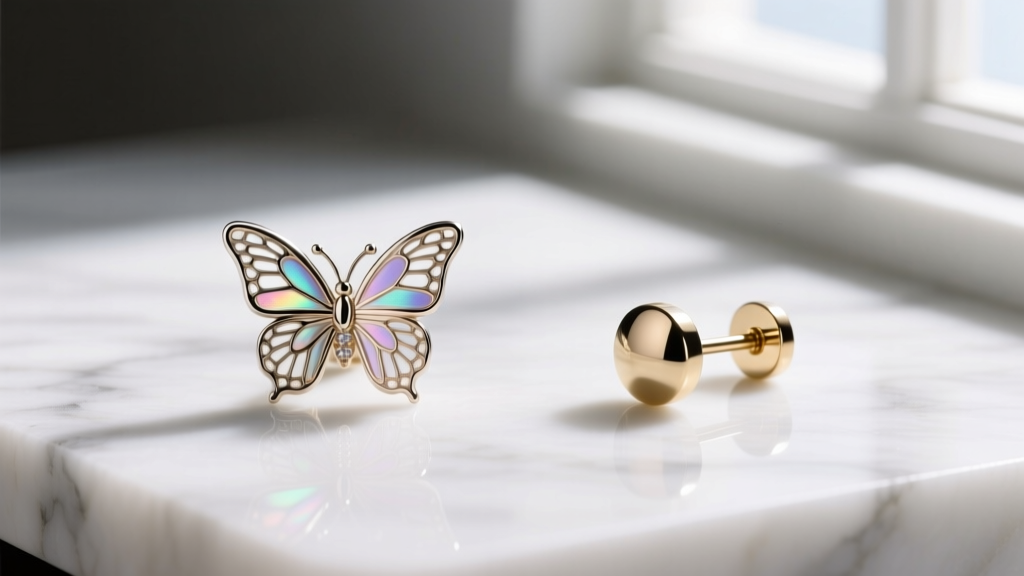
Based on current market analysis, here is how top brands stack up regarding budget and value for stud earrings:
- NeoMetal / Intrinsic Body: The gold standard for ASTM F136 titanium. Unbeatable value for plain and gem-set cartilage studs ($25-$60). You are buying direct from the manufacturer, bypassing retail markups.
- Quince: Excellent for solid 14k gold basics. Their supply chain model allows them to offer solid gold ball studs and small diamond studs at 30-40% below traditional mall jewelers.
- Mejuri / Gorjana: Great for trendy designs, but exercise caution. Much of their lower-priced inventory is gold vermeil. While stylish, they do not offer the same lifetime value as solid gold or implant-grade titanium alternatives.
Final Verdict: Maximizing Your Earring Budget
The best value stud earrings in 2026 are not the cheapest ones on the market; they are the ones that eliminate the need for replacement. By prioritizing ASTM F136 titanium for sensitive cartilage, demanding internal threading for structural integrity, and leveraging lab-grown diamonds for affordable luxury, you can build a premium, hypoallergenic ear stack without overextending your budget. Always verify the exact micron thickness, karat weight, and gauge dimensions before clicking checkout—your piercings and your wallet will thank you.


