Debunking the Gay Side of Earring Myth: Material Guide
Forget the outdated gay side of earring myth. Discover the best hypoallergenic and lightweight materials for modern asymmetrical and single earring styling.

The Origin and Fall of the "Gay Side" Coding
For decades, a persistent and reductive cultural myth dictated the rules of single earring placement for men and masculine-presenting individuals. The so-called "gay side of earring" rule—a homophobic coding from the 1970s and 80s where a right-ear piercing supposedly signaled homosexuality while the left signaled heterosexuality—has been thoroughly dismantled. In 2026, the fashion and jewelry industries recognize that asymmetrical ear styling, single statement pieces, and curated ear parties are purely matters of aesthetic expression, devoid of archaic sexual signaling.
However, as the stigma has vanished, a new challenge has emerged for those embracing asymmetrical or single-earring styling: the biomechanical and metallurgical realities of wearing uneven jewelry. When you abandon symmetry, you must carefully consider material properties, weight distribution, and skin biocompatibility. This guide explores the material science behind modern asymmetrical earring styling, ensuring your ears remain healthy, comfortable, and structurally sound.
The Biomechanics of Asymmetrical Earring Styling
Wearing a single, heavy statement earring on one lobe while leaving the other bare creates an imbalance that goes beyond mere aesthetics. The human earlobe is composed of fibrofatty tissue with no underlying cartilage, making it highly susceptible to gravitational pull and mechanical stress.
Understanding Specific Gravity and Lobe Ptosis
The primary enemy of the single-earring look is specific gravity (the density of a material relative to water). A large, solid brass or stainless steel hoop on one ear can weigh upwards of 15 grams. Over time, this uneven weight distribution can lead to localized lobe ptosis (sagging) and even micro-tears in the fistula (the piercing channel). To combat this, many stylists recommend upsizing the gauge of the single pierced ear from a standard 20g to an 18g or 16g, which provides a thicker tissue column to support heavier, low-density metals without cutting through the skin.
"When styling asymmetrically, the goal is to maximize visual volume while minimizing physical mass. Hollow tubing, low-density alloys, and strategic cut-outs are essential for single-lobe statements."
Furthermore, chronic uneven weight on the cervical spine and surrounding neck muscles can cause subtle postural compensation. While rare in casual wearers, those who wear heavy, solid-metal asymmetrical pieces daily often report unilateral neck tension. Choosing the right material is not just about avoiding allergic reactions; it is about preserving the structural integrity of your piercing and your physical comfort.
Material Comparison for Single Statement Lobes
To achieve a bold, asymmetrical look without compromising tissue health, you must select materials that offer high visual impact with low physical density. Below is a comparative analysis of the most common metals used in modern single-earring and asymmetrical designs.
| Material | Specific Gravity (Density) | Nickel Content | Best Asymmetrical Application |
|---|---|---|---|
| Implant-Grade Titanium (ASTM F136) | 4.51 g/cm³ | 0% | Oversized single hoops, heavy structural studs |
| Niobium | 8.57 g/cm³ | 0% | Ear cuffs, un-pierced asymmetrical accents |
| 14k Yellow Gold (Alloyed) | ~13.5 g/cm³ | Trace (varies) | Lightweight single huggies, delicate chains |
| Surgical Steel (316L) | 8.00 g/cm³ | 8-10% | Budget-friendly asymmetrical lobes (short-term) |
| Solid Brass / Bronze | 8.4 - 8.8 g/cm³ | 0% (but contains copper/zinc) | Avant-garde runway pieces (not for daily wear) |
As highlighted by the Association of Professional Piercers (APP), implant-grade titanium remains the gold standard for body jewelry. Its incredibly low density (4.51 g/cm³) means a 20mm titanium hoop weighs nearly half as much as the exact same design cast in stainless steel or gold. For a single-ear statement piece, titanium allows for dramatic scale without the destructive gravitational pull that causes lobe stretching.
Cartilage Asymmetry: Implant-Grade Requirements
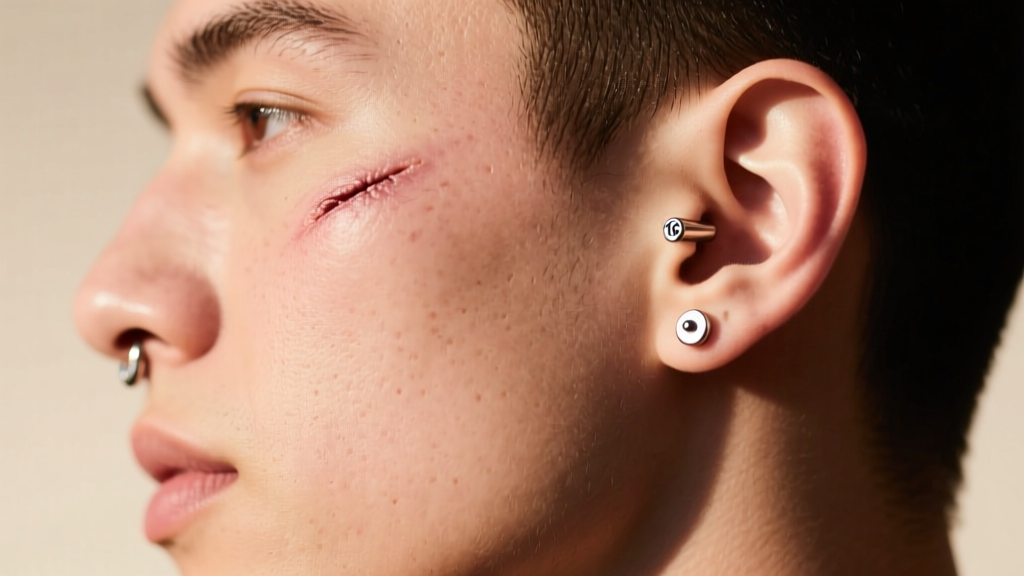
Asymmetrical styling is not limited to the lobes. The modern "curated ear" often features a dense cluster of piercings on one side (e.g., helix, conch, daith, and tragus) while the opposite ear remains entirely bare or features a single lobe stud. This extreme asymmetry places a massive immunological burden on one side of the body.
Why ASTM F136 Titanium is Non-Negotiable
When you subject one ear to multiple fresh cartilage piercings to create an asymmetrical look, the localized immune response is significant. Cartilage is avascular (lacking direct blood supply), meaning it heals slowly and is highly prone to hypertrophic scarring and rejection if irritated by metal allergies.
- Surface Finish: Implant-grade titanium can be polished to a mirror finish (less than 0.2 micrometers surface roughness), preventing bacteria harborage and reducing friction during the healing of multiple adjacent piercings.
- Biocompatibility: Unlike 316L surgical steel, which contains up to 10% nickel that can leach into the skin when exposed to sweat and sebum, ASTM F136 titanium is entirely nickel-free.
- Anodization: Titanium can be anodized to create vibrant, hypoallergenic colors without the use of toxic paints or platings, allowing for complex, color-coded asymmetrical designs.
The Gemological Institute of America (GIA) frequently notes that metal allergies are a leading cause of jewelry dermatitis. When building an asymmetrical cartilage setup, introducing nickel-bearing metals to an already stressed immune environment is a recipe for chronic inflammation and piercing migration. Furthermore, when styling hair swept to one side to accentuate an asymmetrical ear, long posts can snag and cause trauma. Utilizing titanium flat-back labrets and having a professional piercer "downsize" the post length after initial swelling subsides is critical for maintaining the setup.
The Danger of "Mystery Metals" in Uneven Setups
Many fast-fashion retailers sell "asymmetrical earring sets" crafted from zinc alloys or mystery metals with thin gold or rhodium plating. In an asymmetrical setup, the contrast between the bare ear and the pierced ear draws intense visual focus to the jewelry. When cheap plating inevitably wears off on the heavy, single-ear statement piece, it exposes the skin to porous, oxidizing base metals. This not only causes severe contact dermatitis but also ruins the aesthetic integrity of the curated look.
2026 Pricing & Sourcing Guide for Asymmetrical Sets
Investing in high-quality materials for asymmetrical styling requires understanding the current market landscape. Because you are often buying single pieces or mismatched sets, pricing structures differ from traditional paired earrings.
- Implant-Grade Titanium Flatbacks & Hoops: Expect to pay between $35 and $85 per piece from reputable brands like NeoMetal or BVLA. These are sold individually, making them perfect for building a dense, one-sided cartilage cluster.
- 14k Gold Single Statement Lobes: High-quality, lightweight 14k gold single hoops or sculptural studs typically range from $150 to $400. Look for brands that utilize hollow-tube construction or 3D-printed wax casting to reduce material density.
- Niobium Ear Cuffs: For un-pierced asymmetry, niobium ear cuffs ($40 - $90) offer excellent malleability. You can bend and adjust the metal to fit the exact contour of your helix or tragus without the risk of the metal snapping or causing allergic reactions.
Final Verdict: Expression Over Outdated Codes
The concept of a "gay side of earring" is a relic of a less tolerant era. Today, the decision to wear a single earring, an asymmetrical lobe setup, or a fully curated unilateral ear party is a celebration of personal style and facial symmetry balancing. However, true style requires a foundation of anatomical and metallurgical knowledge. By prioritizing low-density, highly biocompatible materials like implant-grade titanium and niobium, you ensure that your asymmetrical expressions remain comfortable, safe, and structurally sound for years to come. Forget the archaic rules; focus on the material science, and let your styling speak for itself.


