Square Earrings Men: Technical Sizing & Material Deep Dive
Discover the technical specs for square earrings men wear best. Expert deep dive into gauge sizes, hypoallergenic metals, and secure backings.

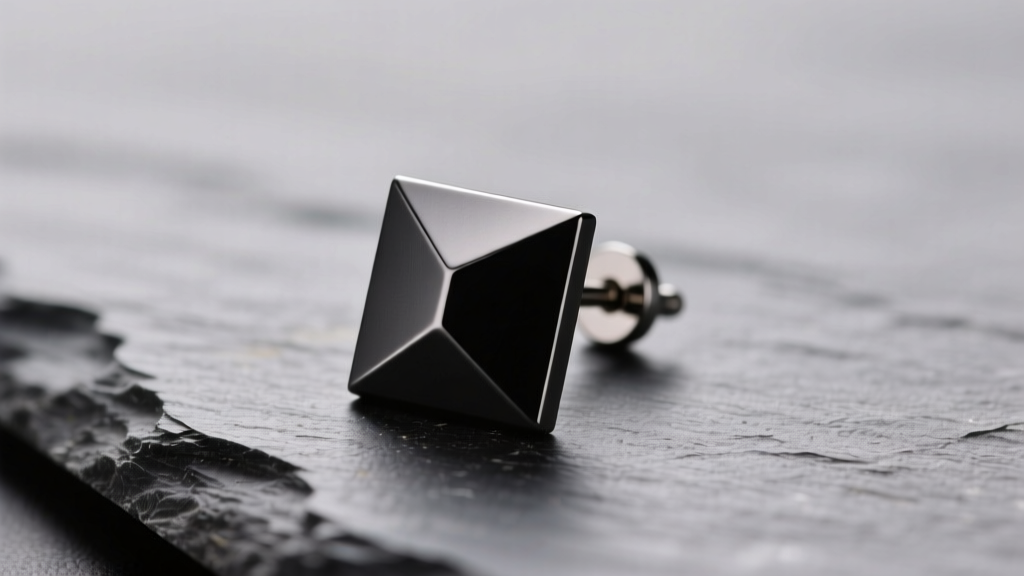
The evolution of men's jewelry has moved far beyond simple wire hoops and basic diamond studs. Today, geometric precision dominates the market, and when searching for the perfect square earrings men often prioritize sharp angles, architectural silhouettes, and modern minimalism. However, the aesthetic appeal of a perfectly machined square earring is only half the equation. The structural integrity, metallurgical grade, and biomechanical fit are what separate a premium piece from a disposable accessory.
As a technical deep dive into the mechanics of men's geometric jewelry, this guide dissects the exact specifications you need to evaluate before purchasing square earrings. From post gauges to alloy compositions, here is the expert blueprint for selecting square earrings that endure daily wear without compromising earlobe health.
Metallurgy & Material Grades for Men's Square Studs
The physical weight and chemical reactivity of your earrings dictate long-term comfort. Because square designs inherently possess more surface area and mass than circular studs of the same diameter, material density is a critical factor.
Implant-Grade Titanium (ASTM F136)
For men with active lifestyles or sensitive skin, Grade 23 Titanium (Ti-6Al-4V) is the undisputed gold standard. According to the Association of Professional Piercers (APP), implant-grade titanium is completely nickel-free and biocompatible. Furthermore, titanium is approximately 45% lighter than stainless steel. When wearing a heavy 10mm x 10mm solid square drop, this weight reduction drastically minimizes the gravitational pull on the earlobe, preventing premature tissue stretching.
316L vs. 904L Stainless Steel
While 316L "surgical" steel is the most common and affordable option ($15–$40), it contains 8-10.5% nickel. The American Academy of Dermatology warns that prolonged exposure to nickel, especially when combined with sweat during exercise, frequently triggers allergic contact dermatitis. If you prefer the heavier, premium feel of steel, look for 904L steel (often used in luxury horology), which offers superior corrosion resistance, though it still contains trace nickel.
Solid Gold Alloys: 14k vs. 18k
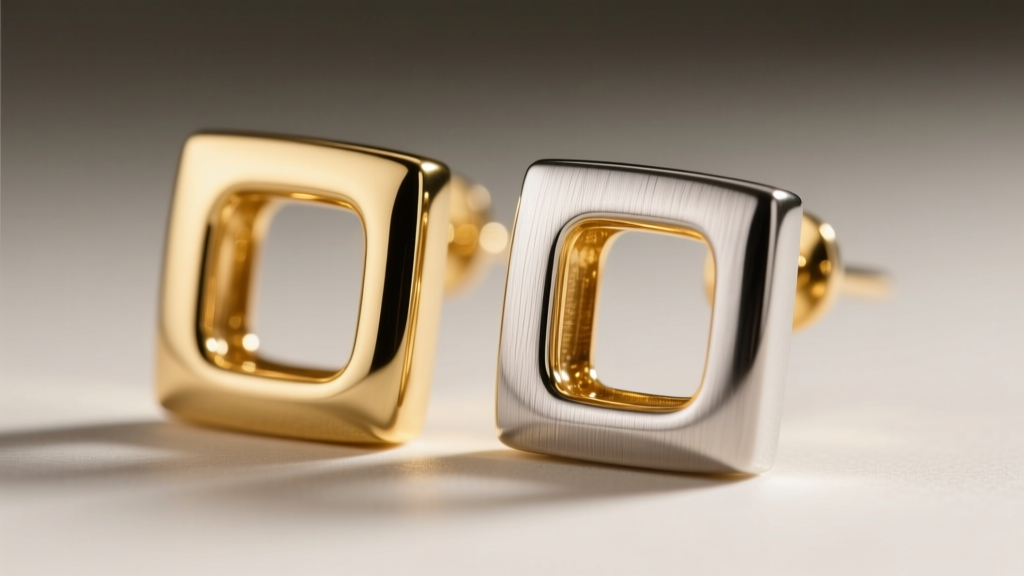
When investing in luxury square earrings ($150–$600+), the karat weight alters both the color and the structural durability. 18k gold (75% pure gold) offers a rich, deep yellow hue but is relatively soft. A sharp-cornered square earring in 18k gold is prone to micro-dents and edge blunting if dropped on hard surfaces. Conversely, 14k gold (58.5% pure gold) is alloyed with higher percentages of copper, silver, and zinc, yielding a harder metal that maintains crisp, 90-degree geometric edges far better over years of daily wear.
Gauge Thickness and Post Mechanics
The "cheese-cutter effect" is a common biomechanical failure in men's jewelry, where a thin post slowly migrates through the earlobe tissue due to the pendulum weight of the earring. Square earrings, with their concentrated corner mass, exacerbate this issue if the post is too thin.
| Gauge Size | Millimeter (mm) | Structural Use Case for Square Earrings | Estimated Price Premium |
|---|---|---|---|
| 20G | 0.81mm | Micro-squares (2mm-4mm); lightweight studs only. | Base Price |
| 18G | 1.02mm | Standard medium squares (5mm-7mm); standard retail default. | +10% |
| 16G | 1.29mm | Heavy drops and large architectural squares (8mm+); highly recommended. | +25% |
| 14G | 1.63mm | Stretched lobes or massive statement geometric pieces. | +40% |
If you are purchasing square drop earrings that exceed 8mm in width, insist on a 16G or 14G post. The increased surface area of a 1.29mm post distributes the shear stress across a wider column of tissue, stabilizing the earring and keeping the square face perfectly flush and level against the ear.
Backing Mechanisms: Securing Geometric Weights
The backing mechanism is the most frequent point of failure in men's earrings. Standard friction backs (butterfly clasps) rely on a tiny metal spring that degrades over time. When paired with a top-heavy square design, the torque generated by turning your head or pulling off a hoodie can easily dislodge a friction back, resulting in lost jewelry.
The Flat-Back (Labret) Advantage
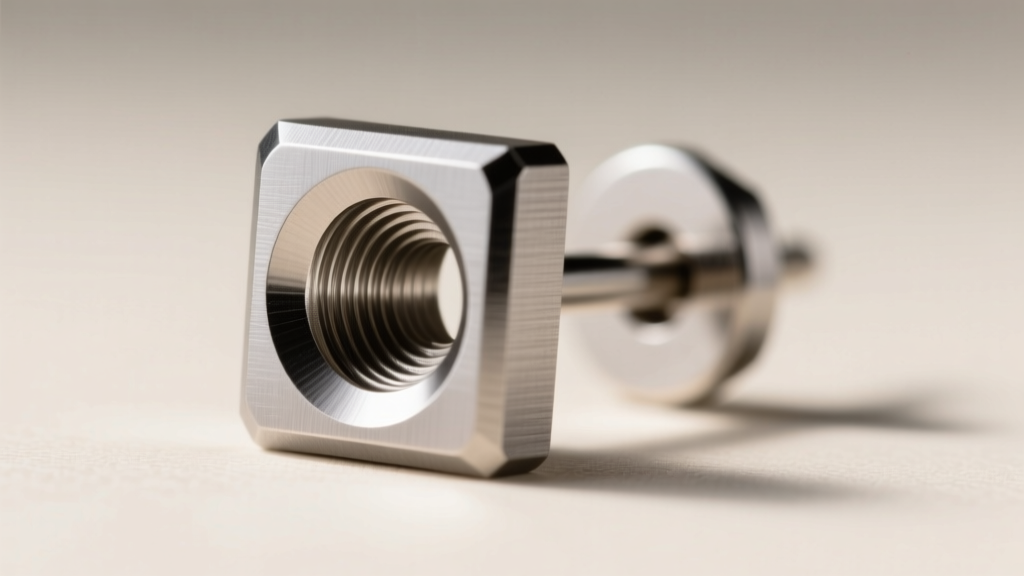
For secure, comfortable wear, internally threaded flat-back posts are vastly superior. The backing is a flat titanium or gold disc that screws directly into the post from behind the ear. This eliminates the sharp post tip that pokes the neck while sleeping and provides a mechanical lock that cannot be pulled off by friction. Brands specializing in high-end body jewelry utilize this threading standard to ensure heavy geometric fronts remain perfectly anchored.
Screw-On Bezel and O-Ring Systems
For square hoop or huggie variations, look for clicker closures with a secondary O-ring seal, or continuous hoops with a precision-machined screw thread. A standard snap-shut hinge on a square huggie will eventually warp due to the angular stress placed on the metal when the earring is opened and closed repeatedly.
Proportional Scaling: Face Shape & Square Dimensions
Geometric jewelry interacts directly with facial symmetry. Men with strong, angular jawlines and square face shapes can carry off sharp, 90-degree square studs (typically 5mm to 8mm) as they echo their natural bone structure. However, men with rounder or softer facial features often achieve better visual balance by opting for square earrings with chamfered (beveled) edges or combining a square silhouette with an inner circular cutout. This breaks up the harshness of the geometry while retaining the modern, architectural aesthetic.
Surface Finishes & Light Refraction in Geometric Designs
The way a square earring interacts with light fundamentally changes its perceived size and visual weight on the ear. Understanding surface finishes is crucial for matching the earring to your personal style and environment.
- Mirror Polish: A high-shine finish reflects the surrounding environment, effectively camouflaging the metal and making the square appear slightly smaller and softer. It is highly formal but shows micro-scratches rapidly.
- Brushed / Satin: Created by dragging an abrasive pad in a single direction, this finish scatters light directionally. It emphasizes the industrial, masculine nature of the square shape and hides daily wear-and-tear exceptionally well.
- Matte / Bead-Blasted: By bombarding the metal with microscopic glass beads, the surface becomes porous at a microscopic level, absorbing light rather than reflecting it. A matte black titanium square stud creates a "void-like" silhouette that is aggressively modern and stealthy.
Maintenance & Oxidation Prevention
Square earrings present a unique maintenance challenge: the 90-degree corners trap sebum, dead skin cells, and environmental debris far more easily than smooth, circular designs. Furthermore, matte or sandblasted finishes are highly susceptible to polishing away if cleaned incorrectly.
- Ultrasonic Cleaners: Safe for polished 14k gold and plain titanium square studs. However, avoid using ultrasonics on oxidized black silver or matte-finished steel, as the high-frequency vibrations will strip the deliberate patina and restore a shiny finish.
- Chemical Soaks: A simple solution of warm water and mild, fragrance-free dish soap is optimal. Soak for 5 minutes, then use a soft-bristled infant toothbrush to gently agitate the debris trapped in the inner corners of the square bezel.
- Storage: Store square earrings in individual microfiber pouches. The sharp corners of square designs will easily scratch the surface of adjacent jewelry if tossed loosely into a communal valet tray or jewelry box.
Ultimately, the best square earrings men can invest in are those that marry uncompromising architectural aesthetics with rigorous biomechanical engineering. By prioritizing implant-grade materials, appropriate gauge thickness, and secure threading mechanisms, you ensure your geometric jewelry remains a permanent, comfortable fixture of your personal style.


