Earrings That Hang: The Ultimate Comfort and Style Buying Guide
Discover how to choose earrings that hang comfortably. Learn about weight limits, secure backings, hypoallergenic metals, and face-shape styling tips.

The Allure and Anatomy of Drop Earrings
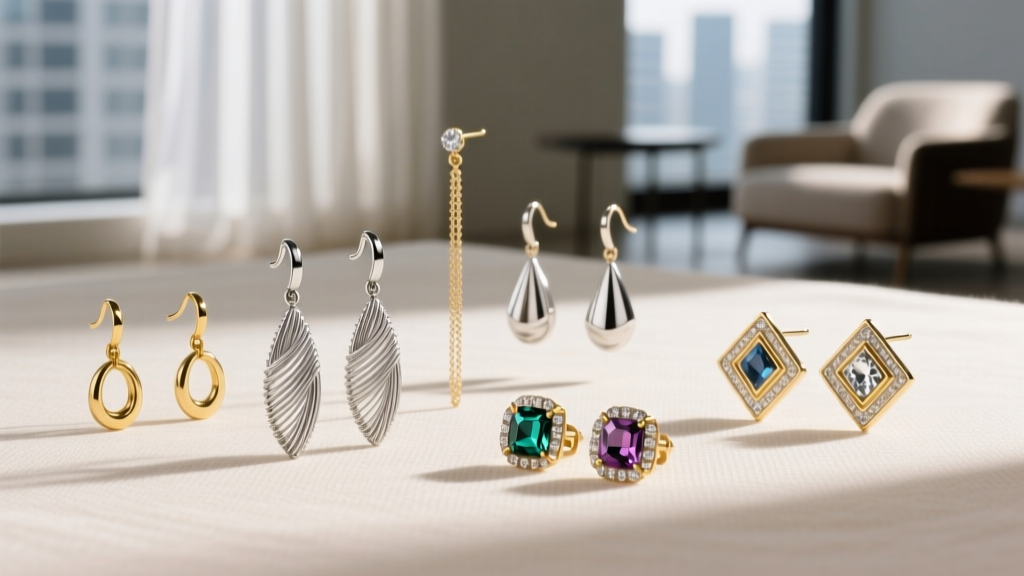
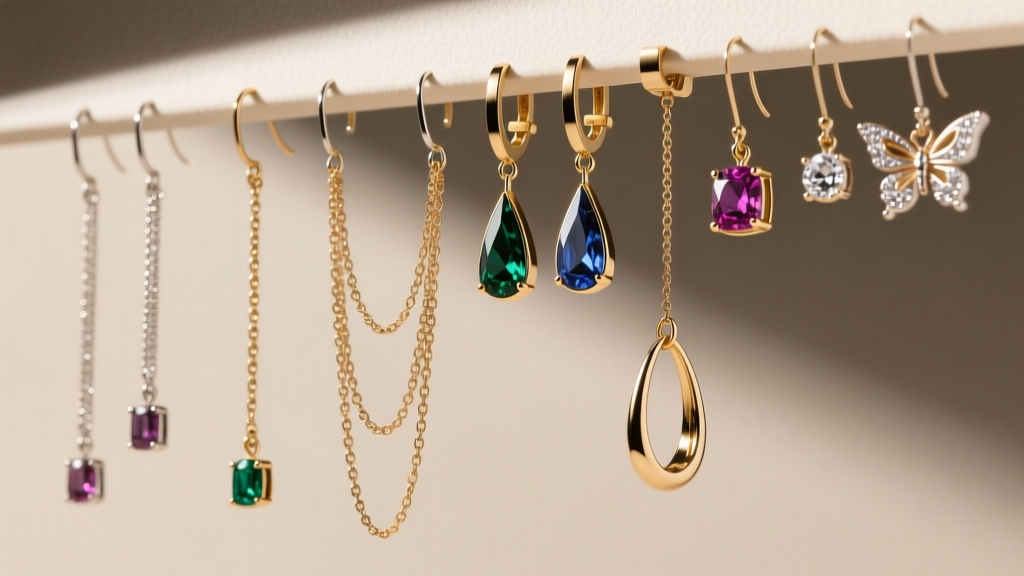
There is an undeniable elegance to earrings that hang. Whether they are subtle teardrop stones, kinetic geometric dangles, or elaborate chandelier pieces, drop earrings introduce movement, draw attention to the neckline, and frame the face in a way that studs simply cannot. However, the very physics that make these styles so captivating also introduce unique challenges regarding comfort, earlobe health, and long-term wearability.
As a jewelry stylist, I frequently see clients invest in stunning dangle pieces only to relegate them to the back of their jewelry box after a few hours of wear due to earlobe fatigue, forward drooping, or insecure clasps. Buying the right pair requires looking beyond the gemstone and focusing on the structural engineering of the earring. This comprehensive buying guide will walk you through the exact specifications, material grades, and mechanical features you need to evaluate before purchasing earrings that hang.
The Physics of Hanging Earrings: Weight and Wire Gauge
The most critical factor when shopping for earrings that hang is weight distribution. A standard stud earring weighs between 2 and 4 grams. In contrast, elaborate dangles can easily exceed 20 grams. When you introduce a hanging element, you create a pendulum effect that exerts torque on the piercing fistula (the healed skin tube of your piercing).
Understanding the 'Cheese-Cutter' Effect
If a heavy drop earring is suspended on a thin wire, the downward force concentrates on a microscopic surface area of the earlobe. Over time, this causes a phenomenon piercers call the 'cheese-cutter effect,' where the wire slowly migrates downward, thinning the earlobe tissue and potentially causing permanent tearing. To prevent this, you must evaluate both the total weight and the wire gauge (thickness).
- Everyday Wear (8+ hours): Look for earrings weighing under 10 grams. The wire should be at least 18-gauge (1.0mm) or 16-gauge (1.2mm) to distribute the weight safely.
- Event Wear (2-4 hours): You can comfortably wear pieces up to 20-25 grams, provided the ear wire is thick (14-gauge or 16-gauge) and you utilize supportive backings.
- Avoid: Any earring over 12 grams that utilizes a flimsy 20-gauge (0.8mm) or 22-gauge French hook, as this will cause immediate lobe strain and micro-tears.
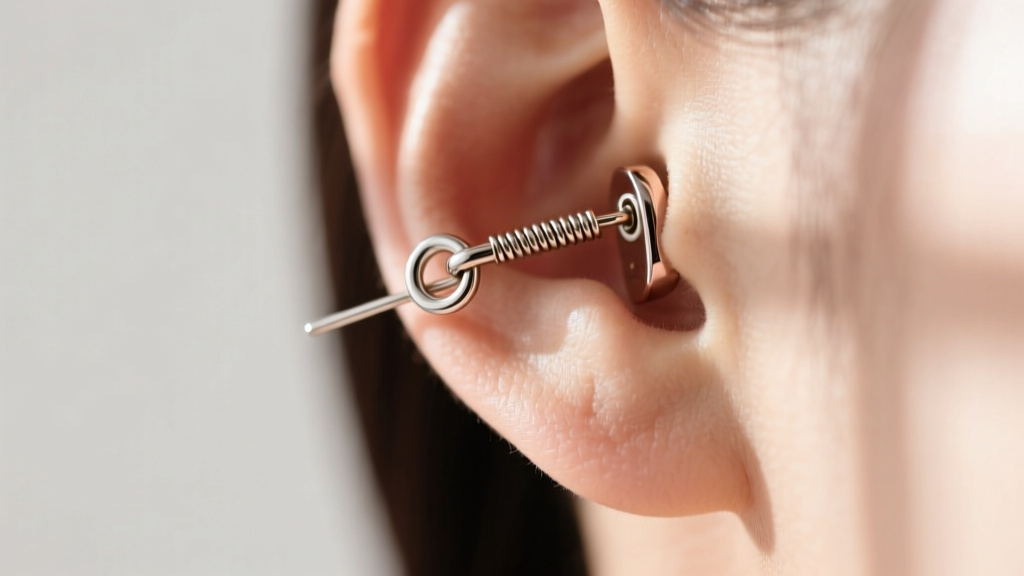
Decoding Backings: Security vs. Comfort
The backing mechanism dictates whether your earrings that hang will stay securely in place or end up lost in a taxi cab. Because dangles move and catch on hair or clothing, standard friction push-backs (butterfly backs) are entirely unsuitable. Here is how the professional backing types compare for hanging styles:
| Backing Type | Security Level | Comfort Profile | Best Use Case |
|---|---|---|---|
| Leverback | Very High | Excellent | Heavy dangles; active days; the hinged clasp prevents snagging and loss. |
| French Wire (Fishhook) | Low | High | Lightweight drops; requires a silicone stopper or O-ring to prevent slipping. |
| Omega Clip | Highest | Moderate | Extremely heavy chandeliers; the wide paddle distributes weight across the back of the lobe. |
| Continuous Hoop / Latch | High | Excellent | Threader earrings and huggies with dangling charms; seamless look. |
Material Integrity: Why Plated Metals Fail in Dangles
When buying earrings that hang, the choice of metal is not just about allergies; it is about mechanical friction. Moving parts—such as the hinge on a leverback or the curve of a French hook rubbing against the post—create constant friction. If you buy gold-plated or vermeil earrings with moving hinges, the plating will wear off at the friction points within months, exposing base metals like brass or copper, which rapidly oxidize and turn the skin green or black.
For the ear wires and moving components of hanging earrings, you must invest in solid, homogeneous metals. According to the Association of Professional Piercers, the safest and most durable metals for prolonged skin contact and friction include:
- Implant-Grade Titanium (ASTM F136): The gold standard for sensitive ears. It is incredibly strong, lightweight (reducing overall earring weight), and completely nickel-free.
- Solid 14k or 18k Gold: Ensure it is alloyed for jewelry (nickel-free). The Gemological Institute of America (GIA) notes that 18k gold offers the best balance of rich color and structural durability for fine jewelry hinges.
- Niobium: A highly biocompatible, lightweight metal that can be anodized into vibrant colors without the use of irritating dyes or platings.
Stylist Warning: Never purchase 'gold-plated brass' for heavy drop earrings. The weight of the dangle will pull the ear wire against the fistula, stripping the microscopic layer of gold plating in a matter of weeks and leading to severe contact dermatitis.
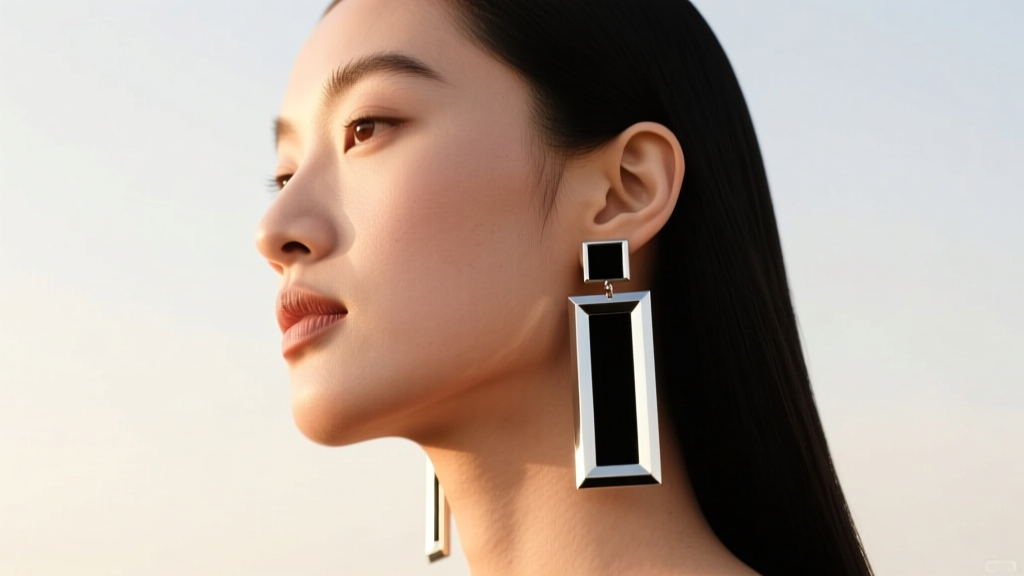
Proportional Styling: Matching Face Shapes
Beyond mechanics, the visual impact of earrings that hang relies heavily on how their silhouette interacts with your natural bone structure. Use this framework to select the most flattering drop lengths and shapes:
- Round Faces: Avoid circular hoops with round charms, which exaggerate facial width. Instead, opt for long, linear drop earrings, rectangular geometric dangles, or narrow chandeliers that hang past the jawline to create a visual elongating effect.
- Square Faces: Angular jawlines benefit from softening curves. Look for teardrop shapes, oval cabochon drops, or fluid, kinetic chain earrings that hang with a lot of organic movement.
- Heart-Shaped Faces: Balance a narrower chin with bottom-heavy dangles or triangle-shaped drops that hang widest at the bottom, drawing the eye downward and adding visual weight to the lower half of the face.
- Oval Faces: The most versatile shape. You can confidently wear any style of hanging earring, from dramatic shoulder-dusting chandeliers to subtle, asymmetrical threaders.
Troubleshooting the 'Forward Droop'
A common frustration with earrings that hang is the 'forward droop'—when the weight of the dangle pulls the top of the earring forward, causing the piece to point at the floor rather than dangling straight down against the neck. This usually happens when the earring's center of gravity sits too far below the piercing hole, combined with a naturally soft or stretched earlobe.
The Solution: Do not abandon the earrings. Instead, purchase silicone earring lifters (also known as earring support discs). These are small, clear, flower-shaped plastic or silicone discs that slide onto the earring post behind the earlobe. They act as a structural splint, distributing the weight of the heavy dangle across a wider surface area of the back of the ear, forcing the earring to hang perfectly straight and relieving pressure on the piercing hole.
Final Buying Checklist
Before adding a new pair of drop or dangle earrings to your cart, run them through this quick quality-assurance checklist:
- Is the total weight under 15 grams for daily wear?
- Is the ear wire at least 18-gauge thickness to prevent the cheese-cutter effect?
- Does the backing feature a secure closure (leverback, latch, or omega) rather than a simple push-back?
- Are the ear wires made of solid, un-plated hypoallergenic metal (Titanium, Niobium, or solid Gold)?
- Does the silhouette contrast flatteringly with your natural face shape?
By prioritizing structural integrity and biomechanical comfort alongside aesthetic beauty, you can confidently build a collection of earrings that hang beautifully, move gracefully, and remain comfortable from morning until night.