Big Silver Earrings: Metallurgy, Weight, and Earlobe Safety Guide
Discover the metallurgy, weight distribution, and structural engineering behind big silver earrings. Learn how to choose safe, durable oversized pieces.

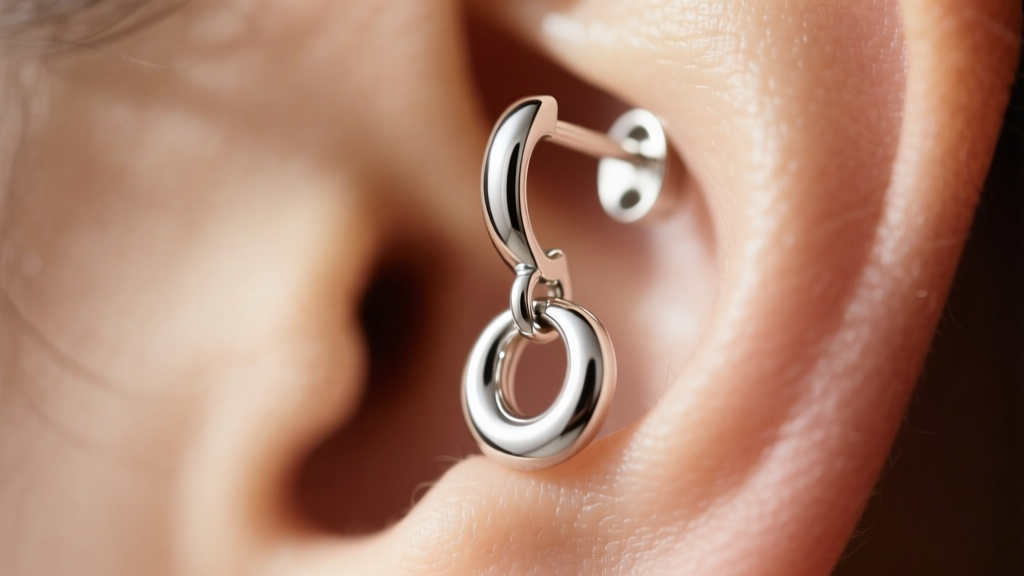
The Metallurgy of Oversized Silver: Beyond Standard 925
When evaluating big silver earrings, most consumers stop at the '925' hallmark, assuming all sterling silver is created equal. However, the structural demands of oversized hoops, heavy sculptural dangles, and large ear cuffs require a deeper understanding of silver metallurgy. Standard sterling silver is an alloy composed of 92.5% pure silver and 7.5% copper. While the copper adds necessary tensile strength compared to pure silver, it introduces two significant vulnerabilities in large-scale jewelry: susceptibility to oxidation (tarnish) and a phenomenon known as metal fatigue.
Metal fatigue occurs when a material is subjected to repeated cyclic loading. For big silver earrings, every time you turn your head, the earring swings, placing micro-stresses on the wire and solder joints. Over time, standard 925 sterling can develop microscopic fractures, particularly at the clasp or the post-to-plate junction. According to the Silver Institute, the specific alloying elements dictate the metal's spring-back and memory. This is why expert jewelers often turn to advanced alloys for oversized pieces.
Argentium Silver: The Superior Choice for Large Hoops
Argentium silver (typically 93.5% or 96% silver) replaces a portion of the copper with germanium. This seemingly minor chemical adjustment drastically alters the metal's physical properties. The germanium forms a transparent, protective oxide layer on the surface, virtually eliminating tarnish. More importantly for big silver earrings, Argentium exhibits superior 'spring-back' and ductility. If a large Argentium hoop is accidentally bent or snagged, it is far more likely to return to its original shape without snapping, whereas standard 925 sterling might permanently deform or fracture at the stress point.
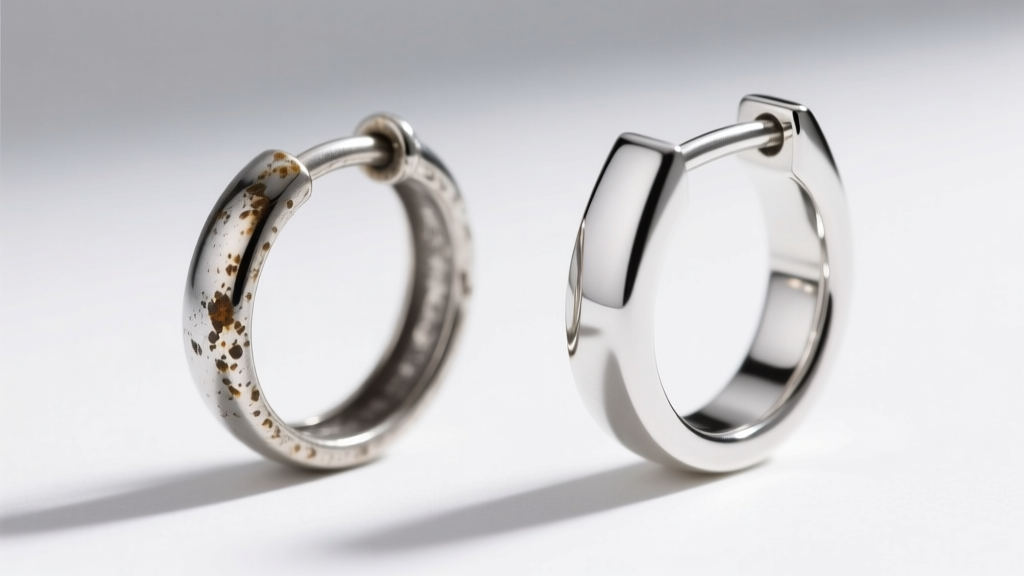
Britannia Silver: A Structural Liability
Conversely, Britannia silver (95.8% pure silver) is entirely unsuited for the structural components of heavy earrings. While its high purity makes it hypoallergenic and excellent for intricate, static metal clay designs, its low tensile strength means that thin wires, posts, and clasps made from Britannia silver will easily bend under the pendulum weight of a large earring body.
Biomechanics of the Lobe: Weight Distribution and Gauge
The human earlobe is composed of adipose tissue and fibroareolar connective tissue; it lacks the rigid cartilage framework of the upper ear. When you wear big silver earrings, you are subjecting this soft tissue to continuous gravitational shear force. The primary cause of earlobe tearing and elongation is not just the total weight of the earring, but the pressure per square millimeter exerted on the fistula (the piercing hole).
This is where wire gauge becomes a critical safety factor. Standard earrings typically use 20-gauge (0.81mm) or 18-gauge (1.02mm) wire. If a 20-gram silver dangle hangs from a 20-gauge wire, the wire acts like a cheese cutter, concentrating the entire load onto a microscopic surface area of the fistula tract. To mitigate this, the insertion wire on heavy silver jewelry must be thicker to distribute the load.
Weight Thresholds and Required Hardware
As a general biomechanical rule, a standard, healthy earlobe can comfortably support 7 to 10 grams of static weight indefinitely. Beyond 14 grams, active intervention in the earring's backing and wire gauge is mandatory to prevent permanent tissue elongation. The American Academy of Dermatology notes that chronic traction on piercing sites leads to irreversible tissue migration and scarring.
| Earring Weight Class | Total Mass | Minimum Wire Gauge (Insertion) | Mandatory Backing / Support System |
|---|---|---|---|
| Lightweight | 1g - 7g | 20G (0.81mm) - 18G (1.02mm) | Standard friction clutch or silicone stopper |
| Mid-Weight | 8g - 14g | 18G (1.02mm) - 16G (1.29mm) | La Pousette locking clutch or 10mm silicone support disc |
| Heavyweight | 15g - 25g+ | 14G (1.63mm) - 12G (2.05mm) | French wire with wide-saddle sleeve or Omega clip-on |
Structural Failure Modes in Large Silver Jewelry
Designing big silver earrings requires anticipating how the piece will fail. The most common catastrophic failure points are the solder joints and the clasp mechanisms. Understanding these failure modes allows you to inspect and purchase oversized silver jewelry with a critical eye.
The Heat-Affected Zone (HAZ) and Solder Joint Fatigue
When a jeweler attaches a post or a hook to a large silver plate using a traditional oxy-acetylene torch, the surrounding metal is exposed to extreme heat. Sterling silver anneals (softens) at approximately 1100°F (593°C). If the jeweler is not precise, the heat travels down the post or hook, accidentally annealing it and leaving it dead-soft. A dead-soft 18-gauge silver post will bend the first time the heavy earring catches on a sweater. Expert bench jewelers use laser welding for heavy silver pieces. Laser welding creates a highly localized fusion point with a microscopic heat-affected zone, preserving the structural rigidity and tensile strength of the surrounding wire.
The Pendulum Effect and Clasp Failure
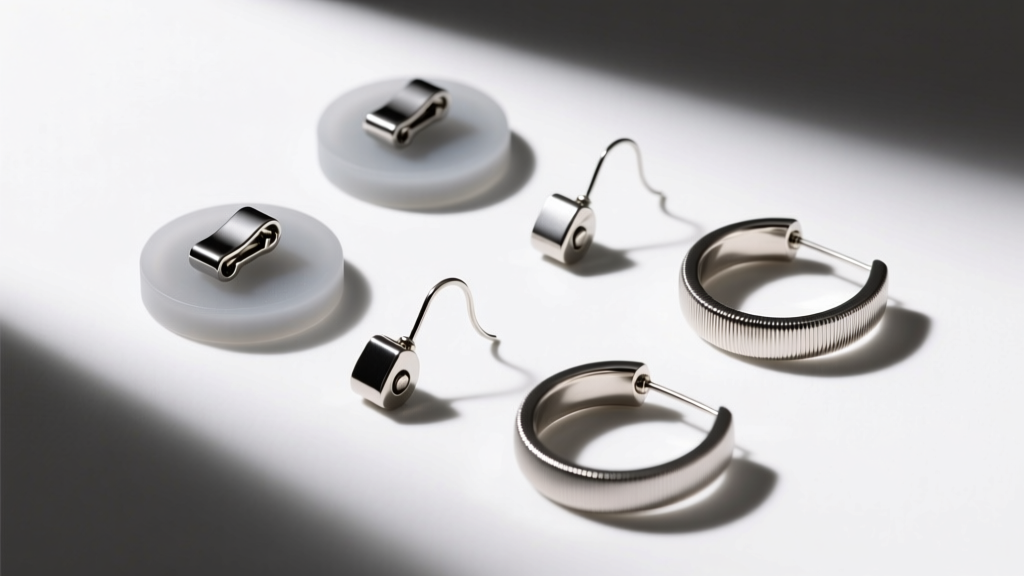
Large hoops and dangles act as pendulums. When you walk, the kinetic energy transfers to the earring, causing it to swing and rotate. Standard push-pin friction backs are entirely inadequate for this dynamic movement; they will slowly vibrate loose. For big silver earrings, you must look for mechanical locking mechanisms. 'La Pousette' clutches utilize a dual-spring locking system that clicks securely into a grooved post, while hinged snap-closures (often called 'saddleback' or 'clicker' closures) on large hoops provide a physical barrier that prevents the wire from slipping out of the fistula during high-movement activities.
Expert Purchasing & Inspection Framework
When investing in substantial silver jewelry, do not rely solely on the brand name or the visual aesthetics. Use this technical checklist to evaluate the structural integrity of big silver earrings before purchasing:
- Verify the Alloy Hallmark: Look for '925' for standard sterling, but actively seek out '935' or '960' (Argentium) for large, tension-dependent pieces like oversized continuous hoops.
- Inspect the Solder Joints: Use a jeweler's loupe (10x magnification) to examine where the post meets the earring body. The solder should be smooth, evenly distributed, and free of pitting or porous bubbles, which indicate a weak, oxidized joint.
- Test the Wire Memory: Gently flex the ear wire or hoop. It should offer firm resistance and snap back to its exact original shape. If it feels mushy or stays slightly bent, the silver has been over-annealed and will fail under the earring's own weight.
- Assess the Center of Gravity: Hold the earring by the post or hook. If the decorative body swings wildly forward or backward, the poor weight distribution will cause the earring to droop unflatteringly on the ear and place uneven shear stress on the front of the fistula.
- Check for Internal Reinforcement: For large, hollow silver earrings (often made via electroforming or 3D printing to save weight), tap the piece. It should not sound papery or overly tinny. Ensure the structural armature inside is reinforced with a hardened resin or internal silver scaffolding to prevent crushing if dropped.
"True luxury in oversized jewelry is not just about visual impact; it is about the invisible engineering that allows a heavy, sculptural piece to be worn comfortably and safely for decades without compromising the anatomy of the ear."
By prioritizing advanced metallurgy, respecting the biomechanical limits of the earlobe, and demanding superior construction techniques, you can curate a collection of big silver earrings that are as structurally resilient as they are visually striking. Always pair heavy pieces with appropriate ergonomic backings, and routinely inspect your tension clasps to ensure your statement jewelry remains securely anchored.


