2026 Trends: Inexpensive Gold Earrings That Look High-End
Discover the top 2026 styling trends for inexpensive gold earrings. Learn how to spot high-quality vermeil, gold-filled, and PVD pieces under $50.

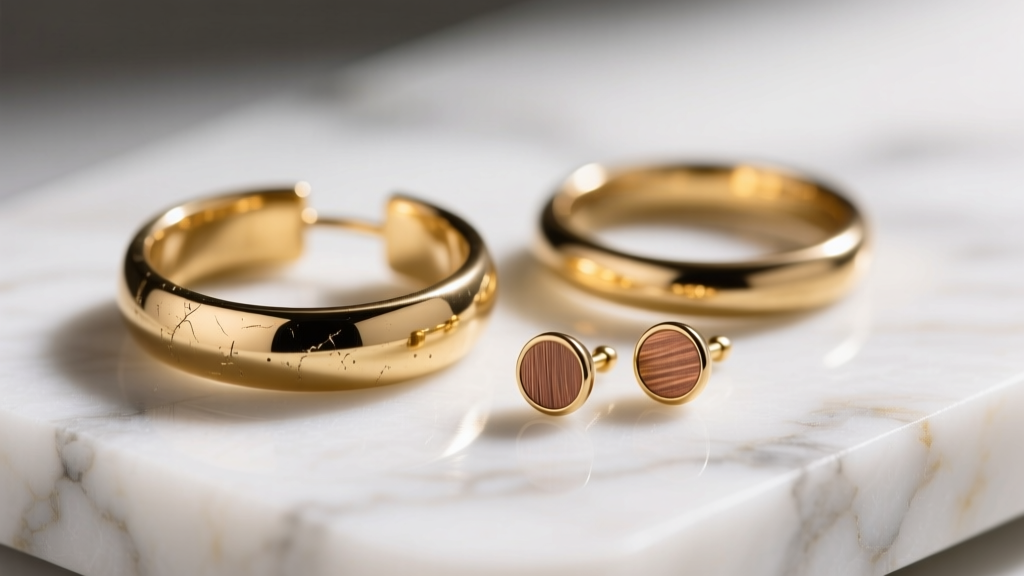
The 2026 Shift: Why 'Quiet Luxury' Demands Better Budget Gold
The jewelry landscape in 2026 has completely redefined what it means to shop on a budget. The era of flimsy, fast-fashion accessories that turn your skin green by lunchtime is officially over. Today, the pursuit of inexpensive gold earrings is no longer about compromising on quality; it is about understanding material science, spotting superior manufacturing techniques, and mastering the art of the curated ear stack. Driven by the 'quiet luxury' movement, consumers are demanding pieces that mimic the weight, luster, and longevity of solid 14k or 18k gold, but at a fraction of the cost.
According to market analyses by Jewelers of America, the demand for demi-fine and high-quality alternative gold jewelry has surged, pushing direct-to-consumer brands to innovate their plating and bonding technologies. As a result, finding budget-friendly gold earrings that look and feel high-end requires a discerning eye for metal grades, gauge thicknesses, and structural integrity. This guide will decode the current market, helping you build a luxury-tier jewelry box without the luxury-tier price tag.
Decoding the Metals: What 'Inexpensive Gold' Actually Means
To find inexpensive gold earrings that won't tarnish after a week, you must look past the word 'gold' and examine the manufacturing method. In 2026, there are three primary categories of budget-friendly gold jewelry that meet the high-end aesthetic standard.
1. Heavy Gold Vermeil (The Demi-Fine Standard)
Vermeil (pronounced ver-may) is not standard gold plating. By US trade standards, vermeil must feature a base of .925 sterling silver coated with a minimum of 2.0 microns of gold (usually 14k or 18k). However, the top-tier budget brands in 2026 are pushing this to 2.5 or even 3.0 microns. Because the base is a precious metal, vermeil is inherently hypoallergenic and carries a satisfying, dense weight that mimics solid gold. Expect to pay between $35 and $65 for high-quality vermeil studs and small huggies.
2. Gold-Filled (The Durable Workhorse)
Gold-filled jewelry is created by mechanically bonding a thick layer of solid gold to a brass or copper core using extreme heat and pressure. The Gemological Institute of America (GIA) notes that for an item to be legally stamped 'gold-filled,' the gold layer must constitute at least 5% (or 1/20th) of the total weight of the item. This makes gold-filled earrings incredibly durable and resistant to flaking. It is the ideal choice for everyday hoop earrings and seamless cartilage rings, typically ranging from $25 to $50.
3. PVD Coating (The 2026 Waterproof Revolution)
Physical Vapor Deposition (PVD) has completely disrupted the budget jewelry market. Instead of dipping metal into a liquid gold bath, PVD uses a vacuum chamber to vaporize gold and titanium nitride, bonding it to a 316L surgical stainless steel base at a molecular level. The result? Inexpensive gold earrings that are 100% waterproof, sweat-proof, and virtually scratch-resistant. PVD pieces are currently the undisputed champions for gym-goers and swimmers, with prices hovering between $20 and $45.
| Metal Type | Base Material | Gold Layer / Thickness | Water Resistance | Avg. Price Range |
|---|---|---|---|---|
| Heavy Vermeil | .925 Sterling Silver | 2.5 - 3.0 microns | Moderate (Avoid pools) | $35 - $65 |
| Gold-Filled | Jeweler's Brass | 5% total weight (1/20) | High (Shower safe) | $25 - $50 |
| PVD Coated | 316L Surgical Steel | Molecular bond (0.3μm) | Extreme (Swim safe) | $20 - $45 |
| Flash Plated | Brass / Nickel Alloy | 0.1 microns | None (Tarnishes fast) | $5 - $15 |
3 High-End Styling Formulas Using Budget-Friendly Pieces
Having high-quality materials is only half the battle; the way you style them dictates their perceived value. In 2026, the trend is all about anatomical precision and mixed textures. Here are three expert styling formulas using inexpensive gold earrings.
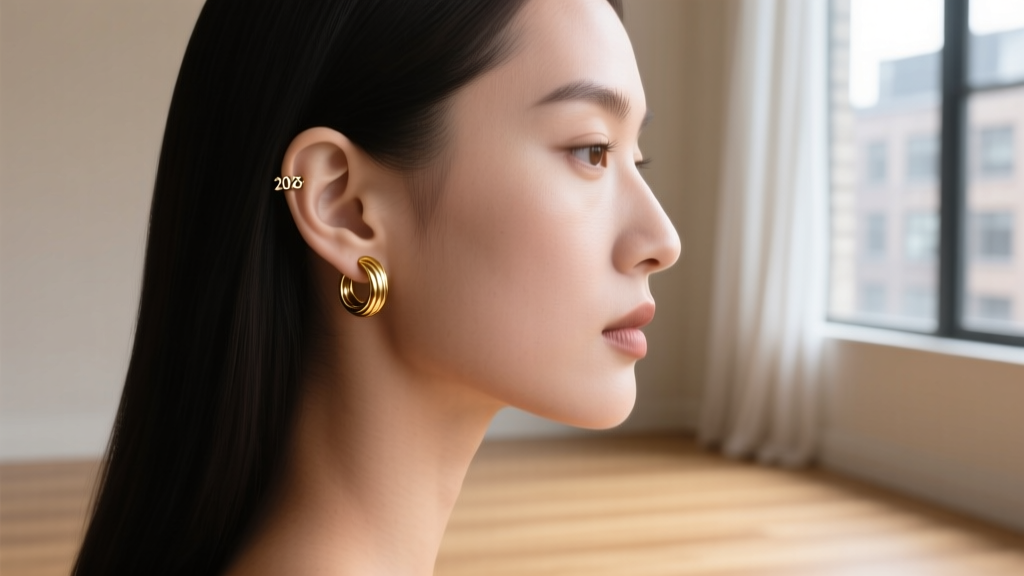
Formula 1: The 'Old Money' Lobe Stack
This look relies on graduated sizing and mixed metal finishes to create depth. Start with a 20-gauge, 4mm bezel-set cubic zirconia or white pearl stud in the primary lobe piercing. In the second hole, place an 18-gauge, 12mm gold-filled huggie hoop with a hammered or rope texture. The contrast between the smooth, brilliant stud and the matte, textured huggie creates a custom, high-end appearance. Keep the color strictly uniform (e.g., all 14k yellow gold tones) to maintain the luxury illusion.
Formula 2: The Architectural Cartilage Constellation
Cartilage piercings require specific gauge sizes to avoid the 'cheese-cutter effect' (where thin wire slowly slices through the tissue). For a helix or flat piercing, always opt for 16-gauge or 14-gauge flat-back labrets. PVD-coated 316L steel is perfect here because cartilage piercings are prone to moisture buildup and irritation. Pair a 16-gauge, 3mm gold PVD threadless end with a delicate 18-gauge gold-filled seamless hoop in the mid-helix. The rigid, architectural post contrasts beautifully with the fluid movement of the hoop.
Formula 3: The Statement Drop (Event Styling)
For evening wear, dangle earrings offer maximum impact. However, inexpensive gold drop earrings often fail at the connector joints. Look for vermeil pieces that utilize solid jump rings rather than soldered, hollow tubing. A 20-gauge gold vermeil fishhook holding a sculptural, molten-gold-style brass drop (heavily gold-plated) provides the visual weight of a $500 designer earring for under $40. The key is to ensure the ear wire itself is vermeil or solid gold to prevent lobe irritation during long events.
The Red Flags: How to Avoid Fast-Fashion Gold
When shopping for inexpensive gold earrings, knowing what to avoid is just as critical as knowing what to buy. The market is flooded with deceptive terminology designed to trap uneducated buyers.
Expert Warning: Never purchase 'gold-plated' or 'gold-dipped' earrings if the base metal is not explicitly stated. If a brand hides behind vague terms like 'hypoallergenic metal mix,' it almost certainly contains nickel or brass that will oxidize rapidly and trigger contact dermatitis.
- Hollow Tubing: Tap large hoop earrings against your fingernail. If they sound tinny or feel impossibly light, they are made from hollow, flash-plated tubing that will dent and bend within weeks.
- The 'Nickel-Free' Loophole: Some brands claim jewelry is nickel-free but use cadmium or lead-heavy brass alloys. Always look for explicit base metal disclosures: .925 Silver, 316L Steel, or Titanium.
- Friction Backs on Heavy Drops: High-end earrings use secure screw-backs or heavy-tension notched posts. If a heavy gold vermeil drop earring comes with a standard, cheap butterfly friction back, it will inevitably slip off and be lost.
Care Protocols to Make a $30 Earring Last 5 Years
The lifespan of your budget jewelry is entirely dependent on your maintenance routine. While PVD-coated stainless steel can survive the ocean, gold vermeil and gold-filled pieces require a more strategic approach to maintain their 2026 high-end luster.
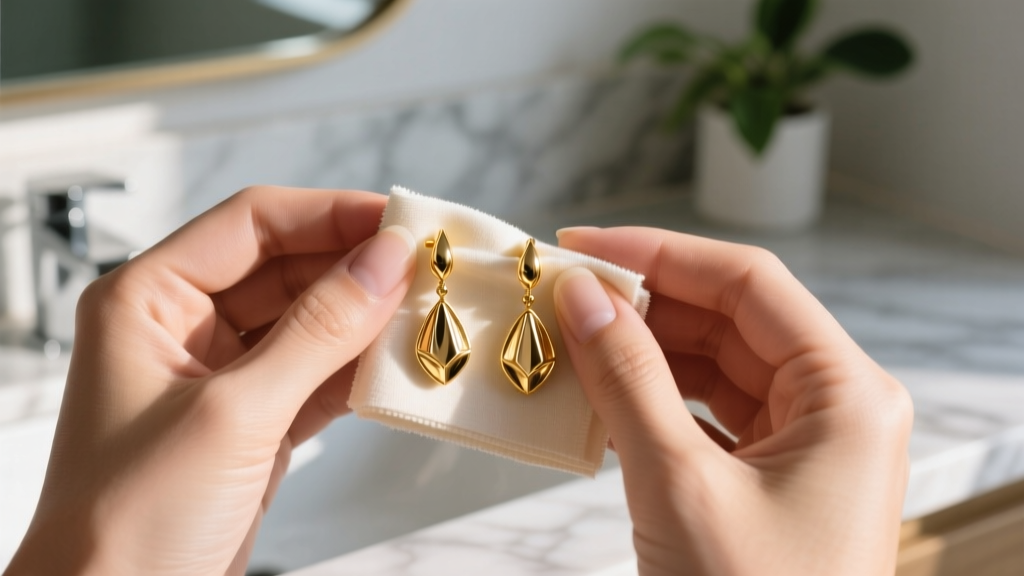
First, abandon the harsh chemical jewelry dips. These solutions strip away the microscopic top layers of gold, ruining vermeil and gold-filled finishes instantly. Instead, use a few drops of phosphate-free dish soap and warm water, gently agitating with a baby-soft toothbrush. Rinse thoroughly and dry immediately with a lint-free microfiber cloth.
Storage is equally vital. The natural oils and sulfur in the air cause sterling silver bases (under vermeil) to tarnish, which eventually pushes through the gold layer as dark spotting. Store your inexpensive gold earrings in individual, anti-tarnish cloth pouches or a sealed acrylic organizer with silica gel packets to control ambient humidity. By treating a $40 pair of gold-filled hoops with the same respect as a $400 pair of solid gold, you bridge the gap between budget shopping and lifelong luxury.


