How to Clean and Care for Passport Picture Earrings
Learn expert cleaning and maintenance tips for passport picture earrings. Protect custom photo resin and acrylic from UV fading, moisture, and scratches.

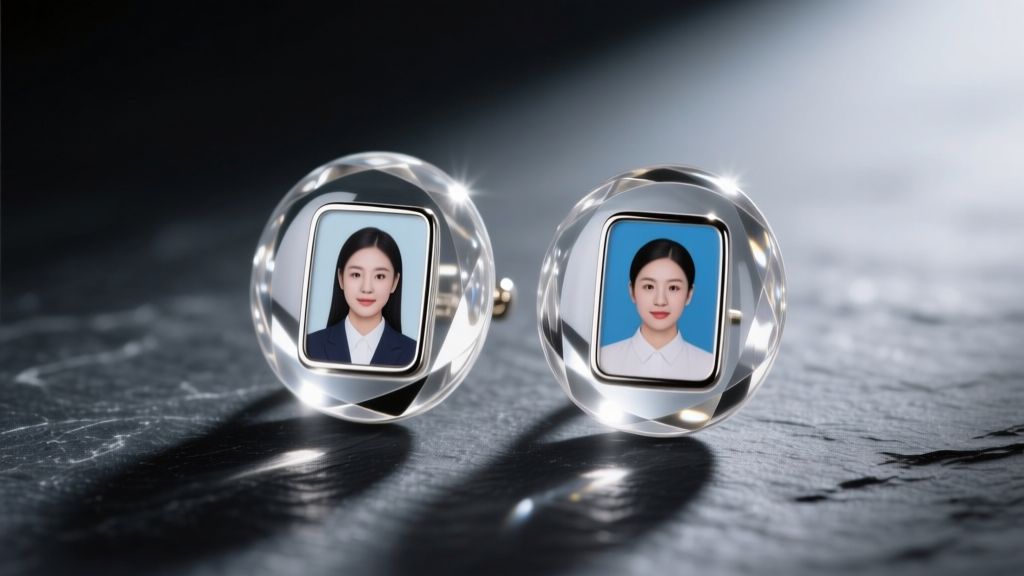
The Composite Anatomy of Photo Jewelry
Custom passport picture earrings have surged in popularity as a hyper-personalized jewelry trend. Whether featuring a vintage visa stamp, a beloved pet, or a minimalist portrait, these tiny wearable archives require specialized care. Unlike solid metal hoops or diamond studs, photo earrings are complex composite structures. A typical pair consists of a metal bezel (often 316L surgical steel or gold-plated brass), an adhesive layer, a paper or PET film substrate printed with the image, and a protective dome made of epoxy resin, UV-cured acrylic, or a glass cabochon.
Understanding this "composite sandwich" is critical for maintenance. Each layer reacts differently to environmental stressors. The metal expands and contracts with temperature changes, the resin can degrade under ultraviolet light, and the paper substrate is highly susceptible to moisture ingress. Treating these earrings like standard gemstone jewelry is the fastest route to ruining the encapsulated memory.
The Three Enemies of Passport Picture Earrings
To properly care for your custom photo jewelry, you must first understand the primary mechanisms of degradation. According to the Library of Congress Preservation Guidelines, photographic materials are inherently fragile, and encapsulating them in jewelry introduces unique physical challenges.
1. UV Radiation and Chromophore Degradation
If your passport picture earrings were printed using standard dye-based inks (common in home inkjet printers), direct sunlight will break down the color chromophores within three to six months. Archival pigment inks or silver halide prints offer significantly higher UV resistance. Furthermore, the resin dome itself can yellow. Epoxy resins without HALS (Hindered Amine Light Stabilizers) will undergo photo-oxidation, turning the clear dome a murky yellow and obscuring the image beneath.
2. Moisture Ingress and Emulsion Swelling
Water is the ultimate enemy of photo jewelry. If the seal between the resin dome and the metal bezel is imperfect, ambient humidity or accidental splashes can seep into the paper layer. This causes the photographic emulsion to swell, resulting in irreversible wrinkling, fogging, or even mold growth beneath the resin.
3. Thermal Shock and Differential Expansion
Metal bezels conduct heat rapidly, while resin acts as an insulator. Exposing your earrings to sudden temperature changes—such as stepping out of a hot shower into a cold room or leaving them on a car dashboard—causes the materials to expand and contract at different rates. Over time, this differential stress breaks the adhesive bond, leading to delamination.
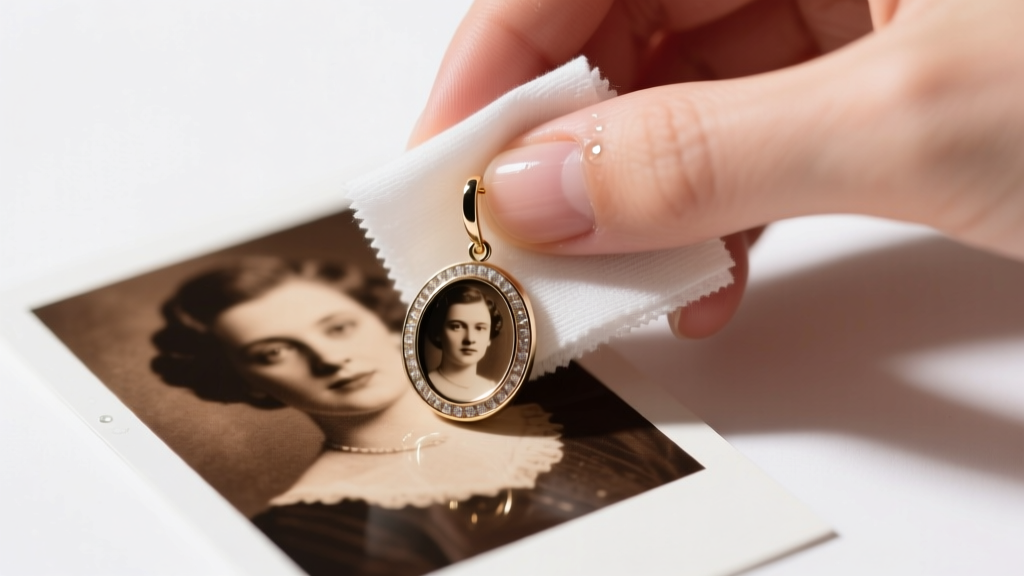
Step-by-Step Cleaning Protocol
When your passport picture earrings accumulate skin oils, cosmetics, or environmental dust, they require a gentle, non-invasive cleaning approach. The Gemological Institute of America (GIA) recommends mild, non-abrasive methods for delicate jewelry, which is especially true for mixed-media photo pieces.
- Dry Dusting: Always begin by removing loose particulate matter. Use a clean, dry, lint-free microfiber cloth or a soft-bristled makeup brush to gently sweep the surface. Rubbing dust directly into the resin can cause micro-scratches that cloud the dome over time.
- Damp Wiping: Lightly dampen a corner of your microfiber cloth with distilled water. Do not use tap water, as the dissolved minerals can leave hard water spots on the resin. Gently wipe the surface of the dome and the metal post.
- Targeted Bezel Cleaning: If the metal bezel requires degreasing, dip a cotton swab in a mild solution of warm water and a single drop of pH-neutral dish soap (like Dawn). Carefully trace the outer edge of the bezel, ensuring no liquid pools at the seam where the resin meets the metal.
- Immediate Drying: Use the dry side of your microfiber cloth to immediately buff the earring dry. Never let your photo earrings air dry, as water spots will form on the glossy resin surface.
Cleaning Agents: What to Use vs. What to Avoid
Using the wrong chemical solvent can instantly destroy the protective dome or dissolve the adhesive holding the photo in place. Refer to the table below before reaching for your jewelry cleaner.
| Cleaning Agent | Verdict | Scientific Rationale |
|---|---|---|
| Isopropyl Alcohol | AVOID | Causes micro-cracking in acrylic and UV-cured resins; degrades the adhesive seal. |
| Acetone / Polish Remover | AVOID | Will instantly melt and cloud the resin dome, ruining the optical clarity. |
| Ultrasonic Cleaners | AVOID | 40kHz cavitation bubbles will force water under the bezel and shatter the adhesive bond. |
| Mild Dish Soap + Water | SAFE | Effectively removes sebum and cosmetics without attacking the polymer chains of the resin. |
| Distilled Water | SAFE | Mineral-free and safe for quick surface rinses if applied sparingly with a cloth. |
"Unlike solid gemstones, photo jewelry is a mixed-media artifact. Treating a resin-sealed paper print with the same ultrasonic methods you use for a diamond stud will result in catastrophic delamination within seconds."
Long-Term Storage and Anti-Yellowing Tactics
How you store your passport picture earrings when they are not being worn is just as important as how you clean them. Proper storage mitigates both UV exposure and moisture accumulation.
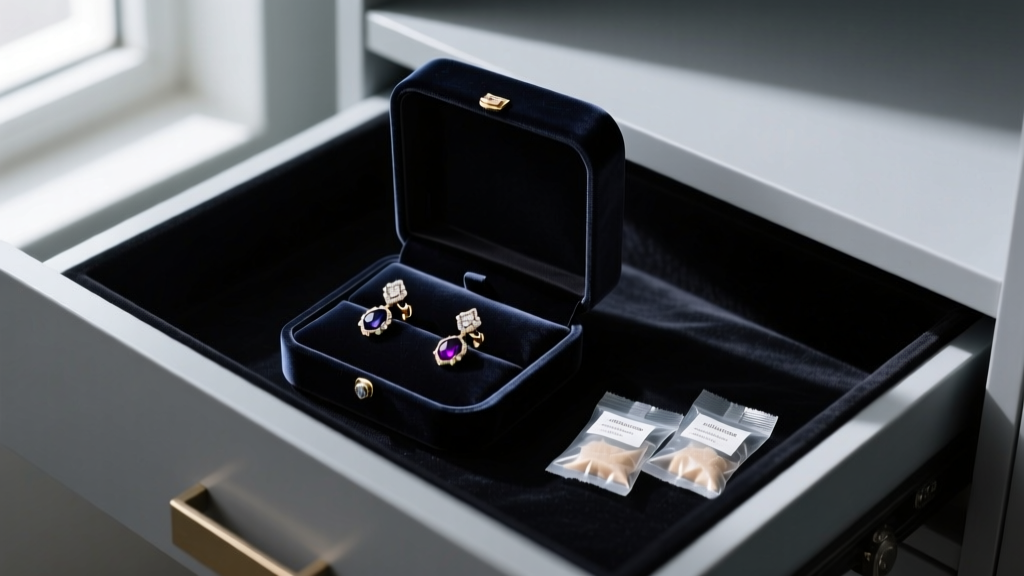
- Darkness is Mandatory: Store your earrings in a closed jewelry box or a drawer. Even ambient indoor lighting contains trace amounts of UV radiation that will slowly degrade the image and yellow the resin over a period of years.
- Climate Control via Silica Gel: Place a few rechargeable silica gel desiccant packets inside your jewelry box. This maintains a low-humidity microenvironment, preventing the paper substrate from absorbing ambient moisture and warping.
- Avoid PVC Plastics: Never store photo earrings in cheap plastic bags made of PVC. PVC off-gasses hydrogen chloride, which can react with the metal bezel and cause corrosive pitting that eventually bleeds onto the photograph.
- Individual Pouches: Store each pair in a soft flannel or anti-tarnish cloth pouch. This prevents the metal posts of other jewelry from scratching the soft resin domes during transit.
Troubleshooting Common Photo Earring Failures
Even with meticulous care, composite jewelry can experience issues. Here is how to diagnose and address the most common failure modes associated with passport picture earrings.
The Resin Dome Has Turned Yellow
Diagnosis: UV degradation of the polymer matrix. This is common in older UV-cured resins that lacked UVAs (Ultraviolet Absorbers).
Solution: Unfortunately, chemical yellowing in cured epoxy or UV resin is irreversible. You cannot polish it out, as the discoloration goes all the way through the material. The only fix is to have a jeweler carefully cut away the resin, extract the photo, and re-encapsulate it using a high-grade, HALS-stabilized jewelry resin.
Fogging or Wrinkling Beneath the Dome
Diagnosis: Moisture ingress. The adhesive seal has failed, allowing humidity to reach the paper.
Solution: Do not apply heat (like a hairdryer), as this will warp the metal and melt the glue. Place the earrings in an airtight container with fresh silica gel packets for 72 hours to slowly draw the moisture out. If the image remains distorted, the paper emulsion has permanently swelled, and the earring must be remade by the original artist.
Green or Black Staining on the Skin
Diagnosis: The bezel is made of copper or brass with a thin silver or gold plating that has worn off. The base metal is oxidizing against your skin's natural acidity.
Solution: Coat the back of the earring post and bezel with a thin layer of clear nail polish or a specialized jewelry shield to create a barrier. For a permanent fix, take the earrings to a bench jeweler to have the posts laser-welded and replaced with solid 14k gold or 316L surgical steel.
Expert Verdict
Passport picture earrings are beautiful, sentimental artifacts, but they demand a higher level of stewardship than traditional fine jewelry. By avoiding harsh chemicals, steering clear of ultrasonic cleaners, and prioritizing dark, dry storage, you can ensure your custom photo jewelry remains vibrant and structurally sound for decades. Treat the resin dome like a camera lens and the paper inside like a museum archive, and your wearable memories will stand the test of time.


