Hatley Baguette Earrings: The Beginner's Buying Guide
Discover everything you need to know about Hatley baguette earrings. Learn about step-cut gems, metal pairings, and styling tips for beginners.

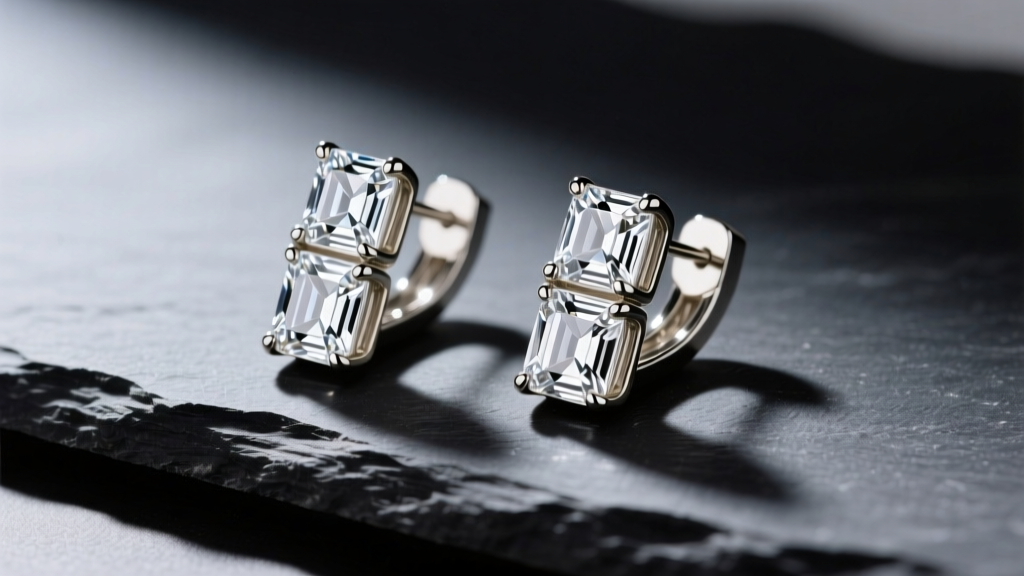
What Are Hatley Baguette Earrings?
If you are stepping into the world of fine jewelry, you have likely encountered the term 'baguette cut.' Derived from the French word for a long, narrow loaf of bread, the baguette cut is a rectangular step-cut gemstone that prioritizes elegant luster over explosive sparkle. Hatley baguette earrings represent a specific tier of craftsmanship where these geometric stones are meticulously matched and set to create a seamless, architectural look on the ear. Unlike traditional brilliant-cut studs that scatter light in every direction, Hatley's baguette designs offer a sophisticated, 'hall-of-mirrors' flash that appeals to minimalist and vintage-inspired aesthetics alike.
For beginners, navigating the nuances of step-cut jewelry can feel overwhelming. This guide breaks down the exact specifications, structural vulnerabilities, and styling frameworks you need to make an informed purchase in 2026, whether you are investing in natural diamonds or opting for the increasingly dominant lab-grown alternatives.
The Anatomy and Geometry of a Baguette Cut
To understand why Hatley baguette earrings command a premium, you must first understand the geometry of the stone. A standard baguette diamond features exactly 14 facets. Compare this to a round brilliant cut, which boasts 57 or 58 facets. Because there are fewer facets, the stone does not hide imperfections well. The broad, flat planes act like windows directly into the center of the gem.
Clarity and Color Requirements
According to grading standards outlined by the Gemological Institute of America (GIA), step-cut stones require higher clarity grades than brilliant cuts. For Hatley baguette earrings, you should aim for a minimum clarity of VS1 (Very Slightly Included) or VS2. Inclusions that would be invisible in a round cut can appear as dark, distracting shadows in a baguette. Furthermore, color grading is critical. Because the step cut retains more body color, beginners should look for G or H color grades when pairing the earrings with white gold or platinum to ensure the stones face up completely colorless.

Length-to-Width Ratios
The visual impact of your earrings is heavily dictated by the length-to-width (L/W) ratio of the baguettes. A ratio of 1.50 to 1.00 yields a squat, almost square-rectangular look, while a ratio of 5.00 to 1.00 creates a dramatic, elongated needle effect. Hatley typically utilizes a 3:1 ratio for their signature stud earrings, providing a balanced, universally flattering proportion that elongates the earlobe without looking overly severe.
Setting Styles and Structural Security
The most critical failure mode for baguette earrings is corner chipping. A baguette cut features sharp 90-degree corners that are highly susceptible to impact damage. How the jeweler sets the stone dictates its lifespan. Below is a comparison of the three most common setting styles used in Hatley designs.
| Setting Style | Description | Security Level | Best For |
|---|---|---|---|
| Channel Set | Stones are set into a continuous metal channel with no prongs. | High | Everyday wear, active lifestyles, hoop accents. |
| Bezel Set | A custom-fitted metal rim completely encircles the gemstone's girdle. | Maximum | Minimalist studs, protecting fragile corners. |
| Four-Prong | Four small metal claws hold the stone, leaving corners exposed. | Low to Medium | Occasional wear, maximizing light entry. |
For beginners seeking a 'buy it for life' piece, bezel or channel settings are highly recommended. If you prefer the open look of prongs, ensure the jeweler uses V-prongs at the corners to shield the sharp 90-degree angles from accidental bumps against doorframes or desks.
Sizing, Gauge, and Face Shape Pairing
Earrings are not one-size-fits-all, and the linear nature of baguette cuts interacts uniquely with different facial structures. Additionally, the physical hardware of the earring must match your piercing anatomy.
Piercing Gauge and Post Thickness
Standard lobe piercings are typically done at 20-gauge (0.8mm) or 18-gauge (1.0mm). When purchasing Hatley baguette earrings, verify the post thickness. Inserting a thick 16-gauge post into a delicate 20-gauge piercing can cause micro-tears and irritation, while a thin post in a stretched hole will cause the heavy baguette drop to droop forward. Always opt for secure screw-backs or heavy-duty friction backs for drop styles, as the linear weight distribution of baguettes can easily pull standard butterfly backs off the ear.
Face Shape Framework
- Round Faces: Opt for elongated Hatley baguette drop earrings. The sharp vertical lines create an optical illusion that lengthens the face and adds structural contrast to soft curves.
- Square Faces: Choose shorter, wider baguette studs or huggies. Avoid excessively long, sharp drops that will over-emphasize the angularity of your jawline.
- Oval Faces: You have the most versatility. Both geometric studs and dramatic chandelier-style baguette drops will complement your natural proportions.
- Heart Faces: Look for baguette earrings that are wider at the bottom, such as inverted triangle arrangements or teardrop clusters, to balance a narrower chin.

Care, Maintenance, and Cleaning
Because baguette cuts feature large, flat facets, they show oil, lotion, and fingerprints much faster than brilliant cuts. A smudged baguette will look dull and lifeless within hours of wear. To maintain the optical clarity of your Hatley earrings, establish a weekly cleaning routine.
Mix a few drops of mild, phosphate-free dish soap into a bowl of warm water. Let the earrings soak for 15 minutes, then gently agitate them with a soft-bristled baby toothbrush. Pay special attention to the pavilion (the underside of the stone), where sebum and dead skin cells accumulate. Rinse thoroughly and dry with a lint-free microfiber cloth. Avoid ultrasonic cleaners if your earrings feature fracture-filled diamonds or if the stones are set in fragile tension mounts, as the high-frequency vibrations can loosen the settings or exacerbate internal flaws.
The 2026 Pricing Landscape
The market for fine jewelry has shifted dramatically. As of 2026, lab-grown diamonds have reached near price-parity with high-end simulants, fundamentally changing the accessibility of Hatley baguette earrings. Here is what you should expect to pay based on material composition for a standard pair of 1.00 Carat Total Weight (CTW) baguette studs:
- High-Grade CZ / Simulants (Sterling Silver): $60 - $150. Ideal for trend-testing the baguette silhouette before committing to fine jewelry.
- Lab-Grown Diamonds (14k Gold): $450 - $900. The sweet spot for modern buyers, offering identical chemical and optical properties to mined stones at a fraction of the cost.
- Natural Mined Diamonds (18k Gold/Platinum): $1,800 - $4,500+. Reserved for heirloom investments and buyers who prioritize the geological rarity of the stones.
Final Thoughts for the First-Time Buyer
Investing in step-cut jewelry requires a shift in perspective. You are not buying a stone for its fiery dispersion; you are buying it for its architectural elegance, its glassy luster, and its understated sophistication. Hatley baguette earrings bridge the gap between vintage Art Deco geometry and modern minimalist styling, making them a versatile anchor in any jewelry wardrobe.
'When advising clients on their first step-cut purchase, I always remind them that clarity is king. A smaller, flawless baguette will always outshine a larger, included one. The beauty of the cut lies entirely in its transparency.' — Senior Gemologist Appraisal Notes
By prioritizing protective settings like bezels, adhering to strict VS1+ clarity grades, and matching the earring's linear proportions to your unique face shape, you will secure a pair of earrings that remain timeless well beyond passing trends. For further reading on jewelry FTC guidelines regarding metal purity and gemstone disclosures, consult the Federal Trade Commission's Jewelry Guides to ensure you are getting exactly what you pay for.


