Fix DIY Fails: The Right Make Earrings Supplies for Lasting Jewelry
Stop DIY jewelry breakage. Learn how to troubleshoot common failures and choose the best make earrings supplies for durable, hypoallergenic designs.

The Hidden Cost of Cheap Make Earrings Supplies
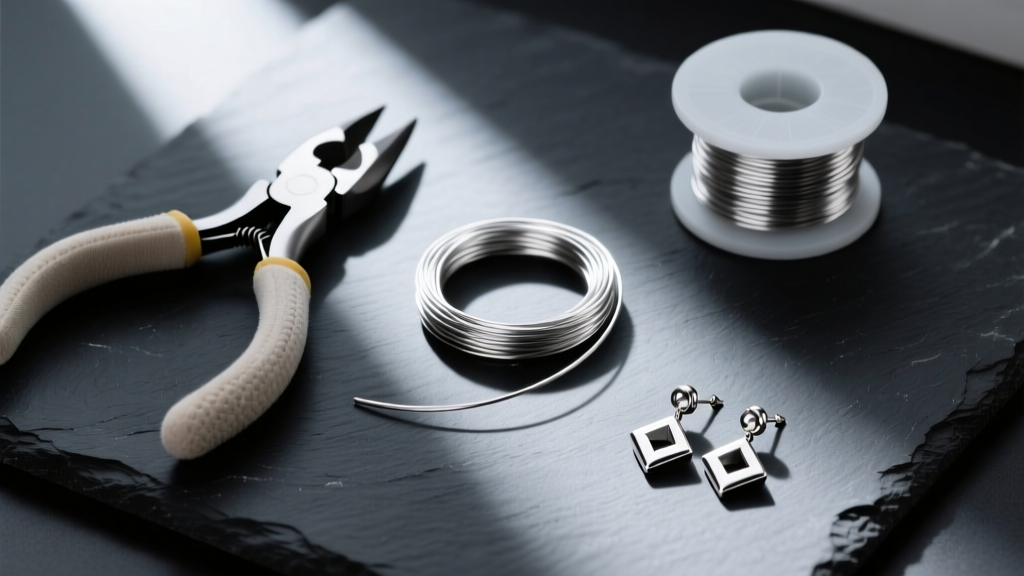
There is a distinct difference between crafting a beautiful pair of earrings and engineering a pair that survives daily wear. When you first begin to source make earrings supplies, it is incredibly tempting to purchase bulk mystery-metal kits from overseas marketplaces. While the upfront cost is low, the hidden expenses—broken ear wires, allergic reactions, and lost gemstones—will quickly destroy your reputation as a jeweler. Troubleshooting DIY jewelry fails requires a deep understanding of metallurgy, mechanical stress, and adhesive chemistry. In this guide, we will diagnose the most common structural and material failures in handmade earrings and detail exactly which professional-grade supplies you need to fix them.
Troubleshooting Structural Failures: Wire and Connections
The most frequent complaints from earring wearers involve components bending out of shape or detaching entirely. These are rarely design flaws; they are almost always material selection errors.
Ear Wires Losing Tension and Bending
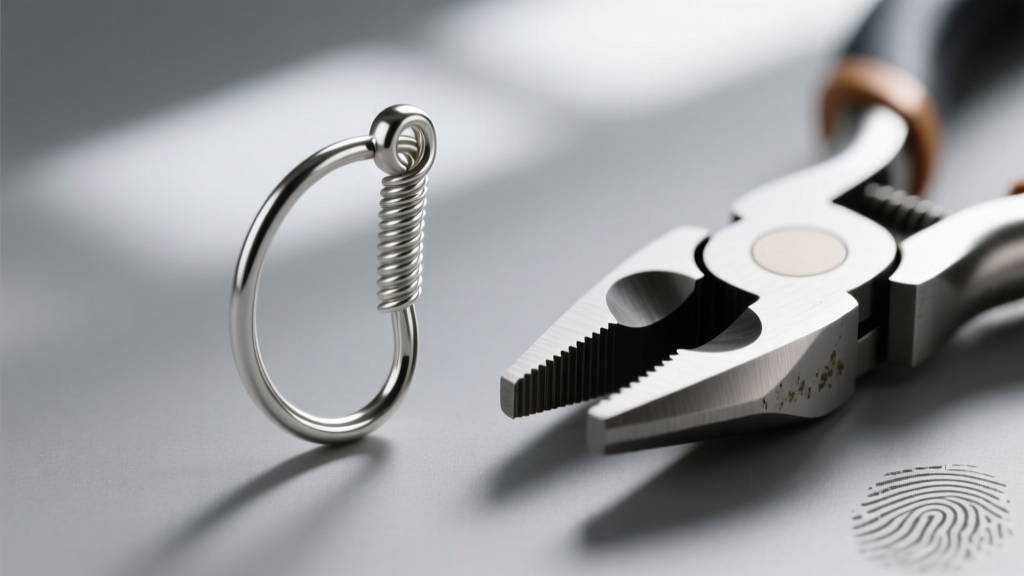
If your French hook ear wires are constantly bending out of their U-shape or failing to snap back into place, you are likely using 'dead soft' wire. Dead soft wire has a Vickers hardness (HV) of roughly 60-80, making it highly malleable but structurally weak for load-bearing loops. To fix this, you must upgrade your make earrings supplies to half-hard wire, which boasts an HV of 100-120. For standard lobe dangles, 21-gauge or 20-gauge half-hard sterling silver, niobium, or titanium wire provides the perfect balance of spring-back tension and malleability. According to metallurgical guidelines from Rio Grande, work-hardening your half-hard wire slightly with a nylon-jaw plier after shaping will further lock the crystalline structure into place, preventing permanent deformation.
Solderless Jump Rings Pulling Apart
Dangle earrings rely heavily on jump rings, but a heavy stone pendant will easily pull a standard soft-temper ring open. The failure point is the saw cut. To troubleshoot this without resorting to soldering, you must understand Aspect Ratio (AR) and wire temper. Jewelry educators at Halstead Bead recommend using hard-temper jump rings with a smaller AR (under 4.0) for heavy pendants. A 20-gauge wire with a 2.5mm inner diameter creates a thick, rigid ring that resists lateral pulling. Always ensure the saw cut is perfectly flush, and when closing the ring, use a twisting motion rather than pulling the ends apart, which weakens the metal's memory.
Material Grade Mismatches and Contact Dermatitis
Nothing ruins a jewelry business faster than causing a customer's ears to swell and itch. 'Hypoallergenic' is an unregulated marketing term, and 'surgical steel' (often 316L) still contains 8-10% nickel, which leaches when exposed to the slightly acidic pH of human sweat. If you are troubleshooting customer complaints about red, itchy earlobes, your metal choices are the culprit.
| Material Grade | Nickel Content | Best Application | Relative Cost |
|---|---|---|---|
| 316L Surgical Steel | 8% - 10% | Short-term wear, body jewelry (non-lobe) | $ |
| ASTM F136 Titanium | 0% (Trace) | Fresh piercings, sensitive lobes, daily wear | $$$ |
| 99.9% Pure Niobium | 0% | Hooks, ear wires, anodized color accents | $$ |
| .925 Sterling Silver | 0% (Usually) | Standard lobe earrings (avoid for fresh piercings) | $$ |
To guarantee safety, source make earrings supplies that explicitly certify compliance with ASTM International standards, specifically ASTM F136 for titanium body jewelry. This ensures the alloy is entirely nickel-free and biocompatible, eliminating contact dermatitis liabilities.
Adhesive Failures in Cabochon and Stud Making
Gluing a glass cabochon or a flat-back crystal to a stud pad seems straightforward, but adhesive failure is the number one reason handmade stud earrings end up in the trash. If your stones are popping off after a few weeks, you are likely using the wrong chemical bond for the substrate.
Why Cyanoacrylate (Super Glue) and E6000 Fail
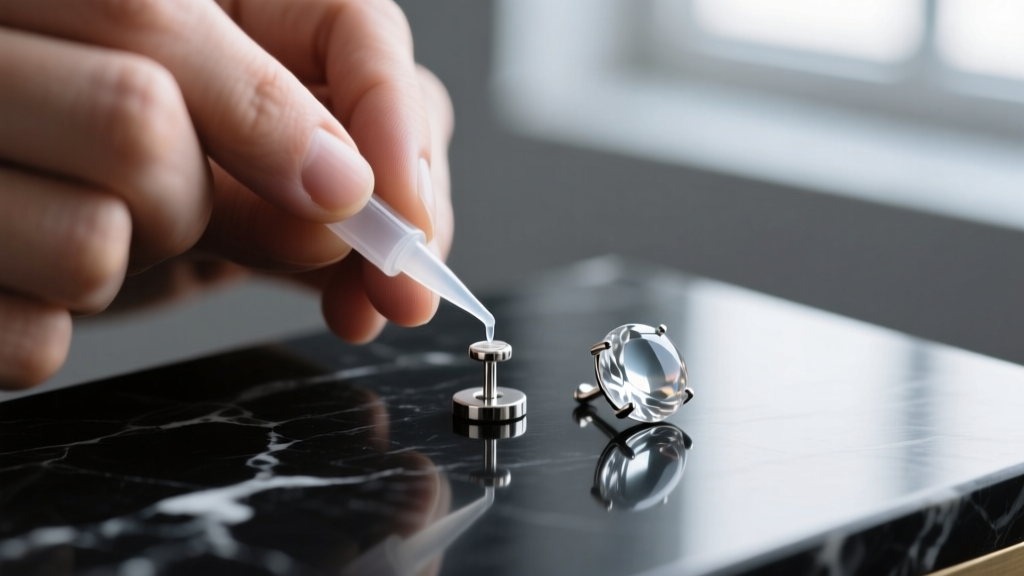
Cyanoacrylate becomes brittle upon curing and shatters under the micro-impacts of daily wear. E6000, while flexible, remains slightly tacky and degrades when exposed to the oils and lotions applied to the face and neck. To permanently bond non-porous materials like glass, metal, or cubic zirconia to a stainless steel or titanium stud pad, you must use a two-part clear epoxy resin (such as Devcon 5-Minute Epoxy). Epoxies cure via a chemical cross-linking reaction that creates a rigid, waterproof, and oil-resistant bond. Always prep the metal pad by scuffing it lightly with 400-grit sandpaper and degreasing it with 99% isopropyl alcohol before applying the epoxy.
Troubleshooting Ear Nut and Post Friction Loss
A beautiful earring is useless if it falls out of the ear. The friction between the earring post and the ear nut (clutch) is a precise mechanical interaction. If your earrings are slipping out, check the post gauge and the nut material.
- Post Gauge: Standard commercial ear nuts are designed for 20-gauge (0.81mm) or 21-gauge (0.72mm) posts. If you are using 22-gauge wire for your posts, standard butterfly clutches will slide right off. Upgrade to 20-gauge flat-pad posts for secure retention.
- Nut Material: Cheap base-metal butterfly clutches lose their internal spring tension after three or four uses. Supply your customers with silicone disc backs or heavy-duty stainless steel friction clutches with internal silicone inserts. These grip the post securely without relying on metal-on-metal tension that eventually wears out.
Upgrading Your Toolkit: Precision Over Force
You cannot build precision jewelry with hardware store tools. Upgrading your physical toolkit is just as important as upgrading your raw make earrings supplies. Invest in the following specialized instruments to eliminate tool marks and structural weaknesses:
- Swiss-Style Flush Cutters: Brands like Lindstrom or Tronex cut wire perfectly flat without leaving a sharp 'pinch' point. A pinched wire creates a microscopic stress fracture that will eventually snap under the weight of a dangle.
- Nylon Jaw Pliers: Essential for gripping and bending wire without marring the surface or removing the protective anti-tarnish coating on sterling silver.
- Stepped Mandrels: For forming perfectly symmetrical French hooks and hoop earrings. Bending wire around a consistent steel radius prevents uneven work-hardening.
Quality Control Checklist for Handmade Earrings
Before packaging any handmade earring, run it through this rigorous troubleshooting checklist to ensure your supplies and assembly methods have held up to professional standards:
- The Tug Test: Apply 2 lbs of lateral pressure to jump rings and glued pads. If there is any give or peeling, the component has failed.
- The Drop Test: Drop the finished earring from a height of 3 feet onto a hard surface. Glass and epoxy bonds should survive this without fracturing.
- The Polish Check: Inspect all cut wire ends under a 10x jeweler's loupe. Any sharp burrs must be filed flush with a cup bur to prevent scratching the wearer's skin.
- The Nickel Spot Test: If sourcing vintage or unverified metal findings, use a dimethylglyoxime (DMG) swab test to ensure no hidden nickel is present before selling the piece as hypoallergenic.
By diagnosing these specific failure points and investing in high-grade, purpose-built materials, you elevate your craft from a fragile hobby to a professional, lasting jewelry line.


