How to Wear the Biggest Earrings Without Pain or Tearing
Learn how to safely wear the biggest earrings without lobe tearing or pain. Expert troubleshooting for heavy statement jewelry and ear supports.

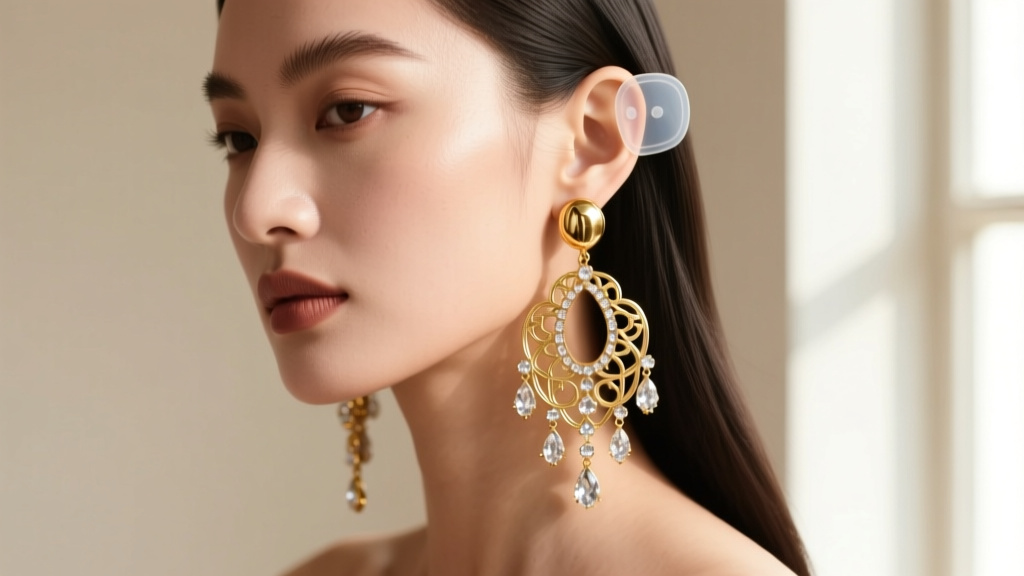
The maximalist jewelry movement of 2026 has pushed the boundaries of scale, with collectors and fashion enthusiasts constantly hunting for the biggest earrings to make a bold statement. From oversized architectural hoops to heavy, gemstone-encrusted chandelier dangles, statement earrings are dominating runways and street style. However, the human earlobe is not naturally engineered to support 40 to 80 grams of dangling metal. When you push the limits of size and weight, you inevitably run into structural failures: micro-tearing, severe contact dermatitis, and the dreaded 'cheese-cutter' effect that permanently splits the fistula.
As a jewelry troubleshooting expert, I see the aftermath of poorly supported heavy earrings daily. This guide provides a clinical and practical framework for wearing the biggest earrings safely, distributing weight effectively, and rehabilitating damaged tissue.
The Physics of Heavy Jewelry: Why Earlobes Fail
To understand how to troubleshoot heavy earrings, you must understand the biomechanics of the earlobe. A standard ear piercing is created at 20-gauge (0.81mm) or 18-gauge (1.02mm). When a heavy earring is inserted, gravity exerts a continuous downward shear force on the tiny ring of tissue (the fistula) lining the hole.
If the earring wire is too thin and the weight is too high, the wire acts like a cheese wire slicing through block cheese. Over a few hours, this causes micro-tearing at the bottom of the piercing channel. Over months or years, this chronic tension leads to 'slit lobes,' where the piercing elongates into a vertical slit that eventually reaches the edge of the earlobe, resulting in a complete bifurcation (split lobe).
Gauge Size vs. Weight: The Hidden Culprit
The most common mistake consumers make when buying the biggest earrings is ignoring the thickness of the post or wire. A 50-gram brass statement earring hanging from a flimsy 22-gauge wire is a biological disaster waiting to happen. To safely wear heavy pieces, the gauge of the metal must scale with the weight of the jewel.
| Earring Weight | Minimum Wire/Post Gauge | Required Support Mechanism | Maximum Wear Time |
|---|---|---|---|
| Under 10g (Light) | 20G - 18G (0.8mm - 1.0mm) | Standard push-backs or silicone stoppers | 12+ Hours |
| 10g - 25g (Moderate) | 16G (1.29mm) | Oversized silicone cushions or omega backs | 8 - 10 Hours |
| 25g - 45g (Heavy) | 14G - 12G (1.6mm - 2.0mm) | Adhesive lobe support patches | 4 - 6 Hours |
| Over 45g (Extreme) | 10G+ (2.5mm+) or Clip-On | Ear chains / Structural harnesses | 2 - 4 Hours |
Note: Upgrading to a thicker gauge requires gradually stretching the earlobe piercing using tapers and jojoba oil, a process that should never be rushed.
Troubleshooting Common 'Biggest Earrings' Disasters
When you wear oversized jewelry, the failure points are highly predictable. Here is how to identify and solve the three most frequent complications.
1. The Slit Lobe (Micro-Tearing and Elongation)
The Symptom: Your piercing hole looks like a vertical teardrop rather than a perfect circle. The earring constantly droops forward, pointing at the floor instead of sitting flush against the lobe.
The Fix: Stop wearing heavy dangles immediately. Switch to lightweight, front-heavy studs that pull the tissue upward. To rebuild tissue density, massage the lobes nightly with pure, cold-pressed jojoba oil or Vitamin E oil to promote collagen synthesis and elastin repair. If the slit has breached the bottom margin of the lobe, topical treatments will not work; you will require a minor surgical procedure called a lobuloplasty to stitch the tissue back together.
2. Contact Dermatitis from Mixed Alloys
The Symptom: Itchy, red, flaky, or weeping skin directly behind the earlobe and along the neck.
The Fix: The biggest earrings are often manufactured using cheap base metals like brass or nickel-silver to keep costs down despite the high volume of metal required. According to the American Academy of Dermatology, nickel allergy is one of the most common causes of allergic contact dermatitis. The larger the earring, the more surface area is exposed to your skin and sweat, accelerating nickel leaching. Always verify that oversized pieces are crafted from ASTM F-136 Implant Grade Titanium, Niobium, or at least 14k/18k solid gold. Avoid 'gold-plated' heavy earrings, as the friction from the weight will wear the plating down to the reactive base metal within days.
3. Cartilage Blowouts on Oversized Hoops
The Symptom: Pain, swelling, and a bump of granulation tissue forming behind a helix or forward helix piercing when wearing large, heavy continuous hoops.
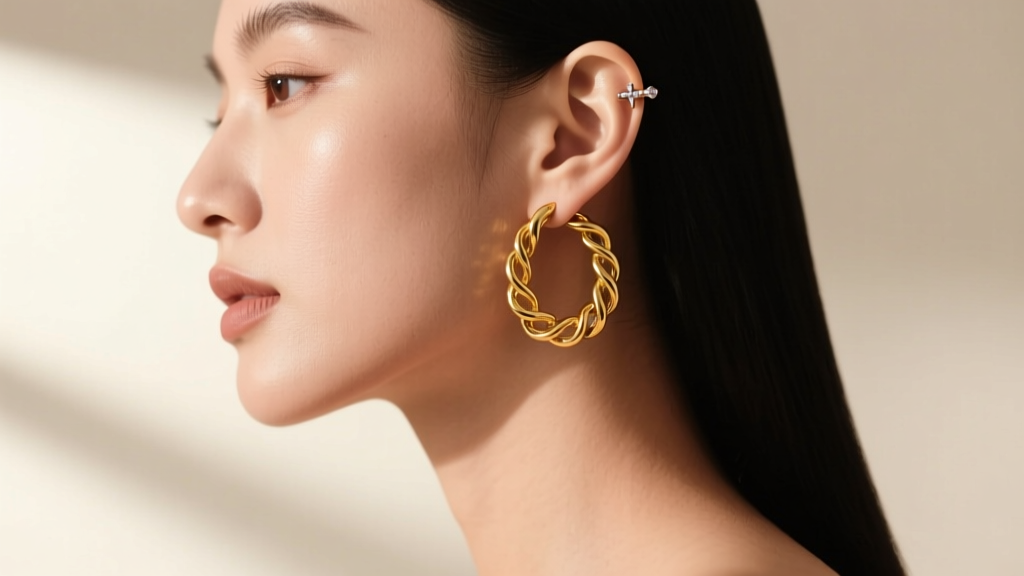
The Fix: Cartilage lacks the blood supply and elasticity of the earlobe. When a heavy hoop pulls on a cartilage piercing, it changes the angle of the jewelry inside the fistula, causing the edges of the metal to slice into the healing tissue. The Association of Professional Piercers (APP) strongly advises against using heavy rings in fresh or irritated cartilage piercings. If you must wear oversized hoops, ensure the inner diameter is large enough (minimum 12mm-14mm) so the metal does not press tightly against the curvature of the ear, and switch to flat-back titanium labret studs at the first sign of a bump.
Engineering Support: How to Wear Heavy Pieces Safely
If you refuse to compromise on the scale of your jewelry, you must engineer a support system. Relying solely on the earlobe is a recipe for disaster. Utilize these three load-distribution methods:
- Adhesive Earlobe Support Patches: Products like Lobe Wonder or Blomdahl Ear Care patches are discreet, medical-grade adhesive stickers with a pre-punched hole. You stick them to the back of your earlobe before inserting the earring. The patch distributes the downward shear force across a 1-inch surface area of skin rather than a 1-millimeter ring of tissue.
- Ear Chains (Earlaces): A brilliant innovation for the biggest earrings. A delicate chain connects the heavy bottom earring to a secondary, lightweight stud placed higher up on the ear cartilage (like a mid-helix or flat piercing). The cartilage stud acts as an anchor, bearing 80% of the weight and completely relieving the earlobe.
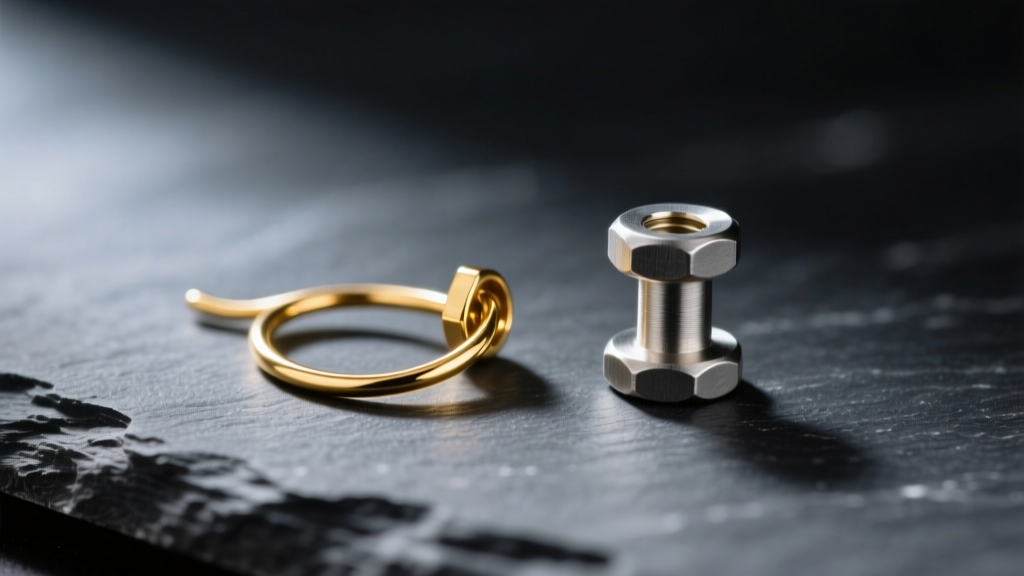
- Omega Backs and French Clips with Screws: Push-back butterfly clasps are useless for heavy earrings; the weight will pull the earring forward, causing the clasp to slip off or dig painfully into the neck. Omega backs hug the earlobe and use a tension hinge to stay in place, while adjustable screw-back clips allow you to manually tighten the grip on the lobe to prevent drooping.
Material Grades That Prevent Infection in Stretched Piercings
To accommodate thicker wires (14G to 8G) for heavy earrings, many enthusiasts stretch their lobes. Stretched tissue is highly porous and susceptible to bacterial trapping. The Mayo Clinic warns that compromised skin barriers are highly susceptible to secondary infections from reactive metals.
Expert Rule of Thumb: Never wear porous materials like raw wood, bone, or unsealed stone in stretched lobes when supporting heavy weight. The microscopic pores harbor bacteria, and the heavy swinging motion acts as a piston, driving those bacteria deep into the fistula. Stick to mirror-polished glass, implant-grade titanium, or high-karat gold.
Lobe Rehabilitation: Fixing the Damage
If your pursuit of the biggest earrings has already resulted in thinning tissue or chronic soreness, implement this 30-day rehabilitation protocol:
- Week 1 (Total Rest): Remove all heavy jewelry. Wear only 18G solid gold or titanium sleepers (small, lightweight continuous rings) to keep the hole open without applying tension.
- Week 2-3 (Tissue Building): Apply a peptide-based collagen serum or pure squalane oil to the lobes twice daily. Gently pinch and massage the tissue to stimulate blood flow.
- Week 4 (Load Testing): Reintroduce moderate weight (10g-15g) using a silicone support patch. Monitor for any forward drooping or redness. If the tissue holds, you can slowly scale back up to your statement pieces, provided you use structural supports like ear chains.
Wearing the biggest earrings is an art form that requires respect for human anatomy. By matching your gauge sizes to the jewelry's weight, utilizing modern support harnesses, and strictly avoiding reactive base metals, you can achieve maximum visual impact without sacrificing the structural integrity of your ears.


