How to Style Drop Earrings for Men: A Beginner's Guide
Discover how to choose and style drop earrings for men. Learn about materials, lengths, gauge sizes, and face shape matching in this beginner guide.

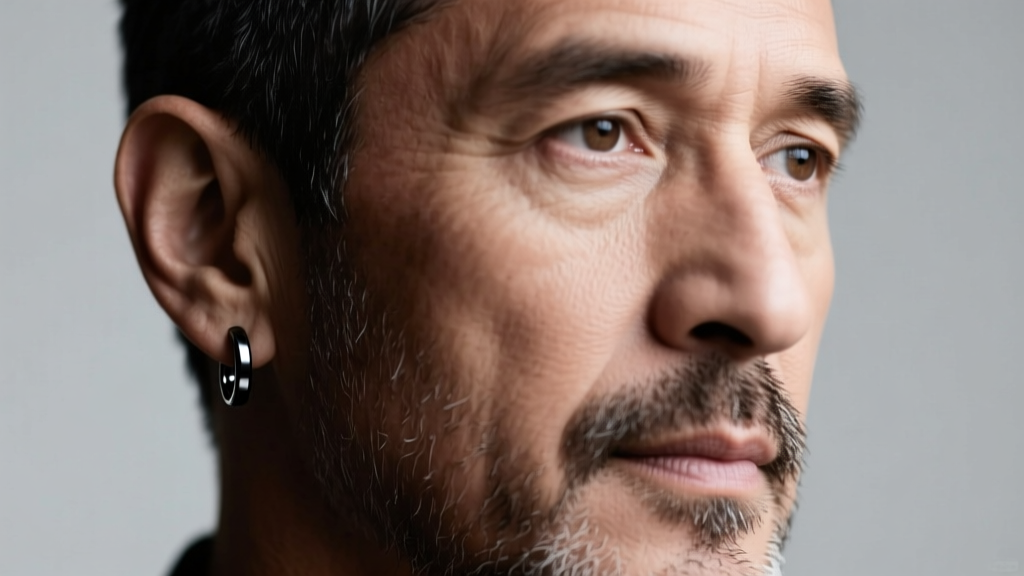
The Renaissance of Men's Drop Earrings
The landscape of men's jewelry has evolved dramatically, and drop earrings for men have emerged as a cornerstone of modern masculine styling. Unlike dangle earrings, which feature multiple moving parts that swing independently, drop earrings consist of a single, solid element that hangs directly below the earlobe or cartilage. This structural difference makes them less prone to snagging on clothing and hair, offering a sleek, streamlined aesthetic that appeals to beginners and veterans alike.
Whether you are stepping into the world of men's earrings for the first time or looking to refine your current collection, understanding the nuances of gauge sizes, material grades, and facial proportions is essential. This guide breaks down everything you need to know to confidently select and wear drop earrings.
Anatomy and Gauge Sizes: Getting the Fit Right
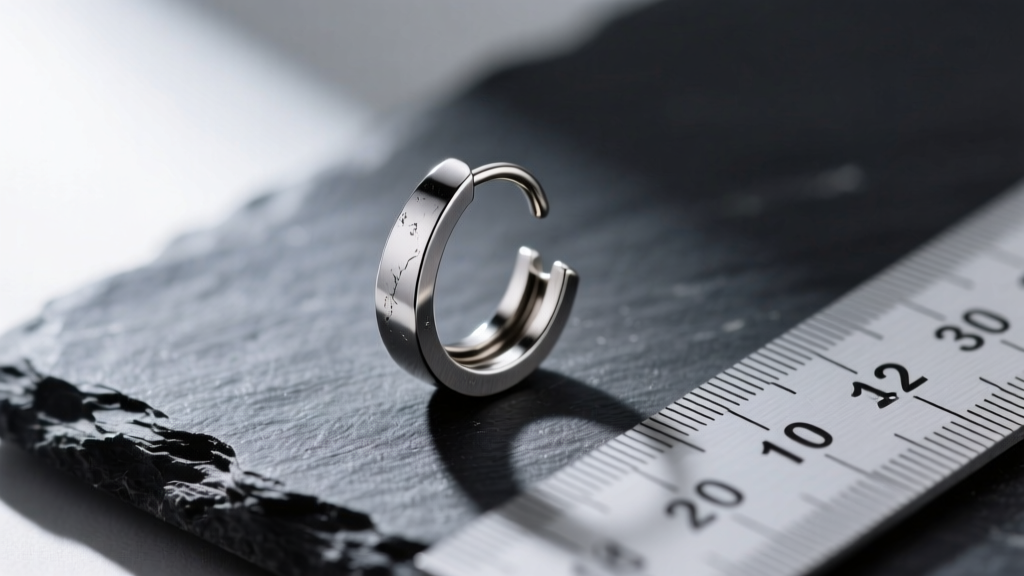
The most common mistake beginners make is ignoring the wire gauge—the thickness of the metal post that passes through the piercing. According to the Association of Professional Piercers (APP), standard earlobe piercings are typically done at 20-gauge (0.8mm) or 18-gauge (1.0mm). However, when shopping for drop earrings for men, you will frequently encounter 18-gauge and 16-gauge (1.2mm) options.
Why Thicker Gauges Matter for Men
- 18-Gauge (1.0mm): The sweet spot for men's drop earrings. It provides enough structural integrity to prevent the wire from bending under the weight of the drop, while still fitting comfortably in standard lobe piercings.
- 16-Gauge (1.2mm): Ideal for heavier, more substantial drops or cartilage piercings (like the helix or tragus). Note that forcing a 16G wire into a tight 20G lobe piercing can cause micro-tearing and irritation.
- Stretched Lobes (8G to 00G): If you have stretched earlobes, standard drop earrings will not fit. You must seek out specialized heavy-gauge drops or use taper adapters.
Material Grades: Hypoallergenic vs. Budget Options
Because drop earrings exert a slight downward pull on the piercing channel, material quality is paramount to avoid contact dermatitis or heavy metal toxicity. The Gemological Institute of America (GIA) frequently highlights the risks of nickel alloys in cheaper jewelry. Here is how the most common materials stack up for men's drops:
| Material | Grade / Standard | Pros | Cons | Average Price Range |
|---|---|---|---|---|
| Implant-Grade Titanium | ASTM F-136 | 100% nickel-free, lightweight, highly durable | Lacks the traditional 'shine' of precious metals | $30 - $80 |
| Surgical Steel | 316L | Affordable, high polish, widely available | Contains trace nickel; can irritate sensitive lobes | $15 - $40 |
| Solid Gold | 14k or 18k | Prestigious, retains value, excellent biocompatibility | Expensive, softer metal (18k can scratch easily) | $150 - $600+ |
| Tungsten Carbide | Industrial | Extremely heavy, scratch-proof, ultra-modern look | Too heavy for fresh piercings, cannot be resized | $40 - $90 |
Pro Tip: If you experience itching or redness after wearing 316L surgical steel drops, switch immediately to ASTM F-136 titanium. The downward weight of a drop earring amplifies metal-to-skin contact, making nickel allergies manifest much faster than with lightweight studs.
Matching Drop Lengths to Face Shapes
The visual weight of drop earrings for men can drastically alter the perceived proportions of your face. While personal preference always rules, understanding basic aesthetic geometry can help you choose a pair that enhances your natural features.
The Face Shape Framework
- Round Faces: Opt for long, linear drops (1.5 to 2.5 inches). The vertical lines help elongate the face and add sharp, angular contrast to soft curves. Avoid short, teardrop-shaped drops that mimic the roundness of your face.
- Square Faces: Choose medium-length drops (1 to 1.5 inches) with rounded or organic bottoms. This softens a strong, angular jawline. Avoid rigid, geometric square drops that over-emphasize your jaw.
- Oval Faces: The most versatile shape. You can pull off almost any length or style, from minimalist 0.5-inch bar drops to dramatic 3-inch architectural pieces.
- Heart-Shaped Faces: Look for drops that are wider at the bottom (like subtle teardrops or inverted triangles) to add visual weight to a narrower chin.
Placement: Lobe vs. Cartilage Styling
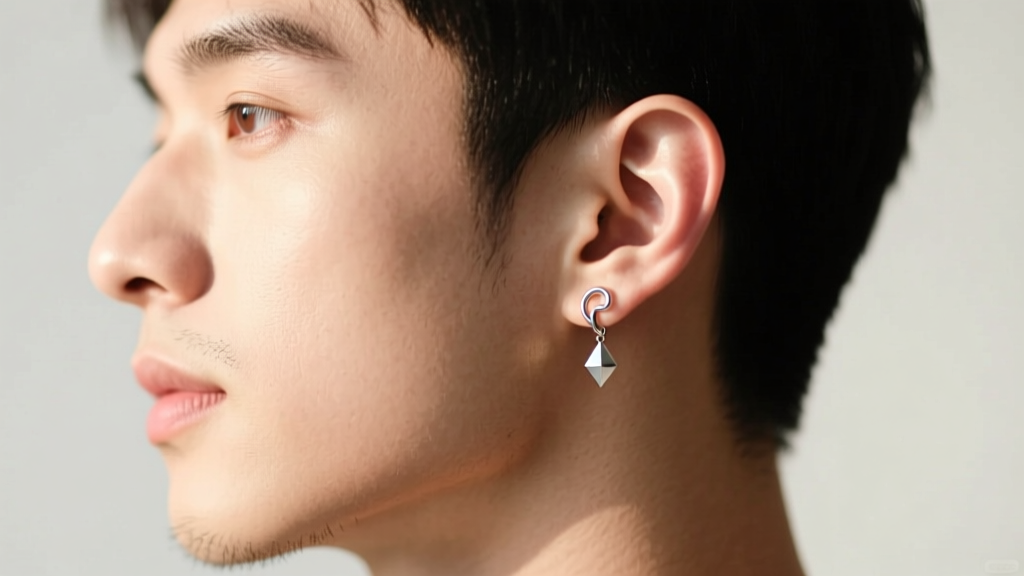
While the standard earlobe is the default home for drop earrings, modern men's styling frequently incorporates cartilage placements. The mechanics of how the earring hangs change depending on the piercing site.
Standard Lobe Drops
For the lobe, gravity does all the work. Ensure the drop has a smooth, rounded bail (the loop connecting the drop to the wire) so it can swing freely without catching on the earlobe tissue. Matte finishes and brushed metals are currently dominating the men's lobe drop market, offering an understated, rugged elegance.
Helix and Cartilage Drops
Wearing a drop earring in a helix (upper cartilage) piercing creates a striking, avant-garde look. However, cartilage is less forgiving than the lobe. You must use a lighter drop (under 5 grams) to prevent migration or tearing of the cartilage channel. Furthermore, ensure the wire is perfectly straight; bent wires will cause immense pressure on the rigid cartilage hole.
Building Your Starter Collection
If you are building a foundational jewelry wardrobe, start with versatility. Your first pair of drop earrings for men should be an 18-gauge titanium or 14k gold bar drop, measuring exactly 1 inch in length. This specific profile bridges the gap between casual streetwear and formal evening attire, ensuring your investment gets maximum rotation in your weekly wardrobe.


