Colorful Dangle Earrings: 2026 Technical Guide & Style Matrix
Master the physics, material science, and hardware mechanics of colorful dangle earrings with our expert 2026 technical guide and durability matrix.

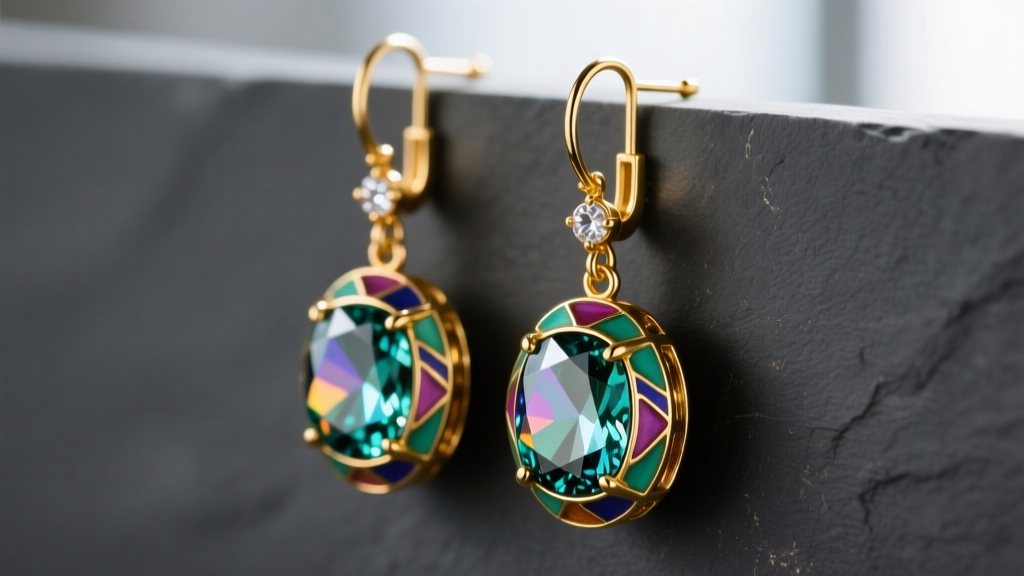
The Physics of the Dangle: Weight Distribution and Kinetic Limits
Designing and wearing colorful dangle earrings is an exercise in applied physics. Unlike static studs, dangles are kinetic sculptures. Every step the wearer takes generates a pendulum effect, transferring kinetic energy directly into the fistula (the piercing channel). In 2026, as maximalist silhouettes and shoulder-grazing lengths continue to dominate editorial runways, understanding the weight limits of the human earlobe is critical for both designers and collectors.
According to guidelines referenced by the Association of Professional Piercers (APP), a standard healed lobe piercing can comfortably support static weights up to 15 grams. However, the dynamic weight of a swinging dangle can generate up to three times the resting force during brisk movement. Therefore, expert jewelers cap the total weight of a single dangle earring at 12 grams to prevent lobe migration, micro-tearing, and the dreaded 'cheese-cutter' effect.
Gauge Specifications and Wire Hardness
The wire gauge of the earring finding dictates its structural integrity under kinetic stress. Standard commercial earrings often use 22-gauge (0.64mm) wire, which is prone to bending and warping when supporting heavy, colorful enamel or gemstone drops. For high-end colorful dangle earrings, 20-gauge (0.81mm) or 18-gauge (1.02mm) wire is mandatory. Furthermore, the metal must be work-hardened. Dead-soft wire will deform under the pendulum stress, whereas half-hard or full-hard wire maintains the structural curve of a French hook or fishwire finding.
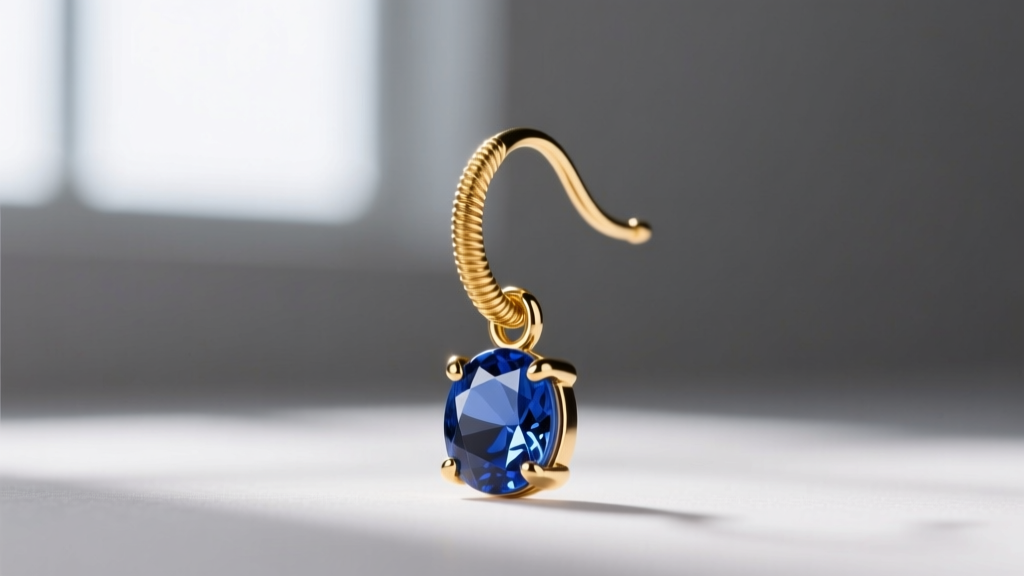
Material Science: How Color is Engineered
The vibrancy of colorful dangle earrings relies on specific material applications. The method used to introduce color drastically alters the piece's durability, weight, and maintenance requirements. Below is a technical breakdown of the three primary color-engineering methods used in modern fine and demi-fine jewelry.
1. Vitreous Enamel vs. Cold Enamel (Epoxy Resin)
Vitreous enamel is essentially fused glass powder, fired at temperatures exceeding 1400°F (760°C). It yields a brilliant, scratch-resistant finish (Mohs hardness of 5-6) that will not degrade under UV light. However, its crystalline structure makes it highly susceptible to shattering upon impact—a significant risk for swinging dangles that may strike a tabletop or mirror. Conversely, cold enamel (epoxy resin) is cured at room temperature. While it is impact-resistant and allows for complex gradient colorways popular in 2026, it scratches easily (Mohs 2-3) and will yellow over time when exposed to prolonged sunlight and cosmetics.
2. Anodized Titanium and Niobium
For lightweight, hyper-durable color, reactive metals like titanium and niobium are unparalleled. Anodization is an electrolytic process that alters the thickness of the metal's oxide layer, refracting light to produce vivid colors without dyes or coatings. Because the color is structural, it will never chip or fade. Crucially, titanium is roughly 45% lighter than stainless steel, making it the ultimate base metal for oversized, colorful dangle earrings that must remain under the 12-gram kinetic threshold.
3. Gemstone Briolettes and the Mohs Scale
When utilizing gemstones for color, the Gemological Institute of America (GIA) Mohs scale of hardness is your primary decision matrix. Dangle earrings are prone to accidental impacts. Soft stones like Opal (5.5-6.5) or Turquoise (5-6) are highly likely to chip or abrade when used in swinging briolettes. For kinetic jewelry, experts recommend Tourmaline (7-7.5), Sapphire (9), or Spinel (7.5-8) to ensure the faceted edges survive daily wear.
Hardware Failure Modes: Where Dangles Break
The most common point of catastrophic failure in colorful dangle earrings is not the earring post itself, but the articulation points. A dangle earring typically features at least two jump rings: one connecting the drop to the main body, and one connecting the main body to the ear wire.
- Unsoldered Jump Rings: If a jump ring is merely twisted shut rather than soldered, the lateral torque generated by a swinging dangle will eventually pull the ring open, resulting in the loss of the gemstone or enamel drop. High-quality manufacturing mandates laser or torch soldering on all articulation points.
- Top-Drilled Briolette Friction: When a gemstone briolette is top-drilled, the sharp edge of the gemstone hole can act like a saw against the gold or silver wire wrapping it. Over months of kinetic movement, the stone will literally cut through the precious metal. Expert lapidaries and jewelers mitigate this by using a specialized 'bell cap' or inserting a microscopic PTFE (Teflon) sleeve inside the gemstone's drill channel to prevent metal-on-stone friction.

2026 Durability & Color Fastness Matrix
When sourcing or designing colorful dangle earrings, use this technical matrix to evaluate the longevity and structural viability of the materials involved.
| Color Method | Weight Impact | Impact Resistance | UV / Chemical Stability | Best Finding Pairing |
|---|---|---|---|---|
| Vitreous Enamel | Heavy (Glass) | Poor (Shatters) | Excellent | 18G Leverback (Secure) |
| Cold Enamel (Resin) | Very Light | Excellent | Poor (Yellows) | 20G French Wire |
| Anodized Titanium | Ultra-Light | Excellent | Excellent | Titanium Hinged Hoop |
| Dyed Jade / Quartz | Moderate | Moderate | Poor (Bleeds) | 18G Soldered Link |
Maintenance: The Ultrasonic Cleaner Hazard
A critical error made by both consumers and retail jewelers is placing colorful dangle earrings into ultrasonic cleaners. The high-frequency cavitation bubbles generated by these machines are devastating to specific color treatments. Dyed gemstones (such as dyed chalcedony or 'jade') will bleed their color into the solvent. Cold enamel will micro-fracture and peel from the metal substrate due to the rapid vibrations. Furthermore, the kinetic articulation points of a dangle earring can become tangled or bent in the ultrasonic basket. For any earring featuring resin, dyed stones, or vitreous enamel, manual cleaning with a soft brush, lukewarm water, and a pH-neutral dish soap is the only safe protocol.
Expert Insight: When evaluating vintage or estate colorful dangle earrings, inspect the enamel under a 10x loupe. If you see a web of microscopic crazing (cracks) in the glass enamel, the piece has suffered from kinetic fatigue and should be retired from daily wear to prevent sudden shattering.
Sourcing and Quality Assurance
For jewelers sourcing findings to build kinetic pieces, suppliers like Rio Grande Jewelry Supply offer specialized 'snap-fit' and soldered articulation components specifically engineered for dynamic weight loads. Ensuring your hardware matches the kinetic demands of your colorful drops is the hallmark of true fine jewelry craftsmanship in the modern era.


