The Definitive Earring Book Buying Guide for Jewelry Fans
Discover how to choose the perfect earring book for styling, history, or jewelry making. Our expert buying guide covers top authors, formats, and tips.
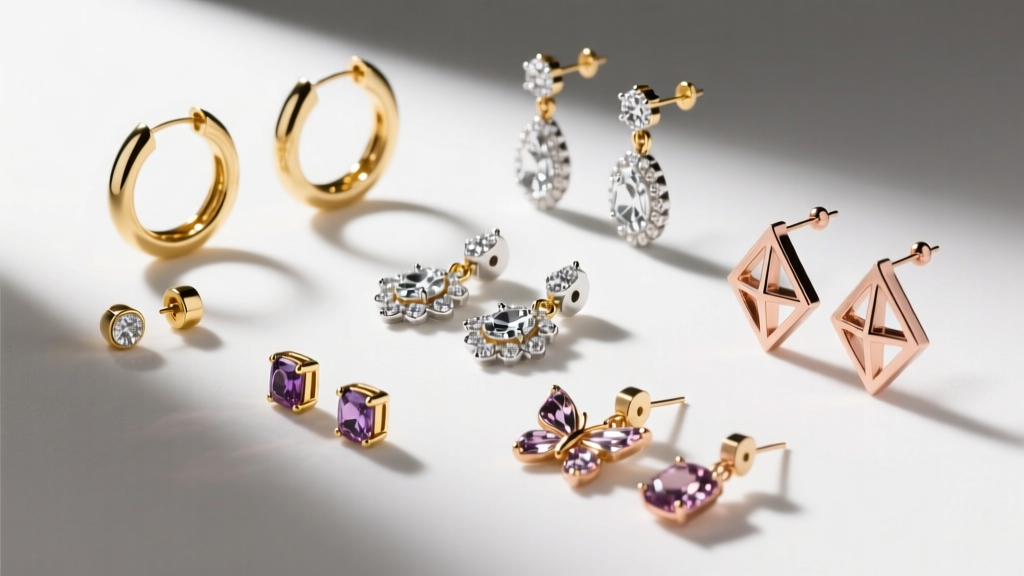
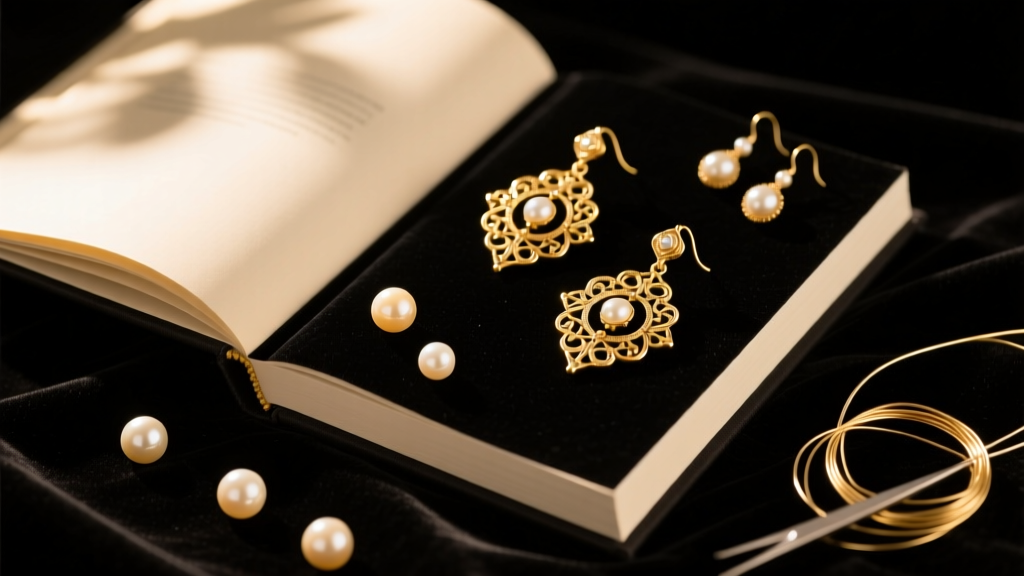
Why an Earring Book is a Wardrobe and Workbench Essential
In an era dominated by fleeting digital trends and endless social media scrolling, a meticulously curated earring book remains an irreplaceable asset for jewelry collectors, stylists, and makers. As we navigate the jewelry landscape in 2026, the tactile experience of studying high-resolution macro photography, historical hallmarks, and structural diagrams in print offers a depth of knowledge that a screen simply cannot replicate. Whether you are trying to authenticate a pair of vintage Art Deco diamond clips, map out the perfect hoop silhouette for a client's face shape, or learn the metallurgy behind forging a seamless 18k gold huggie, the right literature is your foundational tool.
However, the market is flooded with superficial coffee-table books that prioritize vague aesthetics over actionable expertise. This comprehensive buying guide will teach you exactly how to evaluate an earring book for its structural integrity, editorial rigor, and practical utility, ensuring you invest only in volumes that elevate your jewelry acumen.
The 4 Main Categories of Earring Books
Before making a purchase, you must identify the primary purpose of the book. Earring literature generally falls into four distinct categories, each requiring a different set of editorial standards.
1. Historical & Antique Identification
These volumes focus on the evolution of ear adornment, from Georgian girandoles to mid-century modernist ear cuffs. A high-quality historical book will detail specific clasp mechanisms (like the transition from C-clasps to trombone clasps in the 1920s) and hallmarking laws. Look for authors affiliated with institutions like the Victoria & Albert Museum or recognized antique jewelry universities.
2. Styling & Face Shape Matrices
Designed for stylists and personal shoppers, these books focus on visual harmony. The best styling books move beyond generic advice, offering geometric breakdowns of how light interacts with different gemstone cuts based on the wearer's jawline and ear placement. They should feature diverse model representation and detailed charts matching earring drops to specific facial proportions.
3. DIY & Jewelry Making Manuals
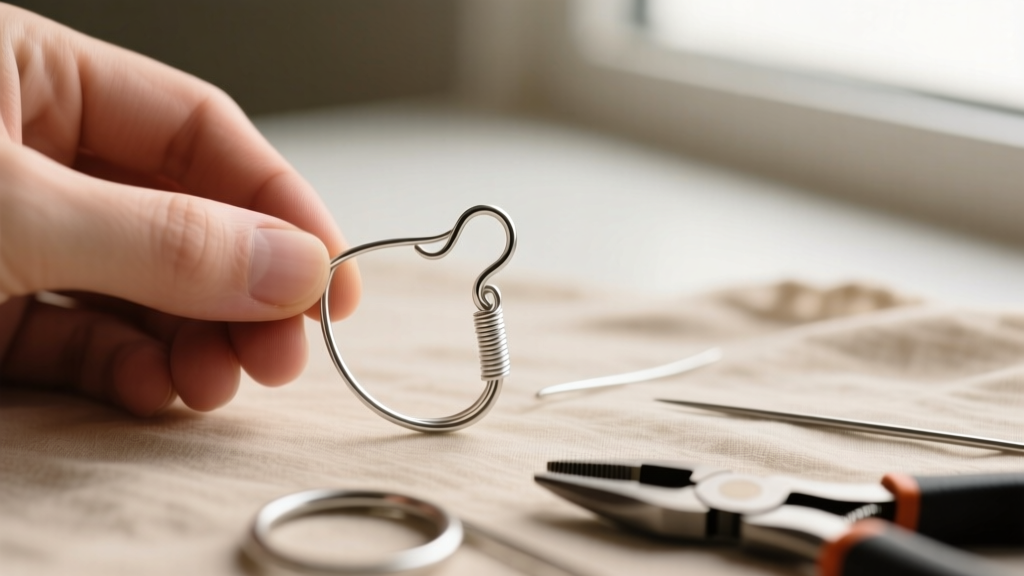
Crafting books are technical manuals. They must cover essential concepts like work-hardening, annealing, and precise gauge sizing. A superior crafting book will explicitly explain why a 20-gauge (0.81mm) wire is optimal for standard lobe French hooks, while an 18-gauge (1.02mm) wire is necessary for the structural integrity of heavy chandelier earrings.
4. Gemological & Material Focus
These texts dive deep into the stones and metals used in fine earrings. They should align with the grading standards established by the Gemological Institute of America (GIA), teaching readers how to identify treated pearls, distinguish between natural and lab-grown diamonds in cluster studs, and understand the durability of different alloy mixes for cartilage jewelry.
| Category | Best For | Key Feature to Look For | Avg. Price Range | Ideal Binding |
|---|---|---|---|---|
| Historical | Collectors, Appraisers | Hallmark charts & clasp timelines | $60 - $120 | Smyth-sewn Hardcover |
| Styling | Stylists, Retail Buyers | Diverse editorial photography | $35 - $75 | Standard Hardcover |
| DIY / Crafting | Jewelers, Hobbyists | 1:1 scale diagrams & gauge specs | $25 - $50 | Otabind (Lay-Flat) |
| Gemological | Gemologists, Investors | Macro inclusion photography | $80 - $150+ | Case-bound with Dust Jacket |
Critical Features to Evaluate Before Buying
When inspecting an earring book, do not just read the blurb. Physically examine the production quality and editorial depth using the following criteria.
Photography and Macro Detailing
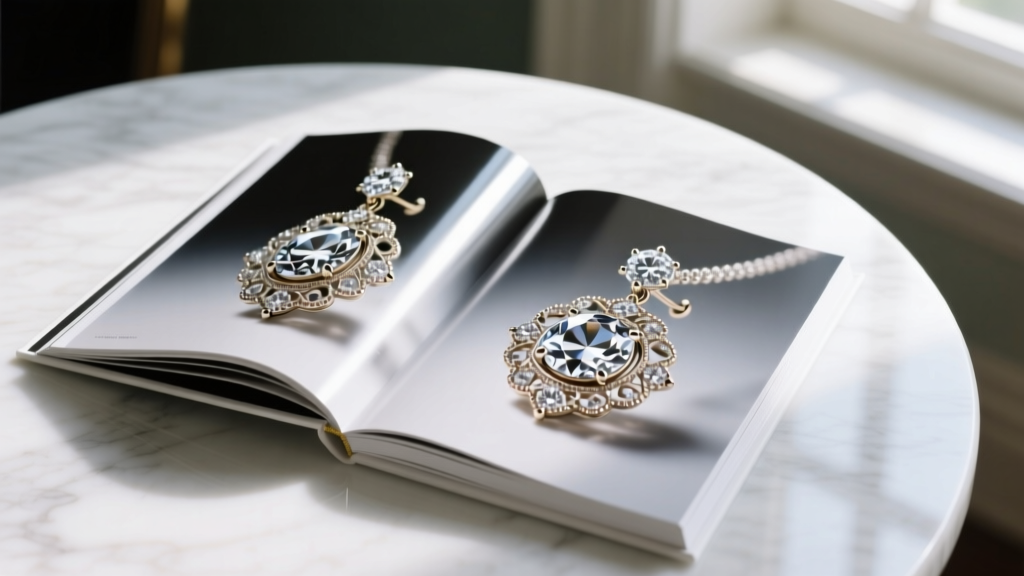
Jewelry is defined by its micro-details. A reputable earring book will utilize focus-stacked macro photography (typically using 100mm+ lenses) to ensure the entire depth of a three-dimensional drop earring is in sharp focus. Flip through the pages: can you see the individual prongs holding a pave diamond? Can you identify the luster differences between an Akoya and a South Sea pearl in the printed image? If the images are blurry, poorly lit, or rely heavily on generic stock illustrations, put the book back on the shelf.
Paper Weight and Coating
The physical substrate of the book drastically affects how jewelry is perceived. Uncoated paper absorbs ink, which scatters light and dulls the visual "fire" of gemstones. For historical and gemological books, insist on high-gloss or matte-coated stock with a weight of at least 130 gsm (grams per square meter). This prevents bleed-through and ensures that metallic foils and high-contrast diamond photography pop off the page.
Binding Mechanics for Workbench Use
If you are buying a DIY or crafting earring book, the binding is just as important as the content. You will be referencing this book while your hands are occupied with flush cutters and mandrels. Look for Otabind or Smyth-sewn lay-flat bindings. These allow the book to open a full 180 degrees without cracking the spine or requiring a heavy weight to keep the pages open. Glue-bound (perfect bound) crafting books are a frustrating investment that will quickly degrade.
Author Credentials
Verify the author's background. For historical and material books, look for post-nominal letters such as GG (Graduate Gemologist), FGA (Fellow of the Gemmological Association), or recognized Antique Jewelry University affiliations. Styling books should be authored by established editorial stylists or image consultants with a verifiable portfolio.
Pricing Tiers: What to Expect in 2026
Understanding the market value of jewelry literature helps you avoid overpriced fluff and identify genuine bargains.
- Mass-Market Paperbacks ($15 - $25): Generally best avoided for serious study. These often recycle basic internet tips, lack high-resolution imagery, and use low-grade paper that degrades quickly. They may suffice for absolute beginners looking for basic face-shape advice.
- Mid-Range Hardcovers ($35 - $75): The sweet spot for styling guides and introductory crafting manuals. Expect decent photography, good binding, and actionable advice, though they may lack the deep academic rigor of museum-published texts.
- Museum-Grade Monographs ($80 - $150+): Essential for collectors and appraisers. These are often published in limited runs by auction houses (like Sotheby's or Christie's) or historical societies. They feature exhaustive archival research, X-ray fluorescence (XRF) metal analysis data, and provenance histories of iconic earring collections.
Red Flags: How to Spot a Low-Quality Earring Book
Protect your library from substandard publications by watching out for these common warning signs:
- Vague Material Terminology: If a book repeatedly uses the term "gold" without specifying karatage (e.g., 14k, 18k) or plating methods (e.g., vermeil, gold-filled), the author lacks fundamental industry knowledge.
- Ignoring Ear Anatomy: A comprehensive styling or crafting book must address the differences between standard lobe piercings and cartilage placements (helix, tragus, conch). Books that treat the ear as a single, uniform canvas are outdated.
- Lack of Scale References: In DIY tutorials, step-by-step photos must include a ruler, caliper, or coin for scale. A macro shot of a wire-wrapped briolette is useless if the reader doesn't know if the wire is 24-gauge or 16-gauge.
- No Index or Glossary: Jewelry terminology is vast (e.g., "filigree" vs. "cannetille", "butterfly back" vs. "la pousette"). A book without a robust index or glossary is a major editorial failure.
Final Verdict: Building Your Jewelry Library
Investing in a high-quality earring book is an investment in your eye for detail. Whether you are authenticating a pair of Victorian ear pendants, mastering the art of the perfect 20-gauge French hook, or simply learning which huggie diameter best complements your jawline, the right text will serve as a lifelong mentor. Prioritize lay-flat bindings for your workbench, demand macro-photography for your reference library, and always verify the gemological credentials of your authors. By applying these rigorous standards, your jewelry bookshelf will become your most valuable asset in the world of earrings.


