Material Guide for Long Earrings for Ladies: Weight and Comfort
Discover the best metals and resins for long earrings for ladies. Compare weight, durability, and hypoallergenic properties to prevent lobe stretching.

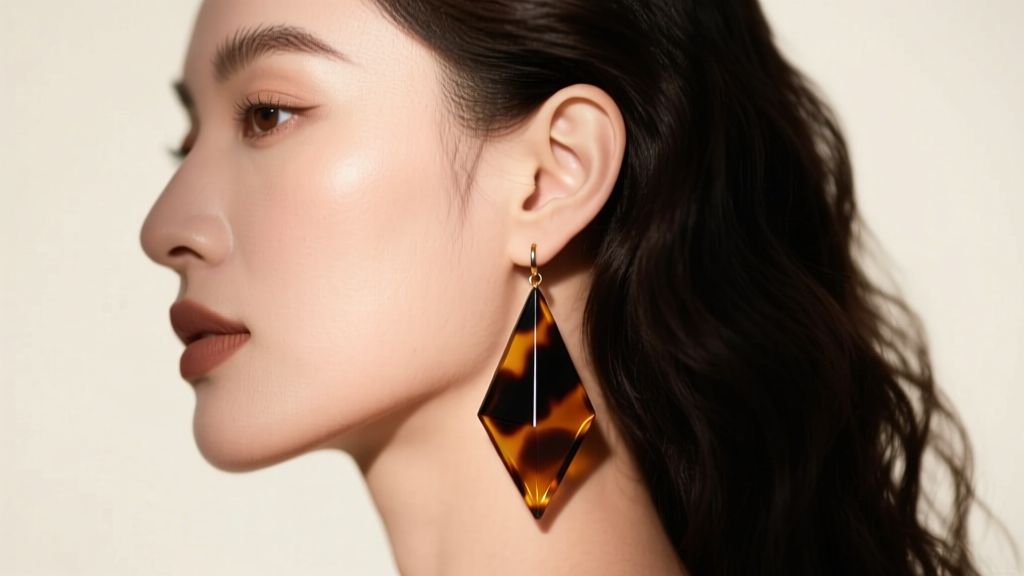
When curating a jewelry collection, the allure of elongated silhouettes is undeniable. However, finding the perfect long earrings for ladies requires looking beyond mere aesthetics to understand the metallurgical and physical properties of the materials involved. In 2026, jewelry design has evolved to prioritize ergonomic wearability, recognizing that a three-inch dangle exerts vastly different physical forces on the earlobe compared to a standard stud. Choosing the wrong material can lead to warped wires, contact dermatitis, or permanent fistula stretching.
This comprehensive guide breaks down the material science behind elongated earrings, providing actionable data on density, tensile strength, and hypoallergenic grades to help you select pieces that offer all-day comfort without sacrificing dramatic visual impact.
The Physics of Dangle: Understanding the Fulcrum Effect
To understand why material selection is critical for long earrings for ladies, we must examine the physics of the earlobe. The piercing fistula acts as a fulcrum. When you wear a drop earring, the distance from the piercing hole to the center of mass of the earring creates a torque multiplier. A 10-gram earring that hangs three inches below the lobe exerts significantly more downward and forward shear force on the tissue than a 10-gram stud sitting flush against the skin.
Tissue Stress and Material Density
Because of this leverage, the density of the chosen material dictates the maximum viable length of the earring. Heavy metals require thicker structural supports to prevent bending, which paradoxically adds more weight to the ear. Conversely, low-density materials allow for expansive, voluminous designs that remain featherlight. Understanding the grams-per-cubic-centimeter (g/cm³) ratio of your jewelry is the first step in preventing lobe fatigue.
Comprehensive Material Comparison Chart
The table below synthesizes the core physical properties of the most common materials used in elongated earring manufacturing. Use this framework to evaluate pieces before purchasing.
| Material | Density (g/cm³) | Max Recommended Length | Hypoallergenic Grade | Avg. Price Range |
|---|---|---|---|---|
| Implant-Grade Titanium (ASTM F136) | 4.43 | 3.5 inches | Excellent (Nickel-Free) | $45 - $120 |
| Cellulose Acetate / Bio-Resin | 1.15 - 1.30 | 5.0+ inches | Excellent (Inert) | $25 - $85 |
| 14k Yellow / Rose Gold | 13.5 - 14.0 | 2.5 inches | Good (Alloy Dependent) | $150 - $400 |
| 18k Yellow Gold | 15.5 - 16.0 | 1.5 inches | Very Good | $300 - $800+ |
| Niobium | 8.57 | 2.0 inches | Excellent (Nickel-Free) | $35 - $90 |
| Hollow-Formed Sterling Silver | 10.4 (Solid) | 3.0 inches | Poor to Fair (Copper Alloy) | $60 - $150 |
Deep Dive: Top Metals for Elongated Silhouettes
Not all metals behave equally when drawn into wire or cast into long chains. Here is how the industry's top metals perform under the specific stresses of dangle designs.
Implant-Grade Titanium (ASTM F136)
Titanium is the undisputed champion for sensitive ears requiring structural integrity. According to standards set by ASTM International, F136 implant-grade titanium contains virtually zero nickel, eliminating the risk of allergic contact dermatitis. More importantly for long earrings for ladies, titanium boasts an exceptional strength-to-weight ratio. Jewelers can draw titanium wire down to 22-gauge or 20-gauge thicknesses without sacrificing tensile strength. This means the structural components (hooks, jump rings, and chains) remain incredibly lightweight, reserving the weight allowance for the decorative elements of the earring.
14k vs. 18k Gold: The Karat Compromise
While 18k gold is often marketed as a premium luxury, it is actually less ideal for very long, solid-wire dangle earrings. Pure gold is exceptionally soft and dense. An 18k alloy (75% gold) is heavier and more prone to warping under the pendulum stress of a 3-inch drop. Conversely, 14k gold (58.5% gold) is alloyed with higher percentages of copper, silver, or zinc. As noted by the Gemological Institute of America (GIA), these alloying metals increase the tensile strength and hardness of the gold. Therefore, a 14k gold wire hook will resist bending and sagging far better than an 18k counterpart, making it the superior choice for elongated, heavy statement pieces.
Niobium: The Anodized Alternative
Niobium is highly biocompatible and can be anodized to produce vibrant, permanent colors without the use of surface platings that can flake off over time. However, with a density of 8.57 g/cm³, it is nearly twice as heavy as titanium. When shopping for niobium long earrings for ladies, look for designs that utilize flat sheet metal cutouts or hollow tubing rather than solid wire to keep the overall gram weight manageable for the earlobe.
Alternative Lightweight Materials for Statement Lengths
When the desired silhouette exceeds three inches, traditional metals often become prohibitively heavy. This is where advanced polymers and structural techniques come into play.
Cellulose Acetate and Bio-Resins
Cellulose acetate, derived from natural cotton fibers and wood pulp, has a density of roughly 1.2 g/cm³—making it nearly ten times lighter than solid gold. It is the premier material for oversized, geometric, and chandelier long earrings for ladies. High-grade acetate is hypoallergenic, polishable, and possesses enough rigidity to hold complex architectural shapes without snapping. In 2026, bio-resins derived from plant-based epoxies are also gaining traction, offering similar weight benefits with the added advantage of being cast into seamless, intricate organic forms.
Hollow-Formed Sterling Silver
Sterling silver (.925) is notorious for causing green skin discoloration or allergic reactions due to its copper content, a fact widely documented by the American Academy of Dermatology. However, if you prefer the look of silver, seek out 'hollow-formed' or 'electroformed' long earrings. These manufacturing processes create a microscopic shell of silver over a dissolvable core, resulting in voluminous, three-dimensional drops that weigh a fraction of their solid-cast equivalents. Always ensure the ear wire itself is made of titanium or gold-plated surgical steel to protect the piercing fistula.
Hardware and Wire Gauge Specifications
The material of the decorative drop is only half the equation; the hardware connecting it to your ear dictates the failure point of the jewelry. For long earrings for ladies, pay strict attention to the wire gauge of the french hook or leverback.
- 22-Gauge (0.64mm): Too thin for heavy drops. Will warp and lose its 'U' shape, causing the earring to slip out of the lobe.
- 20-Gauge (0.81mm): The industry sweet spot. Thick enough to support up to 15 grams of pendulum weight without bending, yet thin enough to pass comfortably through standard 18g or 16g healed fistulas.
- 18-Gauge (1.02mm): Required for heavy, oversized chandelier styles. Note that wearing an 18g wire through a standard 20g piercing hole can cause friction and micro-tearing over time.
Maintenance and Lobe Support Strategies
Even with the most meticulously engineered lightweight materials, gravity will eventually take its toll on the earlobe tissue if elongated earrings are worn for 12+ hours continuously.
Pro Tip: Never rely solely on the tension of a standard butterfly back or silicone nub to secure a heavy dangle. The weight of the earring will cause the back to slide down the post, tilting the earring forward and putting asymmetric pressure on the piercing channel.
To mitigate tissue stretching, integrate invisible ear support patches (small, adhesive, hypoallergenic foam stickers that sit between the lobe and the earring back) into your routine. These patches distribute the shear force across a wider surface area of the skin. Alternatively, use silicone o-rings designed specifically to grip the earring post tightly flush against the back of the lobe, providing a structural shelf that bears the brunt of the earring's torque. By pairing the right low-density materials with proper mechanical support, you can comfortably wear dramatic, elongated silhouettes from morning until night.


