Sonic Earrings Buying Guide: Smart Audio Jewelry 2026
Discover the best sonic earrings in 2026. Our buying guide covers audio specs, hypoallergenic metals, battery life, and styling smart jewelry.

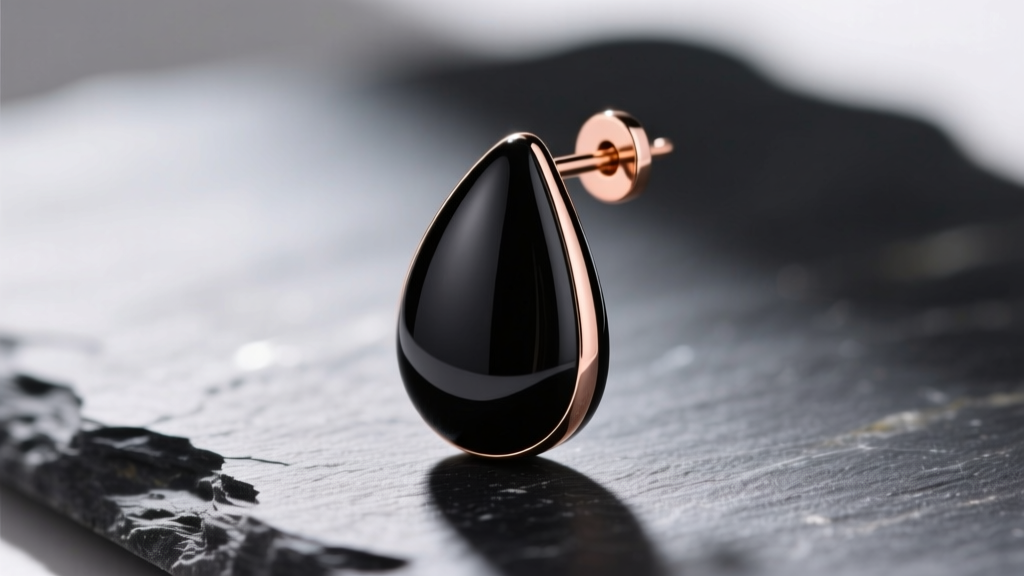
The Rise of Sonic Earrings: Where Haute Couture Meets Wearable Tech
In 2026, the boundary between high-end jewelry and consumer electronics has finally dissolved. The era of bulky, plastic smart wearables is over, replaced by the sophisticated category of sonic earrings—audio-enabled fine jewelry that delivers premium soundscapes, spatial audio, and hands-free connectivity without compromising on aesthetic elegance. Whether you are navigating a busy commute, taking discreet calls in the boardroom, or simply enjoying a private podcast while walking the dog, sonic earrings offer an invisible, stylish solution.
However, merging micro-electronics with body-modification jewelry introduces a unique set of challenges. You are no longer just evaluating karat weight or gemstone clarity; you must also consider piezoelectric speaker integrity, micro-battery lifespans, and the biocompatibility of tech alloys against sensitive piercing tracts. This comprehensive buying guide breaks down exactly what to look for when investing in smart audio jewelry, ensuring your lobes stay healthy and your audio remains pristine.
Audio Technology: Directional Micro-Speakers vs. Bone Conduction
When shopping for sonic earrings, the first technical specification to evaluate is the audio delivery method. Unlike over-ear headphones, earrings are constrained by their placement on the earlobe or cartilage. Manufacturers currently utilize two primary technologies:
- Directional Micro-Speakers: Most high-end sonic drop and hoop earrings use ultra-compact, forward-facing acoustic meshes. These project sound directly up the ear canal. The 2026 standard utilizes Bluetooth 5.4 LE Audio, allowing for lossless, low-latency streaming with minimal sound leakage to bystanders.
- Bone Conduction Transducers: Some specialized ear-cuff styles clamp gently to the cartilage or mastoid bone behind the ear, using vibrations to transmit sound through the skull. While this leaves the ear canal completely open for environmental awareness, it requires a snug, continuous fit that can cause cartilage fatigue over long periods.
Expert Tip: For standard lobe piercings, directional micro-speakers are vastly superior. They do not require clamping pressure, reducing the risk of contact dermatitis and mechanical irritation on the piercing fistula.
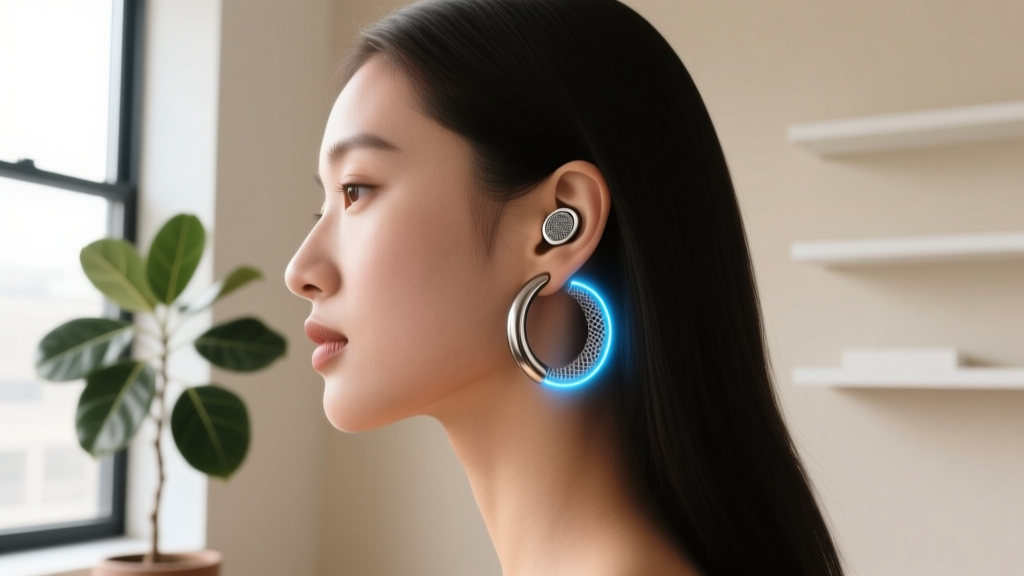
Material Safety: Protecting Piercings from Tech Alloys
The most critical point of failure in early smart jewelry was the use of cheap, nickel-laden base metals for the piercing posts to save manufacturing costs. Because sonic earrings house batteries and circuitry, the risk of galvanic corrosion and contact dermatitis increases if sweat interacts with substandard alloys and micro-currents.
When reading the spec sheet, ignore the outer housing materials (which can be ceramic, enamel, or PVD-coated stainless steel) and focus strictly on the post material. You must look for:
- ASTM F136 Grade 5 Titanium (Ti 6Al-4V ELI): The absolute gold standard for implant-grade jewelry. It is entirely nickel-free, lightweight, and non-reactive.
- Niobium: A highly biocompatible, hypoallergenic alternative that can be anodized into vibrant colors without using toxic dyes or platings.
- Solid 14k or 18k Gold: Acceptable for healed piercings, provided it is nickel-free (white gold often contains nickel alloys, so yellow or rose gold is safer for sensitive ears).
Never purchase sonic earrings with 'surgical steel' or 'stainless steel' posts if you have a known nickel sensitivity, as the friction of inserting a tech-heavy earring can trigger severe allergic reactions.
Weight, Gauge, and Lobe Health: The Biomechanics of Smart Jewelry
A standard gold stud weighs roughly 1 to 2 grams. A fully equipped sonic earring, complete with a solid-state micro-battery, Bluetooth antenna, and speaker driver, typically weighs between 6 and 12 grams. This added mass creates downward torque on the piercing tract, which can lead to lobe stretching, migration, or tearing if the jewelry gauge is too thin.
Below is our 2026 structural framework for matching earring weight to post thickness:
| Earring Weight | Recommended Post Gauge | Max Continuous Wear | Lobe Health Impact |
|---|---|---|---|
| 2 - 4 grams | 20G (0.81mm) | 12+ Hours | Minimal risk; suitable for standard lobes. |
| 5 - 8 grams | 18G (1.0mm) | 8 - 10 Hours | Low risk; may cause slight fatigue by end of day. |
| 9 - 12 grams | 16G (1.2mm) | 4 - 6 Hours | Moderate risk; requires periodic breaks to prevent stretching. |
| 13+ grams | 14G (1.6mm) or Ear Hook | 2 - 3 Hours | High risk; use silicone support patches or ear hooks. |
If your current piercings are stretched to 20G but you want to wear a 9-gram sonic drop, consult a professional piercer about safely tapering your lobe to 16G to accommodate the heavier tech hardware.
Battery Life, Charging, and Water Resistance
The integration of solid-state micro-batteries in 2026 has vastly improved the longevity of sonic earrings. While older models offered a mere 90 minutes of playback, current premium models deliver 4 to 6 hours of continuous audio on a single charge, with the accompanying smart-case providing up to 24 hours of additional juice via magnetic induction.
Regarding water resistance, look for a minimum of IPX5. This ensures the earrings can withstand sweat during a workout or light rain. However, be highly skeptical of any brand claiming 'waterproof' status. Steam from hot showers can easily penetrate the acoustic micro-meshes, condensing on the internal circuit boards and causing irreversible short-circuiting. Always remove sonic earrings before swimming or bathing.
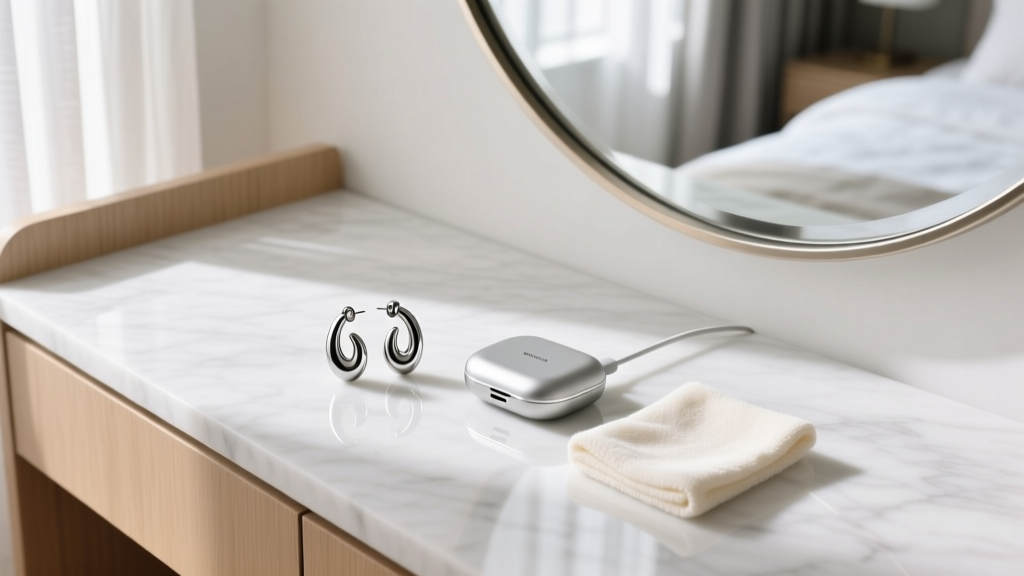
Cleaning and Maintenance: A Crucial Warning
Because the keyword 'sonic' is heavily associated with jewelry cleaning, we must issue a vital warning: Never place sonic earrings in an ultrasonic jewelry cleaner.
Traditional fine jewelry is often cleaned using ultrasonic baths that operate at 40kHz high-frequency vibrations to shake dirt from crevices. If you submerge smart audio earrings in these machines, the intense acoustic cavitation will instantly delaminate the internal piezoelectric speakers, shatter the solid-state battery cells, and destroy the waterproof seals. Furthermore, the electromagnetic fields generated by certain cleaning and charging environments can interfere with unshielded tech components.
The Correct Cleaning Protocol:
- Wipe the outer ceramic or metal housing with a dry, lint-free microfiber cloth.
- Use a soft-bristled, dry brush (like a clean makeup blending brush) to gently sweep dust away from the speaker mesh.
- To sanitize the piercing post, apply a small amount of 70% isopropyl alcohol to a cotton swab and carefully wipe only the metal post, avoiding any seams where the liquid could seep into the battery housing.
Final Verdict: Are Sonic Earrings Worth the Investment?
Sonic earrings represent a paradigm shift in how we interact with our personal devices. For the modern professional, the digital nomad, or the style-conscious commuter, they offer an unparalleled blend of utility and haute couture. By prioritizing implant-grade titanium posts, respecting the biomechanical weight limits of your lobes, and adhering to strict, non-liquid cleaning protocols, your smart jewelry will remain a staple of your wardrobe for years to come. When evaluating your purchase, always prioritize the safety of your piercing tract over flashy exterior features; after all, the most beautiful earring is one you can wear comfortably all day.


