The Ultimate Hanger Earrings Care and Cleaning Guide
Master the care of hanger earrings with our expert guide on cleaning French wires, reshaping bent hooks, and preventing metal fatigue.

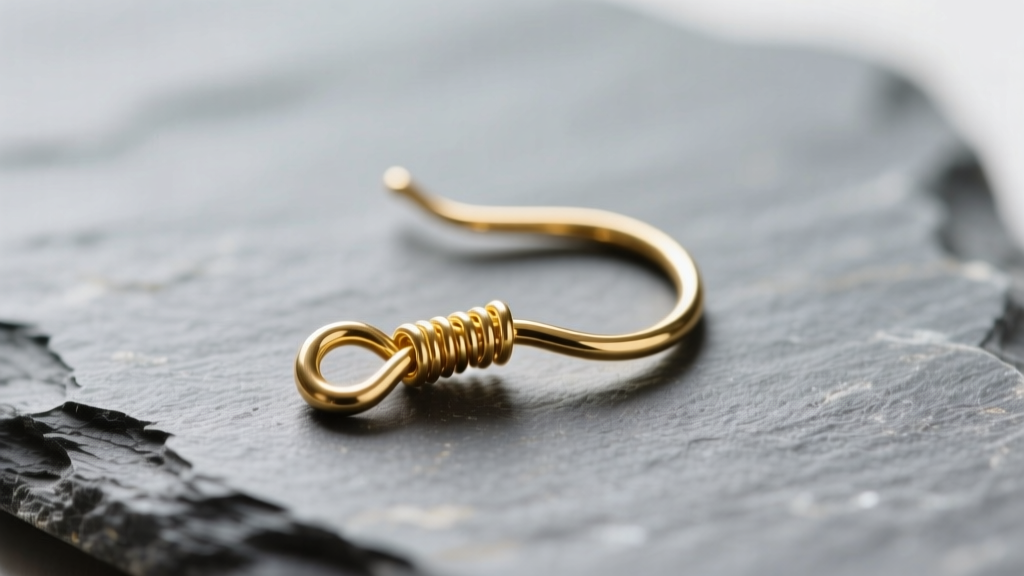
In the jewelry industry, the term 'hanger earrings' refers to the critical suspension mechanisms—French wires, shepherd hooks, ear threads, and leverbacks—that connect the decorative drop to your piercing. While collectors often obsess over the gemstones or the focal pendants, the hanger wire itself is the unsung hero of the earring. It bears the mechanical stress of daily movement, the chemical assault of cosmetics, and the friction of the earlobe. As we move through 2026, with a renewed focus on sustainable jewelry maintenance and preserving heirloom pieces, understanding how to care for these delicate wire components is essential. Neglecting the hanger leads to bent hooks, snapped loops, and severe contact dermatitis from degraded plating.
The Anatomy of Hanger Earrings: Why the Wire Matters
Before diving into cleaning protocols, you must understand the physical properties of your hanger earrings. The durability of the hook is dictated by its gauge (thickness) and its alloy composition. Standard French wires are typically crafted in 20-gauge (0.81mm) or 22-gauge (0.64mm).
- 20-Gauge Wires: The industry standard for most drop earrings. Thick enough to support moderate weight without bending, and wide enough to prevent the 'cheese-cutter effect' (where thin wire slices through the earlobe tissue).
- 22-Gauge Wires: Used for lightweight, delicate dangles. Highly susceptible to bending and metal fatigue if subjected to pulling.
- 24-Gauge and Thinner: Generally avoided by reputable jewelers for hangers due to structural instability and high risk of lobe tearing.
Furthermore, the connection point where the hanger meets the drop is a primary failure zone. Many mass-produced hanger earrings feature an unsoldered, wrapped loop. Over time, the weight of the drop pulls this loop open, resulting in a lost earring. High-end hangers utilize a soldered closed loop or a heavy-duty jump ring to prevent this mechanical failure.
The Tarnish & Debris Matrix: What Actually Ruins Your Hooks
The hanger wire sits inside the piercing, a micro-environment rich in sebum, dead skin cells, and residual hair products. This combination creates a stubborn debris matrix that dulls the metal and harbors bacteria. The cleaning method you choose must be strictly matched to the metal alloy to avoid irreversible damage.
| Material | Standard Gauge | Tarnish Risk | Best Cleaning Agent | Ultrasonic Safe? |
|---|---|---|---|---|
| ASTM F136 Titanium | 20g | Zero | Mild Dish Soap | Yes |
| 14k Gold-Filled (1/20 GF) | 20g | Low | Dish Soap & Water | No (Risk of delamination) |
| Sterling Silver (925) | 22g | High | Silver Dip (Bare metal only) | Yes (Bare metal only) |
| Niobium | 20g | Zero | Isopropyl Alcohol | Yes |
| Vermeil (Gold over Silver) | 20g | Moderate | Microfiber Cloth | No (Strips gold layer) |
According to the Gemological Institute of America (GIA), porous stones attached to hanger earrings (like pearls, turquoise, or opals) must never be submerged in liquid cleaners. When cleaning the hanger wire of these pieces, you must isolate the hook to protect the gemstone.
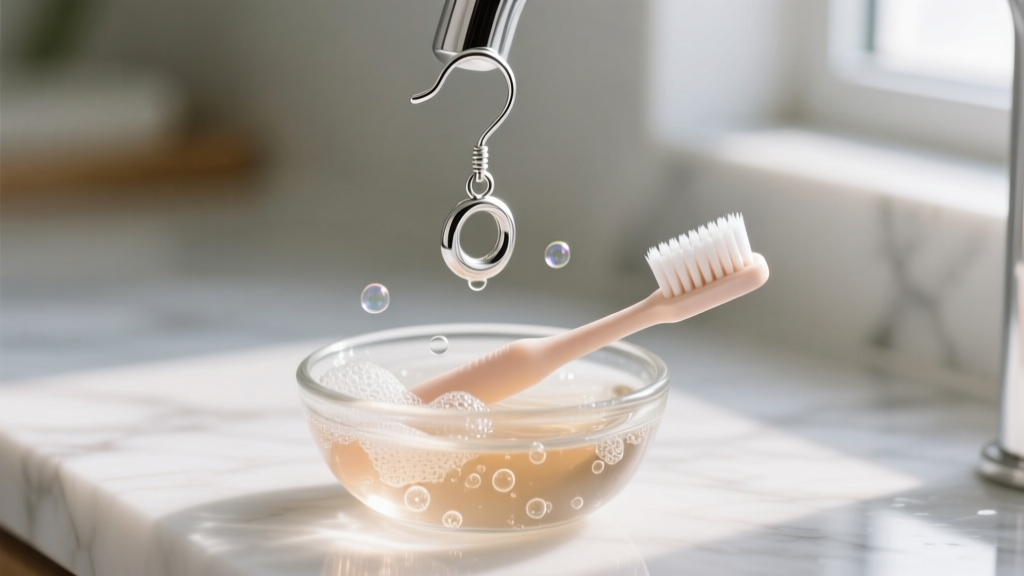
Step-by-Step Deep Cleaning Protocol for Delicate Hangers
For standard gold-filled, titanium, or niobium hanger earrings, a gentle surfactant approach is the safest and most effective method to remove sebum and cosmetic buildup without compromising the metal's integrity.
- Isolate the Hanger: If the earring features a glued or porous gemstone drop, drape the stone over the edge of a small glass bowl so only the metal hook is submerged.
- The Solution: Mix a few drops of phosphate-free, mild dish soap (like Dawn) into warm distilled water. Avoid tap water, as dissolved minerals can leave micro-scratches on high-polish wires.
- Agitation: Submerge the hanger wires for 5 to 10 minutes to soften the sebum matrix.
- Detailing: Use an extra-soft baby toothbrush to gently sweep the inside of the hook curve and the connection loop. Do not use standard toothbrushes; their stiff nylon bristles will scratch gold-filled and vermeil finishes.
- Rinsing and Drying: Rinse under distilled water and immediately pat dry with a lint-free microfiber cloth. Air-drying leads to water spots, especially on sterling silver.
The 'No-Go' Chemicals for Plated Hanger Wires
Never use commercial silver dips, ammonia-based glass cleaners, or toothpaste on gold-plated or gold-filled hanger earrings. Silver dips contain thiourea, which will instantly strip thin gold layers and expose the brass or copper core beneath. Once the core is exposed, the hanger will oxidize rapidly and cause severe allergic reactions in sensitive earlobes.
Reshaping and Restoring Bent French Wires
Because hanger earrings are frequently caught on hair, sweaters, and masks, bent hooks are an inevitable reality. Attempting to bend a misshapen 20-gauge wire back into place with your bare fingers often results in 'work-hardening'—a metallurgical process where the metal becomes brittle and eventually snaps.
'Never use standard steel jewelry pliers on your hanger earrings. Steel-on-steel contact will permanently mar the finish and create micro-abrasions that accelerate tarnishing and harbor bacteria.' — Master Jeweler Bench Guidelines
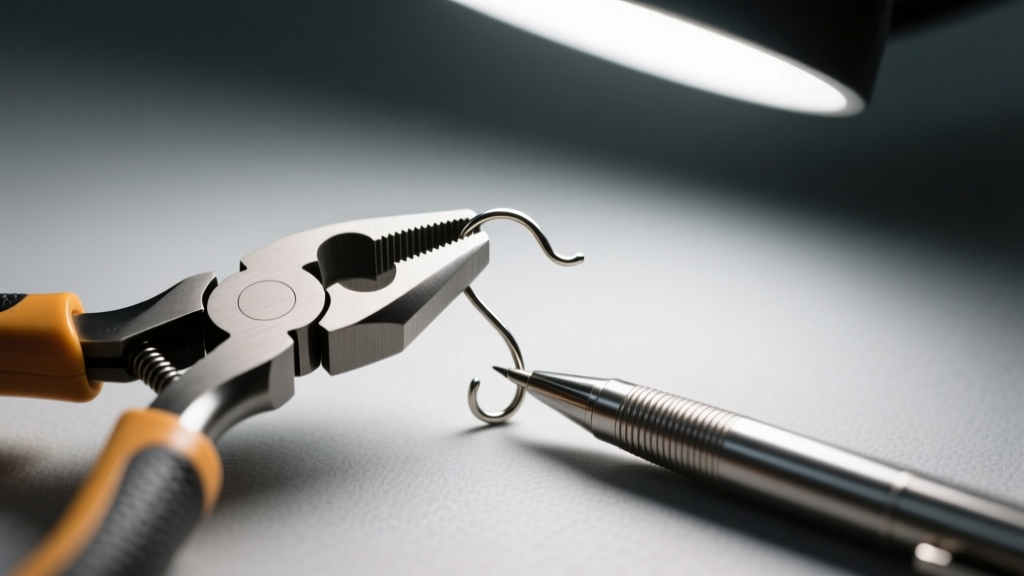
To safely reshape a bent hanger wire, you need nylon jaw pliers and a steel mandrel pen or a round-nose plier with nylon guards. Gently clamp the bent section with the nylon jaws and apply gradual, sweeping pressure to restore the original 'J' curve of the French wire. If the loop connecting the hanger to the drop has pulled open, use flat-nose nylon pliers to twist the wire ends back together laterally, rather than pulling them apart outward, which weakens the structural memory of the metal. For advanced repairs involving work-hardened, brittle silver hooks, a quick pass with a micro-torch to anneal (soften) the wire is required before reshaping, a technique detailed in Rio Grande's wire manipulation guides.
Storage Solutions to Prevent Chain and Wire Snags
Threader hanger earrings and delicate French wires are notorious for tangling in shared jewelry boxes. When chains and wires knot together, pulling them apart often stretches the 22-gauge hooks beyond their yield point.
To preserve the geometry of your hangers, store each pair individually in small, sealable polyethylene bags. For sterling silver hangers, drop a 3M anti-tarnish strip into each bag to absorb atmospheric sulfur compounds before they can react with the copper alloy in the silver. Never store hanger earrings in open-air velvet trays; the velvet fibers can catch on the sharp tip of the shepherd hook, bending it every time you slide the piece across the display.
Expert Verdict: When to Replace the Hanger Completely
Maintenance can only go so far. You must know when a hanger earring has reached the end of its functional lifespan. Replace the hook immediately if you observe any of the following:
- Visible Kinking: A sharp, angular bend in the wire that cannot be smoothed out indicates severe metal fatigue. The wire will snap at this stress point.
- Flaking Plating: If a gold-plated hanger is showing brass or copper underneath, discard the hook. Exposed base metals inside a piercing will trigger contact dermatitis and potential infection.
- Thinning at the Friction Point: Inspect the area of the hook that rests directly inside the earlobe. Over years of wear, friction can literally sand the metal down, making it dangerously thin and prone to breaking under the weight of the drop.
By treating the hanger mechanism with the same respect as the gemstones it suspends, you ensure your favorite drop earrings remain secure, hygienic, and beautifully functional for decades.


