Betsey Johnson Daisy Earrings: Authentic Buying Guide
Discover how to authenticate, price, and care for vintage and modern Betsey Johnson daisy earrings with our expert buying guide.

The Whimsical Legacy of the Betsey Johnson Daisy
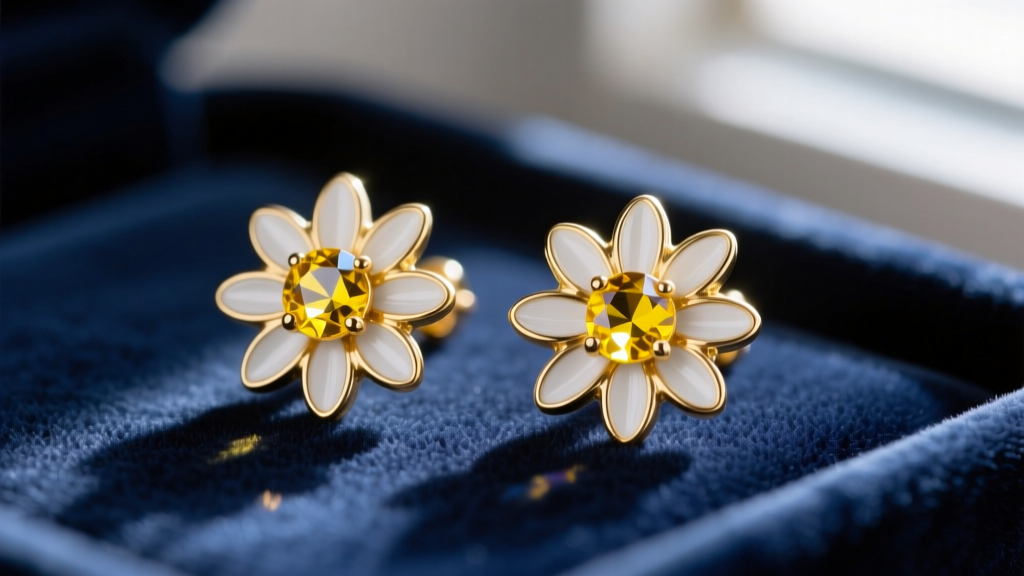
Since the 1980s, Betsey Johnson has reigned as the queen of quirky, unapologetic fashion jewelry. Among her vast menagerie of motifs—from skulls and poodles to bows and hearts—the daisy remains a perennial favorite. For collectors and vintage enthusiasts in 2026, Betsey Johnson daisy earrings represent a perfect intersection of nostalgic charm and wearable art. However, navigating the secondary market for these pieces requires a keen eye. Because her jewelry bridges the gap between mall-bought accessories and highly sought-after vintage collectibles, knowing exactly what to look for is essential to avoid overpaying for contemporary reproductions or accidentally purchasing outright counterfeits.
According to Vogue's historical archives on Betsey Johnson, her designs have always been rooted in a DIY, punk-rock sensibility mixed with vintage Americana. The daisy, symbolizing innocence and retro 1960s flower-power, became a staple in her collections, evolving from simple enamel studs in the 1990s to elaborate, rhinestone-encrusted chandelier drops in the 2000s. This buying guide will dissect the materials, authentication markers, and current market pricing for these iconic floral earrings.
Material Anatomy: What Are They Actually Made Of?
To properly evaluate Betsey Johnson daisy earrings, you must first understand the materials used in her fashion jewelry line. Unlike fine jewelry that utilizes kiln-fired vitreous enamel and solid precious metals, Betsey Johnson’s pieces are predominantly crafted from base metals and cold enamel.
Base Metals and Plating
The foundation of most vintage Betsey Johnson earrings is a zinc alloy, pewter, or brass base. This 'pot metal' is then plated in gold-tone, silver-tone, or rose gold-tone finishes. Vintage pieces from the 1990s and early 2000s often feature a thicker, more durable gold plating compared to contemporary pieces, which may use a thinner flash-plating over brass. When inspecting older daisy earrings, look for areas of high friction (like the earring post or the edges of the petals) to check for 'brassing'—the wearing away of the plating to reveal the yellowish base metal beneath.
Cold Enamel vs. Vitreous Enamel
The vibrant, opaque colors of the daisy petals are achieved using cold enamel, which is technically an epoxy resin rather than true glass enamel. Cold enamel is poured into metal cavities and cured at room temperature or with low heat. While it allows for the bright, bubblegum pinks, stark whites, and sunshine yellows characteristic of the brand, it is inherently softer than vitreous enamel. This means vintage daisy earrings are highly susceptible to chipping if dropped on a hard surface, and the resin can yellow slightly over decades of exposure to UV light.
Gemstones and Hardware
The centers of the daisies and the surrounding accents typically feature glass rhinestones, faceted acrylic, or resin cabochons. Early 2000s pieces frequently incorporated genuine Swarovski crystals, which offer a distinct, sharp sparkle and a foil-backed depth that modern generic glass stones lack. Furthermore, while the decorative body of the earring is base metal, the posts that pierce the ear are usually surgical steel or titanium to comply with hypoallergenic standards, typically in a standard 20-gauge or 18-gauge thickness.
Vintage vs. Contemporary: A Collector’s Matrix
When shopping on platforms like eBay, Etsy, or Poshmark, sellers often mislabel modern mall-bought pieces as 'vintage.' Use the comparison chart below to accurately identify the era of the daisy earrings you are evaluating.
| Feature | Vintage (1990s - Early 2000s) | Contemporary (2010s - Present) |
|---|---|---|
| Base Metal | Heavy pewter or solid brass; substantial weight | Lightweight zinc alloy or hollow-cast brass |
| Enamel Quality | Thick, glossy cold enamel; slight doming on petals | Thinner, flatter epoxy fill; prone to factory bubbles |
| Stones | Swarovski elements or high-grade faceted glass | Standard glass rhinestones or molded acrylic |
| Earring Backs | Often omega-backs for drops; sturdy friction posts | Standard push-backs; lightweight fish hooks |
| Average Resale Price | $45 - $150+ (depending on rarity and style) | $25 - $45 |
Authentication Protocol: Spotting the Fakes
Because Betsey Johnson's designs are so recognizable, they have been heavily counterfeited. Authenticating daisy earrings requires examining three specific areas:
1. The Hallmark Stamp
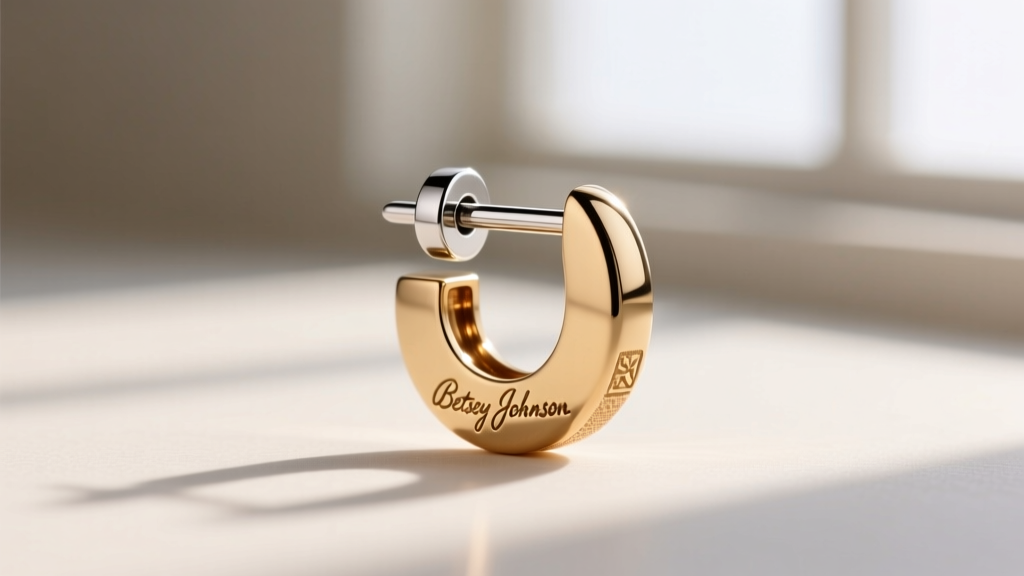
Genuine Betsey Johnson earrings will feature a hallmark. On vintage stud earrings, the back of the earring post pad is often engraved with 'Betsey Johnson' or a stylized 'b'. On drop and dangle styles, look for a small, oval metal tag hanging from the bottom of the earring or near the clasp, stamped with the brand name. Counterfeit pieces often use a shallow, laser-etched stamp that lacks the deep, crisp engraving of authentic molds, or they omit the hallmark entirely.
2. Enamel Precision
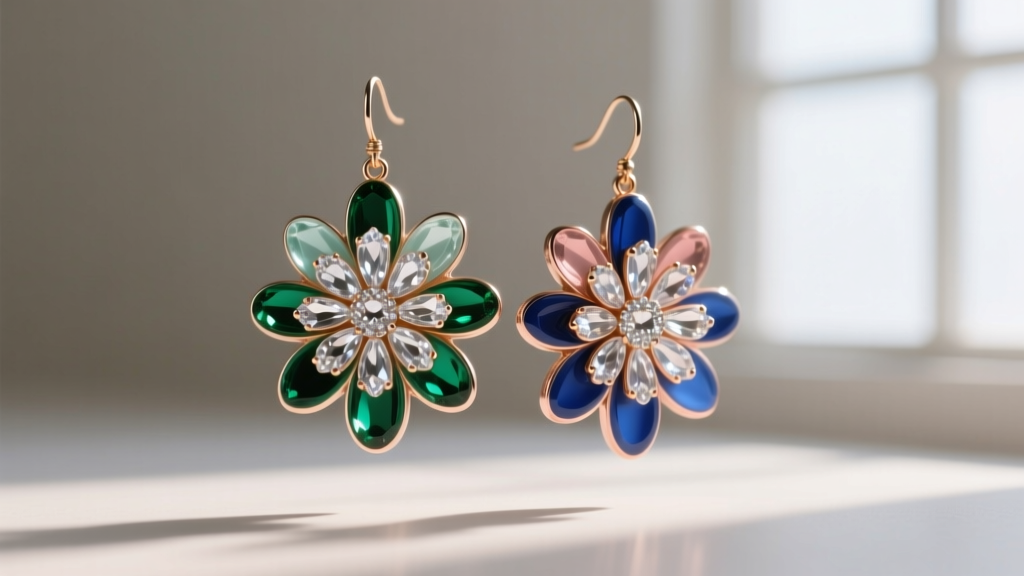
Authentic Betsey Johnson jewelry, despite being mass-produced fashion jewelry, maintains strict quality control regarding enamel boundaries. The metal wire separating the enamel colors (the cloisons) should be flush with the resin. Fakes frequently exhibit 'enamel bleed,' where the colored resin spills over the metal lines, or the resin sits significantly lower than the metal borders, creating a sunken appearance.
3. The Weight Test
Vintage Betsey Johnson daisy chandelier and drop earrings are notoriously heavy due to their solid pewter and brass bases. If a pair of large, elaborate daisy drops feels suspiciously light or hollow, it is likely a modern reproduction or a counterfeit made from cheap, injected aluminum or plastic.
2026 Market Pricing: What You Should Actually Pay
The secondary market for Betsey Johnson jewelry has stabilized, with specific daisy styles commanding premium prices among Y2K fashion collectors. Here is a realistic pricing framework for 2026:
- Basic Daisy Studs (Small/Medium): $30 - $55. These are common, and prices should only exceed $50 if they are new-in-box (NIB) vintage deadstock or feature rare colorways like black enamel with AB (Aurora Borealis) crystals.
- Daisy Drop and Dangle Earrings: $60 - $95. Look for pieces with secure omega-backs, as the weight of the daisy can easily stretch out standard earlobes if the hardware is inadequate.
- Elaborate Chandelier / Climber Daisies: $100 - $180. Large, multi-tiered floral pieces from the late 90s and early 2000s runway collections are highly coveted. Pieces featuring mixed motifs (e.g., daisies intertwined with skulls or ladybugs) sit at the top of this bracket.
Enamel Preservation and Care
Caring for cold enamel and plated base metals requires a gentle touch. The most common mistake new collectors make is using ultrasonic jewelry cleaners or harsh chemical dips. According to GIA's gem and jewelry care guidelines, ultrasonic vibrations can easily shatter cold epoxy resin and loosen the adhesive holding glass rhinestones in their settings.
To clean your daisy earrings, use a soft, dry microfiber cloth to gently buff the metal and glass. If the enamel is sticky or soiled, lightly dampen a cotton swab with warm water and a drop of mild, pH-neutral dish soap. Gently dab the affected area and immediately dry it. Never submerge Betsey Johnson earrings in water, as moisture can seep into the microscopic gaps between the enamel and the metal base, leading to rust and the eventual popping-out of the enamel fill.
Final Verdict: Styling Your Daisy Drops
Betsey Johnson daisy earrings are not for the faint of heart. They are statement pieces that demand attention. When styling heavy vintage daisy drops, consider the structural integrity of your earlobes. For older, heavier pieces, utilizing an earring support patch or opting for styles with lever-back closures can distribute the weight more evenly and prevent lobe tearing. Whether you are hunting for a nostalgic pair of 1990s white-and-yellow studs or a dramatic 2000s chandelier set, armed with this material and authentication knowledge, you can build a whimsical, authentic collection that will bloom for decades to come.


