Heart Shaped Pearl Earrings: Material & Pearl Type Guide
Discover how to choose heart shaped pearl earrings by comparing pearl types, nacre thickness, and hypoallergenic metal settings for lasting wear.

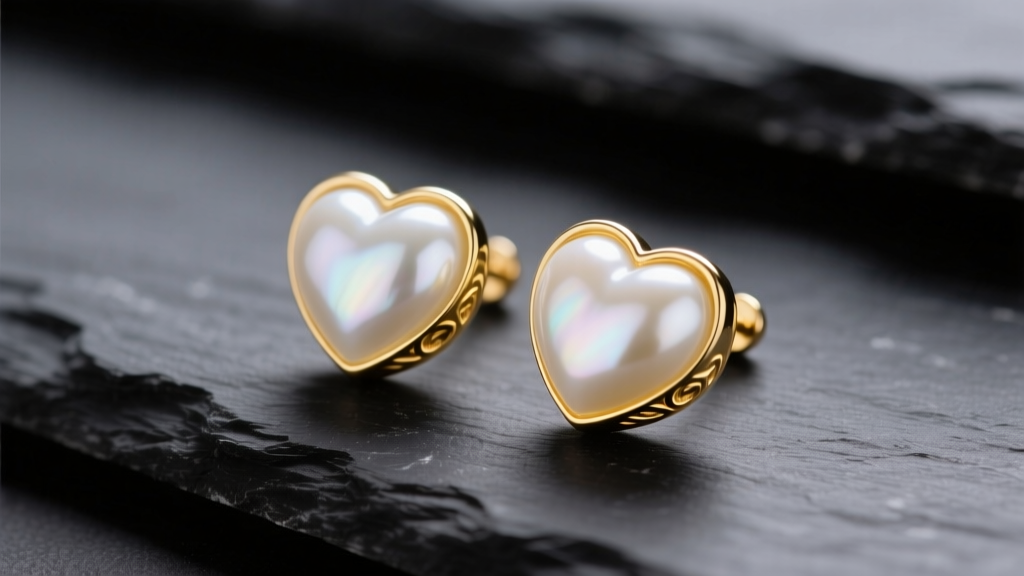
The Anatomy of Heart Shaped Pearl Earrings
Finding a naturally occurring, perfectly symmetrical heart-shaped pearl is a statistical impossibility in commercial jewelry. The mantle tissue of a mollusk does not naturally form sharp vertices or deep clefts. Therefore, the romantic heart shaped pearl earrings you see on the market in 2026 rely on two distinct gemological processes: precision carving of solid-nacre freshwater pearls, or the cutting and assembly of saltwater Mabe (blister) pearls. Understanding these manufacturing origins is critical for evaluating durability, pricing, and long-term wearability.
When shopping for this specific motif, consumers must look beyond the basic silhouette and evaluate the structural integrity of the pearl, the nacre thickness, and the metallurgical properties of the setting. A poorly carved pearl can chip at the vertex, while an improperly backed Mabe pearl can delaminate over time. This guide breaks down the exact material properties you need to scrutinize before investing in heart-shaped pearl jewelry.
Pearl Varieties: Freshwater vs. Saltwater Hearts
Carved Freshwater Pearls
The vast majority of heart shaped pearl earrings are crafted from tissue-nucleated freshwater pearls, primarily harvested from the Hyriopsis cumingii mussel. Unlike bead-nucleated saltwater pearls, which contain a large mother-of-pearl shell core, modern tissue-nucleated freshwater pearls are composed of 100% solid nacre. This is a massive advantage for carved shapes. When a lapidary uses CNC micro-carving or hand-tools to cut a heart shape into a round freshwater pearl, they are removing the outer skin but will never accidentally expose a shell bead core. The result is a durable, solid-nacre heart that can be polished to a high luster.
However, carving removes the pearl's natural protective outer layers. Buyers must ensure the carved heart has been properly sealed and polished to prevent moisture loss, which can lead to micro-cracking at the sharp inner cleft of the heart.
Tahitian and South Sea Mabe Hearts
For those seeking larger, more dramatic heart shaped pearl earrings, Mabe (blister) pearls are the premier choice. Mabe pearls are grown against the inner wall of the oyster's shell rather than inside the body tissue. Once harvested, the dome is cut out of the shell, the nucleus is removed, and the hollow dome is filled with epoxy resin and backed with a flat piece of mother-of-pearl.

Jewelers then use a lapidary saw to cut these large blisters into heart shapes. While Mabe hearts offer incredible size (often 15mm to 20mm wide) and stunning saltwater luster, they are inherently more fragile. The glue line where the nacre dome meets the mother-of-pearl backing is a structural vulnerability. If exposed to extreme heat, harsh chemicals, or ultrasonic cleaners, the epoxy can degrade, causing the heart to split or delaminate.
Metal Settings: Durability and Allergy Considerations
The metal used to cradle and post a heart shaped pearl dictates both the longevity of the earring and its biocompatibility with sensitive earlobes. Because heart-shaped pearls often have a slightly higher center of gravity than perfectly round studs, the tensile strength of the post and the security of the bezel or prong setting are paramount.
| Metal Type | Purity & Composition | Durability & Properties | Avg. Price Premium |
|---|---|---|---|
| Platinum (Pt950) | 95% Platinum, 5% Ruthenium/Iridium | Extremely durable, hypoallergenic, heavy. Best for securing heavy Mabe hearts. | $$$$ |
| 18k Yellow/White Gold | 75% Gold, 25% Alloy (Copper, Silver, Zinc) | Rich color, excellent luster, moderately soft. Requires thicker posts to prevent bending. | $$$ |
| 14k Yellow/White Gold | 58.5% Gold, 41.5% Alloy | Ideal balance of hardness and gold content. Standard for high-quality daily-wear studs. | $$ |
| Sterling Silver (925) | 92.5% Silver, 7.5% Copper | Prone to tarnishing and bending. Must be rhodium-plated and verified nickel-free. | $ |
According to the Gemological Institute of America (GIA), the setting should never obscure the pearl's natural beauty, but it must protect the vulnerable points of the carving. For heart shapes, a partial bezel or a three-prong setting (one at the top cleft, two at the bottom vertices) offers the best protection against chipping.
Nacre Thickness and Luster Grading
When evaluating carved freshwater hearts, luster is the ultimate indicator of quality. Because the carving process cuts through the concentric layers of nacre, a high-quality pearl will display sharp, mirror-like reflections even on the carved facets. Dull, chalky carved hearts indicate low-grade nacre or pearls that were harvested prematurely.
For Mabe hearts, nacre thickness is a critical failure point. The Pearl Paradise education guidelines note that premium saltwater Mabe pearls should have a nacre dome thickness of at least 0.8mm to 1.2mm. If the nacre is too thin, the heart shape will show 'dead spots' or wear through to the epoxy core within a few years of regular wear. Always inspect the edges of a Mabe heart under a jeweler's loupe to ensure the nacre layer is substantial and evenly distributed.
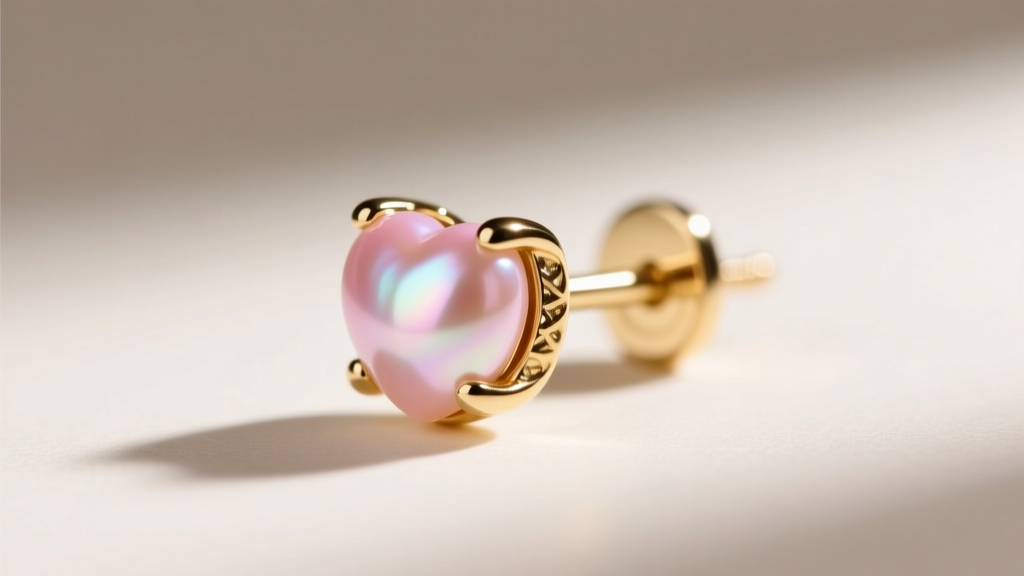
Sizing, Gauge, and Wearability
The physical dimensions and hardware of heart shaped pearl earrings directly impact comfort. Heart-shaped studs typically range from 6mm to 10mm in width. Anything larger than 12mm in a solid freshwater pearl becomes excessively heavy for a standard lobe piercing, causing the earring to droop forward.
Post Gauge Specifications
- 20-Gauge (0.81mm): The industry standard for lightweight freshwater heart studs (under 8mm). Fits most standard piercing holes comfortably.
- 18-Gauge (1.02mm): Required for heavier drop earrings or large Mabe heart studs. The thicker wire prevents the post from bending under the asymmetric weight of the heart shape.
- 16-Gauge (1.29mm): Rarely used for standard lobes, but sometimes necessary for cartilage or helix placements featuring small heart-shaped pearl cuffs or studs.
Securing the Earring
Because the heart shape is top-heavy, standard friction push-backs often fail, leading to lost earrings. We strongly recommend settings equipped with la pousette (butterfly) backings or silicone O-rings. La pousette backings feature a mechanical locking groove on the earring post that clicks into place, providing a secure hold that counteracts the forward tilt of a heart-shaped drop.
Care and Maintenance Protocol
Pearls rank between 2.5 and 3.0 on the Mohs hardness scale, making them highly susceptible to scratching and chemical degradation. The sharp vertices of a heart-shaped pearl are particularly prone to micro-chipping if knocked against hard surfaces.
Expert Warning: Never place heart shaped pearl earrings—especially Mabe assemblies—in an ultrasonic cleaner. The high-frequency vibrations will instantly shatter carved freshwater facets and dissolve the epoxy backing of blister pearls.
To maintain the luster and structural integrity of your earrings, follow this strict maintenance protocol:
- The Last-On, First-Off Rule: Always put your pearl earrings on after applying hairspray, perfume, and cosmetics. The alcohols and acids in these products will etch the nacre and dull the carved facets.
- Microfiber Wiping: After each wear, gently wipe the pearls with a damp, lint-free microfiber cloth to remove skin oils and sebum, which can degrade the silk or wire wrapping over time.
- Storage Isolation: Store heart-shaped pearls in a soft silk pouch separate from diamonds, sapphires, or metal jewelry. The sharp points of the heart can easily be scratched by harder gemstones, and conversely, the pearls can scratch softer metals like high-karat gold.
- Hydration: Pearls require ambient moisture. Storing them in an airtight plastic bag or a bank safe deposit box for years will cause the nacre to dehydrate, crack, and peel, particularly along the carved lines of the heart.
By understanding the precise material properties, nucleation methods, and hardware requirements of heart shaped pearl earrings, you can confidently select a piece that is not only visually striking but structurally engineered to last a lifetime.


