The Anatomy of Big Bow Earrings: Weight, Gauge, and Styling Guide
Discover the technical anatomy of big bow earrings. Learn about weight limits, ideal post gauges, secure backings, and how to prevent lobe damage.

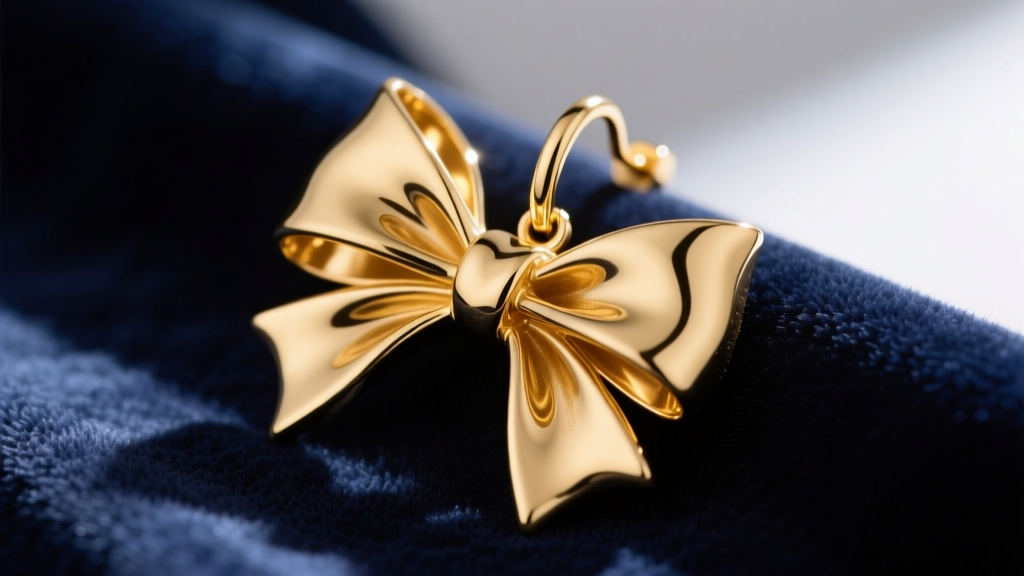
The Physics of the Lever and the "Sail Effect"
To understand the engineering requirements of big bow earrings, one must first understand the biomechanical forces acting upon the earlobe. The earlobe piercing, or fistula, is essentially a tunnel of dense connective tissue lacking cartilaginous support. When you insert an earring, the post acts as a fulcrum, and the decorative element acts as a lever arm.
- The Lever Action: A standard stud sits flush against the ear, distributing weight evenly. Big bow earrings, however, often extend outward or drop downward. A three-inch drop bow creates a cantilever effect, multiplying the gravitational force exerted on the bottom of the fistula. This is known in jewelry engineering as the "cheese-cutter" effect, where sustained downward pressure gradually slices through the tissue.
- The Sail Effect: Bows inherently possess a broad surface area. When worn outdoors, even a mild breeze catches the fabric or metal "sails" of the bow, creating sudden kinetic drag. This lateral force can easily bend standard earring posts or tear unhealed piercings.
Material Science: Balancing Volume and Mass
Jewelers face a distinct metallurgical and structural challenge: creating visual mass without physical weight. The material chosen for big bow earrings dictates not only the price point but the structural viability of the piece.
| Material | Avg. Weight (Per Pair) | Structural Integrity | Typical Price Range |
|---|---|---|---|
| Hollow-Cast 14k Gold | 8 - 14 grams | High (Dents if dropped) | $800 - $2,500+ |
| Acetate / Resin | 4 - 8 grams | Medium (Can snap at hinge) | $45 - $150 |
| Enamel over Brass | 15 - 22 grams | Low-Medium (Enamel chips) | $60 - $250 |
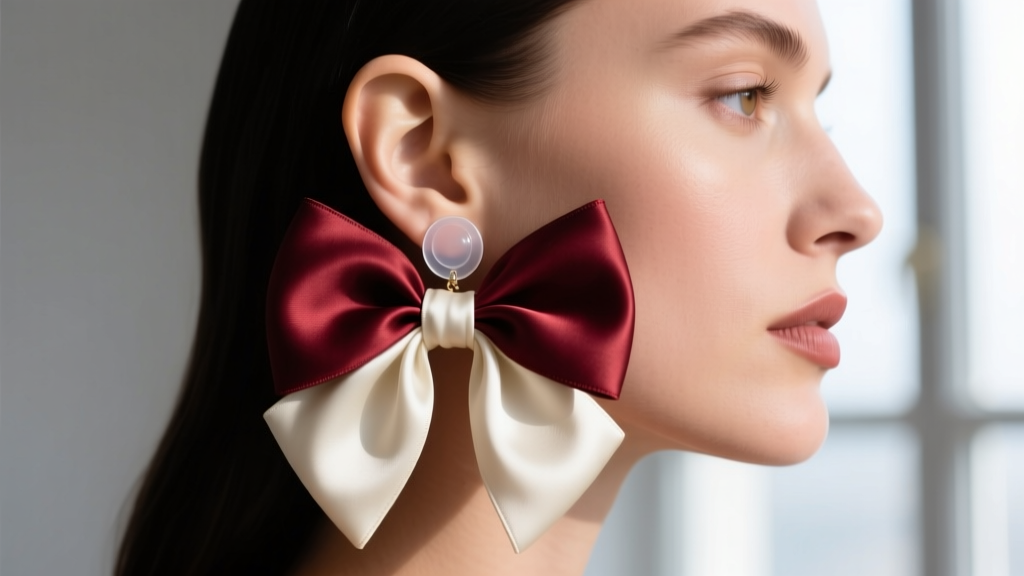
| Silk-Wrapped Wire | 3 - 6 grams | Low (Wire bends, silk stains) | $30 - $120 |
The Electroforming Advantage
For fine jewelry iterations, manufacturers utilize a technique called electroforming. This process involves depositing layers of gold or silver onto a wax or resin model, which is later melted away, leaving a hollow but incredibly rigid metal shell. According to the Gemological Institute of America (GIA), electroformed pieces can be up to 70% lighter than their solid cast counterparts, making it the premier method for crafting oversized, high-karat gold bow earrings that won't immediately drag down the earlobe.
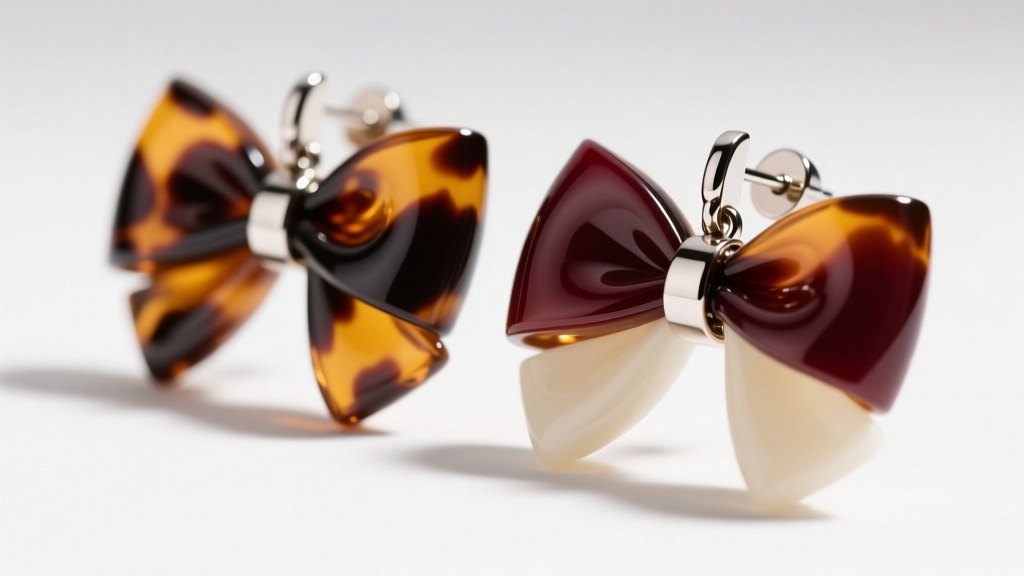
Post Gauge and Backing Mechanics
The most critical point of failure in big bow earrings is the post. Standard fashion earrings typically utilize 20-gauge (0.81mm) or 22-gauge (0.64mm) posts. For oversized bows, these gauges are a mechanical liability. The lateral drag from the "sail effect" will permanently bend a 20-gauge wire after only a few wears.
Optimal Gauge Sizing
Expert jewelers engineer heavy statement pieces with 18-gauge (1.02mm) or even 16-gauge (1.29mm) posts. While an 18-gauge post requires a slightly wider piercing fistula, the tensile strength of the thicker wire prevents the post from warping under the lever-action weight of the bow. Furthermore, the post material matters: 14-karat gold is alloyed with metals like copper and zinc, providing significantly higher rigidity than softer 18-karat or 24-karat gold, making 14k the superior choice for the structural post.
Securing the Fulcrum: Advanced Backings
Standard friction butterfly backs are insufficient for heavy bows. The constant micro-movements of walking and talking will slowly work a standard friction back off the post groove. Instead, look for:
- La Pousette Backings: These feature a tiny internal spring mechanism that locks the back securely onto a notched post. They are the industry standard for heavy fine jewelry.
- Screw Backs: The backing threads directly onto a grooved post, making accidental loss virtually impossible.
- Silicone O-Rings: For budget-friendly or fashion bows, adding a medical-grade silicone O-ring over a standard metal butterfly back provides necessary friction and acts as a shock absorber against the earlobe.
Biomechanics: Protecting the Fistula
The human earlobe is remarkably resilient, but it is not immune to chronic mechanical stress. The American Academy of Dermatology (AAD) notes that repetitive trauma and sustained tension on ear piercings can lead to tissue thinning, contact dermatitis from trapped moisture, and eventual lobe splitting.
The 15-Gram Threshold and Support Patches
As a general biomechanical rule, an earlobe can comfortably support up to 10-15 grams per earring for an extended 8-hour period without suffering micro-tears in the fistula lining. When your big bow earrings exceed this threshold, you must employ mechanical support. Invisible earlobe support patches—small, medical-grade silicone or polyurethane discs with a central hole—distribute the localized pressure of the earring post across a wider surface area of the ear's posterior. This effectively neutralizes the cheese-cutter effect and prevents the lobe from sagging forward.
Maintenance and Failure Modes
Owning oversized statement pieces requires specific maintenance protocols to avoid common failure modes:
- Enamel Micro-Fractures: Bows made of enamel over brass are highly susceptible to thermal shock and impact. Dropping an enamel bow on a hard surface will cause microscopic spiderweb fractures in the glass powder, which eventually leads to chunking. Always remove them over a padded surface.
- Silk Degradation: Fabric-wrapped wire bows absorb sebum, perfume, and hairspray. The alcohol in perfume breaks down the silk fibers, while body oils attract dust. These must be dry-cleaned using specialized jewelry sponges and stored away from direct sunlight to prevent UV fading.
- Storage Crushing: Because of their protruding three-dimensional geometry, big bow earrings cannot be stored in standard flat jewelry boxes. The loops will inevitably be crushed, bending the internal wire armatures. They require individual, hard-shell compartmentalized storage or hanging from specialized T-bar earring stands to maintain their structural silhouette.
Final Verdict: Investing in Structural Integrity
Big bow earrings are a masterclass in the intersection of romantic aesthetics and structural engineering. When evaluating a pair, look past the immediate visual appeal and inspect the hardware. Demand 18-gauge posts, verify the weight to ensure it falls within your personal lobe tolerance, and insist on locking backings like La Pousette or threaded screws. By respecting the physics of the lever and the biological limits of your tissue, you can confidently wear architectural, oversized bows without sacrificing your ear health or the longevity of the piece.


