The Earrings of Madame de... 1953: Cinematic Jewelry Style Analysis
Explore the iconic heart-shaped diamond drops from The Earrings of Madame de... 1953, analyzing their Belle Époque design and modern styling.

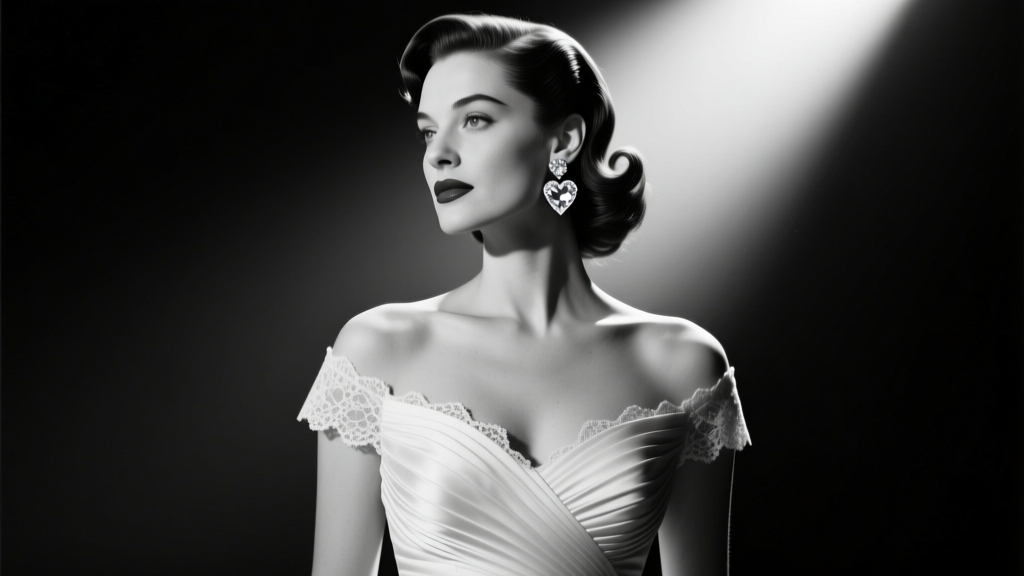
The Cinematic Legacy of The Earrings of Madame de... 1953
Max Ophüls’ 1953 cinematic masterpiece, The Earrings of Madame de..., is widely celebrated for its fluid camera work and tragic romance. Yet, for jewelry historians and style analysts, the film’s true protagonist is a pair of heart-shaped diamond earrings. Based on Louise de Vilmorin’s novel, the narrative revolves entirely around these gems as they are gifted, sold, pawned, and re-gifted, serving as a glittering barometer for the protagonist's shifting fortunes and illicit passions. Today, analyzing the earrings of madame de... 1953 offers a masterclass in Belle Époque jewelry design, revealing how late 19th-century craftsmanship continues to influence high jewelry and vintage styling trends.
Anatomical Breakdown: Designing the Heart-Shaped Diamond Drops
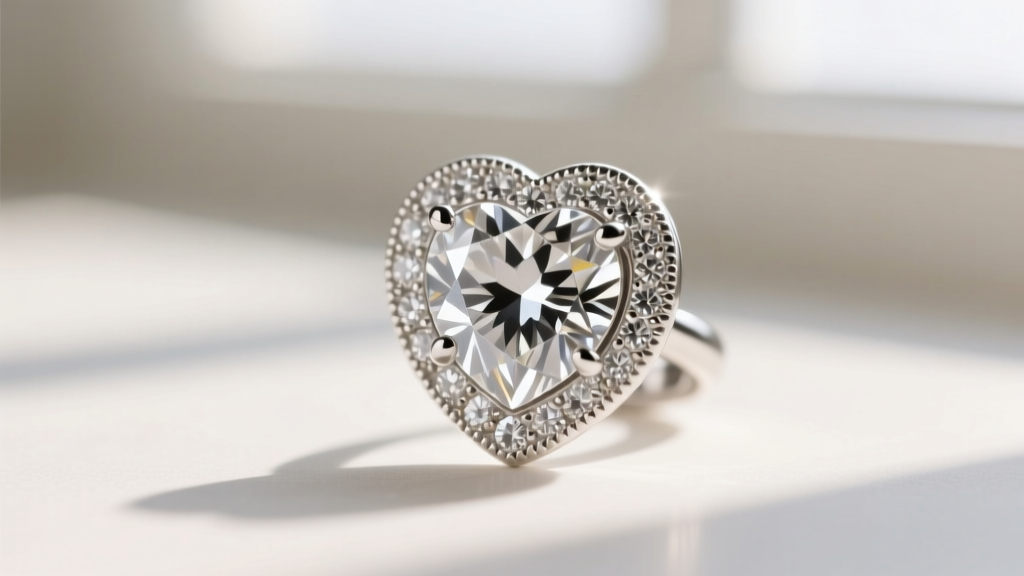
While the film was released in 1953, the narrative is set at the turn of the 20th century. The earrings worn by Danielle Darrieux are classic Belle Époque drop earrings. They feature a diamond-set surmount (the stud portion that rests on the earlobe) connected by a delicate, articulated link to the primary focal point: a large, heart-shaped diamond cluster or solid-cut heart pendant. This articulated drop is crucial; it allows the earring to move fluidly with the wearer, catching the light with every turn of the head—a technique Ophüls exploited brilliantly in his sweeping tracking shots.
Metallurgy: The Silver-Topped Gold Standard
Authentic pieces from this specific era (circa 1890–1910) were rarely cast in platinum, which was not yet widely utilized for intricate diamond settings. Instead, master jewelers employed silver-topped 18k yellow gold. The diamonds were set in a top layer of silver to ensure no yellow reflections tainted the stones' colorless appearance, while the backing and ear wires were crafted from 18k gold to prevent the silver from tarnishing the wearer’s skin or clothing. When sourcing or reproducing this style today, modern bench jewelers typically substitute the silver top with 18k white gold or 950 platinum for superior durability and tarnish resistance, though purists still seek the original silver-topped patina for historical accuracy.
Diamond Cut Comparison for Vintage Reproductions
The scintillation of the earrings on screen is largely due to the specific diamond cuts used during the era. To accurately reproduce the visual weight and light performance of the earrings of madame de... 1953, one must understand the gemological differences between antique and modern cuts. According to the Gemological Institute of America (GIA), antique cuts prioritize different light behaviors than modern mathematics.
| Diamond Cut | Era of Prominence | Facet Structure & Light Performance | Estimated Price Premium (vs. Modern) |
|---|---|---|---|
| Old European Cut (OEC) | 1890s – 1930s | High crown, small table, large open culet. Produces a 'chunky', romantic sparkle ideal for low-light and B&W film. | +15% to +30% |
| Old Mine Cut | 1830s – 1900s | Squarish with rounded corners. Deep pavilion creates a warm, fiery, but less uniform scintillation. | +10% to +20% |
| Modern Brilliant | 1919 – Present | 57/58 facets optimized for maximum brilliance and fire. Appears sharper and more 'glassy' than antique cuts. | Baseline Market Rate |
| Hearts & Arrows | 1980s – Present | Precision-cut modern brilliant with perfect optical symmetry. Too clinical and modern for Belle Époque reproductions. | +20% to +40% |
Styling Heart-Shaped Drop Earrings for Contemporary Wear
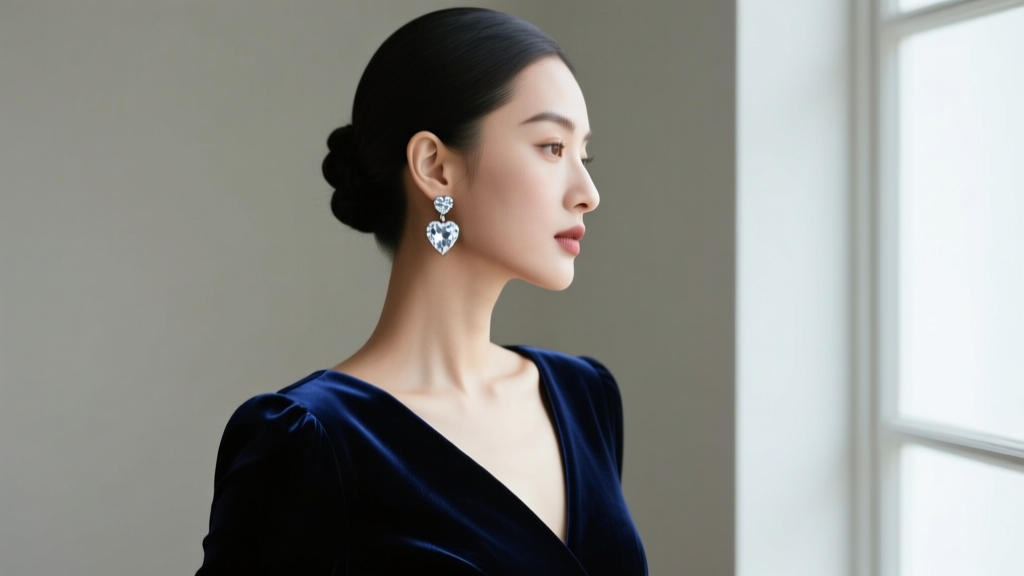
Translating the high-drama, aristocratic styling of the film into a modern wardrobe requires a strategic approach to face shapes and occasion wear. Heart-shaped drop earrings are inherently heavy in visual weight, drawing the eye downward and elongating the neck.
- Oval and Round Face Shapes: The elongated drop of the Belle Époque heart earring perfectly balances wider cheekbones and softer jawlines, creating a flattering vertical illusion.
- Square and Angular Face Shapes: Opt for heart drops with softer, rounded surmounts (like a diamond-set bow or floral motif) rather than harsh geometric studs, which can clash with strong jawlines.
- Heart Face Shapes: Proceed with caution. A prominent heart-shaped drop can over-emphasize a narrow chin. If wearing this style, choose a shorter drop length that terminates just below the earlobe rather than a dramatic chandelier length.
Sourcing Authentic Belle Époque vs. High-Quality Reproductions
For collectors and vintage enthusiasts looking to acquire pieces reminiscent of the earrings of madame de... 1953, the market is divided between authenticated antiques and bespoke modern reproductions. Authentic Belle Époque diamond heart drops are exceptionally rare, as many were dismantled over the decades to reset the valuable center stones into modern rings.
When hunting for originals, platforms like 1stDibs and major auction houses such as Sotheby's or Christie's are the primary avenues. Expect to pay a significant premium for intact, unaltered silver-topped gold pieces with original Old European Cut diamonds, with prices typically starting around $12,000 and easily exceeding $85,000 for stones over 3.00 total carat weight with exceptional provenance.
For those seeking the aesthetic without the antique fragility or prohibitive cost, commissioning a custom reproduction from a specialized heritage jeweler is the optimal route. A high-quality bespoke pair featuring 18k white gold, milgrain detailing, and carefully sourced transitional or OEC diamonds will generally range between $4,500 and $9,000, depending on the carat weight and clarity of the stones. This approach ensures the ear wires are secure (often upgrading from the original shepherd hooks to modern lever-backs or screw-backs for safety) while perfectly capturing the romantic, melancholic essence of Ophüls' cinematic masterpiece.
The 2026 Revival: Cinematic Core and Vintage Diamond Trends
As we navigate the style landscape of 2026, the 'Cinematic Core' and 'Quiet Luxury' movements have converged to bring ornate, narrative-driven jewelry back to the forefront. The influence of the earrings of madame de... 1953 is evident in the renewed demand for articulated diamond drops and the rejection of ultra-minimalist, mass-produced studs. Modern consumers are increasingly drawn to pieces that carry a sense of history, romance, and visible craftsmanship. Whether sourcing a genuine 19th-century artifact or commissioning a meticulous modern homage, the heart-shaped diamond drop remains an enduring symbol of elegance, proving that true style, much like Ophüls' glittering gems, never truly fades—it merely changes hands.


