The Ultimate Guide to Big Earrings for Guys: Style & Fit
Discover how to choose and style big earrings for guys. Learn about weight limits, gauge sizes, face shapes, and the best materials for heavy mens jewelry.

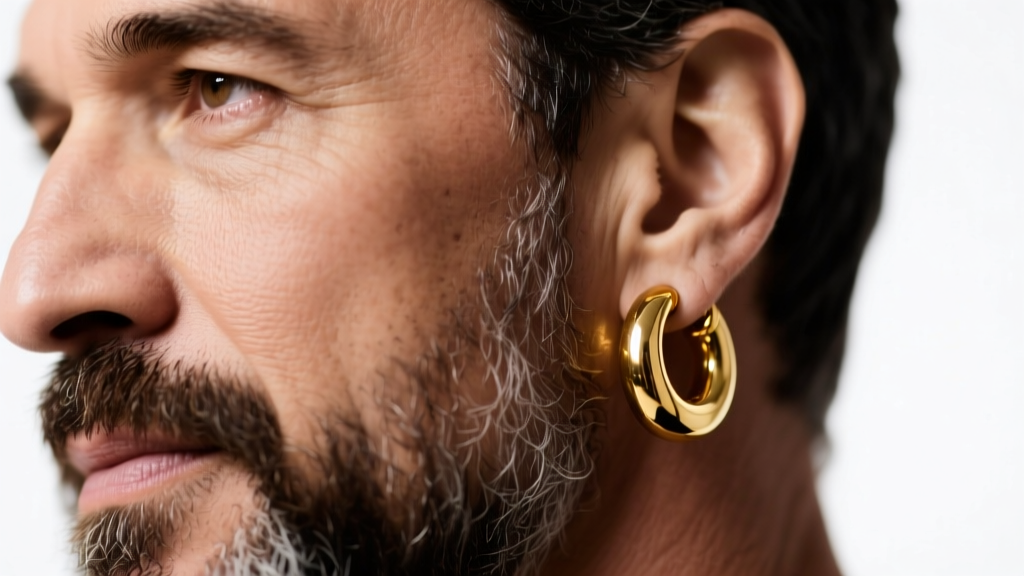
The Rise of Statement Ear Jewelry for Men
The landscape of men's jewelry has undergone a massive transformation over the last decade. Gone are the days when a simple, understated diamond stud was the only acceptable option. Today, big earrings for guys are a staple of high fashion, streetwear, and everyday personal expression. From oversized hoops to kinetic dangles and heavy geometric studs, statement earrings allow men to showcase personality and edge. However, scaling up your ear jewelry isn't just about picking the largest piece you can find. It requires a fundamental understanding of anatomy, material science, and weight distribution to ensure your lobes remain healthy and your style looks intentional rather than costumey.
This beginner-friendly explainer will walk you through the exact mechanics of wearing large-scale men's earrings, helping you avoid painful mistakes while maximizing your aesthetic impact.
Understanding Weight and Gauge: The Physics of Heavy Earrings
The most common mistake beginners make when exploring big earrings for guys is ignoring the relationship between the jewelry's weight and the thickness of the wire (the gauge). If you hang a 30-gram oversized hoop on a standard 20-gauge (0.8mm) wire, you will experience what professional piercers call the 'cheese cutter effect.' The thin wire will slowly migrate through your lobe tissue, causing pain, scarring, and eventual tearing.
To safely wear heavy earrings, you must match the gauge to the weight. If your lobes are currently pierced at a standard 20G or 18G, you will need to visit a professional piercer to gradually stretch your lobes to a 14G or 12G before wearing substantial statement pieces.
Gauge Size and Weight Capacity Chart
| Gauge Size | Wire Thickness | Max Recommended Weight | Best For |
|---|---|---|---|
| 20G - 18G | 0.8mm - 1.0mm | 5 - 10 grams | Standard studs, lightweight huggies |
| 16G | 1.2mm | 15 - 20 grams | Medium hoops, light dangles |
| 14G | 1.6mm | 25 - 35 grams | Heavy oversized hoops, statement pieces |
| 12G - 10G | 2.0mm - 2.5mm | 40+ grams | Stretched lobes, massive kinetic dangles |
Pro Tip: If you must wear a heavier earring on a smaller gauge, use silicone earring support patches (like invisible earlobe guards) on the back of your lobe to distribute the weight across a wider surface area.
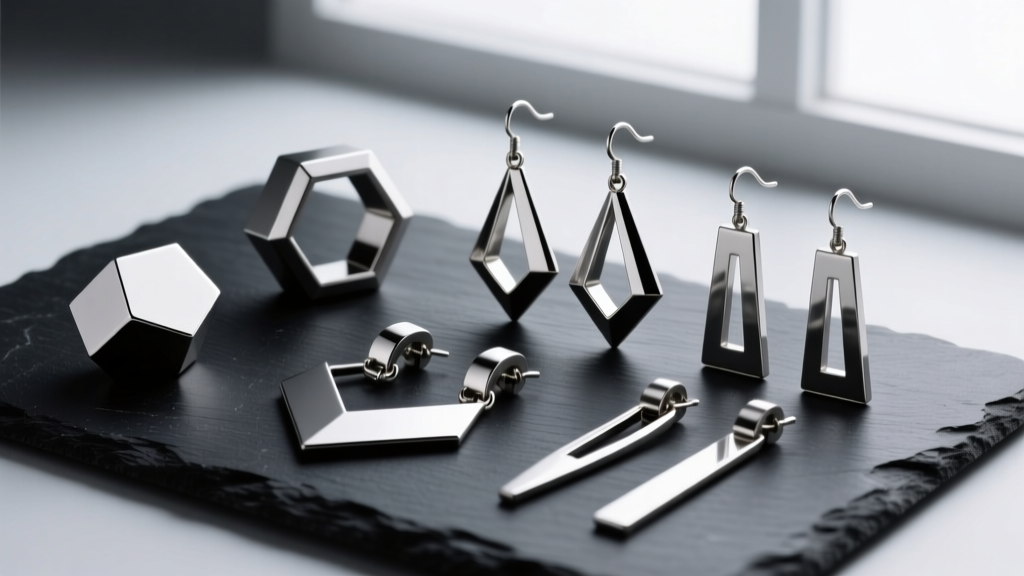
Choosing the Right Style: Hoops, Dangles, and Cuffs
When shopping for big earrings for guys, the silhouette you choose dictates the vibe of your entire outfit. Here is a breakdown of the three primary statement categories:
1. The Oversized Hoop (30mm - 50mm)
Hoops in the 30mm to 50mm range offer a bold, classic look. For a masculine edge, opt for hoops with a thicker cross-section (3mm to 5mm wide) rather than thin, wire-like loops. Hinged segment rings or continuous seamless hoops in brushed finishes (like matte black titanium or satin gold) provide a rugged, modern aesthetic that pairs perfectly with both leather jackets and tailored suits.
2. Kinetic Dangles and Chain Drops
Dangle earrings introduce movement and draw the eye downward. For men, geometric shapes (like elongated rectangles, spikes, or heavy cubic zirconia bars) work best. Chain dangles that connect the lobe to the upper cartilage are also highly popular, but ensure the chain is lightweight to prevent dragging the primary lobe piercing.
3. Ear Cuffs and Cartilage Armor
If you want the look of a massive earring without the commitment of stretching your lobes or getting new cartilage piercings, ear cuffs are the ultimate solution. Modern ear cuffs feature adjustable tension bands that grip the helix or conch securely. Look for cuffs with a 'C' profile and silicone grip pads to prevent them from slipping off during the day.
Face Shape Matching for Large-Scale Mens Earrings
Because big earrings for guys command immediate visual attention, they will heavily influence the perceived proportions of your face. Use these guidelines to balance your features:
- Round Faces: Avoid wide, circular hoops that emphasize facial width. Instead, opt for elongated dangles or vertical drop earrings that create an optical illusion of length and sharpen the jawline.
- Square Faces: You have a strong, angular jawline. Soften these features with curved, oversized hoops or circular dangles. Avoid sharp, geometric studs that mimic your jaw's angles.
- Oval Faces: The most versatile face shape. You can pull off almost any style, from massive 50mm hoops to heavy shield studs. Just ensure the earring doesn't extend past your chin, which can drag your features down.
- Heart-Shaped Faces: Balance a wider forehead and narrow chin with teardrop-shaped dangles or bottom-heavy hoops that add visual weight to the lower half of your face.
Statement jewelry should complement your natural architecture, not compete with it. The goal is harmony between the metal and your bone structure.

Material Matters: Avoiding Allergic Reactions and Tarnish
Heavy earrings sit in the piercing channel for extended periods, making material safety non-negotiable. Cheap alloys used in fast-fashion statement pieces often contain nickel, which is the leading cause of allergic contact dermatitis. According to the Mayo Clinic, nickel allergies can develop suddenly, even if you've worn the metal without issue in the past, resulting in severe itching, redness, and weeping tissue.
When investing in big earrings for guys, strictly adhere to these material standards:
- Implant-Grade Titanium (ASTM F136): The gold standard for body jewelry. It is completely nickel-free, hypoallergenic, and incredibly lightweight, making it perfect for oversized pieces that need to be kept under weight limits.
- Solid 14k or 18k Gold: Excellent for luxury statement pieces. Avoid gold-plated brass, as the heavy weight will cause the plating to wear off quickly against the skin, exposing the reactive base metal.
- Niobium: A highly reactive metal that is anodized to create vibrant colors without using toxic paints or dyes. It is slightly heavier than titanium but completely biocompatible.
For a comprehensive list of safe body jewelry materials, always refer to the guidelines published by the Association of Professional Piercers (APP).
Common Beginner Mistakes and How to Fix Them
Even with the right materials and gauge, poor wearing habits can ruin your experience with large-scale ear jewelry. Avoid these three critical errors:
1. Sleeping in Heavy Hoops
Never sleep in oversized hoops or dangles. The friction against your pillow can twist the earring, causing micro-tears in the fistula (the piercing channel). Always remove heavy jewelry before bed, or switch to a flat-back titanium labret stud for sleeping.
2. Ignoring Lobe Fatigue
Your earlobes are made of soft tissue and can experience 'fatigue' from bearing weight all day. If your lobes feel tender, stretched, or warm to the touch, take the heavy earrings out immediately. Give your lobes a 48-hour break, wearing only lightweight studs or no jewelry at all to allow the tissue to retract and recover.
3. Neglecting the Cleaning Routine
Larger earrings have more surface area to collect sebum, dead skin cells, and environmental dust. Clean your statement pieces weekly using warm water, a mild fragrance-free soap, and a soft-bristled brush. For the piercing itself, a simple spray of sterile saline solution is all you need to keep the channel clear and healthy.
Conclusion
Embracing big earrings for guys is a fantastic way to elevate your personal style and break away from traditional menswear norms. By respecting the physics of weight and gauge, choosing biocompatible materials like ASTM F136 titanium, and selecting silhouettes that flatter your specific face shape, you can wear statement pieces with absolute confidence. Start with a moderately sized 14-gauge hoop, listen to your body, and gradually build your collection as your lobes and your style evolve.


