The 2026 Guide to Big Gold Earrings: Maximalist Hoops & Drops
Discover the 2026 big gold earrings trend. Explore maximalist hoops, heavy karat drops, weight distribution tips, and face-shape styling guides.


The Resurgence of Maximalism: Why Big Gold Earrings Dominate
The pendulum of fashion has decisively swung away from the understated whispers of 'quiet luxury' and into the bold, unapologetic realm of maximalism. At the forefront of this 2026 aesthetic shift are big gold earrings. No longer reserved for vintage archives or specific subcultures, oversized gold hoops, sculptural drops, and heavy molten-style ear cuffs are defining the contemporary jewelry landscape. According to trend forecasters, the demand for high-impact, statement-making gold pieces has surged by over 40% this year, driven by a cultural desire for visibility and personal expression in an increasingly digital world.
But pulling off substantial gold jewelry requires more than just a daring attitude; it demands an understanding of proportion, metallurgy, and structural engineering. When you are dealing with pieces that span three inches in diameter or drop heavily below the jawline, the physical realities of weight and gauge thickness become paramount. This comprehensive guide breaks down the anatomy, styling frameworks, and material science behind the season's most commanding accessories.
Metallurgy & Weight: Engineering Heavy Statement Pieces
Not all gold is created equal, especially when scaled up to statement proportions. The karat weight you choose directly impacts the durability, color, and structural integrity of big gold earrings. While 24k gold offers that rich, buttery yellow hue, it is far too malleable for large structural pieces. A 22k or 24k oversized hoop will easily warp under its own weight or bend if caught on clothing. Therefore, expert jewelers overwhelmingly recommend 14k or 18k gold for oversized silhouettes. As noted by the Gemological Institute of America (GIA), alloying gold with metals like copper, silver, and zinc not only alters the color but significantly increases the tensile strength required to support heavy, dangling designs.
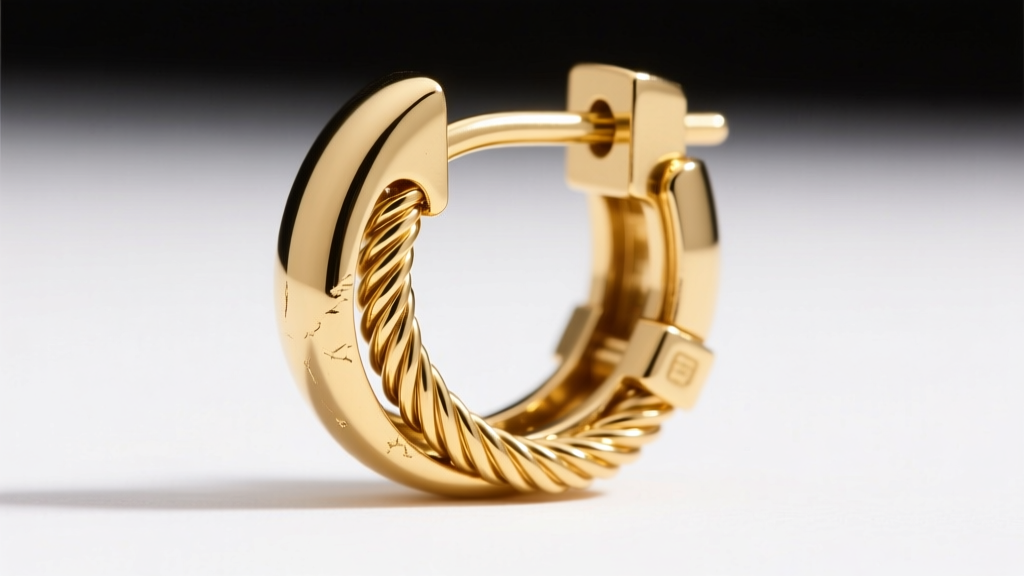
Weight distribution is the hidden hero of comfortable statement earrings. A solid gold hoop measuring 80mm in diameter can easily exceed 25 grams per ear, leading to lobe fatigue, stretching, and even tearing over time. To combat this, contemporary designers are utilizing advanced hollow-forming techniques and electroforming. Electroformed big gold earrings possess a thick, durable outer shell of gold while remaining remarkably lightweight and hollow inside, allowing for massive visual volume without the punishing gravitational pull.
The Gauge and Clasp Matrix
When investing in heavy gold drops, the post gauge and clasp mechanism are critical failure points. Standard 20-gauge (0.81mm) posts are insufficient for heavy loads and can cause the dreaded 'cheese wire' effect, slicing through the earlobe. Below is the structural matrix for selecting the right hardware for oversized pieces:
| Earring Style | Recommended Gauge | Optimal Clasp Type | Max Weight Tolerance |
|---|---|---|---|
| Heavy Sculptural Drops | 18G (1.0mm) or 16G (1.2mm) | Locking Leverback or French Wire with Silicone Stopper | 15-20 grams |
| Oversized Chunky Hoops | 16G (1.2mm) to 14G (1.6mm) | Hinged Saddleback or Clicker | 20-30 grams |
| Molten Gold Ear Cuffs | N/A (Tension fit) | Adjustable Open Cuff (18k for malleability) | 10-15 grams |
For drops exceeding 20 grams, utilizing invisible ear support patches or an omega-back clip-on conversion is highly recommended to distribute the weight across the cartilage rather than concentrating it on the piercing hole. The Association of Professional Piercers (APP) frequently warns against prolonged wear of heavy, poorly supported jewelry to prevent irreversible fistula migration.
Face Shape Architecture: Scaling Proportions
Big gold earrings are a masterclass in optical illusion. By manipulating scale and silhouette, you can dramatically alter the perceived geometry of your face. The key is to contrast your natural face shape rather than mimic it. Here is the definitive scaling framework for 2026:
- Round Faces: Avoid small, circular hoops that echo your face's natural curve. Instead, opt for elongated, geometric big gold earrings like rectangular drops or sharp, linear ear chains. The vertical lines create an illusion of length and structure.
- Square Faces: Strong jawlines benefit from softening elements. Large, fluid, molten-style gold hoops or curved teardrop dangles introduce movement and soften angular features without overwhelming them.
- Heart-Shaped Faces: With a wider forehead and narrow chin, the goal is to add volume at the jawline. Bottom-heavy gold chandeliers or wide, inverted triangular drops balance the facial proportions beautifully.
- Oval Faces: The universal canvas. Oval faces can carry virtually any silhouette, from massive sculptural shields to thick, tubular gold hoops. The only rule is to ensure the earring's width does not exceed the width of your cheekbones.

Stylists often reference the 'Rule of Thirds' when pairing big gold earrings with updos. When hair is swept up, the earring should ideally occupy the lower third of the visible profile, bridging the gap between the earlobe and the collarbone for a harmonious, unbroken line. When incorporating these pieces into a curated ear stack, the primary statement piece must remain in the standard lobe piercing. Secondary piercings should feature minimalist gold threaders or tiny bezel-set diamonds to prevent the overall look from becoming top-heavy and visually exhausting.
Styling Framework: Balancing the Heavy Metal Aesthetic
'When the earrings are doing the talking, the rest of the outfit needs to listen. Big gold demands negative space around the neck and shoulders to truly resonate.' — Editorial Jewelry Stylist
Integrating substantial gold pieces into a modern wardrobe requires a strategic approach to necklines and secondary jewelry. Because big gold earrings command the periphery of the face, pairing them with high-necked collars, ruffled blouses, or busy patterns creates visual clutter. The optimal pairings include deep V-necks, asymmetric one-shoulder tops, and sleek halter necks. These silhouettes provide a 'canvas of skin' that allows the reflective warmth of the gold to pop against the complexion.
Furthermore, the 'more is more' maximalist trend does not mean piling on competing metals. If you are wearing 80mm gold hoops, skip the layered necklaces. Instead, anchor the look with a single, substantial gold signet ring or a thick, flush-fit gold cuff bracelet. This creates a cohesive, intentional aesthetic rather than a chaotic jewelry box dump.
Care, Maintenance, and Lobe Health
Owning statement gold requires a commitment to maintenance. Textured and hammered big gold earrings, while stunning, are magnets for cosmetic buildup. Foundation, setting sprays, and natural sebum can quickly dull the high-polish finish. A weekly soak in a solution of warm water and a few drops of mild, phosphate-free dish soap, followed by a gentle scrub with a baby-soft toothbrush, will restore the metal's luster. Avoid ultrasonic cleaners if your gold features tension-set stones or hollow electroformed components, as the vibrations can compromise the structural integrity.
For hollow electroformed pieces, never use polishing cloths with abrasive compounds, as the gold layer, while thick, can still wear unevenly over time if subjected to harsh friction. Instead, rely on a microfiber cloth for daily buffing. Finally, practice lobe rotation. Wearing heavy gold pieces daily will inevitably stretch the piercing channel. Alternate your big gold earrings with lightweight 14k gold huggies or flat-back titanium studs to give your earlobes time to retract and recover. If stretching occurs, consulting a professional piercer for a temporary glass taper can help gently resize the fistula without surgical intervention. By respecting the physical limits of your anatomy and the material science of gold, you can confidently wield the power of maximalist jewelry for decades to come.


