Expert Care and Cleaning Tips for Multi Gemstone Earrings
Learn how to safely clean, store, and maintain multi gemstone earrings. Expert tips on ultrasonic risks, prong care, and Mohs hardness.

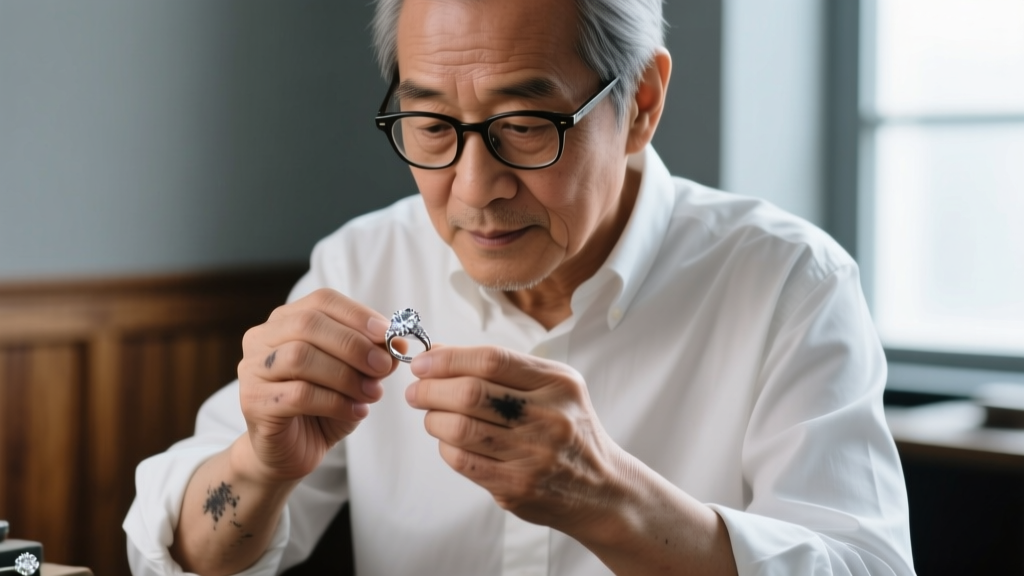
Owning multi gemstone earrings is an investment in complex, wearable art. Unlike single-stone solitaires, multi-gemstone pieces present a unique challenge in jewelry maintenance: a single earring might feature a 9 on the Mohs hardness scale sapphire set directly adjacent to a fragile, porous 3.5 pearl or a fracture-filled emerald. Applying a generic cleaning method to such a piece can result in irreversible chemical damage, thermal shock, or structural failure. According to the Gemological Institute of America (GIA), the most common cause of gemstone damage occurs during routine at-home cleaning when the specific mineralogical properties of the stones are ignored.
The Complex Chemistry of Multi Gemstone Jewelry
When you clean a diamond solitaire, you can safely use harsh degreasers or ultrasonic waves. However, multi gemstone earrings require a compromise approach that caters to the most vulnerable stone in the cluster. For instance, ammonia-based cleaners will brilliantly restore the fire of a diamond, but that same ammonia will strip the natural nacre from a pearl and dissolve the copper-bearing treatments in certain turquoise cabochons. Furthermore, the metal alloy holding the stones—whether 14k yellow gold, 18k rose gold, or rhodium-plated sterling silver—dictates the acceptable pH levels of your cleaning solutions. Understanding this intersection of gemology and metallurgy is the first step in preserving your earrings' brilliance and structural integrity.
Gemstone Hardness, Porosity, and Treatment Vulnerabilities
Before applying any liquid or brush to your earrings, you must identify the stones and their common treatments. The Mohs scale of mineral hardness determines scratch resistance, but it does not account for toughness (resistance to chipping) or stability (resistance to chemicals and heat). Below is a critical reference chart for common gemstones found in multi-stone clusters.
| Gemstone | Mohs Hardness | Common Treatments | Safe Cleaning Method | Strictly Avoid |
|---|---|---|---|---|
| Emerald | 7.5 - 8 | Cedar oil/resin fracture filling | Damp microfiber cloth only | Ultrasonic, steam, soap, heat |
| Sapphire | 9 | Heat treatment (stable) | Mild soap, warm water, soft brush | Extreme thermal shock |
| Opal | 5.5 - 6.5 | Hydration dependent (contains water) | Dry polishing cloth | Water immersion, ultrasonic, heat |
| Pearl | 2.5 - 4.5 | Organic, highly porous | Damp cloth, wipe after wearing | All chemicals, acids, ultrasonic |
| Amethyst | 7 | Generally untreated | Mild soap, warm water, soft brush | Prolonged UV/sunlight exposure |
The Step-by-Step Manual Cleaning Protocol
For multi gemstone earrings that do not contain pearls, opals, or heavily oiled emeralds, a conservative manual cleaning protocol is the safest and most effective method. This process removes sebum, cosmetic residue, and environmental dust without risking chemical abrasion.
- Step 1: The Loupe Inspection. Before introducing moisture, examine the earrings under a 10x triplet jeweler's loupe. Look for lifted prongs, debris trapped under the gallery (the basket holding the stones), or micro-fractures in the gems. If a stone is loose, do not clean it; take it to a bench jeweler immediately.
- Step 2: Formulate a pH-Neutral Solution. Fill a small glass bowl with lukewarm distilled water. Tap water contains chlorine and hard minerals that can leave spotting on porous stones and dull white gold. Add exactly one drop of a mild, pH-neutral surfactant, such as original blue Dawn dish soap or a dedicated jewelry cleaner approved by Jewelers of America.
- Step 3: Targeted Agitation. Submerge the earrings for no more than 3 to 5 minutes. Using a clean, ultra-soft baby toothbrush or a specialized horsehair jewelry brush, gently agitate the bristles around the pavilion (the bottom facets of the gemstone) where skin oils accumulate. Never scrub the crown (top) of softer gems like tanzanite or tourmaline aggressively.
- Step 4: The Distilled Rinse. Rinse the earrings under a gentle stream of lukewarm distilled water to remove all soap residue. Ensure the drain is securely plugged.
- Step 5: Capillary Drying. Pat the metalwork dry with a lint-free microfiber cloth. Use a can of compressed air or a hair dryer on the cool setting to blow moisture out from beneath the gemstone settings. Trapped moisture against the metal can lead to localized oxidation or skin irritation upon re-wearing.
Why Ultrasonic and Steam Cleaners are the Enemy
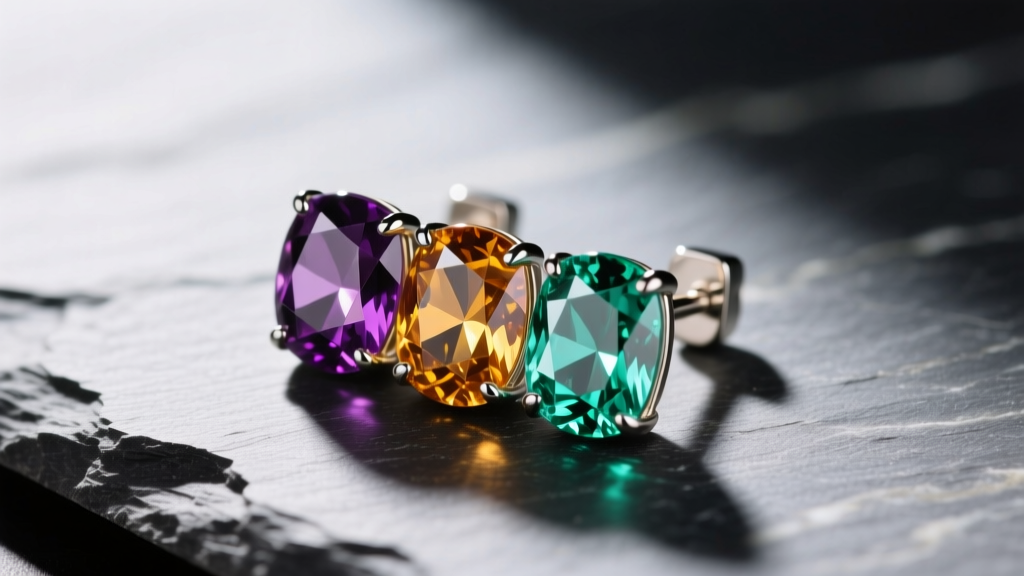
It is a common misconception that professional jewelry store cleaners are safe for home replication. Ultrasonic cleaners work through cavitation—the creation and violent collapse of microscopic vacuum bubbles in a liquid medium. While this blasts dirt out of diamond settings, the high-frequency vibrations can easily shatter stones with natural inclusions or internal fractures. Emeralds, which are almost universally fracture-filled with oils or resins, will literally vibrate apart or have their clarity-enhancing oils stripped away in an ultrasonic bath, leaving them opaque and heavily fractured. Similarly, steam cleaners introduce rapid thermal expansion and contraction. If a multi gemstone earring features temperature-sensitive stones like opals or treated rubies, the sudden 212°F (100°C) heat blast will cause catastrophic thermal shock, resulting in internal cracking known as 'crazing'.
Prong Integrity and Metal Fatigue
Cleaning is only half the maintenance equation; structural monitoring is the other. Multi gemstone earrings, particularly intricate dangle or chandelier styles, endure significant kinetic stress. The swinging motion of a dangle earring transfers torque directly to the top jump ring and the primary gemstone prongs. Over time, this causes metal fatigue. 14k gold, containing 58.3% pure gold mixed with harder alloys like copper and zinc, offers superior prong durability compared to 18k gold or platinum, which are more malleable. Every six months, use a wooden toothpick to gently test the tension of the prongs. If the toothpick catches on a prong, or if you notice a 'clicking' sound when the earring moves, the metal has lifted away from the gemstone's girdle. A jeweler can re-tip these prongs in minutes, preventing the loss of a valuable stone.
Strategic Storage to Prevent Mohs-Scale Scratching
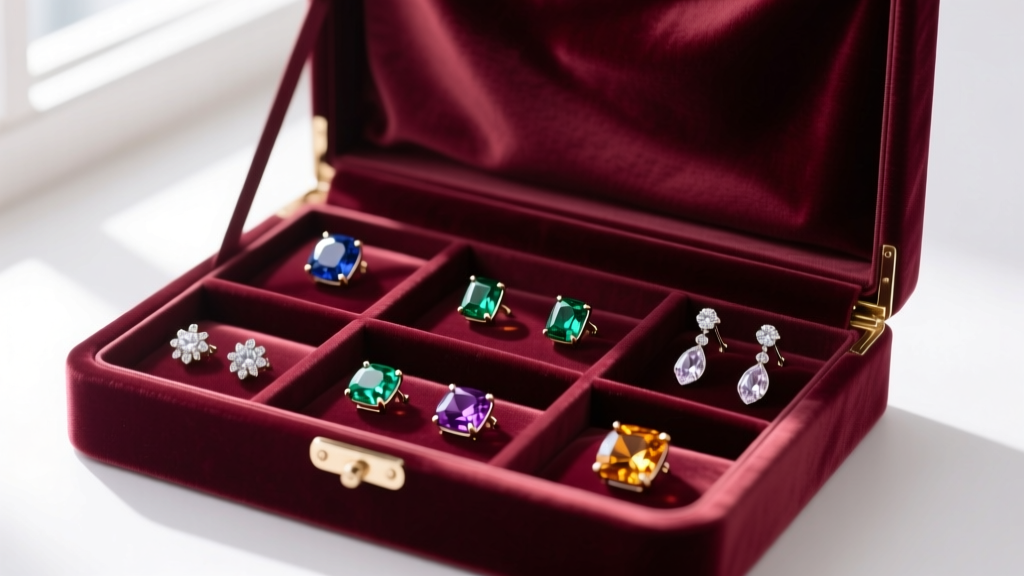
How you store your multi gemstone earrings is just as critical as how you clean them. The Mohs scale is exponential, meaning a diamond (10) is not just slightly harder than a sapphire (9); it is exponentially more capable of scratching it. If you toss a pair of diamond-accented ruby drops into a communal jewelry box, the diamonds will act as microscopic sandpaper against the rubies, the gold settings, and any softer gems they touch. Always store multi gemstone earrings in individual, lint-lined compartments. For dangle and drop earrings, hang them from dedicated hooks or lay them completely flat to prevent the wire from bending. If traveling, wrap each earring individually in acid-free tissue paper or place them in separate anti-tarnish ziplock bags to prevent atmospheric sulfur from oxidizing the silver or copper alloys in the metalwork.
When to Seek Professional Jeweler Intervention
While diligent at-home care maintains the day-to-day brilliance of your earrings, professional servicing is non-negotiable for long-term preservation. You should schedule a bench jeweler visit annually for three specific services:
- Deep Ultrasonic/Steam Cleaning (Selective): A professional will remove vulnerable stones from the setting, clean the metal and durable gems with industrial equipment, and reset the delicate stones.
- Rhodium Replating: If your multi gemstone earrings are set in white gold, the rhodium flash plating will wear thin over 12 to 18 months, revealing the yellowish underlying alloy. A jeweler can polish and re-plate the setting without damaging the gems.
- Prong Re-tipping and Ring Sizing: Ensuring the structural integrity of the earring posts, butterfly backs, and European wire hinges to prevent loss.
Treating multi gemstone earrings as a holistic ecosystem—where the chemical needs of the softest stone and the mechanical limits of the metal alloy dictate your care routine—will ensure these complex pieces remain vibrant and structurally sound for generations.


