Big Hole Earrings: 2026 Trend Analysis & Style Guide
Explore 2026 trends for big hole earrings, from stretched lobe hangers and tunnels to oversized structural hoops. Expert material and gauge guides.

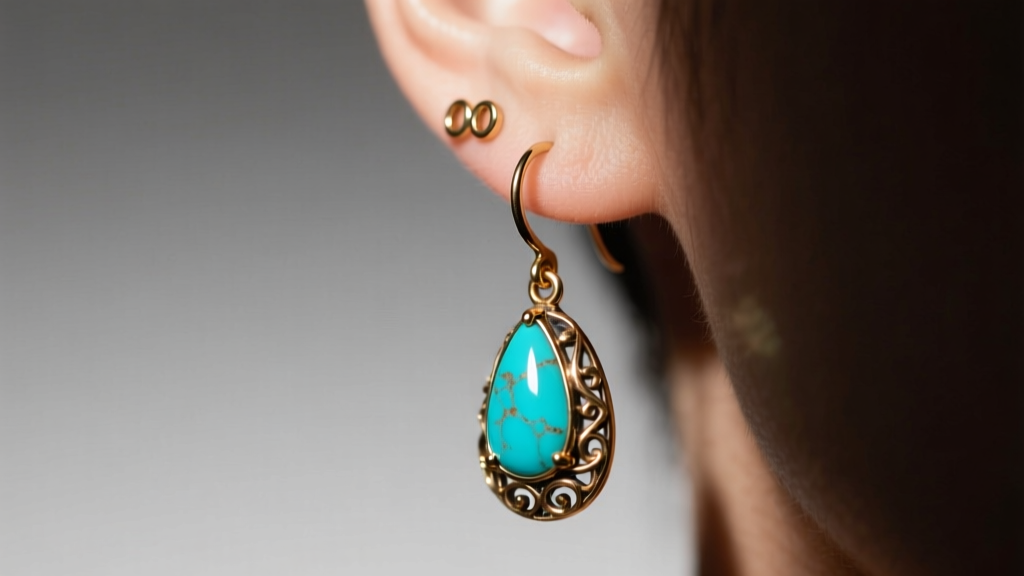
When enthusiasts, body modification artists, and high-fashion designers discuss big hole earrings in 2026, the conversation spans two distinct but equally fascinating realms of ear styling. On one hand, we have the thriving, deeply technical culture of stretched earlobes—where jewelry is designed to fill, adorn, and suspend from fistulas ranging from 6mm to over 25mm. On the other, we have the avant-garde fine jewelry movement focused on oversized structural hoops with massive negative space. Both categories demand a rigorous understanding of weight distribution, material biocompatibility, and anatomical limits.
This comprehensive style and trend analysis breaks down the current landscape of big hole earrings, offering actionable advice on gauge sizing, material grades, and the specific failure modes that separate amateur styling from expert curation.
The Dual Definition: Stretched Lobes vs. Structural Negative Space
The colloquial search term "big hole earrings" captures two entirely different demographics. For the body modification community, it refers to plugs, tunnels, eyelets, and hangers designed for stretched piercings. For the fine jewelry consumer, it refers to standard-gauge earrings (typically 16g or 14g) that feature an oversized, hollow geometric center—creating a "big hole" visual effect without altering the ear's anatomy.
In 2026, the stylistic crossover between these two worlds is more prominent than ever. High-end body jewelers are borrowing micro-pave diamond setting techniques from fine jewelry, while avant-garde fine jewelers are adopting the heavy, brutalist silhouettes native to the stretched lobe community.
Stretched Lobe Architecture: Gauges, Hangers, and Tunnels
Stretched earlobe jewelry is governed by strict sizing metrics. Understanding the conversion between gauge numbers, fractions, and millimeters is non-negotiable for proper fit and tissue health. The current trend heavily favors hangers (dangle earrings that hook through the stretched hole) and eyelets (tunnels with flares on both ends) over traditional solid plugs.
| Gauge / Fraction | Millimeter (mm) | Elastic Recovery | Best Jewelry Type |
|---|---|---|---|
| 2g | 6mm | High | Plugs, Tunnels, Lightweight Clickers |
| 0g | 8mm | Moderate (The "Point of No Return") | Hangers, Double-Flare Glass |
| 00g | 10mm | Low | Eyelets, Modular Hangers |
| 7/16" | 11mm | Minimal | Stone, Wood, Silicone Tunnels |
| 1/2" | 12mm+ | None (Surgical closure required) | Heavy Hangers, Carved Bone |
According to guidelines from the Association of Professional Piercers (APP), tissue elasticity varies wildly among individuals. However, the 0g (8mm) threshold is widely considered the functional "point of no return" where the earlobe will not shrink back to a standard piercing size without surgical intervention.
Material Science and Critical Failure Modes
The most common mistake consumers make with big hole earrings is prioritizing aesthetics over material biocompatibility and weight dynamics. Stretched lobes are highly sensitive to porosity and sustained gravitational stress.
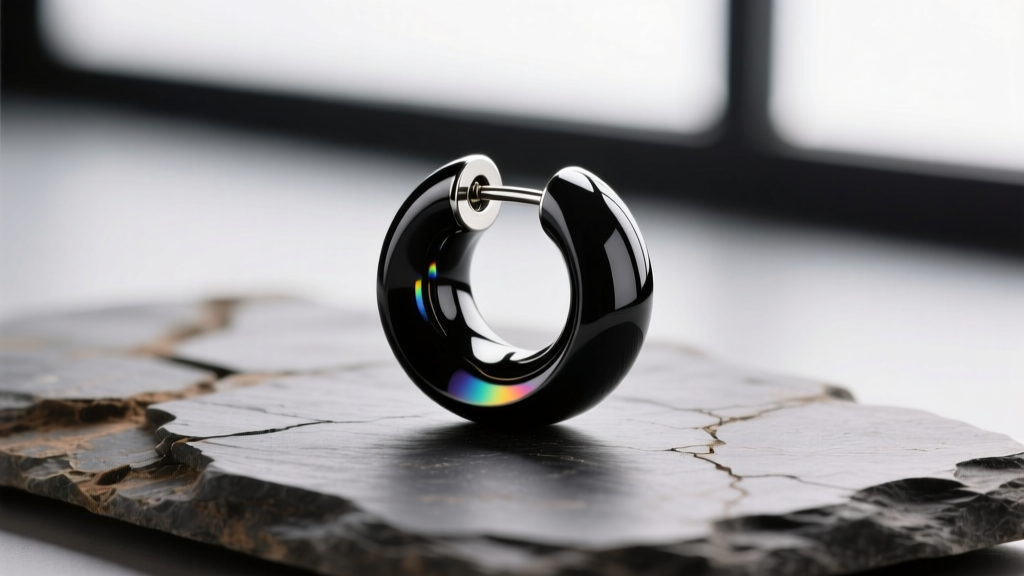
The "Cheese-Cutter" Effect
One of the most severe failure modes in stretched earlobe jewelry is the "cheese-cutter" effect. When a heavy, solid brass or bronze hanger (often weighing 30+ grams per ear) is worn continuously in a 00g (10mm) lobe, the downward force concentrates entirely on the bottom millimeter of the fistula. Over several months, this sustained pressure causes tissue necrosis, thinning, and downward migration. The lobe literally slices through the bottom of the skin.
The Expert Solution: Practice "hanger rotation." Wear heavy, ornate hangers only for the duration of an event or a workday (8-12 hours). For sleeping and lounging, switch to lightweight, wide-flare borosilicate glass tunnels or biocompatible silicone to distribute the resting weight and allow the tissue to recover.
Porosity and Infection Risks
Organic materials like untreated wood, bone, and horn are incredibly popular for their earthy aesthetic. However, they are highly porous. If worn in a freshly stretched lobe (or one that is experiencing micro-tears from heavy hangers), these materials harbor bacteria and can cause severe contact dermatitis or localized infections.
- Implant-Grade Titanium (ASTM F136): The gold standard for metal hangers and eyelets. Completely non-porous, hypoallergenic, and significantly lighter than surgical steel.
- Borosilicate Glass: Ideal for tunnels. Non-porous, autoclavable, and can be worn safely during the active stretching process.
- Sealed Organics: If you must wear wood, ensure it is sealed with a biocompatible, non-toxic finish (like pure jojoba oil and beeswax blends), and only wear it in fully healed, mature fistulas.
Oversized Hoops: Mastering Structural Negative Space
For those without stretched piercings, the 2026 interpretation of big hole earrings centers on massive, structural hoops. Think 3-inch to 5-inch diameter hoops with a hollow, geometric center. These pieces create the illusion of a "big hole" framing the face and neck.
The engineering challenge here is torque. A standard 18-gauge (1.0mm) wire cannot support a 4-inch hoop without bending out of shape when the wearer turns their head or removes a mask. High-end designers are now utilizing 1.6mm (14g) or 2.0mm (12g) wire thicknesses for the main structural body of the hoop, tapering down only at the hinge and clasp.
Furthermore, the traditional "hinge and latch" closure is failing under the weight of 2026's oversized designs. The industry is pivoting toward flat-back labret posts with threaded ends or heavy-duty, spring-loaded clicker hinges originally developed for septum piercings, adapted to handle the sheer leverage of a massive hoop.

2026 Trend Forecast: What is Next for Big Hole Earrings?
As we move deeper into the year, several distinct micro-trends are dominating the market for both stretched and standard oversized earrings.
1. Modular and Kinetic Hangers
Brands like Oncoming Jewelry and independent metallurgists are pioneering modular designs. A single 00g titanium eyelet serves as a permanent, comfortable base. The "hanger" portion—a heavy, kinetic, dangling geometric piece—clips or threads onto the bottom of the eyelet. This allows the wearer to enjoy the heavy, dramatic movement of a hanger without the long-term tissue damage, easily unclipping it before bed.
2. Bio-Resins and Translucent Polymers
For large-gauge tunnels (1/2" and above), solid materials become prohibitively heavy. In 2026, we are seeing a surge in medical-grade, UV-stable bio-resins. These materials can be cast in massive sizes while remaining feather-light, often featuring suspended elements like dried botanicals, gold leaf, or dichroic glass flakes that catch the light through the "big hole" of the tunnel.
3. Mixed-Metal Inlays
The days of single-tone brass hangers are fading. The current luxury aesthetic involves hand-inlaying contrasting metals—such as rose gold wire hammered into oxidized silver or darkened titanium grooves. This creates a high-contrast, textured look that emphasizes the negative space of the ear and the intricate craftsmanship of the piece.
Final Sourcing and Styling Advice
Whether you are navigating the world of 00g stretched lobe hangers or investing in a 14k gold structural hoop with a massive hollow center, the rules of acquisition remain the same: prioritize structural integrity and anatomical respect. Never compromise on material grade to save money on oversized pieces, as the physical leverage amplifies any flaw in the metal or closure mechanism. By understanding the precise gauge metrics, respecting the limits of your tissue, and embracing the modular innovations of 2026, big hole earrings can become the most striking, conversation-starting element of your personal style arsenal.


