Best Materials for Big Statement Earrings: Weight & Comfort
Discover the best materials for big statement earrings. Compare weight, durability, and comfort to prevent earlobe stretching and irritation.

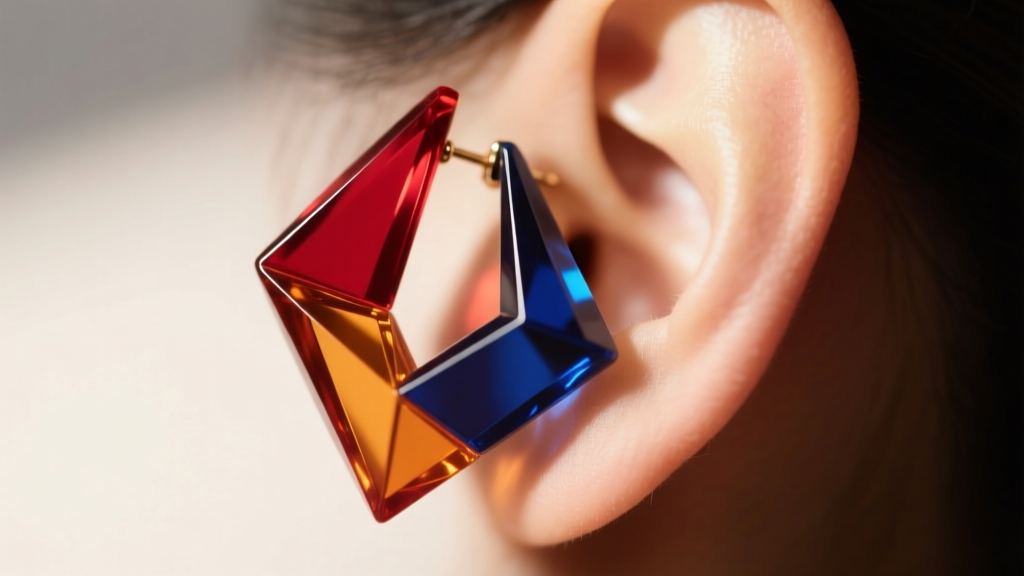
The Physics of Earlobe Stress: Why Material Density Matters
When curating a bold look, big statement earrings are the undisputed focal point. However, the pursuit of dramatic silhouettes often collides with a harsh biological reality: the human earlobe is not engineered to bear heavy loads. As we navigate jewelry trends in 2026, the conversation around statement pieces has shifted from purely aesthetic to deeply ergonomic. Understanding the physics of earlobe stress is the first step in selecting the right materials.
Standard lobe piercings are typically performed at 20-gauge (0.81mm) or 18-gauge (1.02mm). When you hang a 30-gram solid brass earring from a 20-gauge wire, the pressure exerted on the microscopic surface area of the piercing fistula is immense. Over time, this localized pressure causes what piercers call the 'cheese-cutter effect,' where the jewelry slowly migrates downward, thinning the tissue and eventually leading to irreversible tearing or elongation. To enjoy oversized designs without compromising your tissue health, we must evaluate materials not just by their visual appeal, but by their density, tensile strength, and biocompatibility.
Heavyweight Contenders: Traditional Metals & Natural Stones
Historically, the most striking big statement earrings were crafted from dense, traditional materials. While visually stunning, these materials require careful engineering to remain wearable.
Solid Gold (14k and 18k)
Gold is the benchmark for fine jewelry, but it is exceptionally dense. 18k gold has a density of approximately 15.6 g/cm³, while 14k sits around 13.5 g/cm³. A solid gold geometric drop earring measuring just two inches long can easily exceed 25 grams. While gold is highly biocompatible and resistant to tarnish, its sheer weight makes it a poor choice for massive, solid-cast statement pieces unless the design incorporates extensive cutouts or hollow-form construction.
Brass and Bronze
Brass (an alloy of copper and zinc) and bronze (copper and tin) are favorites for affordable, oversized fashion jewelry due to their excellent casting properties and warm, vintage patinas. With a density of roughly 8.4 to 8.8 g/cm³, they are lighter than gold but still heavy in large volumes. Furthermore, the American Academy of Dermatology frequently warns that brass and bronze alloys can contain trace amounts of nickel or lead, which can trigger severe contact dermatitis when the metal rests against the sensitive skin of the earlobe for extended periods.
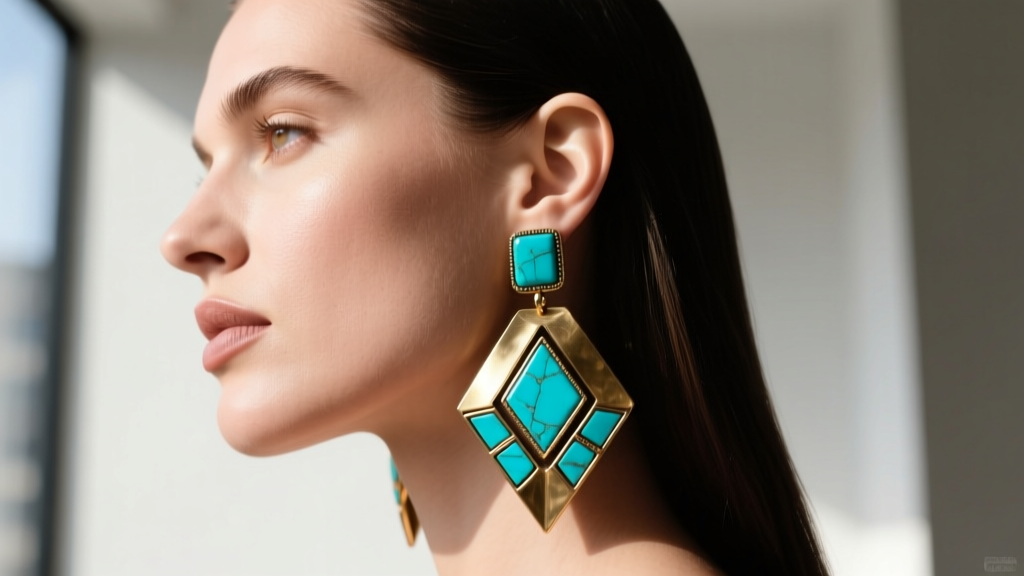
Natural Stones (Turquoise, Agate, and Jasper)
Incorporating natural stones adds incredible organic beauty to big statement earrings, but it drastically increases the weight. According to the Gemological Institute of America (GIA), stones like turquoise and agate have specific gravities ranging from 2.6 to 2.9. When set in heavy metal bezels, a single stone-laden earring can easily surpass the 35-gram comfort threshold, requiring specialized earlobe support.
The Lightweight Champions: Modern & Alternative Materials
Advancements in metallurgy and synthetic materials have revolutionized the statement earring market, allowing designers to create massive, gravity-defying pieces that feel practically weightless.
Implant-Grade Titanium (ASTM F136)
Titanium is the undisputed king of lightweight, hypoallergenic jewelry. With a density of just 4.43 g/cm³, it is nearly 70% lighter than steel and significantly lighter than gold. The Association of Professional Piercers (APP) specifically recommends ASTM F136 implant-grade titanium for its exceptional biocompatibility and lack of nickel. For big statement earrings, titanium can be CNC-milled or 3D-printed into intricate, massive lattice structures that provide enormous visual volume while weighing only a few grams.
Niobium
Niobium is slightly heavier than titanium (8.57 g/cm³) but offers a unique advantage: it is incredibly malleable and can be anodized to produce a vibrant spectrum of colors without using dyes or plating. Jewelers often use niobium to create large, hammered, paper-thin disc earrings that catch the light beautifully while remaining feather-light on the ear.
Resin, Acrylic, and Bio-Plastics
For the ultimate lightweight experience, high-quality resins and acrylics (density ~1.1 g/cm³) are unmatched. Modern UV-cured resins can mimic the appearance of tortoiseshell, marble, or even translucent gemstones. The primary drawback is durability; acrylics can scratch easily and may become brittle over time if exposed to prolonged UV light or extreme temperature changes.
Material Comparison Matrix
Use the following data table to compare the physical properties of common materials used in big statement earrings. The 'Max Recommended Weight' refers to the maximum safe load per earlobe for extended wear (4+ hours) on a standard 18-gauge piercing without auxiliary support.
| Material | Density (g/cm³) | Hypoallergenic | Max Recommended Weight | Best Design Application |
|---|---|---|---|---|
| Implant-Grade Titanium | 4.43 | Yes | 25g | Intricate 3D lattice, large hoops |
| Niobium | 8.57 | Yes | 20g | Anodized hammered discs, thin drops |
| Cast Resin / Acrylic | 1.10 - 1.20 | Yes | 30g+ | Oversized geometric blocks, faux stone |
| Sterling Silver (925) | 10.36 | Mostly | 15g | Filigree, hollow-form domes |
| 14k Solid Gold | 13.50 | Yes | 12g | Small-to-medium solid casts, delicate chains |
| Brass / Bronze | 8.40 - 8.80 | No | 18g | Vintage-style heavy castings (short wear) |
Engineering Comfort: Design Hacks for Heavy Pieces
If you already own heavy big statement earrings or prefer the premium feel of solid metals, you can mitigate earlobe stress through intelligent design modifications and accessories.
Upgrading the Wire Gauge
The most effective way to distribute weight is to increase the surface area of the ear wire. Swapping a standard 20-gauge (0.81mm) french wire for a 16-gauge (1.29mm) or 14-gauge (1.63mm) wire dramatically reduces the pressure on the fistula. Many high-end jewelers now offer heavy-duty leverback findings specifically designed for statement pieces, which also prevent the earring from slipping out of the lobe.
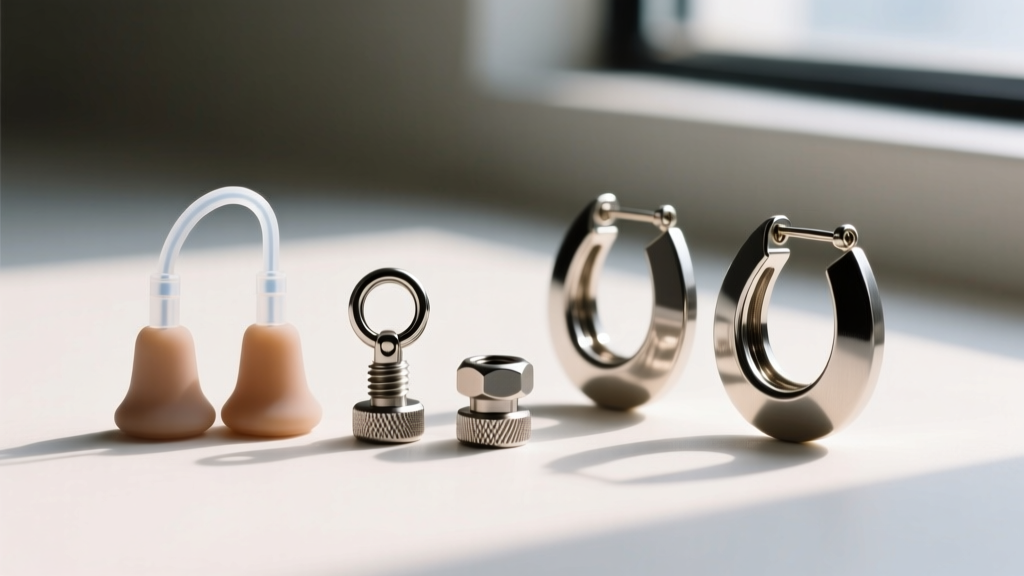
Auxiliary Earlobe Supports
For earrings exceeding 25 grams, auxiliary supports are mandatory for long-term tissue health. Silicone O-rings or specialized earlobe patches (such as BlingDots) adhere to the back of the earlobe, providing a wider, reinforced base that distributes the earring's weight across a broader area of skin. This simple intervention can completely eliminate the 'drooping' effect and prevent post-wear soreness.
Care and Maintenance by Material
The longevity of your statement pieces depends heavily on material-specific care routines. Titanium and niobium are virtually maintenance-free, requiring only a simple wash with mild soap and water. Conversely, brass and bronze will naturally oxidize, developing a dark patina. If you prefer a high shine, these pieces must be regularly polished with a specialized brass cloth. Resin and acrylic earrings should be kept away from harsh chemicals, including perfumes and alcohol-based hand sanitizers, which can cause the surface to cloud or micro-fracture over time.
Final Verdict: Matching Material to Your Lifestyle
Choosing the right big statement earrings is a balance between your aesthetic vision and your anatomical limits. If you plan to wear your earrings for a full workday or an evening event, prioritize implant-grade titanium, niobium, or high-quality resins to ensure your earlobes remain comfortable and healthy. Reserve heavier materials like solid gold or natural stones for shorter, high-impact occasions, and always utilize upgraded ear wires and silicone supports to protect your piercings. By respecting the physics of jewelry design, you can confidently wear bold, oversized pieces without compromising your comfort.


