How to Clean Pearl Cross Earrings Without Ruining Them
Learn how to safely clean, store, and maintain your pearl cross earrings. Expert tips on protecting delicate nacre and metal settings from damage.

The Unique Vulnerability of Pearl Cross Earrings
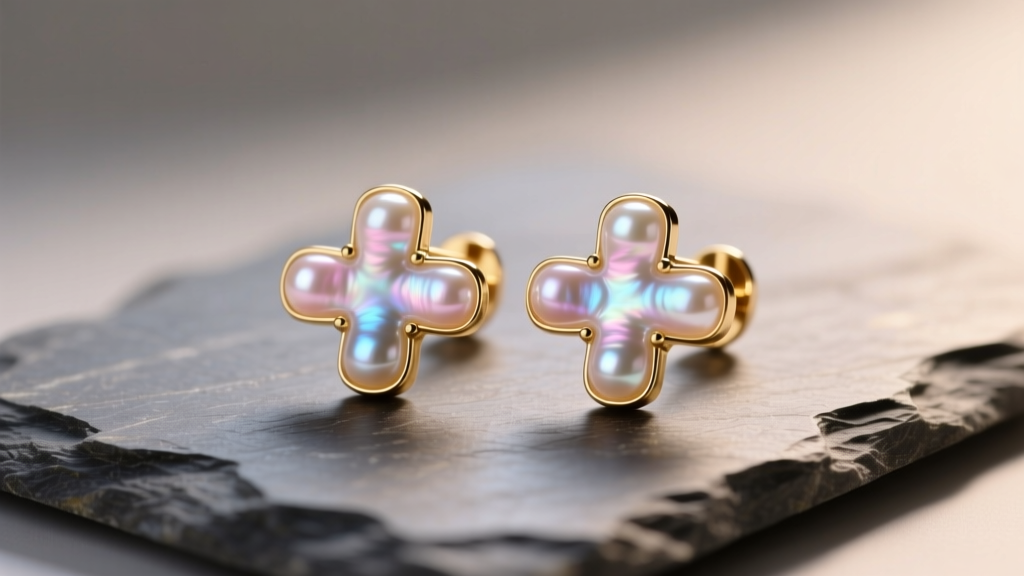
Pearl cross earrings represent a stunning intersection of organic gemology and structured metallic geometry. Whether you wear a delicate pair of freshwater pearl studs arranged in a cruciform shape or a dramatic drop earring featuring a gold cross draped in South Sea pearls, these pieces require a highly specialized approach to maintenance. Unlike solid metal hoops or faceted diamond huggies, pearl cross earrings combine the extreme fragility of organic nacre with the intricate crevices of a cross-shaped metal setting.
The primary challenge lies in the design itself. The 90-degree angles and interior corners of a cross setting naturally trap sebum (skin oils), dead skin cells, hairspray, and cosmetic powders. Over time, this buildup dulls the metal and creates an acidic microenvironment that can degrade the pearl. Furthermore, the physical junction where the pearl meets the metal—often a post-and-cup setting secured with jeweler's epoxy—is a critical failure point if exposed to the wrong cleaning agents or thermal shock. Understanding how to navigate these vulnerabilities is essential for preserving the luster and structural integrity of your earrings.
The Chemistry of Nacre: Why Standard Jewelry Cleaners Fail
To properly care for pearl cross earrings, you must first understand the chemical composition of the gemstone. Nacre, the iridescent outer layer of a pearl, is composed of microscopic platelets of aragonite (a crystalline form of calcium carbonate) bound together by conchiolin, an organic protein. On the Mohs scale of mineral hardness, pearls rank between 2.5 and 4.5, making them exceptionally soft and prone to scratching.
More importantly, calcium carbonate is highly reactive to acids. Even mildly acidic substances like vinegar, lemon juice, or the natural acids in human sweat can begin to dissolve the aragonite crystals, resulting in permanent etching and a loss of luster. Conversely, harsh alkaline cleaners can break down the conchiolin protein matrix, causing the nacre to become brittle and chalky. According to the Gemological Institute of America (GIA), pearls should never be exposed to the commercial jewelry dips and ultrasonic solutions used for diamonds or sapphires, as these chemicals will strip the pearl's orient and overtone in a matter of minutes.
Step-by-Step Cleaning Routine for Pearls and Metal
The Daily Wipe-Down
The most effective maintenance strategy is preventative. After every wear, gently wipe the pearls and the metal cross setting with a clean, lint-free microfiber cloth. This removes the day's accumulation of skin oils and cosmetic residues before they can harden in the crevices of the cross or etch into the nacre. Never use tissue paper or paper towels, as the wood pulp fibers can leave microscopic scratches on the pearl's surface.
The Monthly Deep Clean
For a more thorough cleaning, you must use a solution that is safe for both the organic gem and the metal alloy. Follow these precise steps:
- Prepare the Solution: Mix a few drops of pH-neutral baby shampoo or pure Castile soap into a bowl of distilled water. Avoid tap water, as the chlorine and fluoride can leave microscopic mineral deposits on the nacre.
- Dampen, Do Not Soak: Dip a super-soft baby toothbrush (bristles rated 'extra soft') into the solution and shake off the excess. Never submerge the earring. Submerging pearl earrings allows water to seep into the drill hole or the post-and-cup adhesive joint, which can cause the internal epoxy to rot or rust the metal post.
- Target the Crevices: Gently brush the interior corners of the metal cross setting to dislodge trapped debris. Keep the brush strictly on the metal, avoiding direct scrubbing of the pearl to prevent unnecessary abrasion.
- The Pearl Wipe: Use a separate, soft cotton swab lightly dampened with the soapy distilled water to gently roll over the surface of the pearl.
- Rinse and Dry: Wipe the entire piece with a cloth dampened only with pure distilled water to remove soap residue. Lay the earrings flat on a dry towel in a well-ventilated area, ensuring the metal posts are completely dry before storing.
Deep Cleaning the Metal Settings (Without Harming the Pearl)
Pearl cross earrings are frequently crafted in 14k or 18k yellow gold, white gold, or sterling silver. While gold is relatively low-maintenance, sterling silver is prone to tarnishing due to its copper content reacting with sulfur in the air. When the silver cross setting turns black, it creates a stark, often undesirable contrast against the bright white nacre.
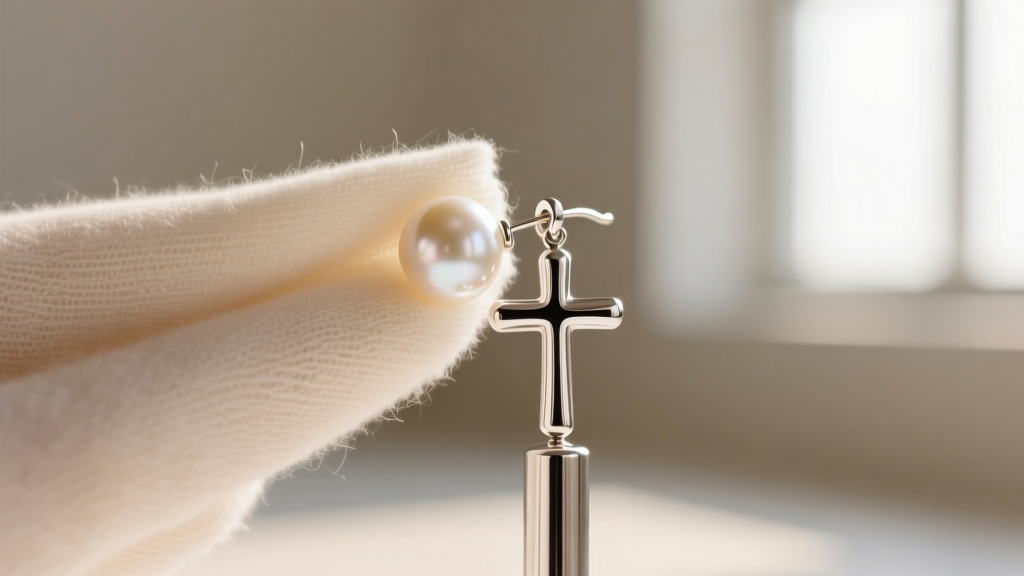
To remove tarnish from the silver cross, use a high-quality jeweler's polishing cloth impregnated with micro-abrasives. Fold the cloth to a fine point and carefully run it along the edges and flat surfaces of the silver cross. Crucial Warning: Liquid silver dip cleaners contain thiourea and strong acids that will instantly destroy a pearl's nacre. Never apply liquid tarnish remover to any piece of jewelry that contains pearls, even if you attempt to mask the pearl with tape. The fumes alone can cause chemical etching. As experts at Pearl Paradise recommend, mechanical polishing with a dry cloth is the only safe method for maintaining the metal components of pearl jewelry.
The Danger of Ultrasonic and Steam Cleaners
It is a common mistake to take pearl cross earrings to a mall jeweler who immediately drops them into an ultrasonic cleaner or blasts them with a high-pressure steam wand. Both of these methods are catastrophic for pearls.
Ultrasonic cleaners work through cavitation—creating millions of microscopic vacuum bubbles in a liquid solvent that implode with immense force. This violent agitation will literally shake the delicate layers of nacre off the pearl's nucleus, resulting in a pitted, ruined surface. Steam cleaners, on the other hand, introduce two fatal elements: extreme heat and moisture. The heat can easily exceed 200°F (93°C), which softens the jeweler's epoxy holding the pearl to the metal cross mount. Once the adhesive softens, the pearl will pop out of its setting and be lost. Furthermore, the thermal shock can cause the nacre to crack or craze.
Chemical Agents to Avoid at All Costs
When maintaining your pearl cross earrings, your bathroom cabinet is full of potential hazards. Below is a breakdown of common household substances and their specific destructive effects on pearls and metal settings.
| Chemical / Substance | Effect on Pearl Nacre | Effect on Metal Setting |
|---|---|---|
| Ammonia (e.g., Windex) | Dissolves conchiolin protein, causing chalkiness | Can strip rhodium plating from white gold |
| Bleach (Chlorine) | Pits and permanently dulls the surface | Causes severe pitting and structural weakening of gold alloys |
| Baking Soda Paste | Acts as a harsh abrasive, scratching the Mohs 2.5 surface | Can scratch high-polish gold finishes |
| Hairspray & Perfume | Leaves a sticky, acidic film that blocks light refraction | Accelerates tarnishing on sterling silver |
| Acetone (Nail Polish Remover) | Dries out the pearl, leading to micro-fractures | Dissolves the epoxy adhesive in post-and-cup settings |
Proper Storage and Preventative Maintenance
How you store your pearl cross earrings is just as critical as how you clean them. Because pearls rank so low on the Mohs scale, storing them in a communal jewelry box alongside diamond studs, sapphire rings, or even harder metal pieces will result in severe scratching. A diamond, ranking at a 10 on the Mohs scale, will effortlessly carve deep grooves into a pearl's surface upon contact.
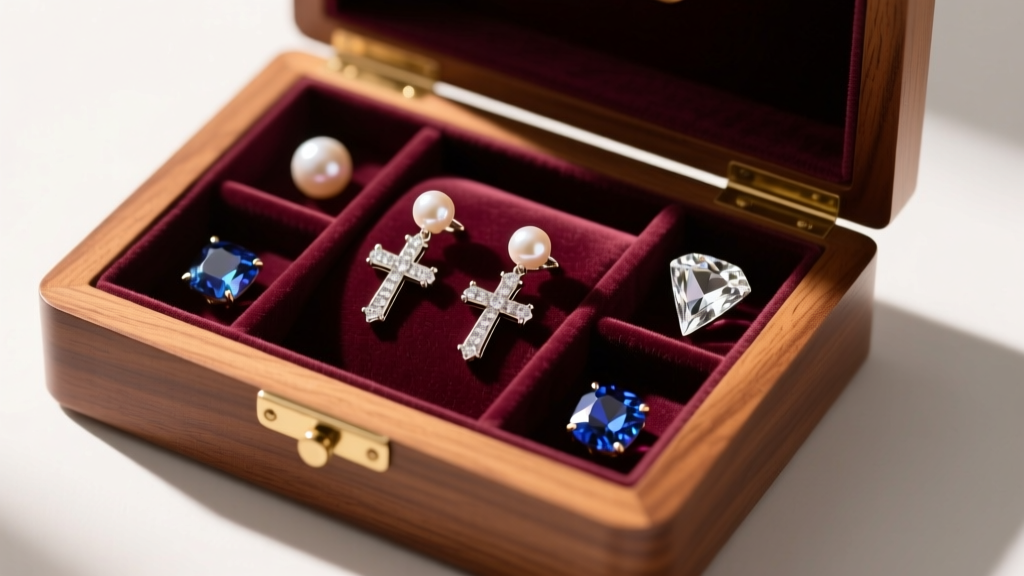
Always store pearl cross earrings in a dedicated, soft-lined compartment or a breathable silk pouch. Avoid storing pearls in airtight plastic bags or bank safety deposit boxes for extended periods. Pearls are organic and require a minimal amount of ambient humidity to prevent the conchiolin from drying out and the nacre from cracking. If you live in an exceptionally dry climate, occasionally placing a slightly damp (not wet) piece of cotton in the general vicinity of the jewelry box can help maintain optimal humidity levels. Finally, always adhere to the golden rule of jewelry wear: 'Last on, first off.' Put your pearl cross earrings on after applying makeup, perfume, and hairspray, and take them off immediately upon returning home.
When to Consult a Professional Jeweler
While routine cleaning can be managed at home, certain maintenance tasks require the expertise of a professional bench jeweler. If you notice that the pearl feels loose within the cross setting, or if you hear a faint clicking sound when you tap the earring, the adhesive bond has likely failed. Do not attempt to re-glue the pearl with household super glue (cyanoacrylate), as it will seep into the nacre, turn it permanently yellow, and create a brittle bond that will eventually ruin the drill hole.
A professional jeweler will safely remove the pearl using specialized solvents, clean the metal cup, and re-seat the pearl using a flexible, archival-grade jeweler's epoxy that allows for slight thermal expansion without cracking the gem. Additionally, if your cross earrings feature prong-set accent diamonds or gemstones surrounding the pearl, a jeweler should inspect and tighten these prongs annually to prevent stone loss, taking care to shield the central pearl during any necessary polishing or retipping procedures.


