Big White Flower Earrings: 2026 Budget & Value Guide
Discover how to evaluate big white flower earrings in 2026. Compare materials, weight limits, and pricing to find the best value for statement florals.

The True Cost of Statement Florals: Beyond the Price Tag
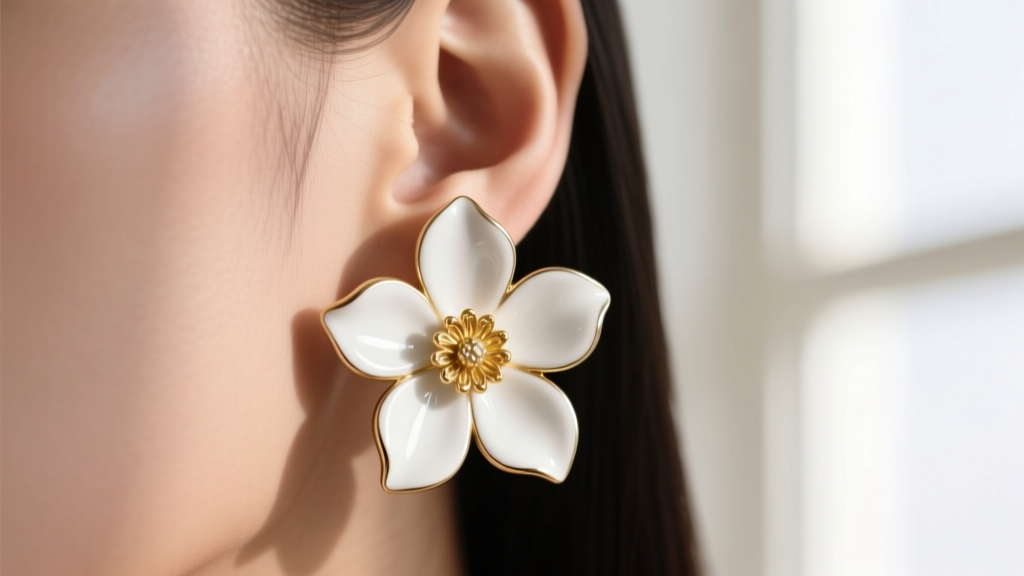
Oversized botanical jewelry has dominated the accessory market for years, but as we navigate the 2026 style landscape, the demand for big white flower earrings has shifted from fleeting fast-fashion trends to a desire for enduring, high-value statement pieces. When evaluating these bold accessories, the initial price tag is only a fraction of the equation. True value assessment requires a deep dive into material longevity, structural integrity, and the biomechanics of how heavy jewelry interacts with the earlobe.
A $25 pair of acrylic daisies might seem like a steal, but if the polyurethane resin yellows within six months of UV exposure and the nickel-laden posts trigger contact dermatitis, the cost-per-wear becomes abysmal. Conversely, a $180 pair of carved mother-of-pearl florals can last a lifetime if properly engineered. To make smart purchasing decisions, collectors and everyday wearers must understand the material science and structural requirements that separate disposable novelties from heirloom-quality investments.
Material Breakdown: What You Are Actually Paying For
The visual impact of a large white floral silhouette can be achieved through vastly different manufacturing processes. The base material dictates not only the upfront cost but also the earring's resistance to environmental degradation, chipping, and discoloration. Below is a comparative analysis of the most common materials used in contemporary statement florals.
| Material | Typical Price Range | Weight Profile | Durability & Failure Modes | Value Rating |
|---|---|---|---|---|
| Injection-Molded Resin | $15 - $45 | Ultra-Light (2-5g) | Prone to UV yellowing; scratches easily; hardware often glued. | Low |
| Brass with Cold Enamel | $35 - $85 | Medium (8-14g) | Paint-like finish chips upon impact; base metal may cause allergies. | Medium |
| Vitreous Enamel on Sterling | $120 - $280 | Medium-Heavy (12-18g) | Glass fused at 1400°F; highly colorfast but can shatter if dropped on tile. | High |
| Carved Mother-of-Pearl (MOP) | $90 - $250 | Heavy (15-25g) | Organic nacre is brittle; requires protective bezel settings to prevent edge chipping. | High |
| Glazed Porcelain | $60 - $150 | Very Heavy (20-30g) | Exceptional color stability; high risk of shattering; requires specialized ear support. | Medium |
For buyers prioritizing longevity, vitreous enamel and high-grade MOP offer the best return on investment. According to the Gemological Institute of America (GIA), the nacreous layer of organic gems like MOP is remarkably resilient to chemical degradation from sweat and cosmetics, provided the structural setting prevents mechanical stress fractures.
The Weight Factor: Preventing Lobe Damage with Heavy Blooms
The most critical, yet frequently overlooked, aspect of assessing big white flower earrings is weight distribution. The human earlobe is composed of adipose and fibrous tissue, lacking the cartilage structure found in the upper ear. A standard, comfortable earring weighs between 3 and 7 grams. However, oversized floral designs crafted from solid brass, porcelain, or dense shell routinely exceed 18 grams per earring.
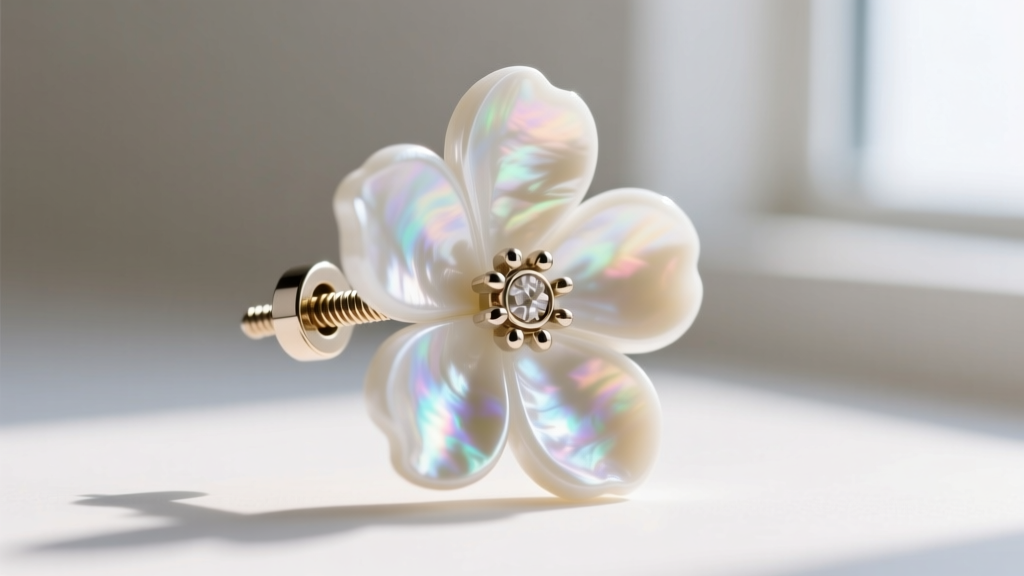
When a 20-gram earring hangs from a standard 1-millimeter puncture hole, gravity creates a concentrated shear force. Over time, this results in the 'cheese-cutter effect,' where the earring post slowly migrates downward, elongating and eventually tearing through the lobe tissue. To mitigate this, high-value heavy earrings must incorporate specific engineering solutions:
- Omega Clip Backs: These feature a hinged, curved wire that snaps over the post, distributing the earring's weight across the broader, fleshy back of the earlobe rather than relying solely on the piercing hole.
- Screw Backs with Friction Discs: A threaded post paired with a wide silicone or metal friction disc prevents the heavy floral head from drooping forward, keeping the center of gravity aligned with the ear.
- Ear Chains and Support Patches: For vintage or artisan porcelain florals exceeding 25 grams, utilizing an invisible ear chain (which hooks over the top of the ear) or adhesive silicone support patches is mandatory to preserve tissue health.
Gauge Thickness and Post Mechanics
The thickness of the metal post—measured in gauge—is paramount for heavy statement pieces. Standard fashion earrings utilize 20-gauge (0.81mm) or 18-gauge (1.02mm) wire. If a large, heavy white flower earring is fitted with a 20-gauge post, the metal will inevitably bend under the leverage of the oversized floral head. When evaluating value, inspect the post thickness. Premium heavy earrings should feature a 16-gauge (1.29mm) or even 14-gauge (1.63mm) post, often reinforced with a soldered junction box where the post meets the floral backing, ensuring the metal cannot snap at the stress point.
Assessing Craftsmanship: Enamel vs. Resin vs. Shell
Visual inspection can easily differentiate a $30 fast-fashion piece from a $200 artisan creation, provided you know where to look. The market is currently saturated with 'enamel' earrings that are, in reality, painted cold resin. True vitreous enamel involves fusing powdered glass to a metal substrate at extreme temperatures, resulting in a hard, luminous white that will never yellow. Resin, conversely, is a liquid polymer that cures at room temperature and is highly susceptible to UV degradation.
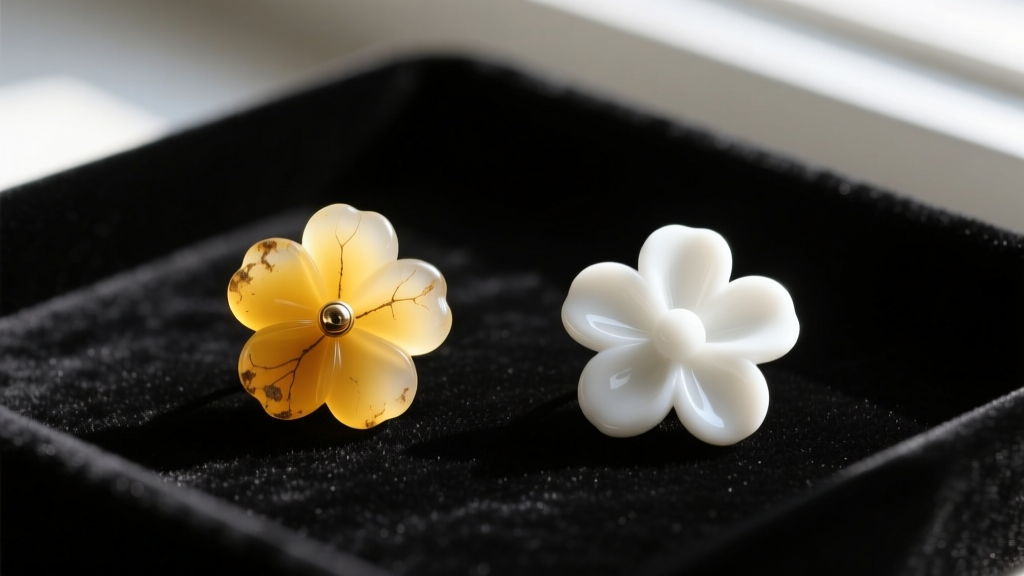
When evaluating mother-of-pearl or porcelain white flower earrings, examine the edge finishing. High-value MOP pieces feature a smooth, polished bezel or a micro-pavé metal border that protects the brittle edges of the shell from chipping against zippers or hairbrushes. Cheaply manufactured shell earrings are simply laser-cut and left with sharp, unsealed edges that will micro-fracture within weeks of daily wear. Furthermore, the hardware on premium pieces is mechanically riveted or laser-welded to the backplate, whereas budget options rely on industrial cyanoacrylate glues that degrade when exposed to the natural oils and acidity of human skin.
The Allergy Variable in Budget Jewelry
Budget-friendly white floral earrings often utilize base metals like brass or 'Tibetan silver' for their posts and backings. These alloys frequently contain high levels of nickel or cadmium. The American Academy of Dermatology notes that prolonged contact with nickel-containing alloys, exacerbated by perspiration, is a leading cause of allergic contact dermatitis. A true value assessment must factor in the cost of replacing cheap posts with hypoallergenic titanium or niobium wire, or simply investing in solid sterling silver or 14k gold posts from the outset to avoid painful lobe inflammation.
2026 Market Pricing: Where the Sweet Spots Are
Navigating the current jewelry market requires a strategic approach to budget allocation. If your budget is under $50, avoid faux-pearl or resin florals; instead, look for lightweight, hollow-stamped sterling silver daisies or lotuses that rely on negative space to create a 'big' visual impact without the material weight.
In the $80 to $150 range, the sweet spot for value emerges. Here, you can acquire solid brass or sterling silver pieces featuring genuine vitreous enamel or responsibly sourced, bezel-set MOP. At this tier, manufacturers typically invest in proper structural engineering, such as 16-gauge posts and secure lever-back or omega closures. For budgets exceeding $250, buyers should expect artisan-level craftsmanship, such as hand-carved porcelain paired with 14k gold hardware, or intricate cloisonné work where fine gold wires separate individual pools of white glass enamel.
Final Verdict: Maximizing Your Budget
Big white flower earrings are a powerful stylistic tool, but their value is entirely dependent on structural execution and material integrity. By prioritizing vitreous enamel or protected MOP, demanding 16-gauge posts for heavy pieces, and utilizing weight-distributing backings, you can acquire statement florals that remain pristine and comfortable for decades. Stop paying for disposable resins and plated base metals; invest in the biomechanics and material science that define true jewelry value.