Troubleshooting Double Earrings for Two Holes: Fit & Style
Solve fit, tension, and gauge issues with double earrings for two holes. Expert troubleshooting for connected jewelry and curated ear setups.
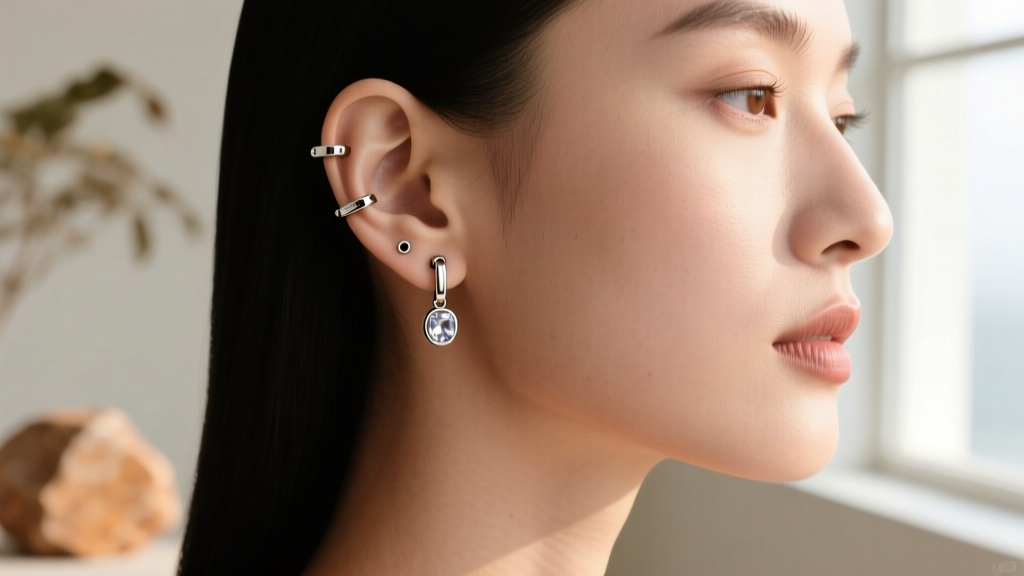
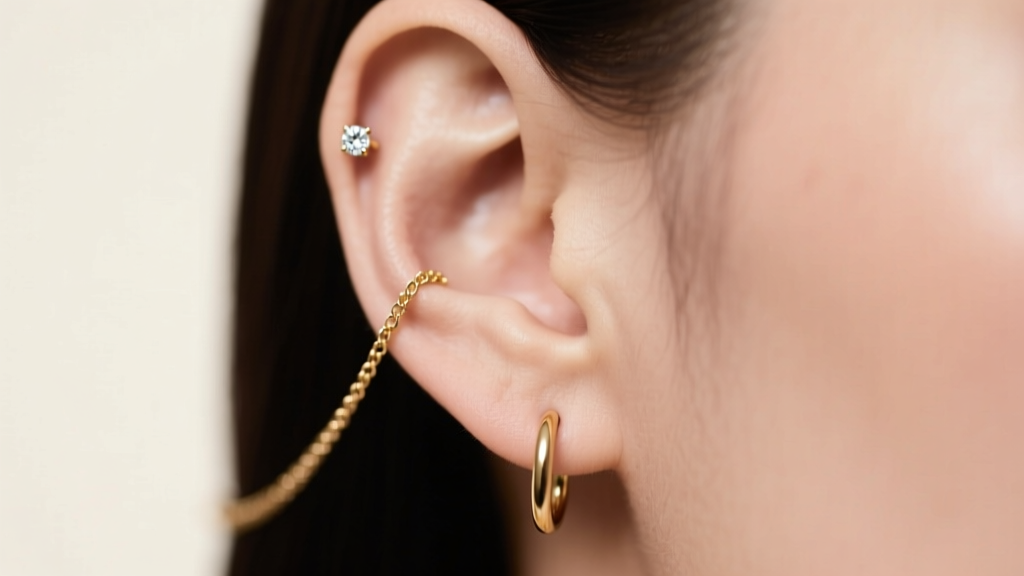
The curated ear trend has evolved significantly, moving beyond simple mismatched studs into highly engineered, multi-piercing setups. Among the most popular configurations are double earrings for two holes—a category that includes connected chain links, double-hole huggies, and rigid barbell setups designed to bridge the primary and secondary lobe piercings. While visually striking, these specialized pieces introduce a unique set of biomechanical and aesthetic challenges.
Unlike single studs that hang freely, connected double earrings lock two separate piercing channels into a single mechanical system. If the jewelry's dimensions do not perfectly match your unique anatomy, the result is chronic tension, migration, and aesthetic overcrowding. This guide provides deep-dive troubleshooting for the most common fit, gauge, and material failures associated with double-hole earrings.
The Anatomy of a Double Piercing Setup
To troubleshoot double earrings, you must first understand the standard anatomical baseline. When a professional piercer places a second lobe piercing, they typically measure a specific distance from the first hole to ensure both can accommodate standard jewelry without overlapping.
The average distance between the center of the first lobe hole and the center of the second lobe hole ranges from 5mm to 8mm. However, mass-produced double earrings for two holes are often manufactured with a fixed bridge length of 10mm to 12mm to accommodate a wider consumer base. This discrepancy is the root cause of 90% of tension-related complaints.
Troubleshooting Tension: Why Your Connected Earrings Hurt
If your connected double earrings cause a dull ache, redness, or visible pulling at the entry and exit points, you are experiencing mechanical tension. When a rigid bar or a short chain forces two piercings into an unnatural alignment, the body responds with inflammation. Over time, this chronic stress leads to migration—the body's process of slowly pushing the foreign object out through the skin.
The Spacing vs. Jewelry Length Matrix
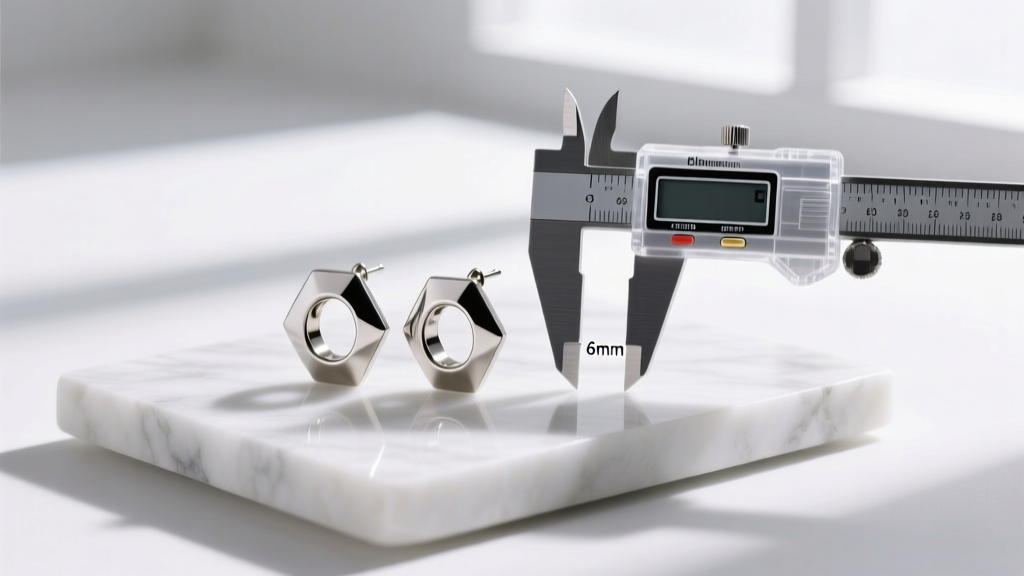
Use digital calipers to measure the distance between your piercing centers, then compare it to the bridge length of your jewelry. Refer to the troubleshooting matrix below:
| Your Piercing Spacing | Jewelry Bridge Length | Resulting Biomechanical Effect | Troubleshooting Solution |
|---|---|---|---|
| 6mm | 10mm (Standard Retail) | Severe pulling; jewelry bows outward; high migration risk. | Switch to a flexible chain link or custom-soldered rigid bar. |
| 8mm | 10mm | Mild tension; acceptable for healed lobes but may irritate during sleep. | Use a 9mm bridge or independent earrings that mimic the double look. |
| 10mm+ | 10mm | Perfect flush fit; zero tension on the fistula (piercing channel). | Maintain current setup; ideal for rigid double-hole hoops. |
The Cheese-Cutter Effect
A critical failure mode in connected double earrings is the 'cheese-cutter effect.' This occurs when a thin wire (typically 22-gauge or thinner) is used to bridge two holes that are slightly misaligned. The tension turns the thin wire into a blade that slowly slices through the earlobe tissue. To prevent this, always ensure the connecting bridge or chain is at least 18-gauge (1.02mm) in thickness, or opt for a multi-strand chain design that distributes the mechanical load across a wider surface area.
Solving the Gauge Mismatch Dilemma
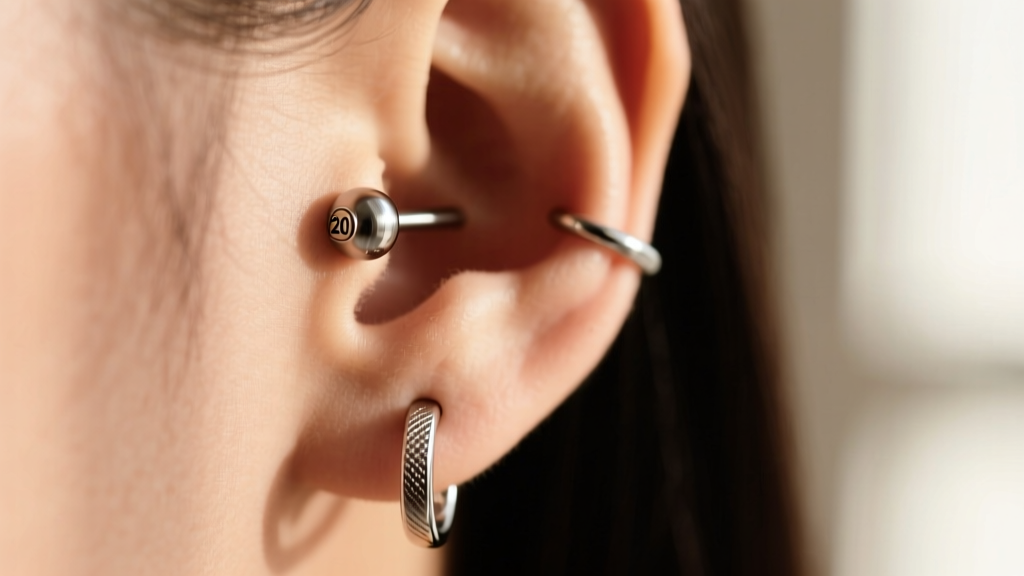
One of the most frustrating issues when shopping for double earrings for two holes is the gauge mismatch. In a standard double-lobe setup, the first hole is frequently pierced at 16-gauge (1.29mm) or 18-gauge (1.02mm) to support heavier statement pieces. The second hole, often done years later or with a standard piercing gun, is usually 20-gauge (0.81mm).
If you purchase a connected double earring that features a uniform 16-gauge wire across both posts, forcing it through the 20-gauge second hole will cause micro-tearing, blowouts, and immediate swelling.
- The Tapered Solution: Seek out artisan jewelers who craft tapered double earrings, featuring a thicker post for the primary hole and a finer 20g post for the secondary hole.
- The Independent Illusion: If custom jewelry is out of budget, abandon connected pieces. Instead, wear a 16g chain-link stud in the first hole and a 20g huggie hoop with a matching chain drape in the second. This creates the visual aesthetic of a connected piece without the mechanical lock.
- The Stretching Protocol: If you are committed to a specific 16g double earring, consult a professional piercer about slowly stretching the second hole using a glass taper and jojoba oil over a period of 4 to 6 weeks. Never force a thicker gauge through a smaller fistula.
Material Upgrades for Chronic Irritation
Because double earrings lock the earlobe into a fixed position, any sweat, dead skin cells, or allergens trapped between the jewelry and the skin cannot easily be flushed out by natural movement. This makes material purity non-negotiable.
According to the Association of Professional Piercers (APP), implant-grade materials are the only safe option for jewelry that creates continuous contact with multiple piercing channels, as surface-level polishing on cheap alloys will quickly degrade under the friction of a fixed bridge.
If you are experiencing persistent crusting or itching between your two holes, audit your jewelry materials against this hierarchy:
- ASTM F136 Implant-Grade Titanium: The gold standard. Completely nickel-free, highly polished, and lightweight enough to prevent gravity-induced dragging on the second hole.
- Niobium: An excellent, highly reactive-free alternative to titanium, though slightly heavier. Best for rigid double-hole hoops where weight distribution is balanced.
- 14k or 18k Solid Gold (Nickel-Free): Ensure the gold is alloyed with palladium or silver, not nickel. Soft 24k gold is unsuitable for connected pieces as it will bend under tension, altering the bridge length and causing sudden pulling.
Aesthetic Overcrowding: Visual Weight Distribution
Troubleshooting isn't purely physical; aesthetic imbalance is a common complaint with double-hole setups. When both holes are filled with heavy, oversized elements, the earlobe appears dragged down, and the jewelry competes for visual dominance.
To solve visual overcrowding, apply the Anchor and Satellite framework:
- The Anchor (Hole 1): This should hold the visual weight. Opt for a larger stud, a textured gold knot, or a gemstone cluster. The first hole has the thickest tissue and can support up to 4-5 grams of weight without stretching over time.
- The Satellite (Hole 2): This piece should complement, not compete. If using a connected chain, the second hole should feature a minimalist clicker hoop, a tiny bezel-set diamond, or a simple seamless ring. Keeping the second hole visually lightweight prevents the 'cluttered' look that plagues many curated ear projects.
Expert Maintenance & Cleaning Protocols
Connected double earrings create a micro-environment between the two holes that traps sebum and hair products. The American Academy of Dermatology (AAD) notes that trapped debris in piercing channels can lead to contact dermatitis and localized infections, particularly when jewelry restricts airflow.
Implement this weekly maintenance routine to keep your double-hole setup healthy:
- The Flush: Once a week, remove the connected earring. Use a sterile, pressurized saline wound wash to flush both channels. Do not use cotton swabs, as the fibers can snag on the internal tissue of the fistula.
- The Ultrasonic Bath: Because double earrings feature complex hinges, solder joints, and chain links, manual wiping is insufficient. Drop the jewelry into an ultrasonic cleaner with a few drops of mild, fragrance-free dish soap for 3 minutes to dislodge trapped sebum from the chain links.
- The Drying Protocol: Moisture trapped against the earlobe causes maceration (softening and breaking down of the skin). After cleaning your ears, use a hairdryer on the 'cool' setting to ensure the space between the two holes is completely dry before reinserting your jewelry.
By treating your double earrings for two holes as a precise biomechanical system rather than a simple accessory, you can eliminate pain, prevent tissue damage, and achieve a flawless, curated aesthetic that lasts a lifetime.


