One Earring on Right Ear Meaning: Asymmetry Styling & Buying Guide
Discover the one earring on right ear meaning, from historical codes to modern asymmetry. Read our expert buying guide for single ear pieces.

The Cultural Roots: One Earring on Right Ear Meaning
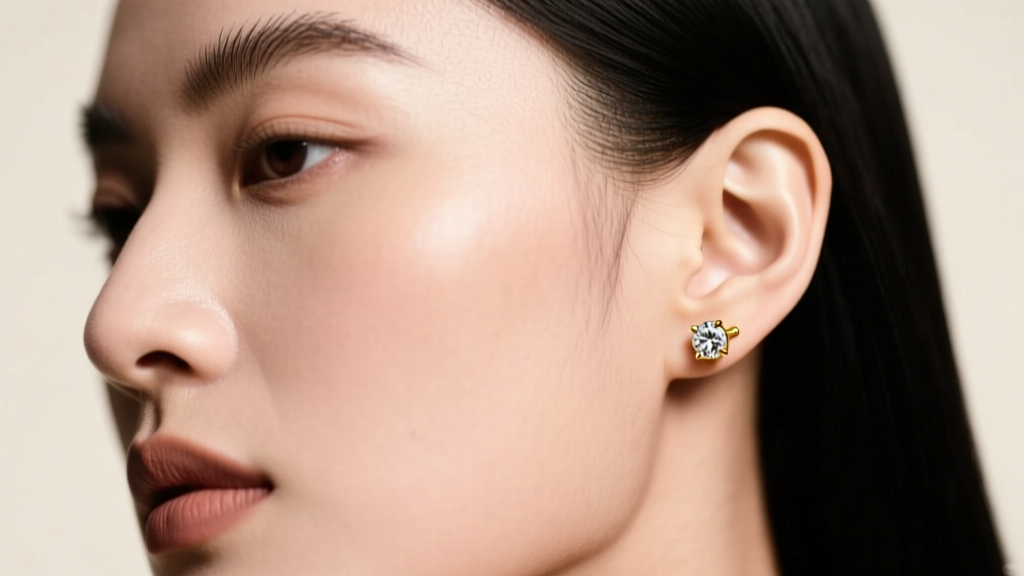
When researching the one earring on right ear meaning, you will inevitably uncover a fascinating timeline of cultural signaling, queer history, and modern fashion rebellion. In the 1970s through the late 1990s, a covert sartorial code emerged in Western cultures: a single piercing on the left ear was widely interpreted as a marker of heterosexuality, while a single earring on the right ear served as a quiet, recognizable signal of homosexuality. This 'gay earring' code was a vital, albeit informal, networking tool during eras of heavy social stigmatization, allowing individuals to identify one another safely.
However, as we navigate the fashion landscape of 2026, this rigid binary code is entirely obsolete. Today, the single right-ear earring has been reclaimed and redefined. It is no longer a sexual or romantic signifier, but rather a cornerstone of gender-fluid fashion, avant-garde ear curation, and asymmetrical styling. Wearing a single statement piece on the right ear is now a deliberate aesthetic choice that disrupts traditional symmetry, drawing the eye and allowing for highly personalized, unbalanced ear stacks that feel editorial and modern.
Why Buy a Single Earring? The Economics of Asymmetry
Historically, fine jewelry brands forced consumers to purchase earrings in pairs, regardless of whether the buyer intended to wear them symmetrically. This resulted in wasted capital and unused jewelry boxes filled with orphaned studs. The modern jewelry market has corrected this inefficiency. Buying single earrings—often referred to as 'singles' or 'solo pieces'—allows collectors to curate an asymmetrical aesthetic without paying for a matching counterpart they will never wear.
From a buying perspective, purchasing a single high-quality piece allows you to allocate your budget toward superior materials and larger gemstones. Instead of buying a matched pair of mediocre 14k gold studs, you can invest in one exceptional, high-carat diamond or rare opal single stud for your right ear, creating a focal point that commands attention.
Curating an Asymmetrical Ear Stack
When styling a single right-ear piece, the goal is intentional imbalance. If your right ear features a single, heavy 14k gold statement hoop or a large threadless gemstone cluster, your left ear should feature a tightly curated, multi-piercing stack of delicate, minimalist pieces. This contrast in visual weight—maximalism on one side, micro-stacking on the other—is the hallmark of high-end editorial styling.
The Technical Buyer’s Guide: What to Look for in Single Ear Pieces
Buying a single earring requires a deeper understanding of piercing anatomy and jewelry mechanics than buying a standard pair of friction-back studs. Whether you are shopping for a standard lobe or a complex cartilage placement, understanding gauge, threading, and material grades is non-negotiable.
Gauge Sizing and Post Thickness
The most common mistake buyers make when purchasing single cartilage or lobe pieces is guessing the gauge (thickness) of the post. Wearing a post that is too thin can cause the 'cheese-cutter effect,' where the jewelry slowly migrates and tears through the tissue. Conversely, forcing a thick post into a delicate piercing will cause immediate trauma. Below is the definitive gauge chart for single earring purchases, aligned with the APP Sizing Guide.
| Gauge | Thickness (mm) | Typical Placement | Best Single Style |
|---|---|---|---|
| 20G | 0.81mm | Standard Lobe | Delicate Solitaire Studs, Thin Wire Hoops |
| 18G | 1.02mm | Upper Lobe, Helix, Nostril | Small Clickers, Huggies, Minimalist Ends |
| 16G | 1.29mm | Conch, Tragus, Flat | Statement Threadless Ends, Chunky Hoops |
| 14G | 1.60mm | Daith, Industrial, Snug | Heavy Seam Rings, Large Captive Beads |
Threadless vs. Internally Threaded Ends
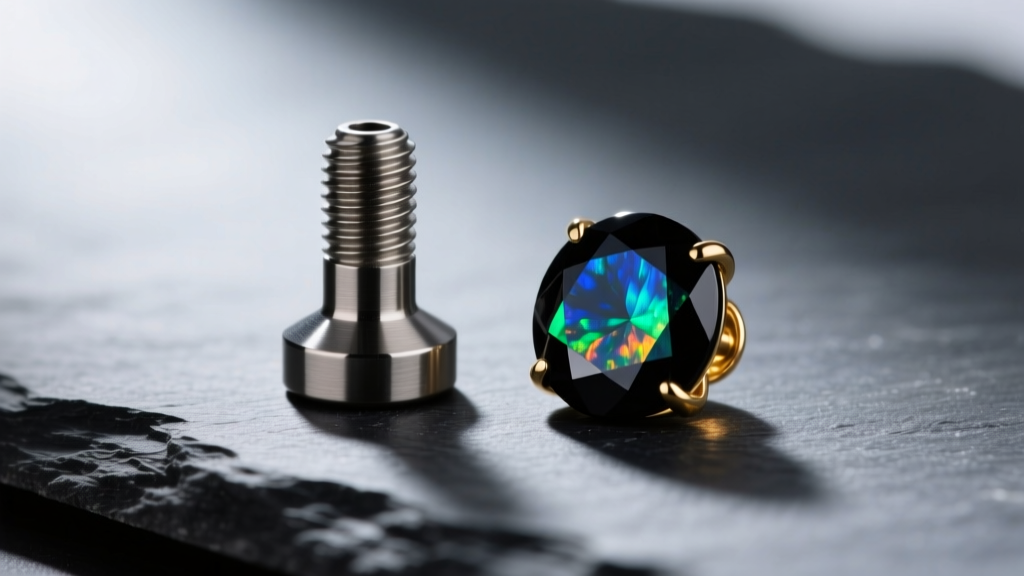
If you are buying a single earring for cartilage or an upper lobe piercing, you must understand the difference between threading systems. Avoid externally threaded jewelry at all costs; the screw threads on the post will damage your fistula (the piercing channel) during insertion.
Internally Threaded: The screw mechanism is inside the post, and the decorative end has a smooth pin. This is excellent for security but requires precise alignment to screw in, which can be frustrating when changing a single earring by yourself.
Threadless (Push-Pin): The industry standard for high-end single earrings. The decorative end features a slightly bent pin that pushes into the hollow post, creating tension-based friction. Threadless systems allow you to buy one high-quality titanium post and swap out dozens of single decorative ends (from tiny diamonds to large opals) without ever removing the base post from your ear. This modularity is the ultimate buying hack for single-earring collectors.
Material Grades for Solo Statement Pieces
When wearing a single, prominent earring, the material is constantly exposed to environmental factors and hair products. Furthermore, because it is a focal point, you want a material that retains its luster without tarnishing. According to the Association of Professional Piercers (APP), only specific metallurgical grades are safe for long-term wear.
- ASTM F-136 Implant-Grade Titanium: The absolute gold standard for the base post. It is entirely nickel-free, lightweight, and will not trigger contact dermatitis. Always ensure your single earring's post is made of this specific alloy.
- Solid 14k or 18k Gold: Ideal for the decorative ends or solid lobe studs. Avoid gold-plated or gold-vermeil single earrings, as the friction of daily wear will quickly strip the plating, revealing the reactive brass or copper base metal beneath.
- Niobium: An excellent, budget-friendly alternative to titanium for single hoops and rings. It is highly malleable, allowing piercers to customize the fit of a single seam ring, and it is completely hypoallergenic.
Where to Buy: Brands Specializing in Single Earrings
The market for single earrings is divided into two distinct categories: fine jewelry singles and modular body jewelry. Knowing which category serves your specific piercing placement is crucial for a successful purchase.
Luxury Body Jewelry (Modular System)
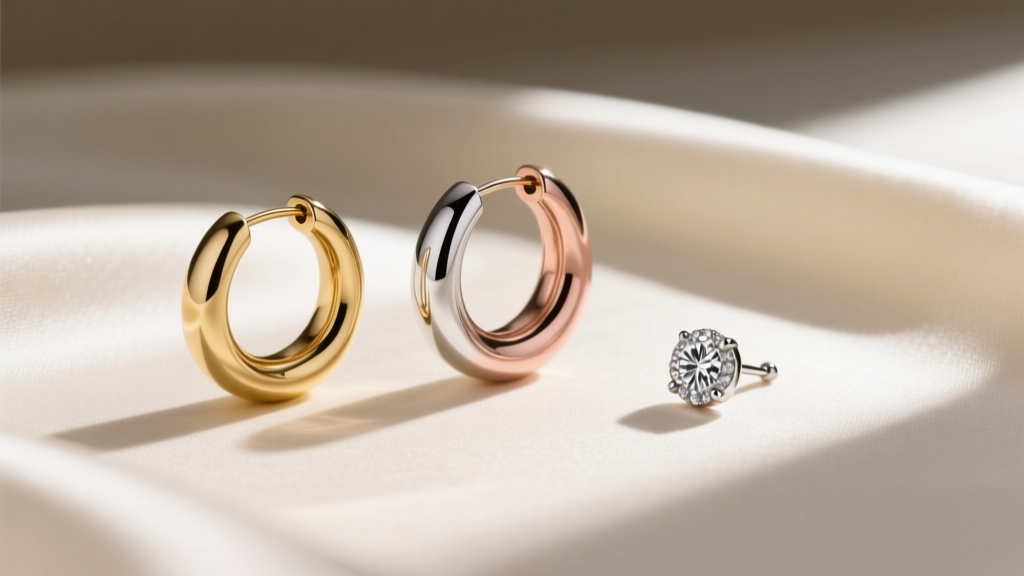
For cartilage, conch, or tragus placements, you need brands that sell posts and ends separately, allowing for true customization. BVLA (Body Vision Los Angeles) and Anatometal are the pinnacle of this space. A single 16G titanium post from Anatometal costs around $30-$45, while a single BVLA threadless end featuring a genuine sapphire or diamond cluster can range from $150 to over $800. This modular approach means your initial investment is higher, but expanding your collection of single ends becomes remarkably affordable over time.
Fine Jewelry Singles (Lobe & Helix)
For standard lobes or delicate helix placements where a traditional butterfly back or clicker is preferred, brands like Maria Tash and Mejuri lead the market. Maria Tash is famous for popularizing the 'curated ear' and sells almost all of her diamond and gemstone studs as singles, with prices typically ranging from $250 for simple bezel-set diamonds to over $2,000 for elaborate, multi-stone single statement pieces. Mejuri offers accessible 14k gold singles, perfect for building an asymmetrical lobe stack on a budget, with prices hovering between $80 and $250.
Final Verdict: Styling Your Right Ear Solo
The one earring on right ear meaning has evolved from a secretive historical code into a bold declaration of modern, asymmetrical style. When buying a single earring, prioritize the mechanics of the jewelry just as much as the aesthetics. Invest in an ASTM F-136 titanium threadless post for unparalleled comfort and security, and pair it with a solid 14k or 18k gold decorative end that reflects your personal aesthetic. By understanding gauge sizes, avoiding plated metals, and embracing the visual tension of an unbalanced ear stack, your single right-ear earring will transform from a simple accessory into a masterclass in editorial styling.


