Birth Flower Earrings: The Ultimate Metal & Material Guide
Discover which metals best preserve the intricate details of birth flower earrings. Compare durability, pricing, and skin safety for your floral studs.

The Anatomy of Birth Flower Earrings: Why Material Dictates Detail
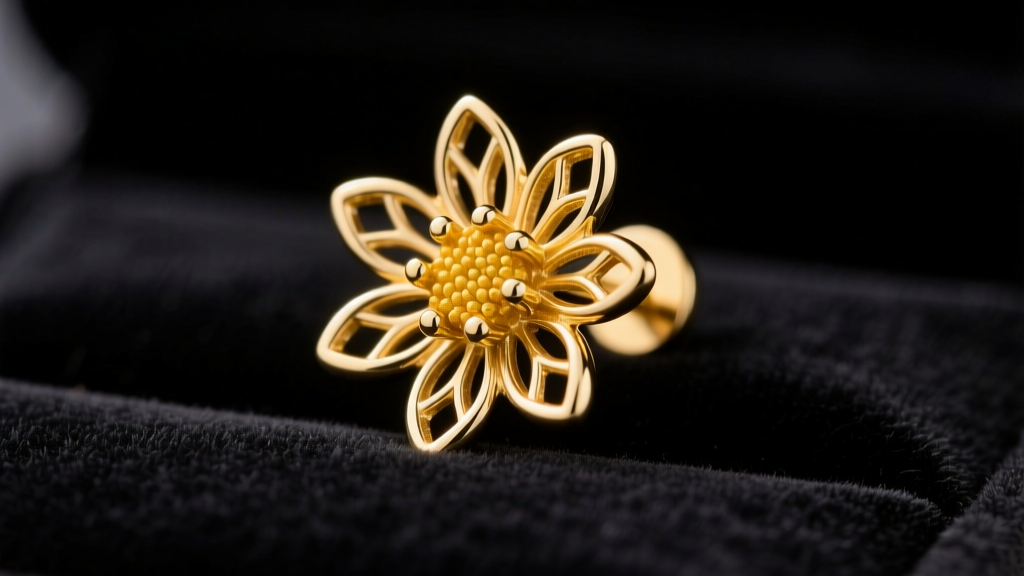
Birth flower earrings have surged in popularity as deeply personalized, wearable art. Whether you are wearing the ruffled carnation of January, the delicate lily of the valley for May, or the complex aster for September, these botanical designs rely heavily on intricate petal definition, deep undercuts, and crisp veining. However, the structural success of these miniature floral sculptures is entirely dependent on the base metal chosen. Unlike simple geometric studs, birth flower earrings feature thin, protruding edges and recessed centers that interact differently with various alloys. A metal that is too soft will result in bent petals and lost detail, while a metal that is too hard may resist the nuanced curves required for an organic floral cast. Understanding the metallurgical properties of your jewelry is essential for balancing aesthetic fidelity, long-term durability, and biocompatibility.
Material Breakdown: From Sterling Silver to Implant-Grade Titanium
925 Sterling Silver & Rhodium Plating
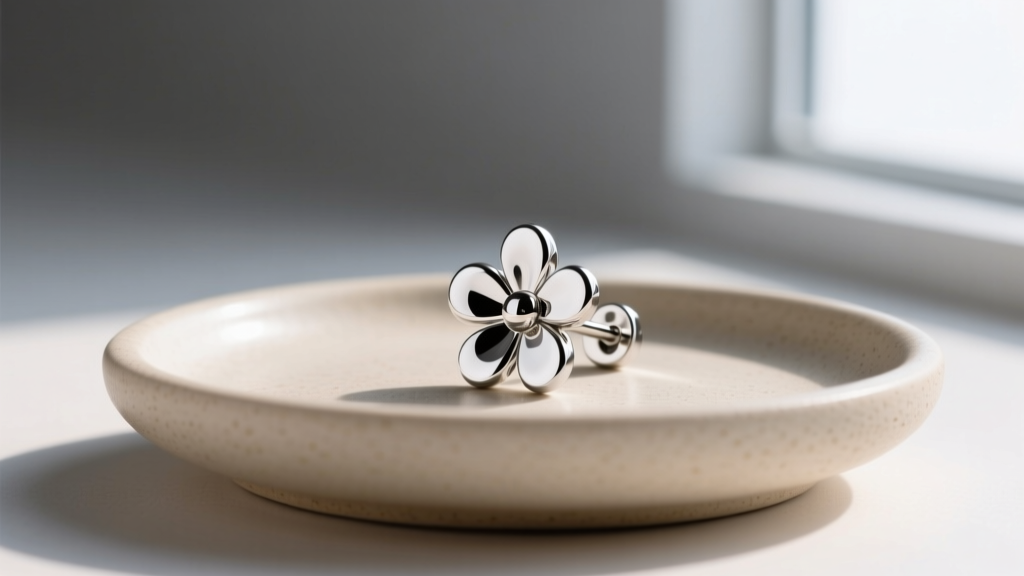
Sterling silver (92.5% pure silver, 7.5% copper) is the most common entry point for birth flower earrings due to its excellent casting properties and accessible price point ($30–$80). The copper alloy provides enough hardness to capture the fine veining of a March daffodil or a June rose via lost-wax casting. However, the deep crevices inherent in floral designs trap moisture and sulfur, accelerating localized tarnishing. To combat this, high-quality silver floral studs are heavily plated with rhodium. While rhodium provides a bright, tarnish-resistant shield, it will eventually wear away on the high-friction petal tips, requiring periodic re-plating to maintain the crisp, white-metal contrast.
Solid 14k vs. 18k Gold
When investing in solid gold birth flower earrings ($250–$800+), the karat weight drastically alters the structural integrity of the design. According to the Gemological Institute of America, pure 24k gold is far too malleable for jewelry. 18k gold (75% pure gold) offers a rich, warm hue that beautifully complements the organic nature of floral motifs, but its relative softness means that thin, protruding petal tips (like those on a December holly or September aster) are prone to bending if snagged on clothing. Conversely, 14k gold (58.5% pure gold) is alloyed with higher concentrations of copper, silver, and zinc. This increased hardness makes 14k gold the superior choice for intricate, laser-sharp floral details and secure gemstone settings, ensuring that micro-pave diamond 'pistils' remain firmly anchored.
Gold Vermeil vs. Standard Plating
For budget-conscious buyers ($40–$120), gold vermeil offers a middle ground. By definition, vermeil requires a sterling silver base coated with at least 2.5 microns of solid gold. This thickness is crucial for birth flower earrings, as the textured surface area of a floral design experiences more friction against hair and skin than a smooth dome. Standard gold-plated brass or copper bases should be avoided for floral studs; the thin plating wears quickly in the recessed petal grooves, revealing the base metal and frequently triggering contact dermatitis due to nickel or zinc exposure, a common issue detailed by the Mayo Clinic.
Implant-Grade Titanium (ASTM F136)
For those with severe metal sensitivities, implant-grade titanium (ASTM F136) is the gold standard, as endorsed by the Association of Professional Piercers. Titanium is exceptionally lightweight and entirely nickel-free. However, its extremely high melting point and reactivity with oxygen make traditional lost-wax casting nearly impossible. Therefore, titanium birth flower earrings are typically laser-cut from sheet metal or CNC machined. This manufacturing limitation means titanium floral designs tend to be flatter, relying on 2D silhouettes and laser-etched surface details rather than the deep, 3D domed cups found in cast gold or silver. Pricing generally ranges from $60 to $150.
Detail Resolution & Casting Limitations by Metal
The manufacturing method used for each metal directly impacts the 'resolution' of the birth flower. Lost-wax casting allows for 3D organic shapes but can suffer from porosity or soft edges in lower-quality alloys. Laser cutting provides razor-sharp outlines but lacks depth. Below is a comparative framework to help you choose the right material for your specific birth flower design.
| Metal / Material | Detail Resolution | Tarnish / Wear Risk | Avg. Price Range | Best Floral Style |
|---|---|---|---|---|
| 14k Solid Gold | Exceptional (Crisp cast edges) | Very Low | $250 - $800+ | Complex 3D flowers (Roses, Peonies) |
| 18k Solid Gold | High (Slightly softer edges) | Very Low | $350 - $1,000+ | Smooth, rounded petals (Tulips, Lilies) |
| 925 Sterling Silver | High (Excellent cast capture) | High (Requires Rhodium) | $30 - $80 | Intricate botanicals (Ferns, Daisies) |
| Gold Vermeil | High (Inherits silver cast) | Moderate (Wears in grooves) | $40 - $120 | Medium-relief flowers (Marigolds) |
| ASTM F136 Titanium | Sharp (2D laser-cut precision) | None (Highly durable) | $60 - $150 | Silhouette outlines (Sunflowers, Poppies) |
Gauge Sizing and Post Thickness for Floral Studs
An often-overlooked aspect of material properties is how metal hardness dictates post gauge (thickness). Standard lobe piercings accommodate 20-gauge (0.81mm) or 18-gauge (1.02mm) posts. Because sterling silver and high-karat gold are relatively soft, a 20-gauge silver post supporting a wide, heavy floral head (like a 10mm July delphinium) is highly susceptible to bending if slept on. For soft metals, opting for an 18-gauge post provides necessary structural rigidity.
If you are placing a birth flower earring in a cartilage piercing (such as the helix or tragus), the standard gauge is 16-gauge (1.29mm). A 16-gauge post is quite thick relative to delicate floral designs. If you choose a 16-gauge titanium or steel floral stud, ensure the flower head is at least 7mm to 8mm in diameter; otherwise, the thick post will visually overpower the flower, and the heavy metal base will cause the earring to droop forward in the ear. Harder metals like 14k gold or surgical steel can support wider flower heads on thinner 18g posts without bending, offering a more delicate visual profile.
Enamel and Gemstone Accents: Enhancing the Petals
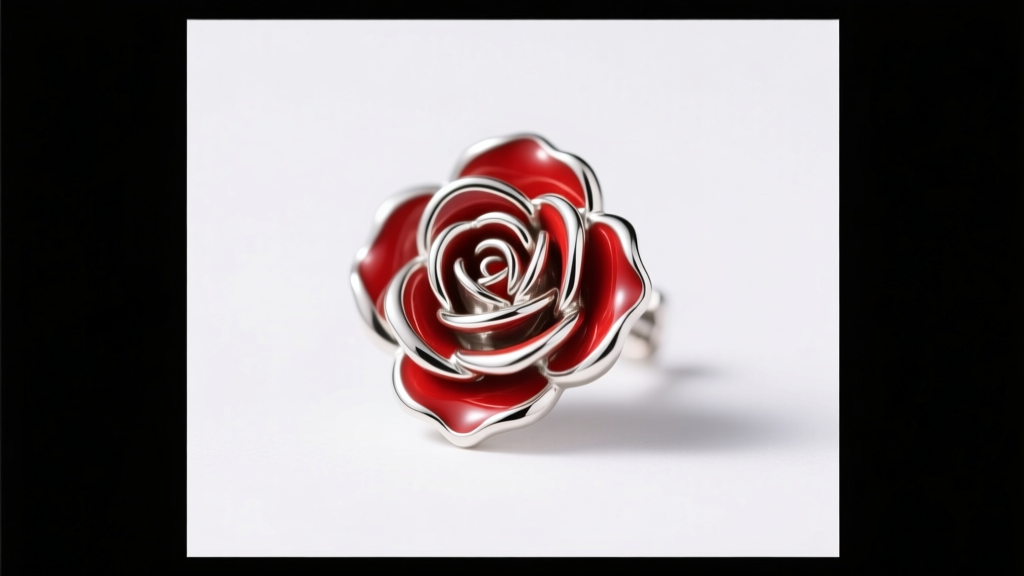
To elevate the botanical realism of birth flower earrings, jewelers frequently incorporate enamel or micro-pave gemstones. The base metal you choose dictates which enamel techniques are viable. Vitreous (hot) enamel requires firing glass powder at temperatures exceeding 1400°F. This extreme heat limits vitreous enamel applications strictly to high-melting-point metals like solid gold or fine silver. Vitreous enamel is incredibly durable, scratch-resistant, and will not yellow over time, making it ideal for heirloom-quality birth flower pieces.
Conversely, cold enamel (a specialized epoxy resin) cures at room temperature and can be applied to sterling silver, vermeil, and even titanium. Cold enamel allows for vibrant, translucent color gradients—perfect for mimicking the pink-to-white ombré of an October cosmos or the deep purple of a February violet. However, cold enamel is softer and more prone to micro-scratches. When cleaning cold enamel floral earrings, avoid ultrasonic cleaners and harsh chemical dips, which can cloud the resin and cause it to lift from the metal recesses.
Care and Maintenance to Preserve Intricate Engravings
The complex topography of birth flower earrings creates micro-crevices that trap sebum, dead skin cells, and cosmetic residues. Over time, this buildup dulls the contrast between the raised petal edges and the recessed background. To maintain the metallurgical shine and structural integrity of your floral earrings, adhere to the following maintenance protocol:
- Daily Wiping: Use a dry, lint-free microfiber cloth to gently buff the surface after wear, removing acidic sweat that accelerates tarnish in silver and copper-alloyed gold.
- Deep Cleaning: Mix a few drops of mild, phosphate-free dish soap in lukewarm water. Use an extra-soft baby toothbrush to gently sweep along the petal veins and the pistil center. Never use stiff-bristled brushes, as they will scratch high-polish gold and strip rhodium plating from silver.
- Chemical Avoidance: Never use silver dip solutions on oxidized or antiqued birth flower earrings. Many jewelers intentionally apply a dark liver of sulfur patina to the recessed areas of a floral design to create depth and shadow. Silver dips will strip this patina, leaving the earring looking flat and one-dimensional.
Expert Tip: If your birth flower earring features a micro-pave diamond center (representing the flower's seeds or pistil), never clean it in an ultrasonic machine. The high-frequency vibrations can easily shake loose the tiny stones from their delicate shared-prong settings. Stick to manual, gentle brushing with soapy water to keep the diamonds sparkling without risking structural failure.


