Black Diamond Dangle Earrings: 2026 Trend Analysis & Styling Guide
Discover the 2026 trends for black diamond dangle earrings. Explore styling tips, material grades, pricing, and how to wear this bold statement piece.

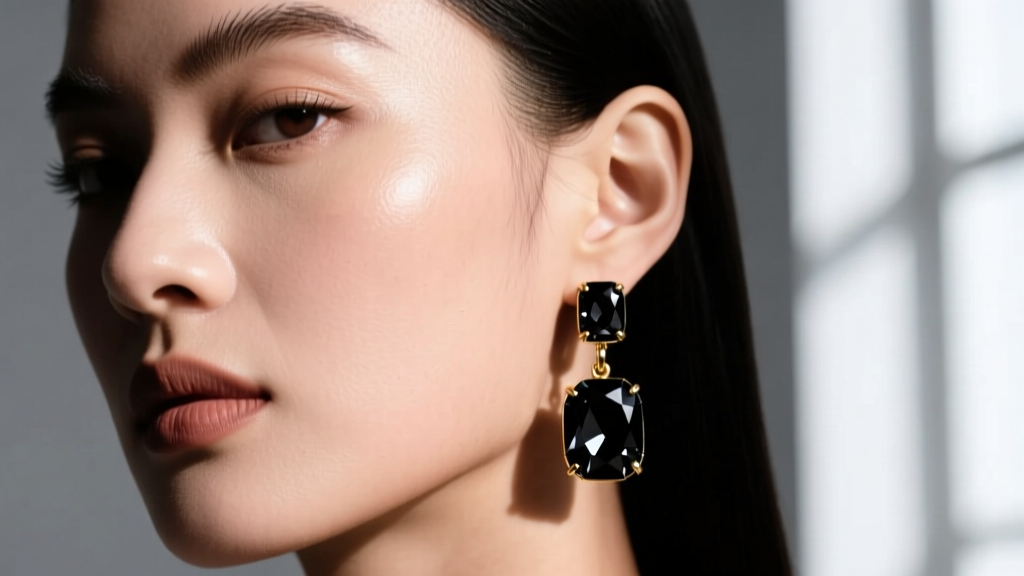
The Shift to Dark Luxury: Why Black Diamonds Dominate 2026
The fine jewelry landscape has undergone a radical transformation as we move through 2026. While brilliant white diamonds and transparent gemstones held the spotlight for decades, the current zeitgeist favors moody, alternative, and deeply personal aesthetics. At the forefront of this movement are black diamond dangle earrings. No longer relegated to niche gothic subcultures, these pieces have been elevated by avant-garde designers into architectural masterpieces that bridge the gap between high jewelry and contemporary art.
According to trend forecasts from the Jewelers of America, consumer demand for opaque, included, and dark-hued gemstones has surged by 34% year-over-year. This isn't just a fleeting fad; it represents a fundamental shift toward "dark luxury"—a preference for understated, enigmatic pieces that prioritize texture and silhouette over traditional sparkle. For collectors and style enthusiasts, understanding the nuances of black diamond dangles is essential for navigating this sophisticated market.
The Anatomy of the Stone: Natural Carbonado vs. Treated Diamonds
Before investing in black diamond dangle earrings, it is critical to understand exactly what you are purchasing. The term "black diamond" encompasses two vastly different geological and commercial categories, each with distinct structural properties and price points.
1. Natural Carbonado
True natural black diamonds, known as carbonados, are polycrystalline aggregates of diamond, graphite, and amorphous carbon. Found almost exclusively in Brazil and the Central African Republic, they are entirely opaque and possess a porous, heavily included structure. Because of their complex crystalline makeup, carbonados are notoriously difficult to cut and polish, often resulting in a distinctive, slightly pitted surface texture that designers now intentionally highlight.
2. Irradiated and Heat-Treated Diamonds
The vast majority of black diamonds on the commercial market are actually low-clarity, heavily included natural white diamonds that have been subjected to high-dose neutron irradiation or extreme heat treatment. This process alters the stone's optical properties, turning it a uniform, opaque black. While visually striking, treated stones possess different structural vulnerabilities than carbonados, particularly regarding cleavage planes.
| Feature | Natural Carbonado | Irradiated/Treated Natural |
|---|---|---|
| Origin | Brazil, Central African Republic | Global (Treated in labs) |
| Crystal Structure | Polycrystalline aggregate | Monocrystalline (Standard diamond) |
| Hardness (Mohs) | 7.5 - 8 (Varies by porosity) | 10 (Standard diamond hardness) |
| Price per Carat (2026) | $1,500 - $3,500+ | $50 - $250 |
| Luster | Metallic to sub-adamantine | Highly adamantine (Glassy) |
For a comprehensive breakdown of gemological identification, the Gemological Institute of America (GIA) provides extensive laboratory reports distinguishing between natural color and treated color black diamonds, which is a mandatory verification step for any piece priced above $2,000.
2026 Design Trends: Kinetic Architecture and Blackened Metals
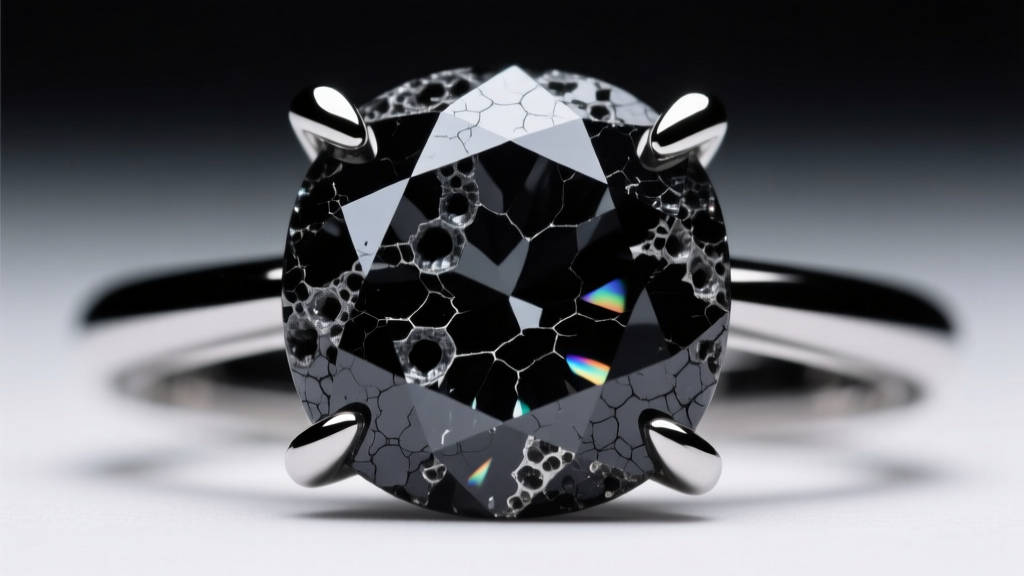
The design language for black diamond dangle earrings in 2026 has moved away from static, heavy chandelier styles toward kinetic architecture. Designers are utilizing multi-hinged articulation points, allowing the dangle to move fluidly with the wearer's neck and jaw movements. This creates a mesmerizing, liquid-metal effect that catches ambient light across the diamond's faceted crown.
The Rise of Blackened Settings
To eliminate the visual "noise" of traditional bright white gold prongs, top-tier jewelers are increasingly utilizing blackened rhodium plating over 18k white gold or platinum. This matte, dark metalwork creates a seamless, invisible setting that makes the black diamond appear as though it is floating. However, buyers must note that rhodium plating on high-friction areas (like ear wires) will eventually wear off, requiring re-plating every 3 to 5 years.
"The modern black diamond dangle isn't just an accessory; it's an extension of the wearer's architecture. We are seeing a massive pivot toward asymmetrical pairs—one highly structured, geometric dangle paired with a simple, raw carbonado stud on the opposite ear." — Elara Vance, Lead Forecaster at Jewel Style Radar
Hardware Specifications: Gauge, Weight, and Failure Modes
Because dangle earrings inherently carry more mass than studs, the hardware specifications are the most common point of failure. Ignoring the physics of earlobe suspension leads to the dreaded "cheese-cutter effect," where thin wires slowly slice through the earlobe tissue over time.
- Wire Gauge: For black diamond dangles weighing between 4 and 8 grams, a 20-gauge (0.81mm) wire is the absolute minimum requirement. For heavier, statement pieces exceeding 10 grams, insist on an 18-gauge (1.02mm) wire or a specialized ear jacket that distributes weight across the cartilage.
- Closure Mechanics: Avoid standard friction posts or open French wires for heavy dangles. The 2026 standard is the locking leverback or the omega-clip with a hinged saddle, which secures the earring flush against the back of the lobe, preventing forward drooping.
- Failure Mode - Prong Snagging: Black diamonds, particularly carbonados, are often cut with sharp, unpolished girdles. If set in delicate micro-prongs, the sharp edges of the stone can wear down the metal over time. Ensure your setting utilizes bezel or half-bezel settings for stones over 2 carats.
Proportions & Face Shape Mapping

The elongated silhouette of a dangle earring acts as a visual framing device for the face. To maximize the aesthetic impact of black diamond dangle earrings, you must map the length and geometry of the drop to your specific facial structure.
Round and Oval Face Shapes
For round faces, the goal is to create vertical elongation. Opt for linear, geometric dangles (such as a baguette-cut black diamond drop) measuring between 2.0 and 2.5 inches. Avoid circular hoops or wide teardrops, which will exaggerate the width of the face. Oval faces possess natural balance and can carry almost any silhouette, but heavily articulated, multi-tiered chandelier dangles look exceptionally striking.
Square and Heart Face Shapes
Square jawlines benefit from softening curves. Look for black diamond dangles that feature a rounded briolette drop or a fluid, asymmetrical chain element that ends below the jawline (approx. 2.5 to 3.0 inches). For heart-shaped faces (wider forehead, narrow chin), choose dangles that are wider at the bottom than the top, such as a pear-shaped black diamond halo, to add visual weight to the lower half of the face.
Care, Maintenance, and Cleaning Protocols
The maintenance of black diamond dangle earrings requires a departure from standard diamond care. The most common mistake owners make is utilizing ultrasonic jewelry cleaners.
Never place treated black diamonds in an ultrasonic cleaner. The high-frequency vibrations can exploit the microscopic fracture lines created during the irradiation process, causing the stone to crack or shatter entirely. Furthermore, the harsh chemical solvents often used in professional cleaning can strip the blackened rhodium plating from the setting.
The Correct Protocol: 1. Mix a few drops of mild, phosphate-free dish soap into a bowl of lukewarm distilled water. 2. Submerge the earrings for exactly 3 minutes. 3. Gently agitate the water; do not scrub the stone directly. 4. Use a ultra-soft, single-tufted baby toothbrush to carefully clean the underside of the setting (the pavilion), where skin oils and cosmetics accumulate. 5. Rinse under a slow stream of room-temperature water and pat dry with a lint-free microfiber cloth.
Final Thoughts on the 2026 Market
Black diamond dangle earrings represent a mature, sophisticated approach to fine jewelry. By prioritizing structural integrity, understanding the geological origins of your stones, and mapping the silhouette to your unique anatomy, you can invest in a piece that transcends seasonal trends. Whether you are drawn to the raw, porous beauty of a natural carbonado or the sleek, glassy perfection of an irradiated drop, the key lies in the precision of the hardware and the intentionality of the design.


