Choosing a Black Earring: Material Properties & Durability
Compare black earring materials like DLC titanium, black rhodium, and oxidized silver. Discover durability, allergy risks, and care tips.

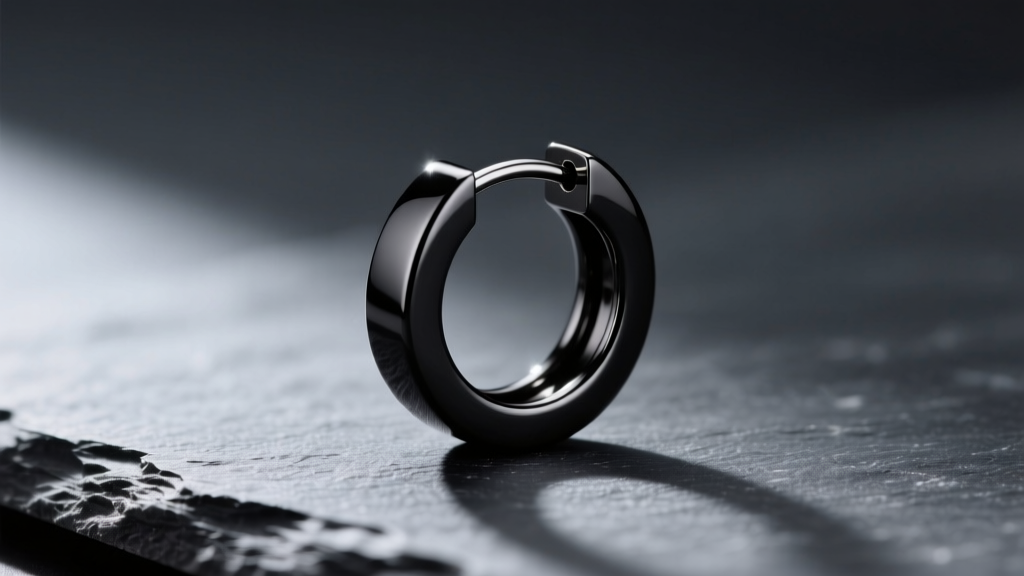
The search for the perfect black earring often ends in disappointment when buyers prioritize aesthetics over material science. While a dark, moody finish looks striking against the skin, not all black jewelry is created equal. In 2026, the market is flooded with everything from cheap painted alloys to advanced aerospace-grade ceramics. Understanding the underlying metallurgy and surface treatments is critical for avoiding contact dermatitis, premature fading, and structural failure.
Whether you are looking for a sleek 16-gauge cartilage hoop or an elegant 18-gauge lobe stud, the longevity of your jewelry depends entirely on how the black color is achieved. This guide breaks down the exact material properties, hardness scales, and biocompatibility of the most common black earring finishes available today.
The Anatomy of a Black Earring: Surface vs. Solid
Before diving into specific metals, it is vital to distinguish between surface treatments and solid materials. A surface-treated earring relies on a microscopic layer of dark material applied over a base metal. Once this layer wears away, the base metal is exposed. Solid black materials, on the other hand, are dark all the way through, meaning scratches and friction will not reveal a different color underneath.
Surface treatments include electroplating (like black rhodium), chemical oxidation (like oxidized silver), and Physical Vapor Deposition (PVD). Solid black options are typically limited to advanced ceramics and specific gemstones. Your choice between the two should be dictated by your skin sensitivity, the piercing placement, and your willingness to perform ongoing maintenance.
Deep Dive: Top 4 Black Earring Materials
1. DLC-Coated Implant-Grade Titanium (Solid/Surface Hybrid)
Diamond-Like Carbon (DLC) is an advanced surface coating applied via Physical Vapor Deposition (PVD) in a vacuum chamber. When applied to ASTM F136 implant-grade titanium, it creates a black earring that is virtually indestructible. The DLC layer bonds at a molecular level, achieving a Mohs hardness of around 9 (just below a diamond). This means it will not scratch from daily wear, hair brushing, or accidental bumps.
- Biocompatibility: Exceptional. The underlying titanium is nickel-free and highly hypoallergenic, making it the gold standard for fresh piercings and cartilage placements.
- Failure Mode: While the coating itself won't wear off from friction, extreme blunt force trauma can chip the underlying titanium, taking the DLC layer with it.
- Pricing: Premium. Expect to pay $60 to $150+ for high-quality, internally threaded DLC titanium pieces from reputable body jewelry brands.
2. Black Rhodium Plating (Surface Treatment)
Black rhodium is achieved by electroplating a mixture of rhodium and other darkening agents (often ruthenium) onto a base of white gold or sterling silver. It offers a deep, luxurious, gunmetal-black shine that is highly sought after in fine jewelry. However, plating thickness is the critical variable here. Most commercial black rhodium plating is only 0.5 to 1.0 microns thick.
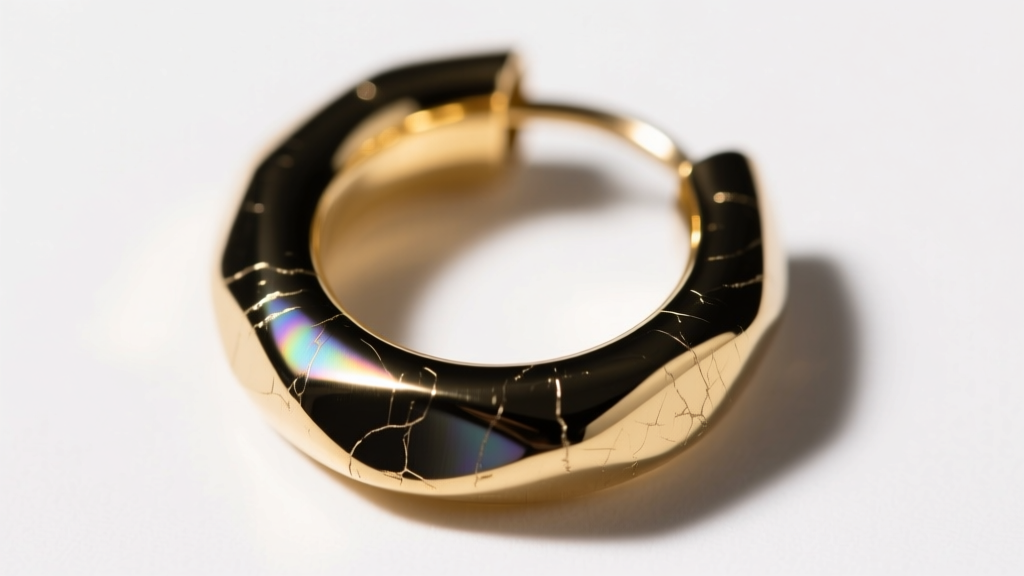
- Biocompatibility: Moderate to High. Rhodium is hypoallergenic, but as the plating wears thin, the underlying alloy may expose nickel or copper, triggering contact dermatitis in sensitive individuals.
- Failure Mode: Friction wear. The post, the clutch backing, and the inner curve of hoops will inevitably rub down to the base metal within 6 to 18 months of daily wear.
- Maintenance: Requires professional replating every few years, which typically costs $40 to $80 per piece.
3. Oxidized 925 Sterling Silver (Chemical Treatment)
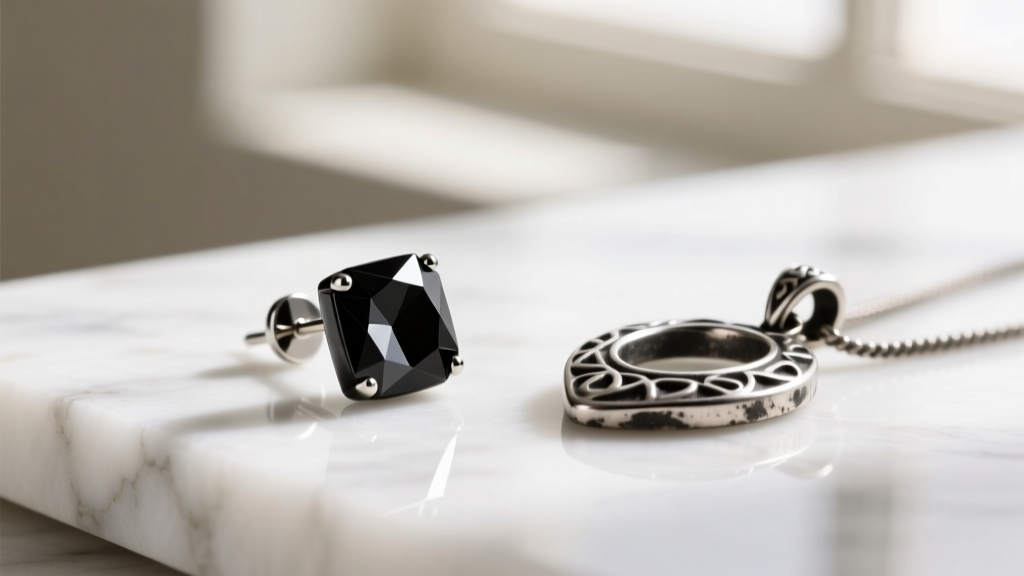
Oxidation is a deliberate chemical process where sterling silver is exposed to liver of sulfur (potassium sulfide) to create a layer of black silver sulfide on the surface. This technique is heavily used in vintage, gothic, and artisan jewelry designs to highlight intricate textures and engravings.
- Biocompatibility: Good for healed lobes, but not recommended for unhealed cartilage. The porous nature of the oxidation can harbor bacteria, and the copper content in 925 silver can cause green skin discoloration in acidic sweat environments.
- Failure Mode: The oxidation actively rubs off onto skin and clothing. Furthermore, aggressive polishing will completely strip the black finish, returning the earring to bright silver.
- Pricing: Highly accessible, usually ranging from $25 to $80.
4. Black Zirconia Ceramic (Solid Material)
Black zirconia (Zirconium Dioxide, ZrO2) is a high-tech ceramic that is solid black throughout its entire structure. According to material studies referenced by the Gemological Institute of America, advanced ceramics offer incredible scratch resistance and a permanent, fade-proof color. It is incredibly lightweight, making it ideal for large, dramatic drop earrings that won't stretch the earlobe.
- Biocompatibility: 100% hypoallergenic and bio-inert. It contains zero metal ions.
- Failure Mode: Brittleness. While it boasts a Mohs hardness of 8.5, it lacks tensile strength. Dropping a ceramic earring on a hard tile floor will likely shatter it.
- Pricing: Mid-to-high range, typically $50 to $120 depending on the brand and setting.
Material Comparison Matrix
To make an informed purchasing decision, compare the physical properties and real-world performance of these materials side-by-side. The data below reflects industry standards for fine and body jewelry as of 2026.
| Material | Core / Base | Mohs Hardness | Hypoallergenic? | Avg. Price Range | Primary Failure Mode |
|---|---|---|---|---|---|
| DLC Titanium | ASTM F136 Titanium | ~9.0 | Yes (Excellent) | $60 - $150+ | Chipping from blunt impact |
| Black Rhodium | White Gold / Silver | ~4.5 | Yes (Until worn) | $120 - $400+ | Friction wear exposing base |
| Oxidized Silver | 925 Sterling Silver | 2.5 - 3.0 | Moderate | $25 - $80 | Polishing / Friction rub-off |
| Zirconia Ceramic | ZrO2 (Solid) | 8.5 | Yes (Excellent) | $50 - $120 | Shattering if dropped |
| Black Enamel | Gold / Brass | ~3.0 | Varies by base | $40 - $200 | Chipping and heat damage |
Piercing Placement: Lobe vs. Cartilage Considerations
The anatomy of your piercing dictates which black earring material you should choose. Cartilage tissue is notoriously avascular (lacking direct blood supply) and highly prone to irritation bumps and hypertrophic scarring if subjected to allergens or micro-tears from rough jewelry.
Standard Earlobe (18G to 14G)
For standard lobe piercings, the tissue is forgiving. You can safely wear oxidized silver, black enamel, or black rhodium without significant risk, provided the piercing is fully healed. If you are wearing heavy black zirconia ceramic dangles, ensure the post is a thick 16-gauge (1.2mm) or 14-gauge (1.6mm) to prevent the 'cheese-cutter effect,' where a thin wire slowly slices through the earlobe over time.
Cartilage and Helix (16G to 14G)
For cartilage, helix, and conch piercings, biocompatibility is non-negotiable. The ASTM International standards for implant-grade metals exist specifically to prevent the body from rejecting foreign objects in dense tissue. For these placements, DLC-coated titanium is the undisputed champion. It provides the desired black aesthetic while maintaining the mirror-smooth, bio-inert surface required to keep cartilage fistulas healthy and irritation-free.
Maintenance and Troubleshooting Fading Finishes
Proper care extends the life of your jewelry, but the cleaning method must match the material. Using the wrong technique can destroy a black earring in seconds.
- For Oxidized Silver: Never use silver polishing cloths or chemical dips (like Tarn-X). These contain mild abrasives and acids that will strip the black silver sulfide layer. Clean only with warm water, a drop of mild dish soap, and a soft baby toothbrush.
- For Black Rhodium: Avoid ultrasonic cleaners. The high-frequency vibrations can cause micro-fractures in the thin plating layer, leading to peeling. Wipe gently with a microfiber cloth after wear to remove skin oils.
- For DLC Titanium & Ceramic: These are incredibly low maintenance. You can safely use ultrasonic cleaners, isopropyl alcohol, and even mild steam to sanitize them without any risk to the black finish.
Expert Troubleshooting Tip: If your black rhodium earring post turns silver or gold near the clutch backing, do not attempt to buff it. The friction of the earring back has simply worn through the 1-micron plating. Take it to a local bench jeweler to have it re-rhodium plated, or switch to a silicone earring back to reduce metal-on-metal friction in the future.
Ultimately, investing in a black earring requires looking past the initial color and examining the metallurgy beneath. By matching the material properties to your specific piercing placement and lifestyle, you can enjoy dark, dramatic jewelry that remains safe, comfortable, and visually stunning for years to come.


